Key Highlights
-
Nepal has a rich mix of religions. The main faiths are Hinduism and Buddhism.
-
Hinduism is the biggest religion in Nepal. More than 81% of the Nepalese people say they are Hindu.
-
Buddhism is important as well, since Nepal is where Siddhartha Gautama, the Buddha, was born.
-
There is a special mix between Hindu and Buddhist ways. Many people visit and pray at the same places, no matter which faith they follow.
-
Islam and Christianity are minority religions in the country. Both have grown over time and have their own histories here.
-
Nepal is a secular state. The constitution says that everyone has freedom of religion.
Introduction
Welcome to Nepal. Here, you will see that being spiritual is a big part of daily life. You can notice the importance of religion in many places. Old temples stand across the land, and lively festivals often fill the streets. For the Nepalese people, faith is not just something for one day. It is with them all the time. It shapes daily life, the way people treat each other, and a lot of Nepali culture. This guide will help you get to know the spiritual side of this land in the Himalayas.
Exploring Nepal’s Religious Diversity
Nepal shows how different faiths can live together in one place. The country is known for its religious diversity. Many types of beliefs and ways of worship are part of Nepal. People here show a strong spirit of religious tolerance. This plays a big part in who they are.
Hinduism and Buddhism are followed by most of the total population. But, many people in Nepal also practise Islam and Christianity. There are also some groups who follow local or indigenous faiths.
When you understand this mix of religion, you get a better idea about the country’s special way of living together in peace. Next, let’s see more about the main religions that help shape the spiritual part of Nepal.
Main Religions Practiced in Nepal
The Hindu religion is followed by the vast majority of Nepalis, making it the dominant faith. Buddhism also has a strong presence, especially in the mountainous regions where you’ll find many Buddhist monasteries. Islam and Christianity are minority faiths but have been growing steadily over the years.
Each religion has its own sacred traditions and religious places, contributing to the country’s vibrant spiritual life. You’ll find that many Nepalis, regardless of their primary faith, show respect for the beliefs of others, often participating in each other’s festivals.
Here is a simple breakdown of the main religions in Nepal by their approximate percentage of followers:
|
Religion |
Estimated Followers (% of Population) |
|---|---|
|
Hinduism |
81.3% |
|
Buddhism |
9.0% |
|
Islam |
4.4% |
|
Kiratism |
3.1% |
|
Christianity |
1.4% |
The Unique Role of Minor Faiths (Kirati, Bon, Sikhism, Jainism)
Nepal is not only known for its main religions. There are also many unique minority religions that make the country’s culture very rich. One of these is the Kirat religion, or Kirat Mundhum. The Rai and Limbu people in the eastern hills follow this old faith. Many people say it is one of the oldest religions in Nepal. It has deep roots in nature and honouring ancestors.
There are other faiths here, too. Bon is an old Himalayan religion that mixes shamanism and ideas about spirits and nature. You will also find small groups of people who follow Sikhism and Jainism. Each group brings its own special ways and ideas, and all these faiths have found a home in Nepal’s open society.
Some key features about these minority religions are:
-
Kirat Mundhum: This is an old faith with shamanism and belief in spirits. The followers give respect to nature, their ancestors, and a main god.
-
Bon: This is an old religion from Tibet. Its ways are older than Buddhism and focus on shaman work and ancestor honour.
-
Sikhism: This is a faith that has one God. It teaches that all people are equal and to stay close to one God.
-
Jainism: People who follow Jainism want a life without doing harm, always telling the truth, and not being too tied to things.
These groups keep Nepal’s culture diverse, as people in the eastern
Hinduism in Nepal: Beliefs and Daily Life
Hinduism is the major religion in Nepal. It’s a big part of the daily life of most people there. The traditions do not fade but are given from one generation to the next. You can see faith everywhere in the community. Many people who follow Hinduism begin their day with prayers and by giving small offerings. Some do this at home, and other people go to local Hindu temples.
Lord Shiva is known as the guardian god of the country. The people feel his presence at many shrines all over Nepal.
The main beliefs come from the sacred texts. These ideas help guide family rituals and bigger life events. This strong spiritual base has helped make Nepal what it is today. It began long before the country became a secular state. Now, let’s look into some sacred sites and festivals that are very important to Hinduism in Nepal.
Sacred Temples and Sites for Hindus
The Kathmandu Valley is full of Hindu spirituality. The area has some of the oldest Hindu temples in the world. The most holy one is the Pashupatinath Temple. You will find it beside the Bagmati River, and it is a UNESCO World Heritage Site. The Pashupatinath Temple is dedicated to Lord Shiva. People from all over the world come here for a major Hindu pilgrimage.
The Pashupatinath Temple was first built in the 5th century. It is a place where the meaning the life and death can be seen every day. At this temple, you can watch rituals, see holy men called Sadhus, and find them reading sacred texts.
Here are some key Hindu sites you can visit in the Kathmandu Valley:
-
Pashupatinath Temple: This is one of the holiest places in Hinduism. Many people come every day for prayers and to join in big festivals like Shivaratri.
-
Changu Narayan Temple: This is known as Nepal’s oldest temple and is dedicated to Lord Vishnu. It is famous for fine carvings on the buildings.
-
Bhaktapur Durbar Square: A historic area full of beautiful palaces and temples built in the pagoda style.
-
Patan Durbar Square: This is another beautiful site from the Malla period with detailed temples and statues.
Major Hindu Festivals in Nepal
Religious festivals play a big part in Nepali culture. They bring people together. These events are full of colour and joy. Hindu festivals in Nepal are big and exciting. The festivals are not just ceremonies. They are tied to the daily life of the Nepalese people and let you see their faith in action.
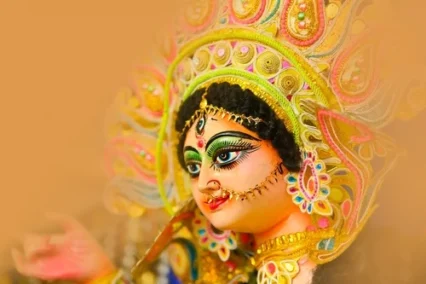
Festivals, like Dashain, show the spirit of Nepali culture. This event stands for the win of good over evil. Yomari Punhi is another, with its sweet dumplings. Every one of these has its own style and feel. You can see how spirituality and community mix during these times.
Here are some of Nepal’s most important Hindu festivals:
-
Dashain: This 15-day event is about family and good winning over bad. People also offer goat sacrifices.
-
Tihar (Deepawali): This is the festival of lights. People light up their homes and worship animals like crows and dogs.
-
Maha Shivaratri: Many gather at Pashupatinath Temple to honour Lord Shiva in one of the grandest religious ceremonies.
-
Indra Jatra: This festival takes place in Kathmandu. People come out to celebrate the Hindu god of rain and see the living goddess, Kumari.
Buddhism’s Deep Roots in Nepal
Buddhism started in Nepal. This is where Siddhartha Gautam Buddha was born, in Lumbini, around the 5th century BCE. He shared his ideas all over the world, but the real starting place stays an important spot for people. Today, about 9% of the people in Nepal follow Buddhism. It is mostly strong in the Himalayan regions and in the Kathmandu Valley.
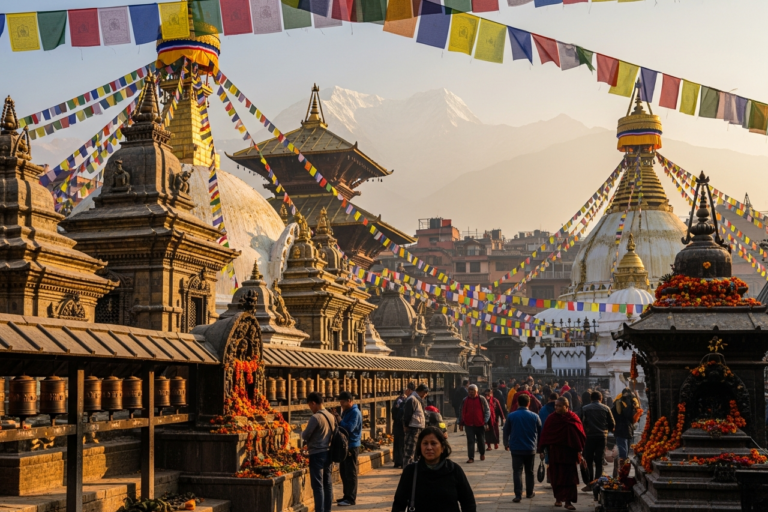
Buddhism has shaped Nepali culture in many ways. You can see it in the peaceful monasteries and in prayer flags moving in the breeze. People in Nepal get along well even though there are both Buddhist and Hindu groups. Now, we will talk about the special traditions and festivals that make Buddhism in Nepal different.
Buddhist Traditions and Customs
Buddhist traditions in Nepal bring together the use of ritual, meditation, and devotion. You often see colourful prayer flags, with mantras written on them, moving in the wind. People believe these prayer flags carry good wishes and blessings everywhere. The spinning of prayer wheels at places like stupas and monasteries is common and is a peaceful practice believed to bring good things to you.
When you visit special places such as the Boudhanath Stupa, which is one of the biggest in the world, you will see monks reading from sacred texts. There are also many people walking around the stupa, deep in devotion. Nepalese Buddhists take these customs to heart, and they are part of daily life.
Some key Buddhist traditions are:
-
Spinning Prayer Wheels: This is a way to gain wisdom and good karma by reciting mantras.
-
Hanging Prayer Flags: People do this, since they think the wind carries out peace, compassion, and wisdom.
-
Prostration: At holy spots, people bow down to show a lot of respect.
-
Chanting and Meditation: These are important for spiritual growth and often happen at a monastery or at home.
Celebrated Buddhist Festivals (Buddha Jayanti, Losar)
Buddhist religious festivals in Nepal are bright and happy times. They bring the Nepalese people together. Among all these festivals, Buddha Jayanti stands out as the most important. The day marks the birth, when he found answers to life, and the passing of Lord Buddha. For Buddha Jayanti, stupas and monasteries wear bright decorations. People gather to say prayers and take part in walks with others.
There is another big event called Losar. It is the Tibetan New Year. Losar is celebrated with lots of energy by Sherpa and Tibetan people. Many families in the Himalayan regions sit together over food, have dances, and go to religious ceremonies as they say hello to the new year.
These are the main Buddhist holidays people celebrate in Nepal:
-
Buddha Jayanti: A special day for the whole country. It looks back on the three big changes in the Buddha’s life.
-
Losar: Tibetan New Year, celebrated by different groups on different days, with feasts and dances.
-
Mani Rimdu: A bright and lively festival that takes place at Tengboche Monastery in the Everest region. There, people can see masked dances.
Islam and Christianity: Modern Growth and Community
Hinduism and Buddhism are the main faiths in Nepal. But Islam and Christianity are also an important part of life for people there. Traders brought Islam in the 15th century. Now, most Muslims in Nepal live in the southern terai region. Christianity was introduced later in the 18th century by missionaries. In the last few years, the number of Christians in Nepal has grown slowly.
The many religious groups in Nepal have built strong ties with each other. They add to the country’s social life through their own customs and ways of doing things. Now, let’s look at their places of worship and how these groups help the community.
Islamic Mosques and Festivities
Islam has been a part of life in Nepal for over five hundred years. Most people who follow Islam live in the terai region in the south. But you will also find some living in cities like Kathmandu. The Islamic mosques in these areas are important for prayer, religious ceremonies, and teaching about the faith. People come to mosques to meet, pray, and take part in learning about Islam.
Every year, Islamic families and communities in Nepal come together to enjoy festivals and special religious ceremonies. These times bring everyone close, and are now a big part of what makes Nepal’s different religions so colourful and interesting.
Popular Islamic festivals and practices are:
-
Eid al-Fitr: This day comes after Ramadan. There are prayers, people eat big meals, and children get gifts.
-
Eid al-Adha: On this “Festival of Sacrifice,” families share meat with each other and also those who do not have much.
-
Daily Prayers: People go to mosques in the terai region and in the big cities for prayer every day.
-
Community Gatherings: The mosque is where many social and other events happen for folks from the Muslim community.
Christian Churches and Charitable Work
Christianity in Nepal has grown a lot since the middle of the 1900s. You can see Christian churches across the country. People in these churches are very active in the work they do to help others. A lot of Christian groups have also made big changes in Nepal’s schools and hospitals.
Before Nepal was known as a secular state, Christian groups had already started working with local people. They helped with many outreach programs. The government of Nepal now has some rules about changing religions, but the protection of religion means each group can follow its faith and do good things in the country.
Contributions of Christian communities include:
-
Charitable Work: Running schools, hospitals, and healthcare clinics across the country.
-
Community Services: Organizing outreach programs to help underprivileged communities.
-
Christmas and Easter Celebrations: These festivals are celebrated with church services, carols, and community meals.
-
Building Churches: Establishing places of worship that also function as community centres.
Religion’s Influence on Culture and Tourism
Religion is a big part of Nepal’s culture. You can see it in the way people greet each other every day and in the festivals that bring everyone together. This strong sense of faith mixes with the natural beauty that the country is known for. It helps make Nepal a place many travellers want to visit. The Nepal Tourism Board often talks about this special mix. From the busy temples in Kathmandu to the quiet trails in the Annapurna region, you can see both the culture and the stunning views.
Many people come to Nepal for the spiritual feeling, not just the mountains. The way faith is part of daily life stands out to visitors. Let’s take a look at how religion shapes what people do each day and which faith-based places tourists like to see the most.
Religious Customs Shaping Everyday Life
Religious practices play a big part in the daily life of people in Nepal. One way they show respect to each other is by saying “Namaste.” This greeting means you are seeing the special part in someone else.
When people eat Nepali food, they usually use the right hand. The left hand is not used for eating, because many believe it is not clean for food. This comes from the old Hindu traditions that are still strong today.
At home, many people have a small spot for prayer. You might see flowers and food left at temples or public shrines for offerings. What people eat also depends a lot on their faith. In Hindu families, it is common to not eat beef because cows are seen as holy. So, many people enjoy buffalo meat, and this is liked in Newari dishes. All these small and big religious practices show up in the way people act with others and in what they do every day.
Popular Faith-Based Destinations for Tourists
Nepal has many amazing religious sites that people from all over the world like to visit. A lot of people go there to trek to Mount Everest or to see Chitwan National Park. But a spiritual trip can be just as important while you are in Nepal. The whole country has many temples, monasteries, and old pilgrimage routes. These places let you feel close to people’s ancient faiths.
The Annapurna Sanctuary Trek is a good example. It is not only a hard walk but also touches your spirit. You go through sacred valleys along the way. Mount Everest (Sagarmatha), which is the tallest peak in the world, is seen as very special by the local Sherpa people.
Here are some top faith-focused spots for tourists:
-
Lumbini: This is where Lord Buddha was born. It is a UNESCO World Heritage site and there are over 25 international Buddhist monasteries to see.
-
Boudhanath and Swayambhunath Stupas: These are famous Buddhist places in Kathmandu. They are great if you want to find some quiet time for yourself.
-
Pashupatinath Temple: You should come here if you want to know about Hinduism. You can watch meaningful ceremonies at this religious site.
-
Tengboche Monastery: This peaceful spot is in the Everest region. You can see broad Himalayan views and feel calm here.
Religion and Rights: Nepal’s Constitution
In 2008, Nepal changed from being a Hindu kingdom to becoming a secular state. This was a big change, and it became official in the Constitution of Nepal. The new rule clearly set church and state apart. It also promises freedom of religion to all people who live in Nepal.
The constitution tries to give protection of religion to everyone. It wants to build a place where people from many different faiths can all get along.
This new set-up is a big moment in Nepal’s history. It tries to mix old customs with today’s ideas about human rights. Next, we will look at the real laws that look after these rights and what life is like for people in Nepal now with these changes.
Laws Protecting Religious Freedom
The Constitution of Nepal says that the country is a secular state. It has rules that protect freedom of religion. These rights make sure that everyone can follow, practise, and keep their own religion. People can do this as they want. The country’s laws are close to how human rights are seen around the world. This means people can live by their beliefs without the government stopping them.
The rules for the protection of religion are made to keep peace among people with different faiths. The state does not pick one religion to support. It works to protect the rights of all groups. This promise to freedom of religion and human rights is a big part of what Nepal is today. The country wants to show that everyone gets equal treatment and can live side by side.
Restrictions and Social Context for Religious Practices
Nepal’s constitution gives people religious freedom. But there are some rules. The law does not allow any act that might harm public order, health, or what is good for everyone. It is a crime to make someone change their religion by using force, pressure, or gifts. The government of Nepal checks these laws to stop problems between people.
The way people deal with these rules can be tricky. Most of the time, religious tolerance is strong in Nepal. But, sometimes problems can show up, often when it comes to talking to others about changing their religion. It is important to know these rules if you are visiting or living in Nepal. It will help you respect local ways and the laws. You can then enjoy the country’s spiritual life to the fullest.
Conclusion
To sum up, when you look at the many religions in Nepal, you see more than just what people believe. You can also see how much these beliefs are part of daily life and culture. There are lively Hindu festivals and calm Buddhist rituals. Each one helps make Nepal special. If you learn about this mix, you not only enjoy your visit more but you also start to value the things that shape the country. When you follow local ways or go to holy places, you’ll see how religion and tradition work together to make everyone feel at home. If you want to know more about Nepal’s religious roots, reach out to us for a free chat to help you plan your trip.
Frequently Asked Questions
Is Nepal considered a religiously diverse country?
Yes, Nepal has a very wide mix of different faiths. Most of the total population follows Hindu religion. Still, there is also a big Buddhist community in the country. People in Nepal get along with each other and respect the different faiths found there. There is real religious tolerance in Nepal. This helps make the country special, as the people show how different beliefs can live together in peace.
Are foreigners welcome to participate in Nepalese religious traditions?
The Nepalese people are friendly and warm. They welcome visitors who want to join or watch their religious practices, as long as you show respect. There might be some religious ceremonies or parts of a temple that you can’t go into. But, there is still a lot you can see and do in everyday life. Tourism often gives people many ways to see and enjoy the religious practices and traditions of the Nepalese people.
How does religion influence Nepalese festivals and travel experiences?
Religion plays a big part in the daily life of most Nepalese people. It shapes many festivals and also their travel experiences. The Nepal Tourism Board talks a lot about the country’s special culture and deep faith. When you go to religious sites or see local festivals, you get to see what the daily life and beliefs of the Nepalese people are really like.