Key Highlights
-
Malaysia is a country with a lot of religious diversity. The major religions here are Islam, Buddhism, Christianity, and Hinduism.
-
Islam is the official religion of the federation. But the constitution gives religious freedom to anyone who is not Muslim.
-
People’s religious beliefs affect many parts of daily life. This can be seen in the food people eat, the clothes they wear, national holidays, and many social customs.
-
There is a close link between ethnic Malays and religion. Most ethnic Malays in the country are Muslim.
-
Even though there are some challenges, different interfaith groups work hard to bring peace and understanding between religious groups.
-
Some of the most important places of worship, such as the Batu Caves and Thean Hou Temple, play a major role for their religious communities.
Introduction
Welcome to Malaysia. It is a lively country in Southeast Asia. People here come from many backgrounds. This brings together a rich mix of cultures and traditions. One thing that makes Malaysia special is its religious diversity. For people from Canada who want to really know the country, learning about religion in Malaysia is important. There, old beliefs and new ways of living come together. This makes a bright and interesting mix of faiths. In this guide, you will learn about the major religions of Malaysia. You will also get to know their old, meaningful customs and traditions.
Overview of Malaysia’s Religious Landscape
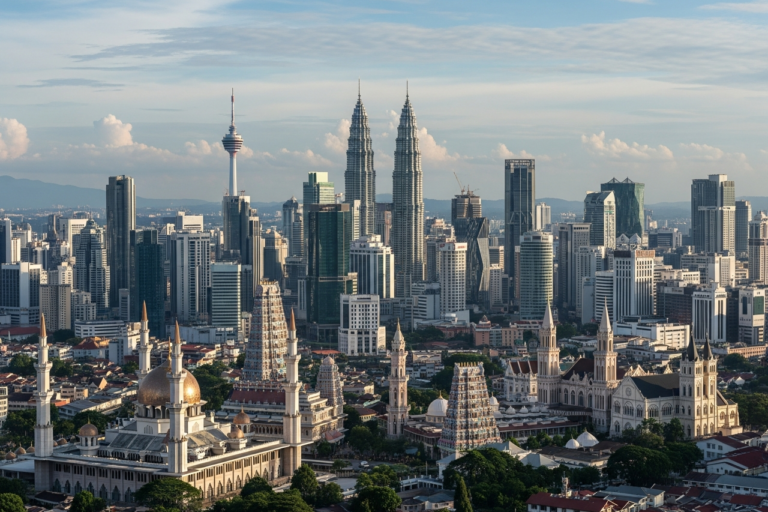
Malaysia’s mix of religions is easy to see and is part of what makes the country special. This comes from its place in Southeast Asia, where many ethnic groups have met and lived together for a long time. There are major religions in Malaysia, and each one adds to how people live and what makes life in Malaysia different. You can see this religious diversity in the things people build and all the big festivals happening in the country.
The variety of faiths is there because Malaysia has many ethnic groups. There are Malay, Chinese, and Indian communities, as well as others. Each has its own beliefs and ways, and this is what leads to so much religious diversity in Malaysia. All these important cultures and beliefs live together side by side, making the country a unique place to be.
Historical Influences Shaping Malaysia’s Religions
The story of religion in Malaysia has changed a lot over many years. Long ago, old trade routes brought many traders and people who wanted to share their faith with local people. This brought the world’s big religions into the country. At first, Hindu and Buddhist kingdoms did well and left behind many marks on culture and life that people can still see today.
Later on, traders from Arab, Indian, and Chinese backgrounds came and brought Islam. Over time, Islam grew strong and is now the main religion. Islam is followed most in peninsular Malaysia. When European colonial rulers arrived, they brought Christianity. It became most popular in east Malaysia.
All these changes helped make Malaysia full of different and interesting religions. Today, most people in Malaysia follow Islam, Buddhism, Christianity, or Hinduism. There are also Chinese folk religions and other local beliefs. This mix shows how the country’s long history of trade, travel, and colonial rule shaped religion in both peninsular Malaysia and east Malaysia.
Current Religious Demographics and Major Belief Systems
Malaysia’s religious diversity is clearly reflected in its current demographics. The Muslim population makes up the majority, followed by significant communities of Buddhists, Christians, and Hindus. These religious groups are often, though not always, linked to specific ethnic communities.
The ethnic Chinese population predominantly follows Buddhism, Taoism, and Chinese folk religions, while the majority of the Indian communities practice Hinduism. Christianity is practiced by various ethnic groups, including some Chinese, Indian, and indigenous peoples in Sabah and Sarawak. This distribution creates a society where different religious groups live side-by-side.
Here is a breakdown of the major religious groups in Malaysia:
|
Religion |
Percentage of Population |
|---|---|
|
Muslims |
55.03% |
|
Chinese folk-religionists |
18.80% |
|
Christians |
9.27% |
|
Hindus |
6.81% |
|
Buddhists |
5.29% |
Islam’s Role in Malaysian Society
Islam has an important and official place in Malaysia. It is the country’s official religion. You can see its impact in law, politics, and in the everyday lives of people who follow it. Muslim groups and religious authorities help shape what people talk about. They also help keep public order.
This special role shapes how the country is run and what the people do in daily life. To really know how things work in Malaysia, it helps to see how Islam shapes the law and the country’s social ways.
Islam as the Official Religion: Meaning and Practice
The Malaysian Constitution says that Islam is the “religion of the Federation.” Because of this, the state helps with funding and supports Islam in many ways. The government gives money to mosques and Islamic schools. There are also religious authorities at both the country level and in each state that work on Islamic issues.
This official religion status creates a system with two types of courts. Syariah courts work next to civil courts. The Syariah courts handle problems like marriage, divorce, and inheritance for Muslims, using Islamic ideas and rules. Having these courts shows how important Islam is as the religion of the federation in Malaysia.
Prime Minister Anwar Ibrahim says he supports a moderate view of Islam. But people still talk about how Islam should be practiced and how it works with the state. The balance between having Islam as the official religion and making sure other religions are respected is still a big part of what makes Malaysia different.
Islamic Festivals and Daily Routines in Malaysia
Religion has a big effect on daily life for the Muslim population in Malaysia. You can hear the call to prayer from mosques five times each day. This sound is part of the daily flow for many people. Islamic religious beliefs also guide what people eat, wear, and how they act with others. Many people follow halal food rules, choose modest clothing, and respect their culture in social life.
Places of worship, like mosques, are used for more than prayer. Mosques are where people come together for learning, events, and to help each other. During Ramadan, Muslims do not eat or drink from dawn to sunset. In the evening, people enjoy food bazaars and join others to pray together as a group.
Many Islamic festivals are public holidays in Malaysia. Families and friends get together to celebrate on these days.
-
Hari Raya Aidilfitri: This festival comes right after Ramadan ends. It is a time for asking for forgiveness, eating special food, and visiting family and friends.
-
Hari Raya Haji: This day remembers when Ibrahim was ready to give up his son. It happens at the same time as the Hajj pilgrimage.
These religious beliefs, places of worship, and special days are very important to the Muslim population in the country.
Buddhism, Christianity, and Hinduism in Malaysian Culture
In Malaysia, Islam is the official religion. But other major religions like Buddhism, Christianity, and Hinduism play a big part in the way of life here. The ethnic Chinese and Indian communities mostly follow these religions. This helps the country have a wide and rich culture.
You can see this in the big temples and churches, as well as in the many colourful festivals these groups hold. These religious practices help shape how Malaysia looks and feels. Their strong presence shows the long history of different groups living together in peace in Malaysia.
Expressions of Buddhism: Temples, Rituals, and Community
Buddhism in Malaysia is still strong and alive today. Most people who follow it are from the ethnic Chinese group. Big places of worship like the Thean Hou Temple in Kuala Lumpur are at the heart of spiritual and social life. People go to these spots not just to pray, but also to join events with others and to enjoy important festivals.
The way people practice Buddhism in Malaysia often brings together Mahayana traditions, Chinese folk ideas, and Taoist ways. Many go to temples to light incense, give offerings, and pray for good luck, good health, and more money. For a lot of Malaysian Buddhists, these are everyday acts, a real part of their lives.
Festivals mean a lot for those who follow Buddhism here. They give people, families, and friends a chance to come together and celebrate life in colourful ways.
-
Wesak Day: The whole country gets a holiday to remember the birth, enlightenment, and passing of Buddha.
-
Chinese New Year: This time is big for ethnic Chinese people in Malaysia. It’s not only a time to celebrate with family, but also a time to mix in Buddhist and Taoist acts like visits to places of worship to ask for good things in the new year.
The Christian Community: Churches, Practices, and Celebrations
Christianity is an important part of life in Malaysia. The people who follow this faith come from many groups, such as Chinese, Indian, and native people in Sabah and Sarawak. There are many churches in the country. You can see old cathedrals and new buildings like the Church of Jesus Christ.
Christian life centres on weekly religious services. These usually happen on Sundays. During these times, people pray, listen to talks, and enjoy music together. This helps them get spiritual help and feel part of the group. The constitution in Malaysia gives everyone the freedom of worship. Because of this, Christians are free to follow their faith out in the open.
Big Christian holidays, like Christmas and Easter, are public holidays in Malaysia. On these special days, people join church services, visit with family, and put up bright decorations. These fun and joyful moments add to the many religious festivals in the country. It also shows how people of different faiths live together with peace.
Hindu Traditions, Temples, and Festivals in Malaysia
Hinduism in Malaysia is followed by many people from the Indian community. You can see how deep the faith goes by looking at the many temples, called kovils, found all over. The most well-known is the lovely Batu Caves, a big place where people come to pray, close to Kuala Lumpur.
Hindu ways are an important part of life for many Indian people in Malaysia. They often go to temples, pray at small shrines at home, and follow many customs. Doing all this helps them keep their culture and faith strong.
Hindu festivals in Malaysia are full of life and draw in lots of people from all groups.
-
Thaipusam: This exciting festival is set aside for Lord Murugan. On this day, people take part in special acts of thanks and penance.
-
Deepavali: Also called the “Festival of Lights,” this is a big holiday in the country. It stands for the win of good over evil and is marked with friendly gatherings and lots of tasty food.
Indigenous and Traditional Beliefs
Besides the major world religions, Malaysia has many old and local beliefs too. These traditions are found mostly in the states of Sabah and Sarawak. Both are on the east side of Malaysia.
Most of these beliefs are rooted in animism. Here, people feel close to the land, to their family members who have passed away, and to the spirit world. Many people from these groups have taken up Christianity or Islam. Still, their old ways shape how they see things today. Often, these traditional faiths mix with newer religions and shape the way they live.
Animism and Local Spiritual Practices
Animism is the base of many indigenous beliefs in Malaysia. People who follow this idea think that there are spirits that live in rivers, rocks, trees, and also in animals. They believe these spirits can bring good or bad things to people’s lives.
Because of that, local spiritual practices focus on keeping peace with these spirits. Shamans or special ritual leaders often talk to the spirit world. They do this by holding ceremonies to ask spirits for help, to heal sick people, and to look after the community. These events may have chants, some offerings, and music that is heard in their traditions.
In East Malaysia, these local spiritual ways are still very important for many ethnic groups in Sabah and Sarawak. Even when life changes with new times, people keep these traditions and teach them to their children, so everyone stays close to the land and spirit world.
Interplay Between Indigenous Beliefs and World Religions
The religious landscape in Malaysia brings together many different beliefs. There is a special mix of local ways with major religions like Christianity and Islam. Many people from the indigenous groups do not leave their old beliefs when they join a new world faith. Instead, the two often come together.
You can see this when new ways to worship are shaped by local ways of life. For example, Christian songs may get sung in the local language. Or, people might look at Islamic teachings by thinking about old values. This gives people a kind of faith that is both worldwide and local at the same time.
Religious diversity in Malaysia means that old and new beliefs live and grow together. It shows that the way people have faith can bend and change as needed. People find ways to keep their spiritual and family past even as they try new beliefs. This mix is what makes Malaysia’s spiritual life so rich.
Ethnicity and Religion: A Unique Relationship
In Malaysia, your ethnicity and religion often go hand in hand. For many, who you are is tied to what you believe. This is seen best with ethnic Malays. By law, all ethnic Malays are Muslim.
The Chinese and Indian communities have their own main beliefs too. Many Chinese people are Buddhist or Christian. Many in the Indian communities follow Hinduism. These links between group and faith shape how people live, who they vote for, and how they see themselves in the country.
Malay Identity and Islam
The link between Malay identity and Islam is an important part of life in Malaysia. According to the federal constitution, to be called an “ethnic Malay”, a person must follow Islam, usually speak the Malay language, and live by Malay customs. So, being Muslim is a big part of being Malay.
Because of this rule, the state law treats all ethnic Malays as Muslims. This affects both their social and legal life. Religious authorities are in charge of Malays when it comes to matters of Islamic law. If a Malay tries to leave the faith, it can be very hard both by law and in everyday life.
This strong tie keeps Islam at the centre of both politics and society in the country. It influences everything, like public rules and even culture. For Malaysia, the federal constitution makes Malay identity and Islam come together as a key part of the nation.
Chinese, Indian, and Indigenous Religious Identities
For the non-Malay groups in Malaysia, religious identity is mixed. The Chinese in Malaysia practice Buddhism, Taoism, Christianity, and traditional Chinese folk religions. Because of this, for many Chinese Malaysians, religion is more about personal or family choices. It is not always set or the same for everyone.
The Indian people in Malaysia are mostly Hindu, but you will also find Christians, Muslims, and Sikhs. This mix of religions brings many kinds of beliefs that add to their way of life and their community traditions.
You will also see a lot of different religious beliefs among the native groups in East Malaysia. Many people from east Malaysia are now Christian, but some are Muslim, and some still keep their older faiths like animism. This mix of religion shows that the link between people’s heritage and their religious beliefs is not always strong or clear. There is a wide range of beliefs within these groups.
Religion in Malaysian Daily Life and Cultural Traditions
Religion is not only for special days in Malaysia. It is part of daily life and part of many cultural traditions. You can see the effect of this in what people eat, what they wear, and in how they talk to each other.
These strong beliefs shape how people act and live together. They help make a place where faith can be seen every day. To really know what Malaysian culture is about, you have to understand how much religion is involved in the way people live.
Religious Influence on Food, Dress, and Social Customs
Religious beliefs play a big part in everyday life in Malaysia. These are seen in things like what people eat, what they wear, and how they act around others. One thing that stands out the most is halal food in Islam. This tells Muslims what they can eat. Because of this, there is a system all over Malaysia where restaurants and products need to get halal certification.
What people wear is also shaped by religious beliefs and is seen in homes across the country. Many Muslim women choose to wear the hijab. This headscarf shows their modesty and their faith. Traditional clothes like the baju kurung for women and the baju melayu for men are often worn, especially when there are festivals.
How people act in Malaysia reflects respect, care for others, and a warm welcome for all, which are things found in major religions.
-
Greetings: The way people say hello or greet each other is different. This can depend on religious and cultural background.
-
Open Houses: During big festivals like Hari Raya and Deepavali, Malaysians—not just Muslims or Hindus—have “open houses.” They invite friends and neighbours to come in, eat, and join in the fun.
-
Respect for Elders: People in Malaysia, from all major religions, share the idea that it is important to show respect to those who are older.
Religious beliefs help shape how people from different backgrounds in Malaysia live, eat, dress, and connect with each
Impact on National Holidays and Community Events
The effect of religion can be seen in Malaysia’s national holidays and events. The country marks the main festivals from all its different religious groups. These are made into public holidays, so everyone can join in. This helps the people in Malaysia feel like one, even with their religious diversity.
Religious festivals are not only for followers of each faith. They are celebrated across the country. The Chinese New Year lion dances, Hari Raya open houses, and Deepavali lights are enjoyed by all Malaysians. This brings about cross-cultural understanding and harmony.
People manage these celebrations to keep public order and still let everyone take part in lively traditions.
-
Hari Raya Aidilfitri: A big holiday across the country which marks the end of Ramadan.
-
Chinese New Year: A celebration that lasts 15 days and is full of family gatherings and cultural events.
-
Deepavali: The festival of lights for Hindus, which is another public holiday in Malaysia.
Interfaith Relations and Harmony Initiatives
In Malaysia, there are many religions. Because of this, people need to keep working on interfaith harmony. Many groups and projects work to help people of different faiths talk and understand each other better. This is important for keeping everyone together and making the country stronger.
Some of these efforts come from the government, while others start with local people. The goal is to solve religious issues and help everyone live together in peace. The Malaysian Bar Council and other groups also help in making sure there is harmony among all religions.
Notable Interfaith Organizations and Projects
There are several well-known interfaith groups in Malaysia that help people from different religious groups understand each other better. These groups are important. They help solve problems, encourage people to talk, and show the value of religious diversity in the country. They often invite different faith leaders and others to work on goals that everyone shares.
One group is the Malaysian Consultative Council of Buddhism, Christianity, Hinduism, Sikhism and Taoism (MCCBCHST). It helps represent non-Muslim groups when talking with the government. The Malaysian Bar Council also works on issues about religious freedom and how religious groups get along.
These groups take on many projects to keep things peaceful:
-
Interfaith Dialogues: They hold meetings and talks where people can find what they all value.
-
Community Projects: They work together on activities that help communities out.
-
Festive Celebrations: They plan joint events to celebrate important religious holidays.
-
Advocacy: They speak up about rights for religious freedom and about things that are not fair.
Everyday Experiences of Religious Diversity
For many people in Malaysia, living with religious diversity is just a normal part of daily life. It is very common to find a mosque, a church, and a temple all close to each other in the same area. These places of worship sitting near each other show how the country is made up of many different groups living side by side.
You will also see this every day in public schools, at work, and where people spend time in the community. People from different religions go to school together, work together, and live next to each other. Many people have friends from other religions, which helps bring everyone closer and makes it easier to get along.
But, getting through religious diversity is not always easy for everyone. Social media helps people from different faiths talk and share ideas, but it can also start arguments. Some religious minorities may not have the same level of freedom of religion as others. Still, being around different cultures and faiths every day is something special and important about life in Malaysia.
Religion and the Malaysian Legal System
The relationship between religion and the Malaysian legal system is not simple. The Federal Constitution gives us a base that sets Islam to have a special role in the country. At the same time, it says there is freedom of religion for other groups too. Because of this, Malaysia has two types of courts: civil courts and Islamic law courts, known as Syariah courts.
It can be hard to deal with religious issues in this kind of system. There are many talks about which court—civil courts or Syariah courts—should handle different matters. People also often talk about how the federal constitution should be read when it comes to matters about faith. This leads to big legal and political talks.
Constitutional Rights and Freedom of Religion
Article 11 of the Federal Constitution gives every person the right to choose and follow their own religion. This is a basic part of freedom of religion in Malaysia. The constitution says that non-Muslims can worship as they wish and take care of their own religious matters.
But, this right is not unlimited. The same article lets the states control or ban the propagation of any religious doctrine among Muslims. This point is often discussed in legal settings, and it is very important for how minority religious groups see their freedom of religion. Many cases come to the High Court where the exact rights and limits in the federal constitution are tested.
The law wants to keep a fair balance between the main position of Islam and the rights of other religious groups. This balance is shaped by the High Court, by people talking about these issues, and by the idea that human rights and justice should be there for everyone.
Navigating Religious Conservatism and Policy Debates
In recent years, the country has been seeing more people talk about religious values in public. The topic often comes up in what political parties say, and in the way they make rules. The Malaysian Islamic Party wants to see Islamic ideas take up a bigger part in law and how things are done in the country. These calls from political parties challenge the way the secular state used to work in Malaysia.
People now hear public talks about moral policing, dress codes, and if the country should use Islamic punishments. The debates make the difference clear between those who want more conservative views and those who want to stick with a secular and multicultural path for Malaysia’s future.
The government, now led by Prime Minister Anwar Ibrahim, tries to juggle what the conservative groups want with the need to make sure all Malaysians have their rights under the constitution. The way leaders manage this keeps changing the rules, and it shows how hard it can be to keep religious diversity as the country grows and becomes new.
Conclusion
To sum it up, Malaysia has many different religious beliefs and deep cultural traditions. This gives Canadians a chance to see how people can live together with great religious diversity. Islam is the main religion, but you will also find lively practices of Buddhism, Christianity, and Hinduism. Learning about these things will help you understand what makes Malaysia special. The mix of different backgrounds and religions shows up in many ways. It shapes people’s daily life as well as their food.
While you are in this wonderful country, you will see how religious diversity brings people together and helps everyone learn to respect each other more. If you stay open to these new ideas, you can get to know the people and their culture even better. If you want to find out more about Malaysian religious beliefs or get involved, try talking to local people or joining community groups. This can help make your time in Malaysia even more special.