Key Highlights
-
The Kuwaiti constitution says that Islam is the state religion. Islamic law is a main source of legislation. This affects public policy and family law.
-
The constitution allows for freedom of belief, but the government still controls religious practices. This happens mainly for groups that are not Muslim.
-
Kuwait’s total population is made up mostly of Muslims. Sunni Islam is the most common type, but there are also many Shia Muslims. The country also has a large expatriate population which includes people of different faiths.
-
Christian citizens and foreign workers from groups like Roman Catholic and Indian Orthodox have official Christian churches. However, there are rules limiting where they can build new places of worship.
-
Religious freedom has some limits in Kuwait. Evangelism to Muslims is not allowed. People who move away from Islam may also experience societal pressure.
-
The government, through groups like the Ministry of Interior, checks religious gatherings and handles the registration of religious groups. For some minorities, worship is only permitted in private spaces.
Introduction
Welcome, fellow Canadians! If you want to go to Kuwait or wonder about its culture, it is good to know about the religion of the state. The country’s constitution says Islam is the official religion of the state. This shapes many things in daily life, law, and social customs. But the country also gives some religious freedom for the people who live there. This guide will help you get to know the main beliefs and old ways that are part of this interesting Middle Eastern country.
Understanding Religion in Kuwait: An Overview
Kuwait is a country where the state religion is Islam, as set out in the constitution. The Islamic faith acts as a main source of legislation. This plays a big role in shaping what public authority can do and also how people act in society. Most of the total population follows Islam. There are both Sunni Islam and Shia Muslims. But, the people in Kuwait also include a large expatriate population made up of foreign workers. These foreign workers bring different faiths. There are Christian citizens as well as followers of Roman Catholic and Indian Orthodox beliefs.
The government takes care of religious practice by using the Ministry of Interior and the Ministry of Social Affairs. These groups manage places of worship like mosques and the Christian churches that have been approved. There is some freedom of religion in Kuwait, but it is under close watch. This is especially true for any religious group that is outside the main parts of Islam.
Historical Background of Kuwaiti Religious Landscape
The history of Kuwait is close to Islam. For many years, this area has been a place full of Islamic culture and tradition. You can see this in the way people live in Kuwait today. The Kuwaiti constitution says that Islam is the country’s main religion.
Through this, Islamic law becomes a main source of legislation in Kuwait. This law guides things like political rights and how people in Kuwait should act in social life. Most of the total population in the country have always been Muslim. But, Kuwait has had other groups living there too.
There are also small but known Christian religious groups in Kuwait. Some of these are Greek Orthodox, Indian Orthodox, and Armenian Orthodox. These groups have been a part of life in Kuwait along with most people who are Sunni Muslims and a smaller group of Shia Muslims. This shows that, even if most people follow Islam, there is some variety in Kuwait’s history. Groups like the Department of State follow and record the status of these christian churches and their people.
Key Terms and Definitions Related to Religion in Kuwait
To better understand religion in Kuwait, you need to know some basic terms. This country has its own special laws and traditions that shape how people follow their faith.
Learning these meanings will help you see how religion works in Kuwait. It affects big things, like state policy, and small things in people’s lives. Here are some words you will often hear:
-
Religion of the State: Islam is the main religion. It shapes the country’s laws and the way people live.
-
Islamic Law (Sharia): This is the main guide for laws. It is important for personal status laws about things like marriage or inheritance for Muslims.
-
Sunni Islam: Most Muslims in Kuwait follow this branch.
-
Shia Muslims: This group is smaller, but still important. They have their own beliefs and ways to practice.
-
Religious Freedom/Freedom of Belief: This means people have the right to choose what to believe. But, in Kuwait, the way people practice that freedom is still controlled by the government.
About 74.6% of the total population in Kuwait is Muslim. This includes both Sunni Islam and Shia Muslims. The rest of the people, many from the expatriate community, follow Christianity or other religions.
Significance of Religion in Kuwaiti Society
Religion is not just a private thing in Kuwait. It is a big part of what makes up the country and the way people live. Islam is the state religion. Its values have a strong effect on everyday life, how families live, and the country’s sense of who they are. The importance of Islam is clear everywhere. You will hear the call to prayer in the cities and see people taking part in religious holidays.
Islamic law helps guide the public authority. It shapes many social rules in Kuwait. Because of this, people keep Islamic values in high regard and most try to follow them. The constitution says people do have freedom of religion. Still, there is a lot of societal pressure to follow Islamic customs.
Religion and culture come together throughout daily life in Kuwait. What people wear, what they eat, how they act around others, and how they do business can all be shaped by religion. It is important for anyone who visits or lives in Kuwait to know about the power of faith in daily life. If you get to know this, you can show respect and fit in with the society.
Islam as the Dominant Faith
Islam is at the heart of life in Kuwait. The constitution says that Islam is the state religion. About 74.6% of the total population is Muslim. This number covers both Kuwaiti citizens and many in the expatriate population. Most people in Kuwait follow Sunni Islam. Islamic law is a main source of legislation in the country, shaping both the laws and how people live.
You can see this influence in things like family law, child custody, and what is taught in public schools. The government does recognize other faiths, and there is some freedom of belief in Kuwait. Still, any religious practice from any religious group is watched closely by the Ministry of Interior. The sections that come next will talk more about the roles of Sunni and Shia Islam in Kuwait.
The Role of Sunni Islam in Kuwait
Sunni Islam is the main religion in Kuwait. Most Muslims in the country follow Sunni Islam. The government also supports this faith as the official religion of the state. Its ideas are at the heart of how the country sees itself and how it is run.
The government in Kuwait works hard to promote Sunni Islam. Islamic law, as followed by the Sunni branch, is used as the main source of legislation. This shapes the laws in Kuwait and guides what the public authority does. Mosques are important places of worship in the community. There are many mosques, and the government looks after how they are built and managed.
Census numbers and other research show that most citizens in Kuwait are Sunni Muslims. What they do—their practices and traditions—shape the public religious life in the country. You can see this in everyday prayers and when people celebrate national holidays.
The Shia Muslim Community in Kuwait
The Shia Muslim community is a key and long-standing religious group in Kuwait. Even though they are fewer in number compared to Sunnis, the Shia community is an important part of the social and political life in the country. People in this group have political rights. They take part in public life.
Kuwaiti law gives the Shia community the right to use their own religious courts. These courts handle personal status laws for the Shia community. For example, they decide on things like marriage, divorce, and inheritance based on their view of Islamic law. This is not the same as the main source of legislation that most Sunni Muslims follow.
Shia Muslims are seen and included as a community in Kuwait. How people treat Shia Muslims is sometimes a topic that people talk about in politics and society. But they have their own mosques and community centres. The Shia community also takes part in the country’s religious and cultural activities.
Islamic Values and Core Beliefs
Islamic values are at the heart of life in Kuwait. They guide how people act, how families treat each other, and how everyone is in the community. Some key beliefs are faith (Iman), prayer (Salah), charity (Zakat), fasting (Sawm), and the pilgrimage (Hajj). These help shape both the moral and spiritual side of Muslims’ everyday lives.
These values talk about the need for being kind to guests, showing respect to older people, having close family ties, and being generous. Since Islam is the state religion, these beliefs are more than just private ideas. They show up in public policy and in what the country expects from people. The government will often share these values as a part of what makes being Kuwaiti special.
Kuwait’s laws also use islamic law for guidance. Still, living out these beliefs is something Muslim people do every day. The country gives some freedom of religion to its people. But, the influence of Islamic values is strong and becomes part of life for everyone there, no matter what religion a person has.
Daily Practice of Islam in Kuwait
The daily life in Kuwait is shaped by Islamic values and religious practice. Islam is the state religion, and you can see it everywhere. The design of mosques across Kuwait City and the way people take part in religious holiday celebrations both show this clearly. For people who follow Sunni Islam or for Shia Muslims, faith is at the center of their day.
Public authority helps with many parts of religious life. The Ministry of Interior and the Ministry of Social Affairs are in charge of places of worship and religious gatherings. People have freedom of religion, but it is within set limits. The whole social life is affected by deep Islamic traditions. We will look into this more in the next part.
Five Pillars of Islam in Everyday Life
The Five Pillars of Islam are the main parts of religious practice for every Muslim in Kuwait. This includes people from the Sunni Islam group or the Shia Muslim community. These five pillars are more than just ideas. They are things that people do every day and they help shape how people live and connect as a group.
These rules help Muslims build a strong link with God and with other people around them. They also keep Islamic values strong all over Kuwait. You can see people follow these duties everywhere, and they are very important to how people live in Kuwait.
Here are the Five Pillars:
-
Shahada: This is when someone says out loud that they believe in one God, and that Muhammad is God’s messenger.
-
Salat: This means doing a prayer five times every day while facing Mecca.
-
Zakat: This is about giving money to help those who are poor or need support.
-
Sawm: Fasting from early morning until sunset during Ramadan.
-
Hajj: Taking a trip to Mecca at least one time if you are healthy and can afford to go.
Prayer and Mosques in Kuwaiti Communities
One of the most important parts of religious practice in Kuwait is the daily prayer. Five times each day, you can hear the Adhan, which is the call to prayer, from mosques all over the country. This call tells Muslims to stop what they are doing and take time to be with God.
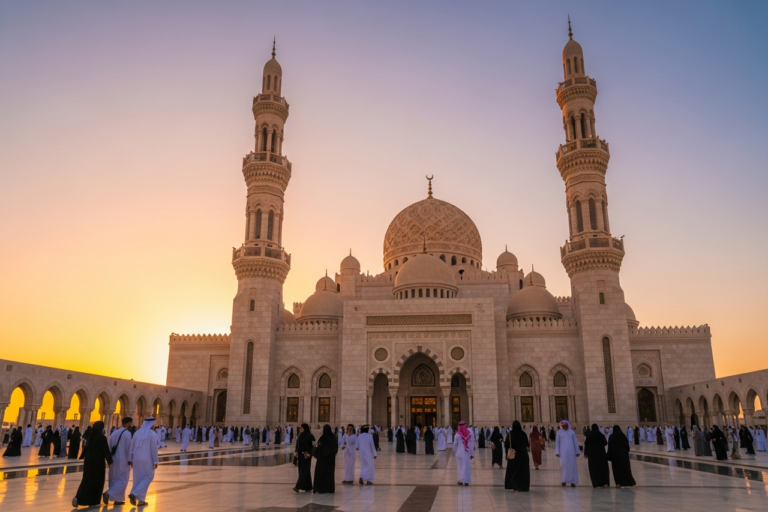
Mosques are the main places of worship and also act as community centres. These buildings, both small neighbourhood ones and large ones like the Grand Mosque, are watched over by groups such as the Ministry of Interior. People go there for prayer, religious gatherings, learning, and to get help from the community.
Islam is the state religion in Kuwait, so the government helps and also supports this kind of worship. Mosques stand out in each area, and the call to prayer is heard in public, showing everyone how much faith means to life in Kuwait. These things are a big way people share and show their religious beliefs.
Islamic Dress and Social Customs
Islamic values shape the way people dress and act in Kuwait. This can be seen as a clear sign of faith. Even though the law does not force everyone to dress a certain way, modesty is a big part of religious practice. You can see this in what many people in the country wear.
Men often choose the dishdasha, which is a long white robe, and a ghutra, which is a head covering. For women, the abaya, a black cloak, and the hijab, a headscarf, are common. These types of clothes come from both the religion and the culture. Both, the old large group and the young, may feel some societal pressure to dress this way, especially in families that are more strict or in public places.
The public authority wants people, whether they live there or are visiting, to wear modest clothes when they are in government buildings or other official places. People see these customs as a way to show their identity, in a country where Islam is the state religion.
The Influence of Islam on Kuwaiti Government and Law
In Kuwait, religion and government are very much tied together. The Kuwaiti constitution names Islam as the state religion. It also says Islamic law, or Sharia, is a main source of legislation. This central idea shapes the way the country’s laws are made, including the penal code and family law.
You can see the effect of Islam in how the National Assembly works, the choices made by government officials, and the rules set by ministries. Kuwait is a constitutional monarchy, and there are some secular laws. But many laws, especially those about personal status, still use Islamic law. In the next sections, we will talk about how the link between religion and law affects Kuwait’s legal and political landscape.
Sharia’s Place in Kuwait’s Legal Framework
Sharia, also known as Islamic law, is a big part of Kuwait’s legal system. The country’s constitution says Islamic law should be one of the main sources for its laws. This means the country’s rules often come from Islamic law.
This is seen the most in matters of personal status. For Muslim people in Kuwait, things like marriage, divorce, inheritance, and child custody are based on Islamic law. These are taken care of by special religious courts. This helps make sure these key life events are handled the way their faith says they should be.
Kuwait’s legal system is made up of a few different systems. It takes some things from French civil law and some from English common law. Still, the part played by Islamic law is clear. Its ideas also touch other parts of law, like the penal code. This shows how important Islamic identity is in Kuwait, even while the constitution gives some religious freedom.
Interplay of Religion and Politics
The link between religion and politics in Kuwait is strong and changes over time. Islam is the state religion, so faith is very important in how the country is run. While Kuwait does not have official political parties, different groups in the National Assembly usually follow certain religious or belief systems.
Government officials, including the people in the cabinet and parliament, often talk about Islamic ideas when they discuss public policy. The Ministry of Foreign Affairs and their choices are also shaped by Kuwait’s Muslim identity and by how the country relates to other Islamic nations.
Because religion and politics go hand in hand, decisions about policies often focus on moral and religious views. Lawmakers check if new laws fit with Islamic values. This helps keep the state’s actions close to its religion.
Islamic Guidance in Public Policy
Islamic guidance plays a big role in shaping public policy in Kuwait. Islamic law is a main source of legislation. Because of this, people often look to its ideas when making new laws and rules that touch on life in the country.
You can see this in areas like social welfare, education, and family law. The Ministry of Social Affairs might build programs that show Islamic values, like helping others and giving to the community. At the same time, the Ministry of Interior works to make sure the laws match with public morals, as seen from an Islamic point of view.
This reach is strong in family law too. Rules about marriage, divorce, and inheritance come straight from religious texts. That way, Muslim citizens live by laws for family matters that do not go against their faith. This shows that islamic law really does guide government policy in Kuwait.
Religious Minorities in Kuwait
Islam is the state religion in Kuwait. Still, the country is home to many religious minorities. Most of these people are part of its big expatriate population. There are a few Christian citizens, and also a bigger group of foreign Christians. These Christians come from Roman Catholic, Greek Orthodox, and Indian Orthodox backgrounds. These communities do get some religious freedom.
The government in Kuwait officially recognizes different Christian religious groups. It lets them run churches in Kuwait City. The Ministry of Interior and other public authorities watch the activities of all religious minorities. They want to make sure that their actions follow local laws and customs. In the next sections, we will talk more about the experiences of these groups.
Christian Communities and Places of Worship
Kuwait hosts a variety of Christian communities, composed of both a small number of Christian citizens and a much larger expatriate workforce. Several Christian religious groups are officially recognized by the government and are permitted to maintain places of worship.
These recognized groups include denominations that have had a long-standing presence in the region. Their ability to operate official Christian churches provides a space for worship and community for tens of thousands of believers. However, these communities face challenges, including significant restrictions on constructing new church buildings.
The government has officially recognized a handful of denominations, allowing them to practice their faith within certain boundaries.
|
Recognized Christian Religious Group |
Primary Community |
|---|---|
|
Roman Catholic |
A large and diverse expatriate community |
|
Greek Orthodox |
Primarily expatriates from the Levant and Greece |
|
Coptic Orthodox |
Mainly Egyptian expatriates |
|
Armenian Orthodox |
A long-established community of Armenian descent |
|
Indian Orthodox |
A significant portion of the Indian expatriate community |
|
Greek Catholic (Melkite) |
Expatriates from the Middle East |
|
National Evangelical Church of Kuwait |
A Protestant congregation with diverse members |
Hindu, Buddhist, and Other Minority Groups
Besides the known Christian religious groups, there are many people in Kuwait from other countries. The expatriate population is made up of a lot of foreign workers from Asia. Many of these people are Hindus, Buddhists, Sikhs, and Baha’is. This means they are part of religious minorities. The situation for these groups is different from what Christian groups face.
Christian religious groups that are officially recognized can get land to build their own places of worship. But these other faiths do not get land for public places of worship. That is why their freedom of religion is mostly just for private practice. Most of the time, they meet for worship in private spaces, like private homes or rented halls.
Groups like Freedom House and the US Department of State have written reports about the status of these religious communities. The government allows private worship in these private homes. But since there are no public places of worship or official recognition, it is still a big problem for these minorities. They find it hard to show their faith out in the open.
Living as a Religious Minority in Kuwait
Life for those in a religious minority in Kuwait means dealing with both social and legal rules. If you are part of the large expatriate population, your freedom of belief is mostly respected. But when it comes to showing your faith in public, there are strict limits.
Christians who are part of known church groups can go to church. But for other groups and faiths, religious gatherings have to take place in private spaces, like private homes. People often meet in small, quiet ways instead of open worship. This is a big part of how religious freedom works in Kuwait.
Along with these laws, there is societal pressure. People are expected to be careful and respect the customs tied to the state religion, which is Islam. While you rarely see clear problems, most minorities understand they need to follow Islamic customs, especially on days like Ramadan. Because of these things, faith turns into something very private. Many people keep their beliefs to themselves, instead of sharing them out in the open.
[freedom of belief], [state religion], [religious freedom], [religious gatherings], [private spaces], [private homes], [societal pressure], [expatriate population]
Freedom of Religion in Kuwait
Kuwait’s way of handling religious freedom shows two sides. The Kuwaiti constitution gives people freedom of belief. This goes along with ideas often found in international laws on human rights. But you will see that this all happens in a place where Islam is the state religion. Its traditions are followed and respected by many.
The government controls things through the Ministry of Interior and the Ministry of Social Affairs. These groups are in charge of day-to-day religious matters. So, on paper, people have freedom of religion in Kuwait. But in real life, there are many rules and oversight. Groups like Freedom House and the US Department of State often talk about this and look into how it works.
This mix of ideas can make it hard for some people. The state shows it values religious freedom, but the system and other limits can still get in the way for some. It helps to look at the policies in the Kuwaiti constitution and how they fit with aims about human rights and freedom of belief.
Constitutional Guarantees and Limitations
The Kuwaiti constitution talks about religious freedom in a clear way. It says that “freedom of belief is absolute.” This gives a strong base in the law for people to follow any faith they want. With this rule, people have the right to personal faith, and the state cannot stop them from what they believe in.
But, this rule does not always protect people when they want to show or act on their faith. The constitution also says that Islam is the state religion. It puts Sharia as a main source for the country’s laws. So, there is a system in place that controls how non-Islamic faiths are shown in public. People must follow the rules to make sure that their acts do not go against public order or the main beliefs of Islam.
Because of this, the freedom of belief is there, but the freedom of religion—when it comes to things like public acts of worship or talking to people about changing their faith—is limited. Groups like the Department of State from the US point out that there is a gap between what the Kuwaiti constitution says and what people can really do about religion day to day, especially for those who are not part of the main religion.
Government Supervision of Religious Activities
The Kuwaiti government takes an active role in watching over religious activities to keep public order and help with social harmony. The Ministry of Interior and the Ministry of Social Affairs are the main groups that do this job. They keep an eye on religious gatherings and handle the registration of any religious group in the country.
When it comes to Islamic institutions, the government looks over sermons to make sure there is no content that is extreme or could be politically upsetting. For people who are in non-Muslim groups, the government checks and approves where they are allowed to worship. Their activities also need to stay within set limits. If a religious group holds a gathering that is not allowed, the police force may get involved.
This kind of supervision brings real limits to religious freedom. The penal code has rules against speaking badly about accepted religions, and also stops activities that are not in line with Islamic law. Because of this, people in Kuwait have to get approval for how they show their religious beliefs, and the government may monitor these activities.
Challenges for Non-Muslim Residents
Non-Muslim people who live in Kuwait are mostly from other countries. They face many problems. One big problem is that it is hard for a religious group to get officially recognized by the government. Without this, the group cannot own a building or build a public place of worship.
Because of this, many religious groups have to meet and pray in private spaces. This can be someone’s apartment or a rented hall. The rules do not always stop these private meetings, but this way of gathering is not as safe or lasting as having a real public temple or church. It also makes it harder for people to know about the group and for it to get bigger.
On top of these rules and paperwork things, there is also some societal pressure. Most people in Kuwait are tolerant, but non-Muslims are expected to keep their religious practices quiet. They should also show respect for Islamic traditions when they are out in public. So, the mix of laws and social rules in Kuwait plays a big part in what religious freedom means for minorities in the country.
Restrictions on Non-Islamic Religious Practice
Kuwait does have some religious freedom, but there are many rules for people who do not follow Islam. It is hard for these groups to become registered. It is also not easy to get building permits for new places of worship. This makes the whole process very tough.
The public authority, such as the Ministry of Interior and the Ministry of Social Affairs, is in charge of these restrictions. Because of this, many people have to hold their religious gatherings in private spaces. The US Department of State often reports on these problems. Non-Muslim groups face challenges when they want to practise their faith in an open way, as we will look at next.
Registration of Religious Groups
One big limit on religious freedom in Kuwait is the hard process for a religious group to get registered. If a non-Muslim religious group wants to work officially, it must be recognized by the government. The Ministry of Social Affairs and the Ministry of Interior handle this.
But the government has not allowed any new religious group for many years now. All the groups that are already recognized, and are Christian groups, got their spot a long time back. Because there has not been a new group made official, other faiths like Hinduism, Buddhism, or Sikhism cannot start their own recognized groups.
If a religious group is not registered, it cannot bring in leaders on visas, open up a bank account, or own any property. With no legal status, these communities have to do their work in an unofficial way. This limits what they can do for their followers and makes it hard for them to be open about their activities. This is a real challenge for religious freedom in the country.
Limitations on Public Worship and Symbols
There are some clear limits on public worship and the use of religious symbols in Kuwait. These limits have a big effect on religious freedom. The government has not given out new building permits for churches in a long time. This means the number of places of worship for the Christian community cannot grow even as there are more Christians.
The rules are strict for showing non-Islamic religious symbols in public. For example, during the Christmas season, stores often sell Christmas trees. But the government does not allow big shows of Christian symbols, like crosses on the outside of buildings. The Ministry of Interior and other groups from the government watch to make sure people follow these rules. Many of these rules are not written down, but people are still expected to follow them.
The penal code says people can get in trouble if they do things the government thinks go against Islam. This makes it harder for any religious group that is not Islamic to show their faith in public. Many people in these groups keep a low profile out of concern for what might happen.
Regulations on Religious Gatherings
The Kuwaiti government has strict rules for religious gatherings, especially for those who do not follow Islam. Recognized churches can hold their services in certain areas. But if a group wants to have a big event outside those places, they must get permission from the public authority.
A religious group that is not recognized finds it even harder. They have to meet in private spaces, like homes or a hall they rent. The Ministry of Interior often lets people gather this way. Still, there is always a risk. If their religious gatherings are big, loud, or bother people, the police force might stop them.
These rules make it hard for people to have religious freedom. Many worry about the police force or the ministry of interior coming to their service. They may try not to be noticed and keep things quiet. This means that people often cannot worship how and where they want. Every time a religious group meets in private spaces, they have to be careful.
Religion in Kuwaiti Culture and Traditions
Religion is a big part of life in Kuwait. It touches daily routines and big events for the people living there. The state religion is Islam. It guides family law, so it shapes how families work, how marriage happens, and what rules are there for child custody. There are religious holiday celebrations too. These are not just family events, but they are marked as public holidays for the whole country.
That mix of faith and culture also shows up in food customs and the way people take part in fasting during Ramadan. The state religion of Islam does not only guide people who were born in Kuwait, but it also has an effect on all people who live there. This makes the country a place where old traditions and new ways of life go hand in hand.
Religious Festivals and Public Holidays
Kuwait has many lively religious festivals through the year. These days are big for the whole country and are official public holidays. They are based in Islamic values because Islam is the state religion in Kuwait. People use these times to come together as family, follow religious practice, and connect with the community. Every religious holiday celebration is important across the nation.
When these holidays come, the whole country gets excited. You can see it, hear it, and taste it. There are special foods, family get-togethers, and people, young and old, take part in important religious events. Each festival is a part of Kuwait’s deep cultural and religious identity.
The most important public religious holiday celebrations include:
-
Eid al-Fitr: This holiday comes after Ramadan ends. There are a few days of eating, visiting with family, and celebration.
-
Eid al-Adha: Also called the “Festival of Sacrifice.” It shows the story of Ibrahim and how he was ready to sacrifice his son.
-
Islamic New Year: This day is for the start of the Islamic lunar year.
-
The Prophet’s Birthday (Mawlid): This day celebrates when the Prophet Muhammad was born.
-
Israa and Miraj: This holiday marks when the Prophet Muhammad made his night journey, went to Jerusalem, and then up to heaven.
Marriage, Family, and Religious Ceremonies
In Kuwait, marriage and family follow strict rules that come from Islamic law. Most people are Muslim, so these rules shape almost every part of daily life. Kuwait’s family law uses these rules to make decisions about marriage, divorce, and child custody.
Marriage is not just a legal step. It is seen as a special contract between two people. Weddings often have big celebrations that mix religious practice with the local culture. The law and religion work together in these moments. The state will only make a marriage official when the religious side is complete.
If you are not a Muslim, you may be able to follow the laws from your own country or your own religious group for things like marriage and child custody. This is okay as long as these rules do not go against public order. But, because Islam is still the state religion in Kuwait, a lot of how families work and how people see marriage is shaped by Islamic law. This shapes what many people in Kuwait expect from marriage and family life.
Dietary Customs and Fasting
In Kuwait, the way people eat is mostly shaped by islamic law. Most Muslims follow the rules of “halal,” which means what’s allowed, and “haram,” which means what’s not allowed. Because of this, people will not eat pork or drink alcohol, and any meat the people eat must be prepared in a special way through a religious practice.
Fasting is also an important part of life, especially during Ramadan. At this time, adult Muslims do not eat or drink from sunrise to sunset. This fasting is a big part of their faith and helps show them discipline. It also helps everyone feel for others and be part of a strong community. When the sun goes down, Muslims have a meal called “Iftar.” This is when people come together, share food, and enjoy time with family and friends.
Since islamic law is so important and Islam is the state religion, these customs are also seen in public. For example, during Ramadan, people should not eat or drink in public when others are fasting. Following this rule is seen as a way to respect the traditions of the people and their way of life in Kuwait.
Visible Expressions of Faith in Daily Life
Faith in Kuwait is easy to see. It is not just found in mosques or private homes. You can spot it in daily life. The call to prayer goes out across the neighbourhoods. Islamic greetings are used by many people all the time. Religious practice is open and part of how people live.
The public authority backs this show of faith. Society also expects it. These things come from islamic law. The way people live is shaped by these rules. The actions you see are reminders. They show how important Islam is to the country’s identity. We will talk more about this later.
Public Attitudes Toward Religion
In Kuwait, people often see religion as a big part of their national identity and culture. Most people in the country follow Sunni Islam. This has a strong impact on what they do every day and the rules they live by. The Kuwaiti constitution gives freedom of belief, but there can be different levels of societal pressure for groups like Shia Muslims and Christian citizens. There is a lot of respect for religious practices. The government often helps support different places of worship for many faiths. Having open talks about religious views can make people understand each other better. This also helps build stronger ties between the different social groups in Kuwait.
The Call to Prayer in Urban and Rural Settings
In both big cities and small towns, you will hear the call to prayer, known as the Adhan, in Kuwait. It is an important part of daily life for many people. The sound usually comes from mosque towers and tells everyone when it is time to pray. But the Adhan is not just about prayer times. It also helps build a feeling of community and togetherness for people.
In busy Kuwait City, the call mixes with the noise of city life. In calm towns, you can hear it softly mark the flow of the day. This shows how much Sunni Islam means to the people and how close it is to daily living in Kuwait. This way, religion and everyday culture come together for everyone in the country.
Social Practices Rooted in Religion
Many social practices in Kuwait are closely linked with religion, showing the values and customs of the people. Family often comes together during religious events, making the community strong. For example, during Ramadan, families gather to eat when the sun goes down. This brings them close and lets them show thanks.
Festivals like Eid al-Fitr and Eid al-Adha are marked by group prayers and giving to those in need. These times remind people of the value of family and building bonds with others in the society. Such ways not only show how people keep their faith, but they also play a big role in the country’s identity. This shapes how both citizens and those from other places live and share moments together each day.
Respect for Cultural and Religious Diversity
Kuwait is a place where many cultures and beliefs live together, making it a colourful mix of ways to live. Islam is the state religion, but there is space for other religious groups, like Christians and Hindus. The people show a lot of freedom of belief and this helps everyone respect each other. You can see people from different backgrounds join together for public events and parties. Whether you are just visiting or if you live there, you will see that knowing about other faiths helps people in Kuwait get along well. This makes life better for all in the country.
Guidelines for Canadians Visiting Places of Worship
Visiting places of worship in Kuwait lets Canadians learn more about the local culture. Dress in a way that covers your arms and legs. This shows you are respecting the community’s traditions. If you want to take pictures, always ask first, especially at times of prayer or special events. This is important to keep their sense of privacy and respect. You may be able to join in prayers, but just watch what people do, and follow along. Talking with people at these places of worship can help you learn more about what they believe and how they live. Take this time to learn and make good connections with others!
Appropriate Behaviour and Dress Codes
Knowing what is okay to wear and how to act in Kuwait is important if you want to show respect. Visitors should choose modest clothes, mainly when they are at places of worship or in public. For men and women, it is good to cover the shoulders and the knees. People there also like it when you follow the local ways, like taking off your shoes before you go into homes or any places of worship.
People there find it nice if you show patience and are polite to them because their culture focuses on being kind and thinking about others. When you talk with people, remember to use a friendly tone. Being nice helps you get along well with others in this setting where you will see people from many backgrounds.
Engaging in Interfaith Dialogue
Taking part in interfaith talks in Kuwait helps build a strong community and better understanding among people of different faiths. This way helps show respect and supports freedom of belief. People get a chance to share their cultural stories and beliefs with each other in a kind way. When there are planned talks, workshops, and local events, people can learn about new ideas. They do not have to give up what they believe.
When Canadians join these talks, they can get more from their time there. They can make close bonds with others. It also helps make the community open for all. Being open while looking for things we share is important. It helps people live well together, both in private and in public.
Religion and Education in Kuwait
Education in Kuwait links closely with religion. The public schools teach Islamic lessons because the country is an Islamic nation. But you will also find other choices for education. Some private schools are set up for certain religious groups like Christian groups. There are also international schools. They welcome new students from other countries and show respect for many beliefs. This helps students know more about different ways of worship. It also gets them ready to live and work in the world. In the end, education in Kuwait shows the state religion in public schools and also shows many different cultural identities.
Religious Content in School Curricula
Public schools in Kuwait follow the state religion, so Islamic education is a main part of what students learn. The lessons often focus on the Quran and the rules of Sunni Islam. Through this, students get to know their history, their culture, and what makes them part of their country.
For families that are not from Kuwait, there are some private schools that have a wider set of classes. These schools teach about different religious beliefs, like Christianity and other faiths. This helps students from all over understand each other better.
Having both public schools focused on the state religion and private schools with broader lessons gives everyone the chance to learn about more than one way of life. It helps kids respect other people and their beliefs, which is important in a place like Kuwait, where many different cultures live together.
Private Educational Institutions and Faith
Private schools in Kuwait show the mix of religious beliefs found in the country. Many of these schools serve certain religious groups. They teach lessons that match the values and ways of each faith. This helps create a caring place for all students. Many are Sunni Muslims, Shia Muslims, or from Christian groups like the Armenian Orthodox and Catholic traditions.
These schools do more than help with schoolwork. They put a focus on helping students grow as good people too. This means they teach respect for different ways and beliefs. That is important for making a peaceful way of life for all.
International Schools and Multiculturalism
International schools in Kuwait welcome students from many backgrounds. The schools are a good place for students from different places to come together and learn. Many times, they are made for families from other countries who live in Kuwait. The children get to learn about many religions and cultures in the classroom. The teachers bring different ideas into what the kids study each day. This helps everyone see the value of freedom of belief and religious freedom.
International schools work to follow Kuwait’s support for both civil rights and the freedom to choose one’s own beliefs. Students work together on group tasks and take part in cultural exchanges. They get more than just book knowledge at school. The main aim is to help every child see the world in a bigger way. By sharing values and learning together, people feel closer and get to know each other better.
Interplay of Religion with Business and Workplace Culture
Getting around the business world in Kuwait means you need to know how religion shapes work culture. Many companies follow islamic law. This can change work hours and other rules at the job. For example, during Ramadan, people work shorter days. This helps them have time to fast and pray. The office also takes part in religious holiday celebrations like Eid. On these days, people get time off. How people act at work shows respect for normal ways of doing things tied to Islamic ideas. People are told to be respectful and friendly. If everyone understands these things, it helps Kuwaiti and foreign workers get along. It also helps the workplace feel calm and welcoming.
Religious Observance During Working Hours
In Kuwait, people find a balance between work and religious practice. Many businesses let workers take breaks to pray. This shows that they know how important faith is every day. During Ramadan, work hours will often change so workers can fast in a more relaxed way. This helps people, including those from other countries, feel close and get along at work.
Most employers support people’s different beliefs. They want everyone to feel welcome, no matter what their religion is. The way work and faith fit together in Kuwait shows the country cares about religious freedom and making sure all people are included.
Religious Holidays and Business Operations
Religious holidays in Kuwait, like Eid al-Fitr and Eid al-Adha, have a big effect on business life. Most businesses change their hours at these times. This shows how important these holidays are for the people in Kuwait. Many workers may take extra time off to be with their families. This can make it hard for businesses to have enough staff at work. On the other hand, people from other countries will see that many markets and restaurants still stay open for them. This shows the way the country tries to keep both local ways and the needs of others in mind. Knowing about these changes can help things go better for all people.
Understanding Work Etiquette Influenced by Religion
Navigating the workplace culture in Kuwait means you need to be aware of how faith shapes work life. Sunni and Shia customs can affect many things. For example, you may see changes in meeting times because of prayer, and you may need to follow certain dress rules during events. Public offices follow Islamic holidays, so it is important that you know these details. This will help you show respect to the people you work with.
Talking with others about religious practices can help create a more open and friendly place at work. This can make your team work better together. It is also a good idea, especially for foreign workers, to know about family law and personal status issues. This knowledge helps you get used to how things are done there. It makes starting work in this busy country easier for you.
Religion, Media, and Public Discourse
Public talks about faith in Kuwait are shaped a lot by the media. News around these topics often shows the many beliefs in the country, like those from Sunni, Shia, and other smaller groups. Social media has a big part, too. It helps people share how they see faith and their own cultural ways. But, these discussions must move carefully because the country’s main identity is built around islamic law and what the government makes as public policy. All of this—in news and in the online world—helps shape how people behave and speak. It creates a space where freedom of belief can grow, even though there are still rules and things people expect in society.
Coverage of Religious Topics in Kuwaiti Media
Kuwaiti media shares its own view on topics of faith. This comes out of the country’s mainly Islamic background. News outlets often highlight Islamic ways of life. They show how much sunni and shia communities matter in Kuwait. This helps people get a better feel for the different types of faiths present.
But coverage also looks at problems tied to religious freedom. For example, it focuses on the rights that smaller groups have, like christian citizens and the indian orthodox. These news stories can grow awareness in the public. They help people talk about these topics in open ways and shape how the country sees itself. These types of stories in the media can bring people together and make faith something that matters to everyone.
Social Media and Public Expression of Faith
Social media is now a common place for people in Kuwait to talk about their faith and how they practice their religion. Many people share stories from their own lives. They talk about what they believe and take part in talks about community events. Some also speak on social media about religious practices. But, people need to be careful when posting about religion online because there are certain things that make the topic sensitive in the culture here. Most people welcome honest talk about personal faith, but there are some limits because of local rules and how the people think. If you use social media with respect, and you try to understand all the different beliefs out there, the area can open up more chances for people to speak. This will help bring more freedom of belief and better understanding between faiths in this lively society.
Representation of Minority Religions
In Kuwait, there are people from different religions. This includes groups like the Catholic, Greek Orthodox, and Indian Orthodox communities. They all live with the main group, which is Sunni Islam. Many of these groups can have their services and gather in churches or other places of worship. Still, there is some societal pressure on them, and some rules limit how they show their beliefs in public. There are groups that speak up about religious freedom. They push for more respect and tolerance for everyone, even as the country keeps the rules of Islamic law and follows local customs. This helps Kuwait bring people together and build a strong national identity.
Conclusion
Religion in Kuwait plays a big part in how people live every day. It shapes how the country grows and changes. In Kuwait, people make sure to respect other cultures and faiths. This respect shows up in how they live with each other. There is room for many beliefs and everyone tries to get along.
Religion also affects how rules and public policy are made, how schools teach, and what is seen as okay in society. If you want to fit in or work well with people there, it’s good to know about this mix of customs and beliefs. When Canadians spend time in Kuwait, knowing how important religion is can help them connect better with local people. It can lead to good talks, better understanding, and it brings people together instead of setting them apart.
Frequently Asked Questions
Is religion a private or public matter in Kuwait?
In Kuwait, religion is part of both private and public life. People respect what others believe in their own time. In public, you can see religion shape many things each day. This can be seen in the way people act, things they do in their culture, and how they spend time with others in the community. The mix of personal and public sides of faith shows how the nation values its religious roots.
How can Canadians respectfully participate in Kuwaiti religious customs?
Canadians can be part of Kuwaiti religious customs in a good and respectful way. They can do this when they follow local ways, wear modest clothes, and act in a calm and polite way during events. Taking time to talk to people who live there helps you know more about their customs. This can build trust and make visits better for both Canadians and the local people.
Are there any special considerations for Canadians regarding religious freedom in Kuwait?
Canadians need to know that Islam is the main state religion in Kuwait. Other faiths are allowed, but people must follow the local customs. If you understand these facts, it will help you show respect for religious freedom while you live there or just visit.
Key Takeaways for Canadians on Religion in Kuwait
Canadians need to respect Kuwait’s rich mix of religions. This means they should follow local customs and manners, especially when visiting places of worship. It is good to join interfaith talks in a polite way and to notice how religion affects schools and work. If they can get used to these ways, they will find their time here will be better and more rewarding.