Key Highlights
Here are the main things to know about religion in Japanese culture:
-
The majority of Japanese people follow a mix of Shintoism and Buddhism. Most people see no problem with practising both.
-
Shinto shrines are an important place for key life events like being born and getting married. Buddhist temples are usually where funerals happen.
-
Japan today supports full religious freedom. This means all groups, including small ones, can live by their beliefs along with the older ways.
-
Religious festivals, called matsuri, are a bright part of community day-to-day life. These festivals often bring people together at their local Shinto shrines or Buddhist temples.
-
For many people, religion in Japanese culture is more about taking part in customs and keeping tradition than being deeply religious.
Introduction
Welcome to the interesting world of religious beliefs in Japan. Many people in Canada think of religion as following just one idea. But in Japanese culture and Japanese society, it is different. People in Japan often mix more than one way of believing or showing their faith. You will see someone be part of Shinto when they are born, then have a wedding that looks Christian, and later, have a Buddhist funeral.
This guide will help you see how Japanese culture and religious beliefs work in Japan today. Most people in Japan follow Shintoism or Buddhism, and these two shape how they live and think every day.
Major Religions in Japan Today
If you look at the numbers, you may see something that stands out. The statistics often say the number of followers for both Shinto and Buddhism is higher than the Japanese population. This happens because the majority of Japanese citizens do not pick just one religion. Many people choose both. They see these beliefs as a big part of their history.
For the majority of Japanese, this way of life is not about faiths fighting each other. It is more about what is useful in life. Religious practice in Japan is usually connected to life events. It is not so much about daily prayer. For a lot of people, these traditions are not about strong religious belief. They help people feel close to their community and keep their cultural identity.
Shinto – The Spiritual Foundation of Japanese Culture
Shinto is the indigenous religion of Japan. It has been in Japanese culture for thousands of years. The word Shinto, or “the way of the gods,” came about when Buddhism showed up in Japan. People started to use the word Shinto to tell it apart from other beliefs. The faith says that gods, called kami, are in everything. You can find this belief in trees, rocks, rivers, and mountains. Shinto teaches a deep respect for nature, and this is a big part of Japanese culture.
The sun goddess Amaterasu is one of the most important kami. People say the imperial family comes from her. This link between the sun goddess Amaterasu and the imperial family has shaped a lot of Japan’s story. Shinto practices focus on this life, on being pure, and celebrating nature.
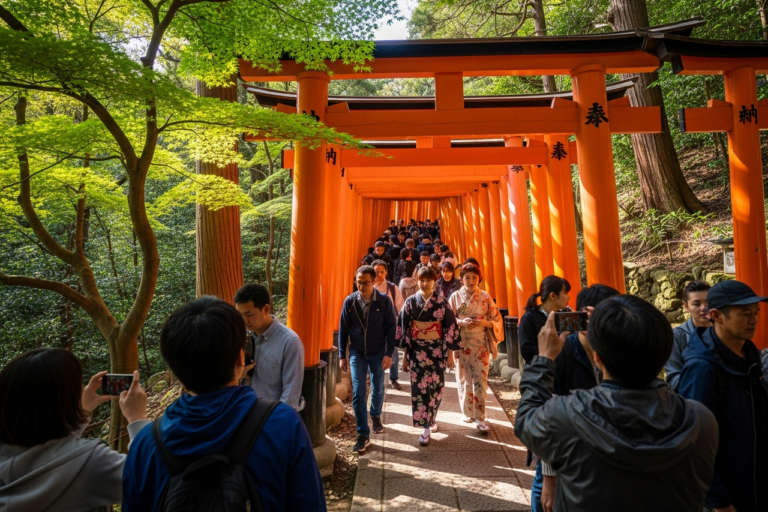
You will see Shinto practices in many parts of Japanese culture. People go to Shinto shrines to pray for good fortune. They head there to welcome a new baby or to have a wedding. Each shrine is for a certain kami, not for remembering ancestors. People go to other places to visit ancestral graves, so shinto shrines stand out as a big part of the local community.
Buddhism – Beliefs and Everyday Practices
Buddhism came to Japan in the sixth century from the Asian mainland through Korea and China. It quickly became part of life in Japan along with Shinto, and now, it is one of the main religions in the country. Over time, it changed and became several sects. Each one has its own main ideas and ways of practice.
The most well-known forms are Pure Land Buddhism and Zen Buddhism. Pure Land Buddhism says people can reach salvation by chanting the name of Amida Buddha. This simple way made it very popular with most Japanese people. Zen Buddhism, on the other hand, puts more weight on meditation and self-control as a way to reach enlightenment.
Followers of Buddhism look to their faith for help with the afterlife. Buddhist temples are the places where most funerals are done. Buddhist monks guide these services. This is different from Shinto, which is more about life in this world. Because of that, the two religions live side by side and help fill the spiritual needs of the Japanese people.
Unique Aspects of Japanese Religious Life
One of the main things that stands out about religion in Japan is syncretism. Many people talk about the syncretism of Shinto and Buddhist beliefs. Many in the Japanese population take part in shinto practices at events like weddings. Later, they may have a Buddhist funeral. There is usually no issue in doing both. This shows how two different faiths can come together and mix into the way people live.
Beside these main faiths, Japan also has what are called new religions. These have started in the last one hundred years. They give people different choices when it comes to spiritual life. All of this—a mix of old customs, linked beliefs, and these new religions—creates something special for Japan when you look at its religious rituals. We will look at how Shinto and Buddhism work side by side, and where these other beliefs fit as well.
Coexistence of Shinto and Buddhism
The syncretism of Shinto and Buddhism is so smooth in Japan that it’s often hard to see where one stops and the other starts. These two ways of thinking have shaped each other for a long time. Together, they form a special blend that many people feel is a big part of their culture. People do not have to pick just one. They take part in both at the same time. This balance is a key part of Japanese spirituality.
You can find buddhist temples and shinto shrines close to one another, sometimes in the same area. This says a lot about how tightly they are tied together. Someone may go to a shrine to pray for doing well in school and then later stop at a temple to show respect for loved ones who passed away. The way people use both gives them a chance to be part of the things that matter most to them at that time.
Here’s how these often work side by side:
-
Life Events: Shinto rituals are used to mark birth and marriage.
-
Afterlife: Buddhist ceremonies look after funerals and memorials.
-
Focus: Shinto is about being pure and life now.
-
Spirituality: Buddhism is more about what happens to the soul after we die.
The Role of New Religions and Minority Faiths
While Shinto and Buddhism are dominant, Japan’s religious landscape also includes various other faiths. After World War II, a number of “new religions” (shin shukyo) gained prominence. These movements often blend elements of traditional beliefs with new philosophies, promising good health, fortune, and happiness to their followers. Some, like Soka Gakkai, have grown into significant international organizations with political influence.
Minority faiths such as Christianity, Islam, and Judaism also have a presence in Japan. For instance, the Jewish community of Kansai in Kobe is one of several small but established Jewish communities. Influences from belief systems like Chinese Taoism can also be seen in Japanese superstitions and fortune-telling practices.
Japan’s constitution guarantees full religious freedom, allowing these diverse groups to practice without state interference. This has created a dynamic environment where traditional ways coexist with modern spiritual movements and global faiths.
|
Religion/Faith |
Presence in Japan |
|---|---|
|
Christianity |
A minority faith with a long history since the 16th century. |
|
Islam |
A growing community, with about 80 mosques nationwide. |
|
Judaism |
Small communities exist, such as in Tokyo and Kobe. |
|
Soka Gakkai |
A prominent “new religion” with a focus on peace. |
Religion’s Place in Modern Japanese Society
In modern times, religion has a special place in Japanese society. Many Japanese people do not call themselves religious in a very strong way. Even so, religious activity is part of everyday life and the culture. For the number of Japanese, religion is about tradition, spending time with family, and being part of a community. It helps form the backdrop for big events during the year and life changes.
This can look confusing, but it makes sense in the Japanese context. For a lot of Japanese people, being spiritual is private. It is something people do with their family and not something shared much with others in daily life. Now, let’s see how what people say they believe can be different from what they really do.
Religious Affiliation vs. Practice
In Japan, many people say they are not part of a religion. But when you look at what they do, the story is a bit different. For example, people visit shrines at New Year’s, buy good luck charms, or go to Buddhist funerals for family members. This shows that what people do can tell you more about religious practice than what they say.
The number of followers a religious organization reports might not show the real picture. Sometimes, the number of Shinto and Buddhist followers together looks higher than the total population of Japan. That happens because being part of Buddhism or Shinto is easy and people can belong to both. Some families register at a Buddhist temple because of family tradition, but they do not always go or take part in daily worship.
In the end, religious practice in Japan is often about joining in cultural rituals, not about saying what you believe. It is more about keeping old ways, feeling part of a group, and being with others at important moments in life. People in Japan focus more on what they do, not just what they say or believe.
Religion in Japanese Daily Life and Family Events
Religion is a big part of life in Japan, mostly when families go through big moments. On normal days, most people do not take part in religious worship. But there are special times, like when a person is born or dies, where the family will have religious ceremonies. These moments give family members a feeling of structure. They help them find meaning, and also feel close to the community and their ancestors.
A good example is when a baby is born. The new parents take their child to a Shinto shrine. The baby gets a blessing there. Weddings are also interesting in Japan. Many couples choose to have a Shinto religious ceremony. They often follow it with a “white wedding” that is Western in style. They do both on the same day. This shows how people can mix different traditions to make a special day their own.
Funerals are usually handled by Buddhist priests. During these events, the family members gather together. They hold a Buddhist ceremony for the person who has died. The person’s ashes go under a gravestone in the family plot, which is often in a Buddhist temple. This shows that Shinto helps for some moments, and Buddhism helps for others in Japanese family life.
-
Births: On the birth of a child, the family brings the baby to a Shinto shrine to have their first blessing.
-
Weddings: A lot of couples say “I do” in a Shinto ceremony and might also have a Western-style party
Religious Festivals and Ceremonies in Japan
Japan has many festivals called matsuri. Most of these have strong links to religion. These events are bright and full of colour. They are a great way for you to see Japanese culture up close. Every year, there are thousands of local festivals and annual festivals. They take place at Shinto shrines and Buddhist temples all over the country. People enjoy parades, music, and lots of food at these events.
Religious ceremonies here are not quiet or sad. They are happy and full of life. These moments bring the community together. These events help people feel close to their local traditions. They also give people a way to show respect for the kami or Buddhist figures found at the local shrine or temple. Now, let’s look deeper at the meaning of these colourful festivals and what they give to the people who join in.
Meaning and Importance of Annual Festivals
Annual festivals are a big part of life in local communities around Japan. Many of these festivals started a long time ago. They are often based in old religious rituals. Some of these include praying for a good rice crop or for the good of everyone in the community. These kinds of local festivals help people feel like they belong.
The New Year is one of the most important festival times in Japan. From January 1st to the 3rd, you will see many people going to shrines for their first visit of the year, called hatsumode. They pray for good fortune and hope to have a great year. Another important festival is O-Bon in August. During this Buddhist festival, people honour their ancestors who are thought to come back to see their families.
These local festivals are not just about religious rituals or beliefs. They mark different seasons and give people a good reason to get together. Families and people in the neighbourhood come out, spend time together, and carry on the old traditions that matter to them. This helps keep the spirit of local communities alive.
-
New Year (Shogatsu): This is when people visit shrines and pray for good fortune.
-
O-Bon: This is a Buddhist festival where people welcome the spirits of their ancestors.
-
Local Matsuri: These shrine festivals often have parades that include portable shrines called mikoshi.
-
Seasonal Festivals: People take part in events like cherry blossom viewing, which started with Sh
Conclusion
In the end, knowing more about religion in Japan lets you better understand its culture and its ways. Shinto and Buddhism live together and blend in a way that is special. People in Japan also care a lot about yearly events, and these beliefs show in daily life and family times. If you are from Canada, showing respect for Japanese beliefs can help bring people closer and make it easier to connect. No matter if you visit Japan or learn about it from Canada, you can have a richer time by learning about these ways. This also helps you see things in new ways. If you want to know more, there are people you can talk to who can give you more ideas on how these beliefs matter in life in Japan.
Frequently Asked Questions
How is freedom of religion protected in Japan?
Freedom of religion is given to everyone under Article 20 of the Japanese constitution. This means that each religious organization can work on its own. The state does not mix with how these groups run their work. Because of this, people in Japanese society can believe in, or follow, many kinds of religion. You will see that in Japan, people mix old and new religions in their daily life.
Do most Japanese people consider themselves religious?
Most Japanese people take part in religious customs and ways, but many do not call themselves “religious.” When someone asks about their religion, a good number of Japanese people will say they are not religious. Still, they often go to shrines and temples for special times of the year and big moments in life.
Are there religious practices unique to Japan?
Yes, that is true. The syncretism of Shinto and Buddhism is something you only see in Japan. Many people visit Shinto shrines for births or weddings. They often have funerals at Buddhist temples. The religious rituals linked to Shinto, which is the indigenous religion of Japan, are not seen in any other country.