Key Highlights
-
Colombia is mostly Christian. The catholic church is the main religious affiliation, but there are now fewer followers than before.
-
Protestant churches, like Evangelical and Pentecostal ones, have grown a lot in the last few years.
-
There is religious freedom in Colombia. People can choose their religion, and now there are more different faiths and religious minorities.
-
Religion has a big impact on daily life. It can be seen in the things people say, what they do in their lives, and in colourful festivals in major cities and in rural areas.
-
Even though Catholicism is still on top, some younger people are choosing other paths when it comes to religious affiliation and how they practise.
Introduction
Are you planning a trip to Colombia, or are you simply interested in learning about its bright and lively culture? If you look at the role of religion in Colombia from a Canadian point of view, you can get a real good sense of what makes the people and the country tick. In Canada, there are people from many backgrounds and there are many faiths, as well as some who do not follow a faith at all. The story of religion in Colombia is different. There, the roman catholic church has touched much of life and history. The influence of the catholic church can be seen in many places, from the way people celebrate holidays to the way they go about their daily lives.
With this guide, you will see the many beliefs and deep traditions held by the people in Colombia. You will also find the country has other types of faith and spiritual thoughts mixed in with the main roman catholic beliefs. Learning about this can help you get closer to what makes Colombia special and better understand what people value most. It is a good way to see the rich blend of ideas, and it will help you enjoy all that Colombia has to offer.
Overview of Religion in Colombia
Colombia does not have an official state religion. But faith is still very important to the people who live there. Most people in Colombia say they are Christian. Roman Catholicism is the most common religious affiliation in the country. There are many religious organizations, and they all help add to Colombia’s spiritual life.
The religious landscape is starting to shift. Many people still keep to traditional religious beliefs, but things are changing. There are fewer Catholics than before. At the same time, more people are going to Protestant churches. This shows that Colombia is going through a time of change in what people believe.
Now, let’s check out the history and importance of these religious beliefs today.
Brief History of Religion in Colombia
The story of faith in Colombia goes way back to when it was a colony. The Spanish brought the Catholic Church with them in the 1500s. It soon became the main faith and also the official one in the country. For a long time, the Roman Catholic Church had a big role in laws, politics, and everyday life.
Because of this, people mostly learned about religion in Catholic ways for a long time. The Church was the group that started many schools and universities in Colombia. Many people got their learning and their way of thinking from these schools.
Even though Colombia now has religious freedom thanks to the 1991 Constitution, the catholic church and its history still matter a lot in Colombia. The Roman Catholic Church helped shape how people live even now when it comes to the mix of different faiths.
Current Importance of Religion in Colombian Society
Today, religion is still very important in Colombian life. It shapes the way people talk and what they do for big events. You might hear people say “Si Dios quiere,” which means “God willing,” in normal talks. This shows that faith is a big part of how they see the world. Going to religious services, mainly on Sundays, is something many families do often.
Religious traditions are there for big moments like baptism, first communion, marriage, and last rites. These religious activities are not just about one person. They bring people together and help remind them of the values they share.
For many people in Colombia, faith is like a moral guide and gives them comfort. When things happen, they often say it is “porque Dios quiere”—or because God wants it—so they can make sense of both the good and the bad times.
Religious Demography – By the Numbers
When you look at the numbers, you see that most people in Colombia are part of the Catholic Church. This is clear in the 2023 poll, which shows a big part of the population has this religious affiliation. There are also many people in Protestant churches. This is the second-biggest group, and it keeps growing.
Besides these larger groups, there are many other religious denominations in Colombia. You will find some smaller Christian groups as well as faiths that are not Christian. More people now say they do not have any religious affiliation, too. This mix tells us that beliefs in the country are changing.
Let’s look at the numbers more closely.
Catholic Population and Regional Variation
The Catholic Church has historically been the cornerstone of religious life in Colombia. As of 2023, around 50% of the population identifies as Catholic. This figure, while still a majority, represents a decline from previous decades when the number was closer to 80-90%.
Regional differences in religious affiliation are noticeable. Catholicism tends to be more deeply entrenched in certain rural areas and traditional communities, while major cities often exhibit greater religious diversity. The Caribbean coast, for instance, has its own unique blend of religious expressions.
Here’s a look at the religious breakdown from a 2023 survey:
|
Religious Affiliation |
Share of Respondents |
|---|---|
|
Catholic |
50.4% |
|
Evangelical |
19.5% |
|
No Religion |
14.5% |
|
Other |
15.6% |
Protestant Churches and Growth Statistics
One of the biggest things happening in Colombia when it comes to religion is the fast growth of Protestant churches. The group includes many kinds of churches, but evangelical Christian churches, like the Church of God and Pentecostal groups, are the ones getting most people to join.
The numbers really stand out. In the mid-1990s, only a few people in Colombia said they were part of an evangelical church. By 2023, close to 20% of people in the country said this. This big jump shows there is now a whole new way people see their religion all over Colombia. It has happened in just a few years.
This rise is usually because these churches give people a strong sense of community, let people share their own stories, and also help build close ties between people. You will see this works well in both cities and out in the country. Many people who are now Protestant came from a Catholic background before they made the switch.
Other Christian Communities (Orthodox, Anglican, etc.)
While Catholicism and Protestantism are the biggest Christian faiths in Colombia, there are other Christian religious groups as well. These smaller groups help make the country’s religion more diverse. For example, the Orthodox Church and the Anglican Church are found in Colombia. They often serve special groups like people who come from other countries or who are part of an ethnic community.
The Church of Jesus Christ of Latter-day Saints, which many people call the Mormons, is also in Colombia. This community has been there for years. They have their own places for worship and their group keeps getting bigger.
Groups such as Jehovah’s Witnesses are easy to see because of their work with people in public and their help in the community. All these smaller Christian groups add to the spiritual life of Colombia. They operate freely because the country supports religious freedom for everyone.
Non-Christian Faiths and Minority Groups
Besides Christianity, there are other faith groups in Colombia. The Jewish community, while not large, has been in the country for a long time. There are synagogues and community centres, mostly in major cities like Bogotá and Cali.
Islam is found in Colombia too. Mosques and Muslim groups are in bigger cities. These groups include both people who moved from other countries where Islam is common and Colombian people who have joined the faith. This shows how global Islam is.
Indigenous and Afro-Colombian spiritual traditions are also important, especially in some regions. These beliefs often mix older customs and may include elements of African animism or Indigenous ways of seeing the world. They are a big part of Colombia’s culture and spiritual life.
The Roman Catholic Church in Colombia
The Roman Catholic Church is very important in Colombia’s history and culture. Even though the country’s ideas about religion are changing now, the church still has a big effect on the way people live. Things like national holidays and family values often follow the Catholic calendar and its older ways.
The Catholic Church is also a part of many parts of life, like religious education. This has been a part of the way people learn and think in Colombia for many years. Knowing about the catholic church helps you know more about Colombia.
Let’s look at the church’s history in the country, what it believes, and the big sites you can find there.
Catholicism’s Historical Influence
The history of Roman Catholicism in Colombia is very strong. It goes all the way back to the time when the Spanish came in the 16th century. The Spanish brought their faith with them. Soon after, it was the only religion people could follow. The Catholic Church became a big part of how things worked in the colonies.
For many years, the church played a key role in politics, in daily life, and in what people believed. It helped start the first schools. The church was in charge of religious education, which shaped what people thought and did, including leaders and regular people.
This strong link is still there. Even after Colombia said the church and the government must be separate, the catholic church kept shaping daily life, its rules, and what makes Colombia the country it is.
Core Beliefs and Popular Practices
The main religious beliefs of Colombian Catholics are the same as those of the universal Catholic Church. A key part of this is faith in God as the Holy Trinity, that is, the Father, the Son, and the Holy Spirit. Many people see life through their faith, and they believe events happen because of God’s will.
Popular practices are mixed into the way people live every day. The sacraments, for example, are big events in a person’s or family’s life. These acts are not only duties but also happy moments.
Some of the top rites of passage are:
-
Baptism: This is the first step into the catholic church. In fact, Colombia is known for having one of the world’s highest baptism rates.
-
First Communion and Confirmation: These two are important for young people in the catholic church. Families mark them with big celebrations.
-
Marriage: This is a special bond that is honoured in church.
-
Extreme Unction (Last Rites): This is given to give peace and comfort to someone at the end of life.
These religious beliefs shape how people see their lives and the world around them.
Major Catholic Sites and Pilgrimage Destinations
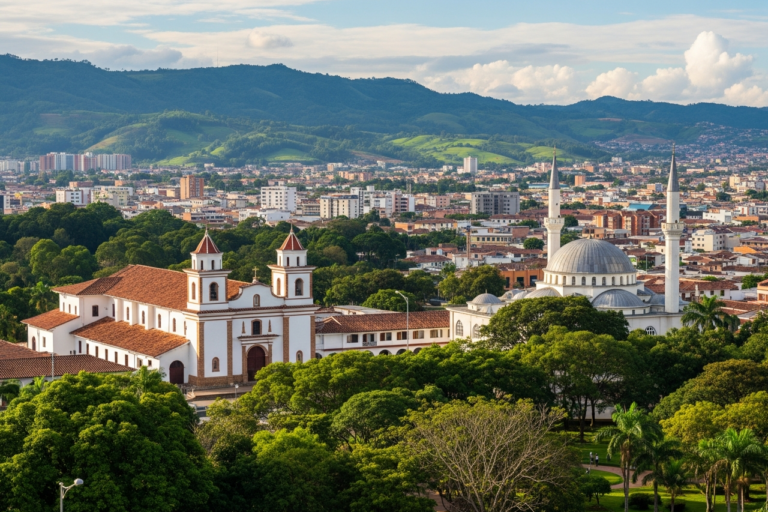
Colombia has many religious sites that bring both local people who worship and visitors from other countries. Many people take trips here because of their faith. These special places show the strong catholic church history in the country. You can find them in major cities and in remote rural areas too.
When you travel to these sites, you get to see the real spirit of colombia. There is old roman catholic church art and beautiful buildings. Many people say you can feel the deep faith in these spaces. For lots of people who believe, going on a trip to one of these places is one of the biggest things in their lives.
Some of the most famous places to visit are:
-
The Salt Cathedral of Zipaquirá: This is an amazing roman catholic church built underground in an old salt mine.
-
Las Lajas Sanctuary: Here you can see a large church placed inside a deep canyon in the south region. Many people make a special trip to see it.
-
Monserrate: This church sits high on a mountain near Bogotá. People go up by cable car or walk the path like a pilgrim.
-
The historic churches of Popayán: This place is well-known for its beautiful old white churches and huge marches during Holy Week.
People who visit any of these historical or deeply loved sights can see the catholic church’s history up close. Many take a moment to think deeply, connect with their faith, and enjoy the art and peace of these holy spaces, whether
Protestant and Evangelical Movements
While Catholicism has been in Colombia for a long time, the story of faith in the country has changed a lot. This change comes mostly from the growth of Protestant and Evangelical groups. These groups, especially the ones linked to Pentecostalism, have seen fast growth in the last few decades.
This rise has changed many communities. It has brought in new ways to worship and connect with others. The increase of evangelical christian churches is a big change in Colombia’s recent history. It now challenges old beliefs that were once common.
Let’s look at how this movement began and the places in the country where it is most common.
Timeline of Protestant Arrival
The first Protestant churches came to Colombia much later than Catholic ones. The early Protestant religious denominations arrived in the 1800s. Their numbers stayed very small for over 100 years. The first foreign missionaries had a hard time in a country where most people were Catholic.
Things started to change in the middle of the 1900s. More North American missionaries came. Local groups began to form as well. Still, their numbers did not get big for many years.
The biggest change happened at the end of the 1900s. The country saw a lot of social change and more religious freedom after the 1991 Constitution. New ways to worship also began. These things helped Protestant churches grow faster and changed the movement into what you see today.
Pentecostalism and Evangelicalism’s Rise
The biggest story in Colombian Protestantism is how Pentecostalism and Evangelicalism have grown. These groups used to be small, but now they make up a large part of the people in the country. In just a few years, more people have joined these movements. For example, the number of Evangelicals has risen almost five times since the 1990s.
There are a few reasons for this growth. Evangelical Christian churches focus on having a personal link with God. Their services are lively and full of strong feelings. They also build close groups that support each other, especially in poor or edge places.
Pentecostalism, with its ideas about special spiritual gifts and help from God, has grown well here. People like the message of hope and change. This is very true in a country with real social and money troubles. Because of that, these movements keep getting bigger.
Regional Hotspots for Protestantism
Protestantism has grown in different parts of Colombia. There are some places where it is very strong. You can see many Protestant communities in major cities like Bogotá, Medellín, and Cali. Social and cultural changes in these cities have made people more open to new choices when it comes to faith.
There has also been growth in Protestantism in some rural areas and along the country’s borders. The Pacific coast, which has a big Afro-Colombian population, is now known for having many types of Protestant churches. These churches do not only focus on faith. They also give social help and build a strong bond between people. In this way, these churches give what other groups may not give.
Protestantism is reaching out to both city life and the countryside. This shows that the movement can change to suit where people live. In busy spots in the city or far-away villages, Protestant communities now have a big effect on how people spend their time and feel about the world around them.
Religious Minorities and Diversity
Colombia’s story of faith is not just about Christianity. There is a mix of religious minorities in the country. This is creating the growing religious diversity you see in the culture. People from the jewish community and followers of Islam now have their own places to worship. They also make spaces for their own community life.
There are also older traditions in the country. You can find Afro-Colombian spiritual traditions and Indigenous belief systems. These are a big and old part of life in Colombia. All of these faiths together show that the country is becoming open to more ways of life. It is now showing a strong multicultural identity.
When you look into these smaller groups, you see a new side to Colombia’s spiritual life. It shows that there is more to discover in the faiths people bring in and keep alive.
Judaism and the Jewish Community
The Jewish community in Colombia is one of the smaller groups in the country, but it has been there for hundreds of years. Many of the first Jews came from Spain and Portugal during the time when Colombia was still a colony. These early members had to keep their faith secret because they were afraid of being punished.
Now, most of Colombia’s Jewish community lives in major cities like Bogotá, Cali, and Barranquilla. In these cities, there are synagogues, community centres, and Jewish schools. These places are very important in Jewish life because the Jewish community uses them to worship, connect, and learn about their culture.
Many religious organizations also help the Jewish community. They work hard to keep old customs and beliefs alive. The community may not be very big, but it is well-organized. The Jewish community is an important part of Colombia’s multicultural life. They have helped make Colombia’s business and culture better in many ways.
Islam and Muslim Organizations
Islam is one of the smaller religious groups found in Colombia. The number of Muslims is growing and there are people from different backgrounds in the group. Many of them came from the Middle East or other countries. Also, there are a good number of Colombian people who have become Muslim.
There are Muslim organizations in the bigger cities like Bogotá, Maicao, and Barranquilla. These groups help the community and run mosques. At these mosques, people come together to pray, listen to talks on Fridays, and take part in community events. The groups also work hard to give religious education.
These Muslim groups teach new members about the main ideas of Islam. They run classes where people can learn the Quran and the Arabic language. Because of these programs, the Muslim community is making its own strong identity. At the same time, the group is finding ways to fit into the larger culture of the country.
Indigenous and Afro-Colombian Spiritual Traditions
Beyond the Abrahamic faiths, Colombia has a lot of Indigenous and Afro-Colombian spiritual traditions. These ways of believing are very close to the land and the wisdom from those who lived before us. They are also some of the oldest kinds of spirituality in that region. Different Indigenous groups have their own beliefs, each having unique ideas about the world and how people should connect to it. They also have their own rituals.
Afro-Colombian spiritual traditions are very strong in the communities you find along the Pacific and Caribbean coasts. In these places, people often mix beliefs from Catholicism with elements of African animism. This mixing brings about special forms of culture. It is common for saints, for example, to be linked with African gods, and the people bring together old healing practices with prayer.
These spiritual traditions tend to stand out most in rural areas. In these parts of Colombia, people have kept close to the roots of their culture. These beliefs are a very important part of the country’s cultural diversity and its deep spiritual background. Still, over time, these ways of believing have often been set aside or not understood by others.
Other Religions and Secularism in Colombia
Colombia’s freedom of religion has made it possible for many religious groups to live in the country. Now, there are Buddhists, Hindus, and people who follow new age spiritualities. Even though these groups are small, they help to increase the country’s mix of beliefs.
At the same time, there is a clear move toward secularism. Based on a survey from 2023, more than 14% of people in Colombia say they have no religious affiliation. This includes atheists, agnostics, and those with no religion at all. It is easy to see this group among younger and city people. It matches the global pattern of more people moving away from religion.
More people who are not part of a religion and the bigger number of different religious groups are changing how people in Colombia talk about society. There is no longer just one main belief. Now, the country is much more varied. Many kinds of worldviews shape the talk about values, identity, and the way society works.
Religion and Colombian Culture
In Colombia, the culture and religion are close and mix in many ways. People do not just go to church for faith. You can see their religious beliefs come out into the streets during colourful festivals. It also grows in the music people love, shows in art, and helps build the heart of family life. There is the touch of religion in all parts of their daily lives.
From big country festivals to simple family dinners, religious beliefs help give Colombia the special feel it has. If you want to see how amazing the culture is, you have to see how these beliefs flow in every part of life.
Let’s see how faith shows up at festivals, through art, and in the lives of everyday people.
Religious Celebrations and Festivals Unique to Colombia
Colombia is well-known for the way it mixes big religious festivals with strong local traditions. At these events, people join in both serious religious moments and joyful cultural acts. These religious celebrations stand out as big days on the social calendar, bringing together large crowds in both major cities and small towns. Each area has its own way of celebrating, which makes these events special to the people there.
The events are about much more than just religion. They show off community pride, the local history, and the art of the area. There is a lot of music, walking in big groups, and old-style costumes seen. Both people who live in Colombia and people who visit from other places find these festivals memorable.
A few of Colombia’s best-known religious holidays are:
-
Holy Week (Semana Santa) in Popayán: This event is on the list with UNESCO. At night, there are serious and beautiful processions.
-
The Carnival of Blacks and Whites in Pasto: This celebration is different. It brings together Indigenous and Spanish traditions along with religious points.
-
Festival of the Flowers in Medellín: This is not a holiday from church, but it has some faith mixed in. Parades include “silleteros” who carry big displays made of flowers, many have religious shapes or signs.
-
Day of the Candles (Día de las Velitas): On December 7th, families start the Christmas season. They light many candles outside their manys.
How Religion Shapes Music, Art, and Food
The effect of religion on Colombian culture is strong and goes into every creative area. You can see it in music, art, and even food. For centuries, art in the country was all about religion. Many old churches are full of art showing stories from the Bible and saints. Today, many artists still get ideas from these old works.
When it comes to music, you will find that music styles like vallenato and cumbia sometimes use faith or stories from the Bible in their words. Gospel music is getting more well-known because more people are joining Protestant churches. This has brought a fresh sound into the country’s music scene.
Religion is also important in food traditions. People make special foods for holidays like Christmas and Easter. The Catholic habit of not eating meat on Fridays during Lent means many families eat more fish and veggies at that time. This has also changed local dishes, with more fish and vegetable meals being served.
Intersection of Faith with Family and Community Life
In Colombia, faith is something people share with their families and the people around them. Religious beliefs help set common values that make family life and social bonds strong. Many events, like baptisms, weddings, and funerals, are important religious activities. These big moments bring not just families, but also many community members together.
The church, whether it is Catholic or Protestant, is often at the heart of life in the community. People do not just go there on Sundays. It is where folks meet, share meals, help with charity work, and support one another. Many people feel the church is almost like a second family to them.
Because people live their faith together, religious values get passed down from parents to their kids. It changes how children grow up and how neighbours act toward each other. Focusing on community helps everyone feel like they belong, and that keeps people close in neighbourhoods all over the country.
Religious Freedom, Law, and Politics
The way religion, law, and politics work together in Colombia can be hard to understand. The country’s constitution gives every person religious freedom. This was a big change from the past, when Colombia was an officially Catholic country. Because of this law, each person has the right to pick, follow, or change their religion.
But, the Catholic Church was part of the country for a long time. You can still see this in the way church and government are connected, and in talks about public policy. It is not easy for a secular state to work side by side with people who are so connected to religion. This leads to debates and new questions.
Now, let’s look at the laws that protect people’s beliefs, how the church and government work together, and what people are talking about today.
Constitution and Legal Framework Supporting Religious Freedom
The Colombian Constitution of 1991 is at the heart of religious freedom in the country. Article 19 says that every person in Colombia has the right to freedom of worship. People can freely practise and share their religion, whether on their own or with others. This was a big change for the country. In the past, only Catholicism had a special place.
Now, the law makes sure that Colombia is a secular state. This means the state does not favour any religion. It also matches international religious freedom standards. All religious groups and people have the same rights and protection by the law.
Religious organizations can work officially if they register with the Ministry of Interior. This process gives them a legal identity in Colombia. The law protects both old religious churches and new religious groups. This helps create an environment that welcomes religious pluralism and freedom of worship.
Church-State Relations in Practice
In Colombia, keeping church-state relations steady is not easy. The state is meant to be neutral, but the Catholic Church has deep roots in the country. That gives the Catholic Church a kind of power that other religious groups do not get. You can see this show up in daily life and when people talk about politics.
The Ministry of Interior is the one that looks after how the state deals with all religious groups. For any religious group to get legal status, they need to send in basic organizational information. They also have to name a legal representative of the religious group. The Constitutional Court is there to make decisions when there is a big question about religious freedom or if something pushes the limits.
Leaders of many religious groups talk with the government on public policy issues. This shows how important faith leaders are for people and communities. But it also sparks debate. Many ask how far the separation should go between church and state.
Modern Challenges and Debates on Religion and Policy
Modern Colombia has some big issues where religion and public policy come together. There are a lot of talks around LGBTQ+ rights, abortion, and euthanasia. These topics often put religious groups with conservative ideas against people who are more liberal or do not want religion in laws. You can see the debates happen in the courts, in rules made by leaders, and on social media.
People also talk a lot about religious education in public schools. The rules allow it, but there is good talk about how it should look or if it should even be a rule for every student. There is more to say about the political rights of religious leaders. They want to have a say or take part in how laws are made.
In some far-off places, religious leaders and the people there have had threats from illegal armed groups. That shows there are tough security issues that can make it harder for people to practice their faith and feel safe. Because of these things, you can see the way faith, public policy, and the country move and change over time.
Religion Among Younger Colombians
The future of religion in Colombia is changing because of its young people. The way they think about faith is not the same as how their parents and grandparents did. Many of them still have a religion, but they see it as something personal and not just about big church groups.
Social media and the wider world have let youth see more ideas. The things they see and hear shape how they think about religious affiliation, spirituality, and right or wrong. To know where faith in Colombia will go, we need to look at these changes.
Now, let’s look at how young people are talking about and living their religion today.
Trends in Religious Affiliation for Youth
Among young people in Colombia, religious affiliation is changing. A lot of them still grow up in the Catholic church, but they do not always stay with it. Young people are more open now to become Protestant. Some have no religious connection at all, and others are looking for new spiritual paths.
You can see these changes when you look at how they go to religious services. Some are very active in lively evangelical churches. Many young Catholics, though, say they are “not very observant.” They only go to church when there is a big holiday or their family asks them to come.
School and meeting new ideas matter, too. As young people go for more education and learn about many ways of life, they start to ask questions about old beliefs. They often want to make their own spiritual path. For some, this may be with a church or group, but for others, it is not.
Generational Attitudes Towards Faith and Secularism
There is now a clear gap between young and old people when it comes to thinking about faith and secularism. Younger Colombians are more open to different religions. They also have more friends from other faiths. Many of them can set their cultural identity apart from religious rules much more than older people did.
You can see the rise of secularism most with the young. A big group of people under 30 say they have “no religion.” Some still believe in a higher power, but they do not trust organized religion and what it tries to do in society or politics.
Social media is a big space for these talks. Young Colombians use it to talk about faith, right and wrong, and big social topics. This digital talk is making a whole new set of attitudes for this generation. They look more to their own way of thinking and are less likely to follow what tradition or religious leaders say.
Youth Participation in Religious Activities
When it comes to youth taking part in religious activities, things look both good and bad. A lot of young people are not joining in on the usual long services that are full of rituals. Still, this does not mean they are not interested in finding out more about the spiritual side of life. The truth is, many of them want to be with religious groups that give them lively worship, chances to help the community, and fun social gatherings.
Evangelical and Pentecostal churches do well at getting young people to come. They use modern music, make sure the sermons talk about real-life problems, and have a close-knit community life. These churches give young people more to do than just Sunday service. There are camps, concerts, and small group meets that let people be a part of something exciting and welcoming.
Inside the Catholic Church too, groups that spend time reaching out to the youth and helping people in need see more young faces show up. For many young Colombians, what makes religion stand out is that it helps people find meaning. It gives them people to belong with, and it lets them help others. This is what really brings youth into the catholic church and other religious groups.
Conclusion
In the end, when you get to know the many religions in Colombia, you learn a lot about the country’s way of life and people. Catholicism has old roots here, while new Protestant groups are growing fast. Each group helps make Colombia’s identity rich and full. Religion is part of daily life. It shapes traditions, art, and the things people do with others.
If you are a Canadian visiting Colombia, you will see that joining local religious events and festivals will help you feel closer to the culture. You might enjoy taking part in loud and joyful celebrations, or you might like the quiet and calm moments of spiritual customs. No matter what you like, Colombia has something for you. If you want to feel more sure about taking part in these things, you can ask for a free consultation. This will help you find the best way to explore Colombia’s religious side.
Frequently Asked Questions
What are the main religions in Colombia?
The main religion in Colombia is Christianity. The Catholic Church is the largest group, but its hold is getting weaker. Many people in Colombia have this religious affiliation. Protestant churches, like Evangelical groups, are the second biggest group. They are growing fast. You can also find smaller groups like Jews and Muslims. People who follow Indigenous traditions live in the country, too, and most of them stay in major cities.
Is it safe for Canadians to participate in religious festivals in Colombia?
Yes, it is safe for Canadians to join in religious festivals in Colombia, most of the time, especially in major cities. These events are open to the public and welcome everyone. You should always stay aware when you are in a big group. Still, these festivals show off the culture, and both tourists and local people like to take part.
How do Colombians typically celebrate major religious holidays?
Colombians come together for big religious holidays, mixing faith and fun. The catholic church plays a key role, and people go to special religious services. Family is important at these times, so relatives meet for good meals. Some family traditions, like lighting candles for Día de las Velitas, are enjoyed by all.