Key Highlights
-
Australia does not have an official religion. This shows the country values religious diversity and freedom.
-
The Australian Bureau of Statistics Census says that Christianity is the most common religion. Still, the number of people who follow it is going down.
-
More people now say they have no religion. This shows there is a change in spiritual beliefs.
-
People moving to Australia has changed the religious scene a lot. Many have brought new faiths like Islam, Buddhism, and Hinduism. These faiths have grown because of this.
-
Indigenous spiritual beliefs are still an important part of Australia’s culture and history.
-
The information from religious affiliation in the census shows the country is always changing and is home to many different people.
Introduction
Are you planning to move to Australia or are you just interested in the country? Knowing how religion fits in australian society can tell you a lot about its people and life there. Australia has people with many different beliefs. Some australians feel that religion is very important in their day to day lives. Others in australia do not follow any religion. This mix of ideas shapes how people live together in the country. It can also be seen in community days and some national holidays. Let’s see how religion is part of life in australia and what it means for people there.
Historical Overview of Religion in Australia
The story of religion in Australia began long before European settlers arrived. Aboriginal traditional religions have a deep history and they have shaped the culture in Australia for thousands of years. When Europeans came, they introduced Christianity. This soon became the main religion in the country.
In the last ten years, religious affiliation in Australia has changed a lot. The Australian government supports freedom of religion. This means people are free to practice many different faiths. Because of this, beliefs in Australia have shifted a lot. Now, many people in the country follow their own faith in their own way, and we will look more at this next.
Indigenous Australian Spirituality and Beliefs
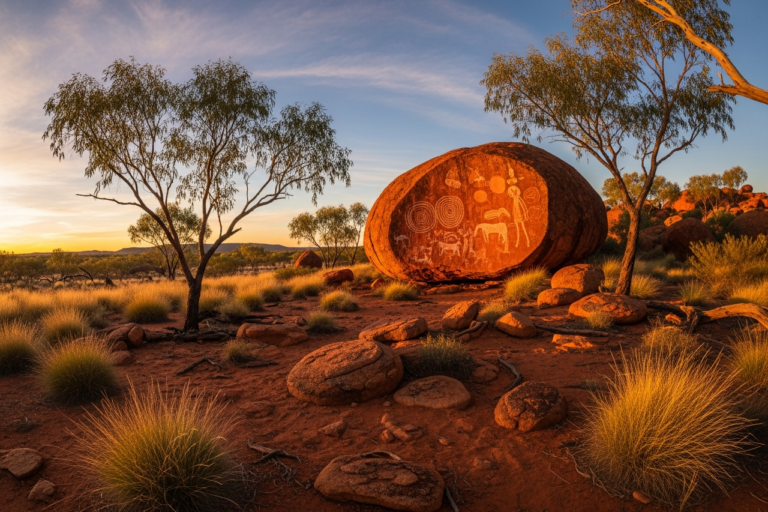
Before there were any churches or temples, the land of Australia was shaped by the deep spiritual beliefs of its First Peoples. Australian Aboriginal traditional religions are closely tied to the land, and stories and ceremonies have been shared over many years. These beliefs are not just old ways from the past. They still play an important role in Indigenous culture today.
Across Australia, from the mainland to the Torres Strait Islands, there is a lot of cultural diversity in spiritual beliefs. The ways that Australians practise worship and connect to the country are very different from group to group. These aboriginal traditional religions do not have set rules like many other faiths. Instead, their spirituality is part of everyday life. It shows up in their law, art, and more.
This way of life stands out as a big difference from some other religions. For Indigenous Australians, spirituality cannot be taken out of daily life. It is part of the land, people, and who they are. The connection is strong, giving many the power to keep going and stand firm.
Impact of European Settlement on Religious Landscape
The arrival of European settlers in the late 1700s changed the way people believed in Australia. Christianity, with the Church of England leading, became the main faith. This shaped how people acted and what they believed.
As years went by, different christian denominations started to grow. The catholic church became big, with many followers. The Anglican Church, and later the Uniting Church, also had important roles. But in the last ten years, the number of people with these religious affiliation has dropped.
Today, you can still see this old influence in Australia. It shows up in things like public holidays, the look of buildings, and how people live. Still, the early power of these christian denominations is not as strong now. The country has new people, backgrounds, and beliefs. Australia has become more multicultural and not tied to religion. This shows a big change in what people believe.
Current Religious Demographics in Australia
To see what religion looks like in Australia now, we can use census data. The Australian Bureau of Statistics gets information on religious affiliation every five years. This gives us a good idea of what the Australian population believes. The last census had some interesting facts about how Australians see their faith.
The data from the bureau of statistics tells us that Australia is changing. The country is becoming more mixed with different beliefs and also more secular. Christianity is still the most common religion, but the number of people following it is going down. At the same time, more people are choosing “no religion.” Next, we will look more at the main religions and how the number of people with no religion in the census is growing.
Major Religions Practised Today
While Australia is increasingly diverse, Christianity remains the most common religion. According to recent census data, just under half of the population identifies as Christian. Within this group, the Catholic Church and the Anglican Church are the largest Christian denominations, though their numbers have been gradually declining.
Following Christianity, other faiths have been growing, largely due to migration. Islam, Buddhism, and Hinduism are now significant religions in Australia. These communities have established vibrant places of worship and cultural centres, adding to the nation’s multicultural character. The primary source for this data is the national census conducted by the Australian Bureau of Statistics.
The 2021 Census provides a clear breakdown of the per cent of the population identifying with each major religion, illustrating the country’s evolving spiritual landscape.
|
Religion |
Per Cent of the Population (2021) |
|---|---|
|
No Religion |
38.9% |
|
Catholic |
20.0% |
|
Anglican |
9.8% |
|
Islam |
3.2% |
|
Hinduism |
2.7% |
|
Buddhism |
2.4% |
|
Uniting Church |
2.7% |
Growth of Irreligion and Non-religious Affiliations
One of the most important trends in Australia right now is that more people are moving away from religion. In the 2021 Census, the proportion of Australians who said they have “no religion” went up a lot. It reached 38.9%. This group includes people with many kinds of secular beliefs such as atheism, agnosticism, and humanism. You can see a steady decline in people who belong to traditional organised religions.
This change is easy to spot among young Australians. There are many young people today who do not want to say they follow any one faith, even if they grew up with religion at home. This shows that people may want their own spiritual path or may want nothing to do with any religious group at all.
Australia’s strong support for freedom of religion also means you can choose to have no religion. This way, people can talk about their secular beliefs. They do not have to be afraid of being treated badly. So, you will find that more people report non-religious choices in the census.
Religious Diversity and Multiculturalism
Australia is a place known for its people from many cultures. There is also a lot of religious diversity across the country. Over the years, people have come to Australia from many areas around the world. This has led to a mix where many faiths now live side by side. The cultural diversity found in Australia, and help from the Department of Home Affairs, affects how people worship and follow their faith.
Many migrants have brought new religions here. They have also helped grow and change the faiths that were already in Australia. You can see the change in the different festivals people now enjoy. There are places of worship for many beliefs. People use many languages in these places as well. Because of the mix of so many people and faiths, Australia’s religious life is lively and always changing.
Influence of Migration on Religious Practices
Migration is the main reason for changes in religion in Australia. When people move, they bring their own religious traditions. They set up new groups that add to spiritual life across the country. We can see the rapid growth of Hinduism, Buddhism, and Islam because of this.
Migrants from India and Sri Lanka have helped the Hindu and Buddhist communities grow. At the same time, people from South Africa have added to Christian and Jewish groups. Many of these communities make cultural and religious centres. These centres be important for daily life. They help people keep their heritage but also fit into Australian society. In New South Wales, a lot of migrants come in, so the diversity there is easy to see.
You can see this influence in many ways:
-
The start of new places of worship, such as temples and mosques.
-
People add new religious festivals and celebrations to the list of national events.
-
Certain types of Christianity—like Eastern Orthodox—grow fast because of migration from Europe and the Middle East.
Regional Differences and Urban vs. Rural Beliefs
Religious beliefs in Australia are not the same everywhere. You can see some clear regional differences. Big cities like Sydney and Melbourne have lots of people from different backgrounds. Many people move there because these places are popular for migrants. So, the cities have a wide mix of religious groups, making a busy and colourful, multicultural religious scene.
When you look at rural or remote places, you find that a bigger part of the population says they are Christian. This comes from how people first settled these areas. Still, even here, times are changing. Some areas, like Western Australia and the Northern Territory, are a bit different. In the Northern Territory, there are more Indigenous people, and many follow their own spiritual beliefs.
Tasmania is another story. It has one of the highest shares of people who say they have no religion. All of this shows that religious affiliation across Australia depends on where you are, local history, and where people come from. This creates a complex and different mix of beliefs, whether you are in the big city or out in the outback.
Religion’s Role in Australian Society
Religion still has a big role in Australian society, even though the country is now more secular. From the days when the Church of England had a strong influence to now, faith has helped shape the way people live and talk with each other. Religious freedom is very important in this mix. It makes sure all beliefs are treated with respect.
Many religious organizations in Australia work with social services, schools, and help groups. They help keep communities strong and close. The mark of religion is also easy to see in things like laws, public holidays, and what people say about what is right and wrong. Next, we will see how these groups help in daily life and how this is seen in laws across the country.
Contribution to Social Cohesion and Community Life
Religion plays a big role in bringing people together in australian society. Many faith groups in australia offer support for people. They run services that help with charity, education, and social events. These groups help new migrants and others feel like they belong. They make bonds stronger between people in the community.
Most australians may not go to church or other services every week. Still, many people in australia value the same things that faiths teach. These values are compassion, charity, and helping others. They help connect people from all walks of life. Faith groups are often the first ones to step up to help people in need. They do this for everyone, no matter where they come from.
Australia stands by religious freedom. This means different groups can be open with what they believe. They can give help and share their ways of looking at life. People from all sorts of backgrounds, including migrants, can bring something special to the community. This makes australian society stronger. People can work together across all beliefs, and this keeps the country united.
Reflection of Religion in Culture, Laws, and Daily Life
Religion has an impact on Australian culture, its laws, and how people live day to day, even if you do not always see it. The Australian government accepts many types of faith. They use the Australian Standard Classification of Religious Groups for collecting data. Events like Christmas and Easter started as Christian holidays but are now seen by many people as cultural days.
Australia does not have an official religion. Its laws are made in a secular system. Still, Christian ideas from the past can be found in some parts of the law. Social issues bring out debates where leaders and groups from different religions speak up. The religion question in the census and surveys like the National Church Life Survey show that people are interested in how faith affects lives.
You can see signs of religion every day with places of worship, schools run by faith groups, and community festivals. Some people use their religion to guide their actions and find purpose. Others feel that not following a religion matters, showing how Australia respects the right to make your own choice.
Conclusion
In short, it’s important for Canadians to know about religion in Australia if you want to get along with people there. Australia has many types of spirituality. The Indigenous people have their beliefs, and new faiths came with Europeans who settled and migrated here. Religion is a big part of how people work together and live in their communities. Many australians today are choosing not to follow any religion, and the country is becoming more multicultural. If you see these things, you will get to know australians better and enjoy your time in australia more. If you want to learn more about spirituality in australia, you can reach out and ask for more information.
Frequently Asked Questions
What percentage of Australians identify as having no religion?
The latest census data from the Australian Bureau of Statistics shows that 38.9% of Australians now say they have “no religion.” This shows a big rise in people who do not follow a faith. There has been a steady decline in people tied to traditional religions. This makes “no religion” the largest group in the country, as the census data from the bureau of statistics points out.
How has religious affiliation changed among younger Australians?
Data from the Australian Bureau of Statistics census shows more young Australians now say they have no religion. Every generation in Australia connects less with religion than the last. This means there is a big change happening in how young people in Australia think about spirituality and being involved in a faith.
How does Australia’s cultural diversity shape local religious practices?
Australia has a wide mix of cultures because people move there from many different places. These new groups bring their own religious traditions with them. They set up new places to worship and hold special festivals. All this makes local religion in australia lively and always changing. Time after time, different faiths live side by side and make the country’s cultural diversity even richer.