Key Highlights
-
Argentina is a country that has a lot of religious diversity. This is mostly because many people came from Europe and settled here.
-
The Catholic Church is the main religious institution in Argentina. Most people in the country are members of the Roman Catholic Church.
-
Lately, there has been strong growth in Evangelical churches, and now these churches are a big part of the country’s religious life.
-
Argentina says yes to religious freedom. People can practise their religion, and different religious communities live together peacefully.
-
There are not only major world religions in Argentina. Some people also follow indigenous beliefs and local folk traditions, showing even more religious diversity.
-
Roman Catholicism is still very important in the country, but many people—especially in cities—now say they are not religious.
Introduction
Welcome to a look at religion in Argentina. This beautiful place in South America is well-known for its culture. The country also has a wide range of beliefs to see. Over time, many people from Spain and Italy came here. Because of this, the religious side of life is now full of colour and style. Roman Catholicism is the main religion in Argentina. But, there are also many other religions and spiritual ways of living that people follow. This guide is here to help you learn about the religious diversity in Argentina. You will see how the most common beliefs, smaller faiths, and different special traditions all come together to shape the country’s spiritual life.
Overview of Religious Diversity in Argentina
Argentina has a mix of many faiths and traditions when it comes to its religious identity. While the country does not have a state religion, most of the total population is part of a religion. Roman Catholicism is the main faith. Some other big religions practiced in Argentina are Evangelical Christianity, Judaism, and Islam. Each group helps shape the country’s rich culture.
Religious diversity is very important in Argentina’s society. There are a lot of religious communities living together, showing how much the country values religious freedom. Over the years, people from different countries have moved to Argentina, bringing their faiths with them. This has led to a blend of beliefs, from popular world religions to the spiritual practices of the country’s native people. The result is a special and lively spiritual scene. Next, we will look at the history behind this diversity and talk about some main numbers related to religious affiliation.
Historical Evolution of Religion in Argentina
The story of religion in Argentina shows a lot of change. At first, the people in Argentina had their own indigenous religions. When the Spanish arrived, they brought the Roman Catholic Church with them. For many years, this church was the main faith in the country. The Catholic Church became a big part of the nation’s culture and daily life because of that early influence.
Later, more people came from Europe. They brought new religions and started to build large groups. Some of these newcomers set up jewish organizations. Over the years, new events changed what people believed in. For example, during the time of the military dictatorship, the way the government and the Roman Catholic Church worked together shifted.
Now, one can see big changes in religious beliefs. One big change is the fast growth of Evangelical Christianity. Many people now join these churches. At the same time, fewer people say they are practicing Catholics. Instead, more people say they have no religion at all. This shows that faith life in Argentina keeps changing and is full of new things.
Key Statistics on Religious Affiliation
When looking at the numbers, Argentina’s religious affiliation profile is quite distinct. Compared to some other Latin American countries, it has a historically larger proportion of its total population identifying as Roman Catholic. However, recent surveys show a significant portion of the population is non-practicing.
The most significant change in recent years has been the growth of Protestant churches, particularly Evangelical ones, which now represent a substantial minority. Argentina also stands out for having the largest Jewish population in South America and a notable Muslim population, adding to its diverse religious makeup.
Here’s a general breakdown of religious affiliation in Argentina, which highlights these trends:
|
Religious Group |
Approximate Percentage of Population |
|---|---|
|
Roman Catholic |
74% (though many are non-practicing) |
|
Protestant/Evangelical |
15% |
|
Jewish Population |
<1% |
|
Muslim Population |
<1% |
|
No Religion/Other |
~10% |
The Central Role of Catholicism in Argentina
The Catholic Church has been very important in Argentina for a long time. Roman Catholicism is the main faith of most people here. It shapes the country’s culture, how people act, and even what happens in politics. The Roman Catholic Church is more than just a church. It is strong and has helped make Argentina what it is today.
You can see this everywhere. It shows in national holidays and family traditions. Many major religious institutions, like schools and charities, are run by the catholic church. We will now look at the ways the church is part of life in Argentina. We will also see how its rituals fit into public life.
The Catholic Church’s Influence on Culture and Society
The Catholic Church has a strong and deep influence on Argentina’s culture. It is the main faith in the country. The teachings and customs from the Roman Catholic Church have shaped how people in Argentina live, how families are set up, and how the community works. The Roman Catholic Apostolic Faith is a big part of the nation’s identity. You can see its touch in art, in books, and also in talk about social and political ideas.
A lot of important religious institutions in Argentina were started by the Catholic Church. Some of these are universities, hospitals, and groups that help people. These religious institutions still work closely with the Church today. They give people important help and make sure there are ways for the community to get involved in religious activities.
Also, the Catholic Church guides people during big talks about what is right or wrong in the country. Those who lead the Church are listened to by many people. People pay attention when they speak about things like family, schools, or fairness for all. Because of this, the Church’s voice matters a lot in what the country thinks and does. The Roman Catholic Church stays important in how Argentina keeps changing and growing as a society.
Catholic Rituals, Festivals, and Public Life
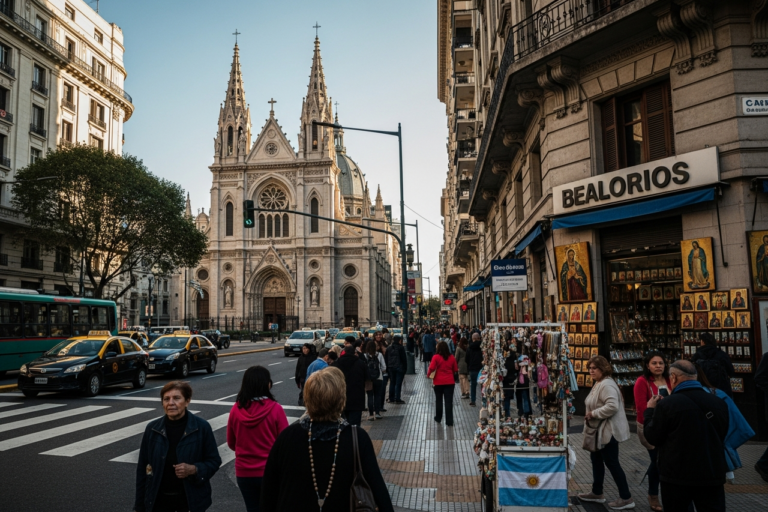
Catholic rituals and festivals play a big part in public life in Argentina. The power of the catholic church stands out the most during important religious holidays. People show a lot of joy and join together to celebrate these days. These events are more than just church dates. They are also times when people come together as a group, offering strong cultural value.
Across the country, some religious activities are very popular. These include processions, pilgrimages, and parties honouring local patron saints. These times mix serious church events with happy get-togethers in the community. There will often be music, food, and old customs on display. The calendar of the catholic church blends with the national schedule well.
Some of the biggest holidays are:
-
Easter (Semana Santa): This is a key holiday. There are church gatherings, time spent with relatives, and many streets come alive with processions in towns and cities.
-
Christmas (Navidad): Families and churches both join in. Homes and places get bright with decorations. Meals bring people together, showing how Christmas is both a religious and social event.
-
Feast of the Immaculate Conception: December 8th is a national holiday. Many go to Mass or join in other religious activities on this day.
You can see how roman catholicism mixes belief with local ways of life in Argentina.
Growth and Influence of Evangelical Christianity
One big recent change in Argentina’s religious scene is how fast evangelical churches are growing. There are now more people going to these churches than before, and they come from many walks of life. This religious group is now an important and active part of life in Argentina.
There are a few reasons for this rise. People are drawn to the focus on personal faith, taking part in the community, and having real spiritual moments. Churches like the Church of Jesus Christ and those in the Christian Alliance now have a strong place in the country. So, let’s see how these evangelical churches are helping local communities. These changes also show the bigger shifts happening with Christianity in Argentina.
Evangelical Churches and Community Impact
Evangelical churches have brought big changes to many places across Argentina. These churches are different from other protestant churches. They often work hard to build close religious communities. People in these groups give each other a lot of social and spiritual support. The message many hear in these churches is that it matters to have a personal connection with Jesus Christ and use faith in everyday life.
These evangelical churches are also busy with community outreach. They offer things that help with what local people need right now. For example, they may run food banks, youth groups, or help families by giving support in tough times. By doing this, they get to know many people who might not feel part of older religious institutions.
You can see how evangelical churches help the community in these main ways:
-
Social Services: They start centres that give help to those in need, support for people fighting addiction, and tutoring or learning help for students.
-
Community Building: Their worship meetings are often lively and very welcoming. This makes people in the religious communities feel like they belong.
-
Youth Engagement: Evangelical churches often bring in young people, with lots of music, fun events, and practical advice for their lives.
These ways show how evangelical churches offer more than mostly spiritual teaching. They help people connect and grow every day.
Trends and Shifts Among Christian Denominations
The rise of Evangelical churches shows a big change in the way people see the christian faith in Argentina. For many years, the Roman Catholic Church was the main spiritual group in the country. Now, with more Evangelical and other protestant churches growing, things have become more open to change. This shows that more of the people are changing how they see and live out faith.
Many now get drawn to Evangelical churches because of the powerful worship and close community. It helps people feel like they belong. At the same time, the catholic church sees fewer people taking part in church life, though a lot still call themselves Catholic. With this change, different religious communities try new ways to reach new followers.
Because of this, relationships between christian groups have changed and now get a bit more complex. There can be some stress at times, but there are also moments where these groups work together on problems that touch all. All in all, the whole scene is more mixed than before. The roman catholic church now is not the only force in the christian world in Argentina, and the many protestant churches are only growing bigger.
Minority Religions in Argentina
Argentina is rich in different cultures, not just because of Christianity. There are many other religions in the country. It has the biggest Jewish population in Latin America. There is also a good-sized Muslim population. Both groups have been in the country for many years. They built strong social and religious organizations for their people.
Every religious group made a special mark in the country. Now, let’s look at two of the most important group in Argentina. Judaism stands out with deep history and a very active community. Islam is also very important and has made its own mark on the culture.
Judaism: History and Present-Day Communities
Judaism has been part of life in Argentina for many years. The country is home to one of the largest Jewish communities outside of Israel. Most of the jewish population in Argentina come from Ashkenazi families. They started coming in the late 1800s and early 1900s. Back then, they made strong jewish communities, mostly in Buenos Aires. They set up the synagogues, schools, and their own cultural places.
Even though jewish communities grew in the country and mixed well with other people, they faced hard times too. There were acts of antisemitic violence, like the AMIA bombing in 1994. After that, jewish organizations spoke up for justice and better safety. As AMIA President Amos Linetzky said, to remember and keep seeking justice is very important for them.
Now, the jewish population stays strong in Argentina’s mix of people and cultures. Groups like the Berman Jewish Databank say the community holds on to its old ways, but also joins in with others in all kinds of work — from art to school life.
Islam and Its Cultural Footprint
Islam has a strong place in Argentina. The muslim population in the country mostly comes from the middle east and the area once ruled by the Ottoman Empire. Their families came to the land many years ago. While this group is not as large as some others, it leaves a clear mark on daily life in argentina. You can see this in the style of buildings, the food, and the community there.
There are several mosques and islamic center buildings that bring people together. One of the largest places is the King Fahd Islamic Cultural Center in buenos aires. This spot is one of the biggest for its kind in latin america. These places of faith are not only for worship. They also help people learn, meet new friends, and keep islamic ways alive. That way, this history is passed to the next group.
Different religious organizations do things to help the muslim population. They also try to make good talks with people from other faiths. Their mark on culture shows up in these ways:
-
Architecture: The Islamic Center of Argentina (CIRA) and other mosques use classic islamic looks in their buildings.
-
Cuisine: Middle east food has become part of popular argentina meals.
-
Cultural Exchange: Islamic organizations join in public events to help all people get along and live in peace with each other in argentina.
Other Global Faiths in Argentina
Argentina has a wide range of religions, not just Christianity, Judaism, or Islam. There are small groups of people in Argentina who follow Buddhism, Hinduism, and the Greek Orthodox Church. These religious communities help people from other countries feel at home. They also offer new spiritual paths for people living in Argentina.
Faiths like Buddhism and Hinduism from Asia, and different types of Christianity, including the Greek Orthodox Church, make the country more diverse. These groups may be small, but they play an important role. They show that Argentina is open to many kinds of beliefs and celebrates religious diversity. It is interesting to see how these religious communities came together and how they became a part of life in Argentina.
Buddhism, Hinduism, and Eastern Traditions
Buddhism and Hinduism in Argentina are followed by a small but committed group of people. These religious communities came to the country mostly because of immigration from Asia. Over time, a few Argentines who were born in the country have also joined, looking for new ideas about life and spirit.
Buddhism shows up in Argentina in a few ways. You can find meditation centres and temples in city areas. These are places where people can learn about and practice this religious group. For many, Buddhism is a path about being more aware and finding new meaning. It gives an option to those who want something different from the usual Western religions.
Hinduism is mainly followed by people from India and Southeast Asia who moved to Argentina. While this religious community is not big or well-known, members keep their beliefs alive through personal worship and group festivals. Even if these groups are small, they help show that Argentina has a lot of spiritual variety.
Orthodox Christianity and Newer Movements
Orthodox Christianity has been in Argentina for a long time. It mainly serves people who came from Eastern Europe and the Middle East. The Greek Orthodox Church, plus the Russian and Serbian Orthodox groups, have started beautiful churches and religious institutions. These places are important for both culture and faith for their people.
These churches keep their own special ways of worship and plan of religious activities. These are not the same as those used in Catholic or Protestant groups. They have managed to keep their own culture and faith alive through the years. This makes Christian life in Argentina even more rich.
Besides the older Orthodox churches, some newer groups are growing in Argentina. Groups like The Church of Jesus Christ of Latter-day Saints are part of the changes. This church, often just called the church of Jesus Christ, has been building its own churches and starting new community ties. These changes show that the religious world in Argentina is open to new ideas and different ways to follow jesus christ—both old and new.
Indigenous Religions and Spiritual Practices
Long before Europeans came to Argentina, the land was home to many indigenous communities with their own unique religious beliefs. These groups had a strong connection with nature and the places their ancestors lived. Today, you can still see these indigenous religions shaping the lives of people, especially in rural places where many old native traditions are still alive.
Many people in these communities now follow Christianity, but they often mix it with their old ways. Still, there are many who want to bring back and protect their own religious beliefs without mixing them. Many people are working to keep these true native traditions, and they do not want them to disappear. Let’s look at the old beliefs that are still with indigenous peoples in Argentina, and see how they are working in the modern world to keep their faith strong.
Ancient Beliefs Among Indigenous Peoples
The religious beliefs of Argentina’s indigenous people are very different from one place to the next. Each community has its own way of following these traditions. Most of these indigenous religions are built on the idea that all things have a spirit. People honor nature, spirits, and those who came before them. For many, the land is holy, and what they do is meant to keep things peaceful with the earth.
In areas like Patagonia and the Gran Chaco, shamanism has been an important part of life. Shamans work as go-betweens for people and spirits. They do special acts to heal, help people find answers, and look after their people. The ways of shamans and their teachings are told from one age group to another, and not usually written down.
There are provinces such as Santiago del Estero and Salta where many indigenous people still live today. Here, some of these old beliefs and ways can still be found. People still talk about Pachamama, who is like Mother Earth, and Inti, the Sun God. Sometimes, the community mixes these beliefs with the stories about Catholic saints. This shows that the ancient religious beliefs and stories live on, even now.
[religious beliefs,santiago del estero,indigenous religions]
Modern Revivals of Native Traditions
In the last few years, many people in Argentina want to bring back their old native traditions and indigenous religions. This change is led by indigenous communities who wish to have their culture and their rights back. Civil society and different civil society organizations are helping them. Together, they try to save, write down, and keep using their old customs.
These people work to make old ceremonies happen again. They also help bring back native languages and teach the young about their spiritual heritage. They want to feel close to their land and ancestors, something taken away by many years of colonization. These religious activities show cultural pride and how strong they are.
Key points of this new movement are:
-
Ceremonial Practices: People join public events and old rituals like the Pachamama festival in August more and more.
-
Educational Initiatives: There are workshops and village meetings to share spiritual practices and old skills.
-
Advocacy: Indigenous leaders and civil society organizations work to get laws that keep their sacred places and spiritual ways safe.
Popular Folk Beliefs and Syncretic Practices
Argentina is home to many formal religions. But there are also strong folk traditions and mixed practices in the country. These religious beliefs often do not follow the rules of the catholic church. In many small towns, people honour folk saints. These saints are not officially recognized by the catholic church, but many folks love and follow them. You can see catholic ideas mixed together with local and native traditions in these beliefs.
Some of the best known figures are Gauchito Gil and San La Muerte. People are very loyal to them. Their followers embrace these spiritual leaders as much as they do any official saints. This shows that there is more to spiritual life in Argentina than just what is of the catholic church. The interest in these religious beliefs is a big part of the culture in Argentina. Now, let’s take a look at why Gauchito Gil and San La Muerte mean so much to their followers. Let’s see how the veneration for them has grown over the years.
Veneration of Folk Saints and Local Deities
The veneration of folk saints is common in Argentina, especially in the countryside. People there often think these saints are closer to everyday life than official saints. Many build small shrines beside roads or in towns. They leave special gifts, and pray to these saints for miracles, to get help, or for protection with life’s problems.
People in these religious communities mix Catholic beliefs with local stories and sometimes even old local customs. The shrines to folk saints often have crosses and rosaries, but people also leave their own offerings. You might see cigarettes, alcohol, or red ribbons. You can often find red flags, especially for Gauchito Gil. Putting local symbols together with Catholic ones shows a big part of how people believe in the region.
This tradition keeps going because of people in lively religious communities who share stories about miracles and look after the shrines. The main parts of this veneration are:
-
Shrines: People put up small, often homemade shrines by the road or anywhere in town.
-
Offerings: Followers bring certain things the saint likes—for Gauchito Gil, it would be red flags.
-
Pilgrimages: On special days, thousands go to big shrines to honour the saint and ask for help.
This way of showing respect to folk saints keeps growing through the work and stories from religious communities and those connected with Gauchito Gil.
The Significance of San La Muerte and Gauchito Gil
Among many folk saints, Gauchito Gil and San La Muerte stand out as the ones people in Argentina talk about the most. Gauchito Gil is an argentine folk hero. He lived in the 19th century. The stories say he took from the rich and helped the poor. He is like the country’s own Robin Hood. Many see him as someone who looks out for regular people, especially travellers on the road. You can find his shrines anywhere as you drive, painted in bright red along highways all over the country.
San La Muerte, or Saint Death, is the other figure people know in the country. He looks like a skeleton, much like the Grim Reaper. Some people say he is more controversial, but many have strong devotion to him, especially in the northeast. His followers believe they can ask him for help with love, money, or to stay safe. Some think that requests can go the other way, too, and be for things not so good.
People show their religious beliefs and faith with religious activities around these folk saints. They take trips to visit their shrines and look after them. These traditions have been here a long time and are a big part of the country’s popular culture. This type of spirituality stands beside the catholic church, and sometimes is even against it. But for those who follow Gauchito Gil or San La Muerte, it gives something different and meaningful in their lives.
Secularism, Non-Religious Belief, and Changing Attitudes
Religion is still important in Argentina, but more people are moving toward a life with no religious affiliation. Many young people do not follow any religion at all. This number keeps growing each year. There are more people now who say they are agnostic, atheist, or “spiritual but not religious.”
This is seen even more in big cities. In these places, the old religious leaders do not have as much influence. The shift away from organized religion is changing how people in Argentina live and see the world. Let’s see how secularism is rising in cities and how groups of agnostics, atheists, and others with new kinds of beliefs are growing.
The Rise of Secularism in Urban Areas
Secularism is found the most in big cities in Argentina. You can see it best in the busy and diverse city of Buenos Aires. Here, people live faster lives and the usual way people do things can change a lot. People come across many new ideas and ways to live. This helps explain why fewer people hold strong religious ties or go to church as much as before.
Many who live in these cities might still feel they are Catholic in some way, but they do not go to church or follow all the church rules. This step away from organized religion is a big part of today’s secular outlook in Argentina. It shows that people are looking more at what they want for themselves and what fits their own lives when it comes to beliefs.
Civil society organizations that focus on human rights and pushing for secular values have helped move things this way, too. They have put effort into separating the church and government, especially in areas like education and public health. Because of this, it is easier now in civil society to speak your mind and not always follow religion if you do not want to. This has made the space for non-religious ideas much more open.
Agnosticism, Atheism, and Spiritual But Not Religious Groups
The “no religion” group in Argentina includes many types of people. There are some who are strong atheists. They do not believe in God and speak out about it. There are also agnostics. They say no one can know for sure if a higher power is out there. These people talk more openly now and have started to work together.
There are now more people who call themselves “spiritual but not religious.” They do not follow religious institutions, rules, or dogmas. But, they have their own way to think about spiritual things. This can include doing meditation, being mindful, or feeling close to nature.
Groups that speak for these views often talk about human rights, too. They say people must have freedom to think for themselves. They want everyone to be free from religion being pushed on them by others. These groups talk about:
-
Agnosticism: The idea that people can’t really know if God exists.
-
Atheism: The belief that there is no God.
-
Spiritual But Not Religious: People who look for their own connection to something more, but do not join formal religious institutions.
Religious Freedom and Government Relations
Argentina’s constitution gives people the right to choose their religion. The Argentine government usually respects this right in real life. The country is known for being very open and welcoming to people of all religions. This helps make it a safe place where everyone can follow their own faith. The laws also give legal status to many different religious groups.
Even though the state and the Catholic Church have always had a close connection, the government works to treat all religions fairly. Now, let’s look at the laws that protect religious practice and how the country has done well to encourage people from different faiths to talk and learn from each other.
Legal Protections for Religious Practice
The foundation of religious freedom in Argentina is its National Constitution. Article 14 guarantees all inhabitants the right to profess their faith freely. This right is further reinforced by various laws passed by the National Congress and upheld by the Supreme Court. These legal protections ensure that religious groups can operate without undue government interference.
To operate formally, religious groups must register with the government, which grants them legal status and certain benefits. Human rights organizations generally report that the registration process is fair and non-discriminatory. This framework allows for a wide array of faiths to establish themselves and practice openly.
The legal framework is designed to protect both individual and collective religious rights.
|
Legal Instrument |
Key Provision |
|---|---|
|
National Constitution |
Guarantees the right to freely profess one’s faith. |
|
National Registry of Religions |
Provides a formal process for religious groups to obtain legal status. |
|
Supreme Court Rulings |
Have consistently upheld the principle of religious freedom and non-discrimination. |
|
International Treaties |
Argentina is a signatory to human rights treaties that protect freedom of religion. |
Interfaith Dialogue and Social Cohesion
Argentina is known as a leader when it comes to talking between people from different faiths. Leaders from the Catholic, Jewish, Muslim, and Protestant communities often meet. They talk about common problems and work together on many projects. Because of this working together, there is more respect and understanding between people.
People in religious organizations and civil society groups are a big part of these talks. They set up conferences, lessons, and cultural events. These things bring people from all backgrounds together. This helps stop old ideas or stereotypes and helps everyone understand each other better.
What happens with interfaith talks in Argentina is something others can learn from. By building strong ties between religious communities, the country stays peaceful and open to all, even during tough economic or political times. Choosing to talk and work as one is a big reason why society in Argentina is so strong.
Religion in Daily Life, Celebrations, and Holidays
Religion is a big part of daily life in Argentina. It also plays a large role in national celebrations. The calendar has many important holidays. Most of these are Catholic Church traditions. People often mix religious activities with fun events during these days. They like to come together as a group to celebrate.
There is respect for other faiths too. The holidays of the Jewish population, along with other small groups, are seen and talked about in public. These things matter to the people. Now, let’s see how these religious activities and beliefs are part of the country’s main celebrations.
Major Religious Holidays and National Celebrations
Argentina has many national holidays that come from the catholic church. Big dates in the christian calendar, like Christmas and Easter, are public holidays. People take part in many religious activities and spend time with family at these times. You can really see the country’s strong catholic heritage during these days.
Besides these big days, you will find local festivals all year. These honour patron saints in each town, and fill places with processions, masses, and fairs. People in each town show their community and religious tradition in these events. There is a mix of spiritual and cultural celebration.
While catholic holidays are the main ones, more people are starting to see the jewish population and other faiths too. Important holidays for the jewish population, like Rosh Hashanah and Yom Kippur, are non-working days for those who celebrate them. Some key religious holidays that shape the national calendar are:
-
Good Friday (Viernes Santo): This is a serious national holiday. It remembers the death of Jesus.
-
Christmas Day (Navidad): This is a public holiday where people join church and later celebrate with family.
-
Immaculate Conception Day: On this holiday, people honour the Virgin Mary.
Religious activities play a big part in these events.
Conclusion
Religion in Argentina is a mix of many beliefs and customs. These are all a big part of how people live and what makes the country special. The strong impact of Catholicism, the growing role of Evangelical Christianity, and different small faiths all add something to the country’s story. There are also local beliefs and new ways that people follow religion. This shows that the religious scene in Argentina has many sides.
When you know about these things, you look at other cultures in a kinder and deeper way. You also build better links with people who are not like you. If you want to know more, you can always learn about Argentina’s old and new spiritual side. This is true whether you plan to visit, or you just want to find out a little more. There is always something new to see about the way religion and culture come together in this country.
Frequently Asked Questions
How does religion shape Argentinian culture compared to other Latin American countries?
Argentina’s culture is much like the rest of Latin America, as the catholic church has played a big role in both. But, there is also more religious diversity in Argentina. This is because many people from Europe moved there long ago. That’s why you will find a bigger jewish population and a more open society in some ways. In Argentina, religious institutions share the space with others, and all this helps to shape the culture.
Are indigenous and folk beliefs still practised today?
Yes, both indigenous religions and folk beliefs are still alive today. Many people in indigenous communities are bringing their native traditions back. At the same time, people show respect to folk saints like Gauchito Gil, which shows how different beliefs can mix. These religious activities, which often use shrines and visits to holy places, are a big part of spiritual life for many Argentines.
Is astrology or belief in UFOs common in Argentina’s spiritual landscape?
Many people in Argentina are interested in astrology and UFOs, even though these are not a real religious group. People usually see these things as part of other types of beliefs or old ideas. Many of those who care about this say they are “spiritual but not religious.” They help make the country’s spiritual mix even more different and wide.