Key Highlights
Here is a summary of what you will learn about Vietnamese greetings:
-
Greetings in Vietnam change based on how formal the moment is, with “xin chao” being a hello anyone can use.
-
Getting the right pronunciation, plus knowing the six tones, is very important, since it can change what the word means.
-
You need to show respect for someone’s social status and age. This is really important in Vietnamese culture and shows when you greet a person.
-
Most Canadians tend to mispronounce the tones or use the wrong body language, which are common mistakes.
-
Using the right greeting can help people make a great first impression and really build good, meaningful connections.
-
This guide will help Canadians and all new language learners who are visiting Vietnam for the first time.
Introduction
Welcome to your guide on Vietnamese greetings! If you will go to Vietnam, knowing how to say “hello” in the Vietnamese language can change your whole trip. The Vietnamese people see a greeting as more than just a word. It is a way to show respect. This is also the first step to get a real connection with someone. This guide is for Canadians who want to speak in the local way and pick up the feel of the Vietnamese language. It will help you give a good first impression and add to your experience with the Vietnamese people from the start.
Introducing Vietnamese Greetings to Canadians
If you are a Canadian going to Vietnam, you might want to know about the local customs. Learning about vietnamese greetings is a great way to show respect and connect with the warm and friendly vietnamese people. It can help you get a better cultural understanding and have more real and honest talks with the people you meet.
You may find a few things in common, such as a big smile. But, there are many vietnamese greetings that will be new for you. This guide will show you the main differences. It will help you greet others with confidence and make your trip more fun and unforgettable.
Why Greetings Matter in Vietnamese Culture
In Vietnamese culture, greetings are much more than just a simple act. They are an important way to show respect and let someone know you see them. The way you greet a person can show that you understand their age, their place, and how you both relate to each other.
This focus on greetings helps you make meaningful connections. When you take time to use the right words or gestures, it tells the other person you value them and care about their culture. This small thing can go a long way to create a good and warm feeling for both people, whether it is at a market or in formal settings like a business meeting.
No matter if you are meeting new friends or talking in a more serious place, the right greeting sets the tone. It is the first way to show you are truly interested in the other person. This can help you have better, more rewarding, and more memorable times when you travel through Vietnam.
Key Differences Between Vietnamese and Canadian Greetings
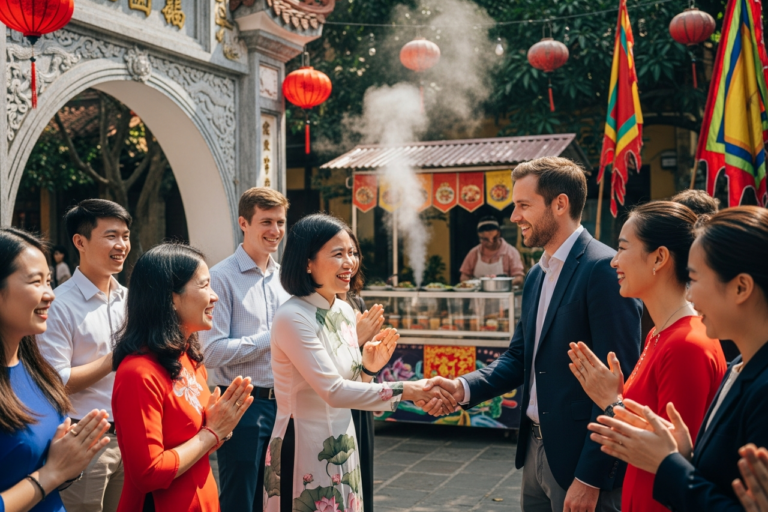
For a Canadian, saying “hello” and giving a handshake is often enough. In Vietnam, greetings can be more detailed. Vietnamese greetings change based on the age, gender, and social status of the person you talk to. So, you need a good level of cultural understanding.
The way people use body language is also not the same. A firm handshake is common for men, but women can choose a small bow or just nod. In some rural places, you might even see a bow with hands clasped together. When greeting someone older, people lower their gaze to show respect. This is not like the Canadian way, which values keeping direct eye contact.
As one example, in Canada it may seem rude to ask someone’s age when you first meet. In Vietnam, though, asking about age is a polite way to find out which pronouns or honorifics to use. These changes show why it’s good to notice and follow local customs when it comes to vietnamese greetings, social status, and other traditions that aren’t always found in western languages.
Essential Basics of Vietnamese Greetings
Learning some vietnamese greetings is not hard. You just need to know a few basic greetings. It is also good to know who you talk to. When you say “hello” the right way, native speakers will often smile at you.
When you start, remember that the vietnamese language has tones, so how you say words matters a lot. Try to use proper pronunciation and respect how the language sounds. This will help you talk with others better. Here are some tips about saying words, and some common words you can use.
Understanding Pronunciation and Tone
Vietnamese is a tonal language. It has six tones. This can be hard for people who speak other languages like English. The tone you use will change what a word means. For example, the word “ma” can mean “ghost”, “mother”, or “horse” based on how you say it.
To say these tones the right way, a non-native speaker must practice a lot. Your voice may need to go up, down, or both, in one word. For example, the sắc tone (´) makes your voice rise. The nặng tone (ạ) is a quick, deep sound. At first, it may feel like you are trying to sing as you speak.
A good trick is to listen to native speakers and copy the way they say words. You do not have to say every word perfect. Native speakers like it when you try. Every time you try, even when you make a mistake, people might laugh and see that you have a genuine interest in their culture.
Common Greeting Words and Their Meanings
When you’re in Vietnam for the first time, knowing a few basic greetings is incredibly helpful. The most universal greeting is “xin chào” (pronounced zin chow), which you can use for anyone, anytime. It’s a polite and safe option for all situations. For a more casual “hello” among friends, you can simply say “chào.”
You can also use greetings that are specific to the time of day, which is a common practice. These are similar to saying “good morning” or “good evening” in English and show a bit more familiarity with the language.
Here are some common greeting terms to get you started. Pay attention to the pronunciation to get the meaning of the word across correctly.
|
Greeting |
Pronunciation |
Meaning & Use |
|---|---|---|
|
Xin chào |
Zin chow |
The universal and polite “Hello,” suitable for everyone. |
|
Chào |
Chow |
A casual “Hello,” used among friends or people of similar age. |
|
Chào buổi sáng |
Chao boo-oy sang |
“Good morning” |
|
Chào buổi chiều |
Chao boo-oy ch’yoh |
“Good afternoon” |
|
Chào buổi tối |
Chao boo-oy toy |
“Good evening” |
Formal and Informal Greetings in Vietnam
Understanding what is going on in a conversation is important when you say hello to Vietnamese people. The way you greet someone can change if they are older, have a higher social status, or if you are close to them. Showing you know the right way to greet someone is a way to show respect and that you understand their culture.
You should use formal greetings with older people, those who have authority, or anyone you just met. Save informal greetings for your close friends or people your own age. We will look at when to use formal greetings and when to use informal greetings. We will also see how they sound different and how the body language can be different too.
When to Use Formal Greetings
Formal greetings are the way people show respect in special social and work settings. You often hear honorifics in these greetings, and people also act a bit more calm and polite when they say them. If you use a formal greeting, it shows you are polite and that you get how things work in Vietnamese culture.
There are formal situations where you will want to use these greetings to make a good first impression. Some of these are when you meet someone for the first time, like when you meet an older woman or a person who is older than you. It is also right to use formal greetings in business meetings and when talking to people who have more power or are elders.
In Vietnamese culture, being formal is not about staying away from others; it is a way to show respect. For example, if you say “Chào Chị” when talking to an older woman, you are really saying “Hello, Older Sister” or “Hello, Madame.” If you use proper pronunciation in these formal situations, people will notice. It will help you build good relationships and make people feel respected.
Casual Ways to Say Hello Among Friends
When you are with close friends or people about your own age in Vietnam, greetings are much more laid back. The strict rules you see in formal settings do not really apply. Instead, you see more informal greetings. Young people use these words a lot, and they help make the mood warm and easy-going.
People often skip the formal “xin chào” and say “chào” with the person’s name. Gestures also change in a relaxed group. You might just give a wave, a simple nod, or even no big move at all. There is no need to bow or use any special hand moves like you would in more formal settings.
For example, when you see a friend, you can just say, “Chào Lan!” By doing this, you make the bond stronger between you and your peers. What matters is to know your conversation partner and pick your greeting in the way that fits your level of closeness and the place you are in.
The use of these informal greetings is very common with close friends, young people, and others you know well.
Time-Specific Greetings in Vietnamese
In Vietnamese, people have greetings for certain times of the day, just like we do in English. Saying “good morning,” “good afternoon,” or “good evening” to someone is a nice way to show respect. It tells them you know a bit more about the language, too. You can use these words in many different contexts.
It is important to use the right phrase for the part of the day you are in. This is a common way to be polite and friendly. A simple greeting can help make your chats easier and feel right. Here are the phrases you can use for each time of day.
Morning, Afternoon, and Evening Greetings
Using time-based greetings can help you sound more local in Vietnam. These greetings are made by adding the word for the time of day right after “chào.” People use them a lot, and you can say them in formal situations and semi-formal ones too.
Here are the main vietnamese greetings you need to know:
-
Chào buổi sáng (Chow bwoy sahng): This is how you say “good morning.”
-
Chào buổi chiều (Chow bwoy chee-oh): This is how you say “good afternoon.”
-
Chào buổi tối (Chow bwoy toy): This is how you say “good evening.”
You should use the proper pronunciation for these phrases so people can get what you say. In English, you can say “hello” at any time, but in Vietnam, saying “chào buổi sáng” in the morning gives a nice, polite touch. It even works in any formal situation. Using these vietnamese greetings is an easy way to show respect and add a little style to your hello.
How to Adapt Your Greeting for the Right Occasion
The beauty of Vietnamese greetings is that they fit many situations. To really connect, it helps to learn how to change your greeting to suit different moments. You need to think about the person’s age, their social status, how you know them, and what time it is during the day.
For instance, when you meet someone older, you use a formal phrase and the right pronoun such as “ông” for a man or “bà” for a woman. These mean grandfather or grandmother, even if the person is not your relative. If you meet a friend, just saying “chào” will do. This way of greeting shows you respect the small details in the culture.
If you are learning the language, do not worry about small mistakes. People will see your effort to use the right greeting. Watching how the local people greet each other in different contexts helps you understand more. When you show you can be flexible, the meaning of the word or phrase you pick will stand out even more.
Keywords: vietnamese greetings, appropriate pronoun, social status, different contexts, meaning of the word
Beginner’s Guide: How to Greet People in Vietnam
Are you ready to try saying hello to someone in Vietnam? This beginner’s guide will make things easy for you. It gives you simple steps you can follow. Learning these basic greetings is a good way to improve your language skills and show that you respect Vietnamese culture.
We will take you through what words to use and what gestures go with them. You will find a practical way to greet people, step by step. After you practise a bit, you will soon be greeting others with confidence.
What You Need to Get Started (Language, Attitude, Resources)
To start learning Vietnamese greetings, you do not need much. Just a few things can really help you do well. Having the right way of thinking is just as important as remembering words.
Here are the basics you need to know:
-
Basic Language Knowledge: Begin with “xin chào” and know some main pronouns.
-
A Positive Attitude: Have a genuine interest in the culture and be ready to learn. Do not worry if you make mistakes.
-
Helpful Resources: You can use language apps, online videos, or this guide to help you practice.
Your attitude is the best thing you have. Vietnamese people are friendly and will notice when you try to speak their language. When you come to learn with a good way of thinking and are not proud, your language skills will get better and you will have more good talks with others. Try to use interactive ways to practice, like speaking to local people, as this is one of the best ways to learn.
Step-by-Step Guide to Greeting in Vietnamese
Here is a helpful guide to make your first time saying hello in Vietnam easier. It will show you simple steps so you feel more ready and sure of yourself when you speak with people there.
This way, you can break basic greetings into smaller steps.
-
Step 1: Look at the situation to pick the right greeting. Think about if it should be more formal, informal, or match the time of day.
-
Step 2: Choose the correct pronoun or right pronoun for the person you speak to. Their age, if they are a man or woman, and if they have a higher place in life matter.
-
Step 3: Use the right body language. You can do a little nod, bow, or handshake.
-
Step 4: Practice your proper pronunciation so they can understand you well.
Think of this as your way to start with basic greetings. If you meet an older man for the first time, use a formal hello, say the correct pronoun like “uncle” or “grandfather”, and maybe give a two-handed shake. When you do this a lot, you will get better and it will feel normal.
Step 1: Choose the Right Greeting Based on Situation
The first step in greeting someone in Vietnam is to look at the situation. Is it a formal situation like a job meeting, or is it casual, like seeing a friend at a café? The words you pick will depend on the setting. In formal situations, “xin chào” is a good and polite choice.
Then, think about your conversation partner. Are they older than you or very young? Are they someone in charge? This will change not just your greeting, but also the appropriate pronoun to use. The words you use for your hotel worker should be different from what you say to a child you meet on the street.
In the different contexts you may face, it helps to have some starter phrases ready. Walking into a shop, saying “xin chào” is the right way. If you see young people in a group, you can just say “chào,” and that will work. Paying attention to the people and the context is key to have a good greeting.
Step 2: Select the Appropriate Pronoun and Gesture
After you pick your greeting, the next big thing is to choose the right pronoun. In Vietnamese, people use pronouns based on family words. These words show how old someone is, if they are a man or woman, and what their social status is. For example, you say “anh” (older brother) for a man who is a little older than you. You call a woman “chị” (older sister).
Picking the correct pronoun is a way of showing respect. It may feel odd at first to ask about someone’s age, but that is normal. It helps you use the right pronoun. Most locals will help you with this. If you are talking to a group of people, a general greeting is fine.
When you greet someone, think about your gesture, too. Men often shake hands. If you are with women or elders, a small nod or bow works best. In formal situations, use both hands when you shake to be extra polite. Watching these little things helps make your greeting work well.
Step 3: Practice and Use in Real-Life Interactions
The last and most important thing you need to do is practice. The more you try out your new language skills, the better you will get. Don’t be afraid to use what you know when saying hello to native speakers. Most times, they will be happy to see you trying.
It is normal to feel nervous in the beginning. But if you want to get over that, you have to just go for it. Try with easy things first, like saying hello to a shopkeeper or a hotel worker. Each time you do this, you will feel better and be ready for your next adventure.
You can practice anywhere—at markets, in cafés, or with tour guides. Vietnamese people are friendly, and this helps new learners a lot. Take every chance to use what you learned. This way, your language skills and the number of people you know will keep growing each day.
Showing Respect: Greeting Elders and Authority Figures
In vietnamese culture, people see respect for elders and those with higher social status as very important. You can see this in the way people say hello and greet each other. It’s good to use formal greetings and show the right body language when speaking to someone older or who has more authority. It does not matter if you are in a small village or in busy ho chi minh city.
Here are some useful tips for how to talk to elders or people higher up than you. Following these can make the meeting go well and show the right amount of respect.
Proper Phrases and Body Language for Elders
When you greet an elder, the words and the things you do matter a lot. They should show deep respect. This is the heart of Vietnamese social etiquette. It is always the polite way to use the right honorifics when you talk to an elder.
Here are some important words and ways to show respect:
-
Say “cháu” for yourself, which means “grandchild”. Call the older man “ông” for grandfather or the older woman “bà” for grandmother.
-
If they are one generation older, you can use “bác” for aunt or uncle who is older than your parents, or use “chú” for uncle younger than your dad.
-
You must greet the oldest person first. This is a way to respect the order in their family or group.
The way you act is just as important as what you say. When you greet, do a small bow from your shoulders to show respect. When you talk to an older man or older woman, you should look down to show respect. If they give you a handshake, use both hands to take it. This shows you are humble. By doing all these things, you will give respect to elders in the right way.
Dos and Don’ts When Greeting Someone of Higher Status
Making a good first impression on someone with higher social status is very important in Vietnam. It helps to follow some easy do’s and don’ts to show respect and good cultural understanding.
Here are some simple tips for these times:
-
Do stand up when they come into a room.
-
Do greet them first and use a proper title.
-
Do use both hands if they offer you a handshake.
-
Don’t call them by their first name unless they ask you to.
-
Don’t keep strong, direct eye contact for too long; look down or away a bit.
If you meet your boss’s manager for the first time, you will stand up, say “xin chào” and add their job title to what you say, and then wait for them to offer a handshake. These steps show that you notice their social status, and it shows respect for the rules of the culture.
If you stick to these ways of doing things, you can meet someone important and feel sure of yourself the whole time. It proves to them that you want to show some cultural understanding. People always notice and like that.
Common Mistakes Canadians Make with Vietnamese Greetings
As Canadians, we often use more direct and informal greetings. This can sometimes cause a few problems when we are in Vietnam. Making small mistakes, such as in how we say something or how we use our body language, can change the meaning of the word or even come off as rude.
Knowing about these things before you go will help you avoid them. Just being a bit more aware of their culture will go a long way. This helps you make sure your informal greetings to an individual or a group of people come across the right way. Now, let’s look at some of these common mistakes people make.
Pronunciation Pitfalls to Avoid
One of the biggest challenges for Canadians when they want to speak the Vietnamese language is its tones. A tiny change in your voice can totally change the word. This can lead to some funny or even embarrassing moments. The most common mistake is to say every word with a flat, English sound.
Here are some pronunciation pitfalls that people should watch out for:
-
Mispronouncing “xin chào”: Many people say “sin chow,” but the proper pronunciation is closer to “zin chow.”
-
Ignoring tones: If you say “ma” flat, it means nothing. You have to use one of the six tones so people will know if you want to say “ghost,” “mother,” or “horse.”
-
Speaking too quickly: Take your time. Focus on getting the tones right. People in Vietnam will like that you try for proper pronunciation.
To improve, listen to native speakers and try to match the way their voices go up and down. You can also use language apps that let you hear audio. It’s okay if you make mistakes. Your effort to speak the tonal language will show people you respect them.
Cultural Taboos Around Greetings
Beyond how you say hello, you need to think about some culture rules and body language in Vietnam. There are a few things you should not do if you want to be polite and make a good impression in all different contexts. These are very important, no matter if it is the first time you meet someone or in more formal situations.
Here are a few key taboos to avoid:
-
Touching someone’s head: The head is the most important part of the body in Vietnam. You should not pat or touch someone on the head, even a kid.
-
Pointing with your finger: Do not use one finger when you point at people or things. You should use your whole hand. Only pointing with your finger can be rude.
-
Overly familiar physical contact: Hugging is not common unless someone is your close family. If you are in formal situations or meeting someone for the first time, use a handshake or a small bow.
For example, a gentle pat on the back, which many people do in Canada, is sometimes too much in Vietnam, especially when it is the first time you meet someone. It is good to remember that personal space and the kind of touch you use matter a lot. If you follow these basic rules, you make sure your hellos and greetings are polite and feel right for everyone.
Saying Goodbye: Essential Farewell Phrases
Making a good first impression matters, but how you end a conversation is just as important. Being able to say goodbye in Vietnamese helps you finish a chat in a polite way. There are many ways to say goodbye. Just like greetings, you can use formal or informal words.
You can say something as easy as “goodbye” or wish someone a “good night.” These simple words help you end a talk well. Let’s look at some common ways people say goodbye.
Formal and Informal Goodbyes
The words you use to say goodbye depend on the situation. It also depends on how you know the other person. You can use “tạm biệt” to say goodbye in almost every case and it always fits.
Here are the main phrases you can use when you say goodbye:
-
Tạm biệt (Taam Byeet): This one is a bit formal and is the usual way to say “goodbye.” It is good to use when you leave a store or end a talk with someone you do not know well.
-
Chào bạn/anh/chị, etc.: To be a bit less formal, just say “chào” and then the appropriate pronoun for the person, in the same way you would say a simple hello.
-
Chúc ngủ ngon: If it’s nighttime, say this. It means “good night” and is said when you leave at the end of the day.
The word “tạm biệt” is a lot like saying “goodbye” in English. But this word can sound more final. People may use it when they don’t think they will see the other person again soon. For daily goodbyes to friends or the people you work with, just saying “chào” is more common. It’s like when we just say “bye” instead of “goodbye.”
Other Useful Parting Expressions
Beyond saying goodbye, there are some other ways to make your farewells stand out. You can use different words depending on if you are at a business meeting or with new friends. This helps your goodbyes feel warmer and more special.
Here are some easy phrases you can use:
-
Hẹn gặp lại: This means “See you again.” It is a friendly way to end any chat.
-
Rất vui được gặp bạn (r-uht voo-yee d-uh-k g-uh-p ban): This means “It was nice to meet you.” Use it when you have just met someone and are saying goodbye.
-
Chúc một ngày tốt lành: This means “Have a good day.”
When you say something like “rất vui được gặp bạn,” people know you enjoyed meeting them. These words show you care, and they help people remember you in a good way. Try these when wrapping up a talk or when you are getting ready for your next adventure. It adds warmth and makes all your “see you laters” better, whether with new friends or at work.
Conclusion
To sum up, knowing how to greet people in Vietnam is a big part of showing respect and making real, meaningful connections. When you learn about both informal greetings and formal ones, understand when to use them, and see what they mean in Vietnamese culture, you are set up to feel more confident. These greetings are not just words. They show the values and ways of life in Vietnam.
If you want to get to know Vietnamese culture better, it’s good to work on how you say each word. Be sure to look at the person, think about your ties with them, and choose the right type of greeting. It does not matter if you are in Vietnam or you meet someone from Vietnam here in Canada. Giving a friendly greeting goes a long way. Happy greeting!
Frequently Asked Questions
What are the most common ways to greet people in Vietnam?
The word “xin chào” is the most common way to say hello. You can use it in almost any setting with people. If you are talking to friends, you might just say “chào” for an informal greeting. Native speakers will see that you are respectful if you use formal greetings or say hello that fits the time of day. Using the right greeting shows respect and can help you get along better with them.
Are there different Vietnamese greetings depending on the time of day?
Yes, there are. You can use “chào buổi sáng” to say “good morning.” Say “chào buổi chiều” for “good afternoon.” If you want to say “good evening,” use “chào buổi tối.” These vietnamese greetings are a polite way to talk with people. They help you sound natural and nice in what you say.
How should I greet elders or people of higher status in Vietnamese culture?
In Vietnamese culture, it is a polite way to greet elders or people with higher status by using formal greetings and showing respect with your body language. You say honorifics such as “ông” for grandfather or “bà” for grandmother. You should also bow your head a little and not look them right in the eyes. This is how we show respect in the most formal way.
What are some mistakes to avoid when greeting someone in Vietnam?
In vietnamese culture, you should not be too casual with people. Try not to skip titles or use someone’s first name too soon. Do not touch others, especially if they are the opposite sex. You need to respect other people’s space as well. Also, do not speak in a loud voice when you meet someone. In vietnamese culture, being low-key is liked by most people.