Key Highlights
-
Greetings are a big part of Ghanaian culture. They show respect, politeness, and help people get along well.
-
Always use your right hand when you greet someone. The left hand is usually seen as not clean in social settings.
-
A normal handshake can have a middle-finger snap. This snap is a way to show you are warm and friendly.
-
Try to learn some common Twi greetings, and use simple, time-related pleasantries. This shows your goodwill and effort to be part of Ghanaian culture.
-
When you walk into a room, greet people with your right hand, starting with the person on the far right. Go from right to left.
-
Call elders by titles like “Auntie” or “Uncle,” and show special respect with your words and actions.
Introduction
Are you planning to go to Ghana? Get ready to meet some very warm and friendly people! A big part of the Ghanaian culture is in how you greet each other. In Ghana, saying hello is not just something you do in passing. For them, greeting is a big way to show respect and make friends. If you are from Canada, knowing about these customs can really change the way you talk with people. It can help turn a normal chat into something more special. This guide will help you understand the small things about a greeting in Ghana and show you how to connect in a good way with the people there.
Common Greeting Customs in Ghana
In Ghana, people see greetings as a key part of daily life. It is also a big part of Ghanaian culture. When you go into a place, it is good manners to greet everyone there. This can be at a waiting room or when you step into someone’s home. If you do not greet, people in Ghana may feel that it is not polite. Many Ghanaians will wait for you to start the greeting.
When you are with a large group, you can just wave and say hello. But if you are with one or a few people, you may need to give a handshake. Many Ghanaians will like it if you use a few basic Twi greetings. If you try these Twi phrases, you may get smiles and real appreciation. Now, let’s see some simple phrases and greetings you can use at different times of the day.
Everyday Ways to Say Hello and Respond
While English is one of the main languages used, speaking a few common Twi greetings can help you start a good chat. For example, if you want to ask “How are you?”, you can say “Wo ho te sen?”. You can use this phrase in many casual talks and it shows you want to connect with people.
When you get asked “Wo ho te sen?”, a usual answer is “Onyame na adom me hu ye.” This means “By the grace of God, I am fine.” It shows how important faith is in the lives of many people. You might also hear someone say “yaa nua” as a friendly Twi greeting. It is a kind reply, often used between friends.
You do not have to be fluent in Twi to make a good mark. Just knowing these common Twi greetings helps a lot. Saying these simple Twi greetings when meeting someone or going into a shop makes your meeting feel more open and warm.
Time-Specific Greetings: Morning, Afternoon, and Evening
Just like in many other cultures, greetings in Ghana can change depending on the time of day. Using the correct time-specific greeting shows attentiveness and respect. These are some of the most common Twi greetings you can use throughout the day.
While you can always use English, incorporating these phrases into your conversations will be well-received. For instance, greeting a shopkeeper with “Maakye” in the morning is a wonderful way to start your interaction on a positive note.
Here is a simple guide to time-specific greetings in Twi:
|
Time of Day |
Twi Greeting |
English Meaning |
|---|---|---|
|
Morning |
Maakye |
Good morning |
|
Afternoon |
Maaha |
Good afternoon |
|
Evening |
Maadwo |
Good evening |
Introducing Yourself and Showing Respect
Introducing yourself in Ghana is all about being humble and polite. The people in Ghana do not jump right into matters or talk about what they want at once. It would be rude to do so. You always need to start with a few kind words and ask about how the other person is doing. You also ask about their family. After that, you speak about why you are there. This is an important part of Ghanaian culture, even when doing easy tasks.
When you are in a formal setting, how you act matters as much as what you say. Showing respect in the way you stand and move makes a big difference in how people see you. Now, let’s talk about how to speak to elders and which body language fits best.
Addressing Elders and Formal Situations
Showing respect to elders is very important in Ghanaian society. When you greet someone who is older or in a position of power, you should use honorific titles like “Auntie” or “Uncle,” even if you don’t know them well. This shows that you know and respect their status.
In a formal setting, like when you meet a chief or a highly respected elder, how you act will matter a lot. You should take off your hat, not put your hands in your pockets, and not cross your legs. When you go over to greet, you might bow a little. For example, saying “yaa agya” to an older man is a polite way to show respect.
Don’t reach out for a handshake unless the chief or elder offers their hand first. In some places, it can also be good to kneel. If you follow these ways, it will show that you honor their customs and respect their spot in the community.
Appropriate Gestures and Body Language during Greetings
Your body language says a lot when you greet someone. The most important thing to know in Ghanaian culture is to always use your right hand. This is not just for shaking hands, but also for giving or taking things and when you eat. People see the left hand as less clean because of what it is used for, so using it is not a good idea. If your right hand is busy, you should say sorry before you use your left.
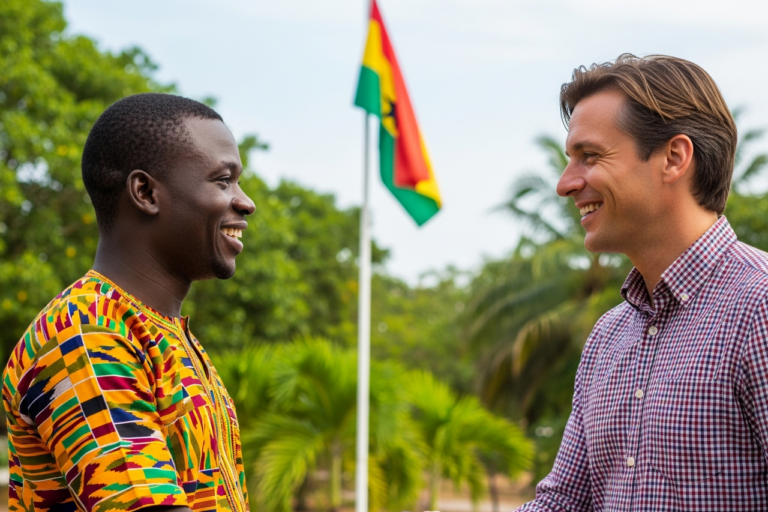
The handshake is also a big part of Ghanaian culture. It’s not just a simple grip. There is a special part to it where you and the other person both snap your middle fingers together as you let go. Don’t be afraid if it makes a big sound. In Ghanaian culture, that just shows you feel happy to meet someone.
When you walk into a room, you should greet people with your right hand, going from right to left. It might seem strange if you have to walk past some people to start at the far end, but this way your hand is in the right spot each time. This small thing tells everyone you know and care a lot about local ways to show respect.
Significance and Social Role of Greetings
In Ghana, saying hello is more than just being polite. It is at the heart of how people connect with each other. When you greet someone, you show goodwill and let them know you see them. This is also a way to keep the community feeling strong. If you do not greet someone, it can look rude or seem like you have bad feeling toward that person, so you do not want to skip it.
This greeting custom is a big part of Ghanaian culture. It helps to keep peace among people and shows mutual respect. When you know why this is done, you start to see how deep part of Ghanaian culture it is. Let’s look at why greeting is so important in Ghana and see how this is different from what many might do in Canada.
Why Greetings Matter in Ghanaian Society
Greetings in Ghana are very important for all social situations. They are the first thing you do to show politeness and start a good connection. When you walk into a room, people will watch to see if you give a greeting. They do not do this to be unkind or rude. They are just waiting for you to start, and you will get a warm answer when you do.
This actions shows the strong community spirit in Ghana. When you take the time to say hello to everyone, no matter if they are old or young, you show that you see them and show respect. Doing pleasantries before starting anything—even if you are just buying something small like fruit—let people know you think they are important, not just the deal you make.
In the end, this is to help social harmony and to keep peace. A good greeting is a way to show goodwill and start to talk to someone with respect. Doing this may seem small, but in Ghana, it means a lot for how people live together and get along.
Comparing Ghanaian vs. Canadian Greeting Customs
As someone from Canada, you may find greeting customs in Ghana more detailed than what you know. Here, a fast “hello,” a nod, or a simple handshake is usually enough. The goal often is to be quick, and people may get right to what they want to say.
In ghanaian culture, the greeting is very important. It follows steps like using the right hand, greeting people from right-to-left, and saying a few words about how you or your family are doing. This time at the start is not rushed. People enjoy it because it helps them get to know each other.
Both cultures value politeness, but they show it in different ways. In Ghana, people show politeness by following these detailed steps. Sometimes, the finger snap in a handshake or saying something nice in Twi makes the greeting feel warmer and shows more care than what you may see in Canada.
Etiquette Tips for Canadians Greeting in Ghana
Navigating how people greet in a new country can be tough. But the right tips will help you feel sure of yourself in Ghana. Be respectful and show you want to take part. Ghanaians like it when you try, even if you make some mistakes at first.
As a Canadian, you may be used to more direct or casual ways to talk. Take your time. Try to enjoy the warm and polite style that people use in Ghana. Doing this can make good things happen. Here are some common things not to do, and some simple phrases you can learn to add to your vocabulary.
Common Mistakes Canadians Should Avoid
If you want things to go smoothly in Ghana, and you want to show respect, you should keep a few things in mind. Sometimes, it is easy to make mistakes that can upset people, even if you don’t mean to. When you pay attention to these small things, you show humility and care about the culture.
Most problems happen with simple moves and how you talk. If you rush a greeting or use the left hand, people might feel upset. Being polite matters. They look at what you do in these moments.
Here are some mistakes you should avoid:
-
Using your left hand: Don’t greet, give, or take anything with your left hand. People see it as dirty and find it disrespectful.
-
Being too direct: Don’t start talking about business right away. Always begin with pleasantries. Ask about how someone is doing first.
-
Ignoring people: When you walk into a room or join others, greet everyone in that room. If you miss someone, even a child, it comes across as rude.
-
Forgetting the order: When you greet, do it from right to left. Age or gender does not matter unless there is a chief present.
Use a little extra care in Ghana to help make good memories, show politeness, and practise humility at all times.
Polite Expressions to Use When Meeting Someone New
Expanding your list of words with some polite phrases can make your greetings in Ghana feel more genuine. If you say more than just “hello,” it shows you have interest in the other person and respect for how the culture values connecting with people.
When you use these phrases as you meet someone, they help to build trust and give your conversation a warm feeling. The politeness is clear, and it says you want to make a real connection with them.
Here are some helpful Twi phrases to include in your greetings, along with how you say them in English:
-
“Wo ho te sen?”: This asks “How are you?” and goes well right after you say hello.
-
“Medaase”: This means “Thank you.” Use it often to show thanks.
-
“Yaa nua”: Say this to answer a greeting from a friend or someone your age.
-
“Yaa agya” / “Yaa ena”: Use these when you reply to someone older, with “agya” for a man and “ena” for a woman.
Try to add yaa nua, yaa agya, wo ho te sen, and other Twi phrases to your greeting in English. This shows good politeness, improves your vocabulary, and makes moments with people in Ghana more special with real pleasantries.
Conclusion
To sum up, learning the many ways to greet people in Ghana can make your travel better. You will have a chance to connect with the people you meet. Every greeting has a meaning. This shows respect and the way of life in Ghanaian culture. If you get to know these ways, like greetings for different times of day, how to use your hands, and your body, you show that you want to fit in and be part of the community.
When you start your trip, keep in mind that a simple greeting can lead to great moments with others. The next time you go to Ghana, try out these greetings. You will feel the kindness and joy from people there. Enjoy your travels!
Frequently Asked Questions
Are there differences in greetings across regions or languages in Ghana?
Yes, many people in Ghana understand Twi. But, there are many languages and groups in Ghana. Each group has its own greeting words and vocabulary. Still, you should always use your right hand when you greet people. It is important to show respect to elders. People also like to exchange pleasantries in these greetings. English is also often used when people greet each other in Ghana.
How should I greet a group of people in Ghana?
When you say hello to a group, start with the person on the far right. Then move to your left. Give a good handshake to each person in that order. It does not matter the age or gender of the people in the group. This way, your handshake shows greeting and politeness to everyone. Make sure your palm touches theirs with each shake.
Is it acceptable to shake hands with everyone when greeting in Ghana?
A handshake is a common way to say hello. It is good to shake hands with every person you meet. You need to use your right hand for the greeting. The only time you do not go first is when you meet a chief. Wait for the chief to offer their hand as a sign of humility.