Key Highlights
-
The main Nepali greeting is ‘Namaste.’ People use it to show a sign of respect in most situations.
-
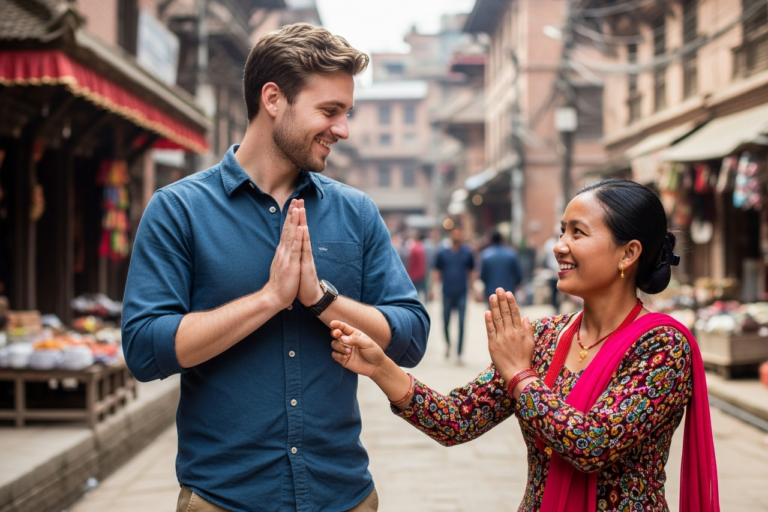
Body language matters here. When you say ‘Namaste,’ you put your palms together at your chest level and bow a bit.
-
Greeting words change with time of day. You use one phrase in the morning, another in the afternoon, and one more in the evening.
-
For elders, it is important to show respect. You use more formal greeting words and gestures with them.
-
When you are with friends, people often use informal phrases like “Ke cha?”. But, it is best to start your greeting with a formal phrase.
-
People might shake hands in big towns or business offices. Still, the best Nepali greeting is the usual ‘Namaste.’
Introduction
Are you thinking about a trip to the beautiful country of Nepal? It’s smart to learn a bit about Nepali culture. This helps you be closer to the people there. One big part of Nepali culture is the way people greet each other. If you can use a simple Nepali greeting, you can open many doors for yourself. It also shows them that you bring respect and a real interest in their way of life. This guide will help you know more about greeting people in Nepal. You will read about ‘Namaste’ and other important ways to say hello and use the right gestures when you meet someone.
Key Aspects of Nepali Greeting Culture for Canadians
For people from Canada going to Nepal, it helps to know the local nepali greeting culture. The way people greet each other in Nepal is more than a simple hello. It shows deep respect and is also warm.
You will see that there are clear differences between informal phrases and formal ones. The greeting you use depends on the level of formality. You need to think about who the other person is, how old they are, and the situation you are in. We will talk more about why greetings matter in Nepal and when it is good to use each kind of greeting.
Importance of Greetings in Daily Life
In Nepali culture, a greeting is not just a simple hello. It is a big sign of respect and helps people get along. When you greet someone with a Nepali greeting, you are saying that you see them and that you care about them. This matters even more when you meet someone for the first time.
The most used greeting is ‘Namaste’ in Nepal. Namaste means “I honour the divine in you.” This shows how much people in Nepal believe that everyone has value. The word namaste is a powerful sign of respect for all, no matter if you are strangers or friends.
When you use the right nepali greeting, you connect with people and the local ways. It shows you care enough to learn about nepali culture and their customs. People in Nepal notice this and feel good about it, which helps you make a good, strong bond while you are there.
Common Situations Where Greetings Matter
Greetings are an important part of life in Nepal. People use them every day to make the right start to a meeting. The words “Namaste” or “Namaskar” are common and can be used in almost any setting. You can say them in formal situations like a meeting or in casual moments, such as when you pass someone on a trek.
You will see that different greetings fit different places and times. If you go into a shop, meet your host family, or get introduced to someone new, a greeting helps make things feel friendly. For formal gatherings, like special meals or weddings, one uses a respectful tone. With friends or in informal settings, people can use more relaxed greetings.
Here are some times when using a proper greeting is very important:
-
Entering someone’s home
-
Meeting elders or respected individuals
-
Starting a conversation with a shopkeeper
-
Passing someone on a trail during a trek
-
Formal gatherings and weddings
The Meaning and Usage of ‘Namaste’ in Nepal
The word ‘Namaste’ is one of the best known Nepali words in the world. It means a lot in Nepali culture. People use this greeting all the time. It can be used to say hello, goodbye, and even thank you. It shows a sign of respect.
When you say ‘Namaste,’ you are not just saying a greeting. You are being part of nepali culture. You take part in something special to them. Let’s look at what this nepali word means to the people, and find out how to use this greeting the right way.
Cultural Significance of Namaste
The way people use ‘Namaste’ in Nepal is special. This greeting, with both the word and the gesture, shows honour and mutual respect. The word ‘Namaste’ comes from Sanskrit. It means “I bow to you.” Some people see it as saying, “the god in me bows to the god in you.”
Nepalis believe that every person has a spark from god inside. When they say ‘Namaste,’ they are showing that all people share this divinity. This makes a connection that does not depend on age, their place in society, or their background. ‘Namaste’ is a real sign of respect. Nepalis use it with everyone, from family members to people they just met.
In the end, ‘Namaste’ is a simple and deep greeting. It is more than just a word, it is a way of meeting someone with all you have. It helps people feel peace and reminds us all are equal. It is the nicest way to see god in other people and show mutual respect in Nepal.
Proper Technique and Response to Namaste
Doing ‘Namaste’ in the right way is a small but important part of Nepali etiquette. To give this greeting, you put your palms together, like you do in prayer. Your fingertips should be pointing up, and your hands stay at chest level. You should bow your head a little when you do this and say the word.
You say it like this: “Na-mas-tay.” If someone says ‘Namaste’ to you, the right way to answer is to do the same gesture and say the word back. This will show you see and give respect in return.
Here’s a simple guide for the right technique:
-
Place your palms together.
-
Keep your hands at chest level.
-
Bow your head a bit.
-
Say “Namaste” in a clear way.
The Variety of Nepali Greetings by Time of Day
While ‘Namaste’ is a common nepali greeting you can use any time, there are a few other phrases to use during the day. Using these phrases in formal situations will show that you want to connect with people and understand a bit more about their customs.
When you say words like ‘subha prabhat’ for good morning, it shows respect. These greetings, like good morning or good evening, make your days in Nepal feel warmer. If you know how to use each nepali greeting, you will get the most out of meeting people every day. Below, you’ll find these phrases and how to say them.
Typical Morning, Afternoon, and Evening Phrases
Yes, Nepalese people use different greetings for morning, afternoon, and evening, though ‘Namaste’ is always an acceptable alternative. Using these phrases shows you’re making an extra effort to connect. For instance, greeting someone with ‘Subha Prabhat’ is a lovely way to start the day.
These greetings are generally used in slightly more formal or thoughtful contexts but can be used with anyone you meet. They follow a simple pattern that is easy for visitors to learn and use.
Here’s a simple table to help you learn the greetings for different times of the day:
|
English Greeting |
Nepali Phrase |
|---|---|
|
Good Morning |
Subha Prabhat |
|
Good Afternoon |
Subha Din |
|
Good Evening |
Subha Sandhya |
|
Good Night |
Subha Ratri |
How to Use and Pronounce Each Greeting
Learning the right pronunciation is important to use these Nepali greetings in the best way. “Hello” in Nepali is ‘Namaste.’ This means “I bow to the divine in you.” If you use greetings for the right time of day, you can make your language learning in Nepal even better. You do not have to worry if your pronunciation is not perfect. What matters is that you try.
To say “Good Morning,” use ‘Subha Prabhat’ (soo-bha pra-bhaat). For “Good Evening,” you say ‘Subha Sandhya’ (soo-bha sahn-dhya). Practice these words a few times, and you will get it soon. People in Nepal are friendly and want to help you with your pronunciation.
Using these phrases is easy. Just say them instead of ‘Namaste’ when it is the right time. If you meet someone in the morning, greet them with a smile and say ‘Subha Prabhat.’ A small action like this can help you connect with people and make your time in Nepal better.
Respectful Greetings for Elders and Formal Settings
Showing respect to an older person is very important in Nepali society. In formal situations or when you meet someone older, the way you greet them is more polite. Doing this is a big sign of respect and people in the culture really like it.
At formal gatherings or when you meet a senior person for the first time, you may use a formal way to say ‘Namaste’ or use a special gesture. Knowing about these things helps you for greeting, and it makes social talks nicer and more polite.
Language Used to Express Politeness
When you want to greet elders in Nepal, it is good to show more respect in your language. The best way to do this is by saying ‘Namaskar’ and not ‘Namaste.’ ‘Namaskar’ is a formal nepali greeting. People use it to show more formality, and it works well for talking to elders or in an important setting.
It is not just the greeting that matters, the grammar also changes when you talk to elders. You need to use “Tapai” for “you”. It is the formal word, not “Timi,” which sounds casual. If you come to nepal and do not know all of the grammar, that is okay. Just knowing this difference can help. It shows you respect the way people speak in nepal.
If you want to be polite, learn a few simple phrases. Even just using ‘Namaskar’ is a good way to start. Always keep a good posture when you greet someone. If you greet people in the right way, they will see you are trying to be respectful. This small effort in how you use nepali greeting words and respect others will be noticed.
Appropriate Gestures and Etiquette
When you say hello to elders, how you move is as important as the words you use. The common greeting is ‘Namaskar,’ where you put your palms together. This will be fine in all settings, but sometimes, you may see younger people show a deeper sign of respect. They might bow more or even touch the elder’s feet.
If you are not from here, the people will not expect you to touch an elder’s feet. But you can bow a bit deeper with your ‘Namaskar.’ This way, you give a good greeting and show you know about their seniority. This makes both you and them feel mutual respect.
Here are some simple things to keep in mind about etiquette:
-
Use ‘Namaskar’ when you meet elders or in formal places.
-
Bow a little deeper when you greet an elder.
-
Use your right hand if you need to touch or hand over something.
-
Don’t act too casual or act like you know them too fast.
-
Watch how younger people show respect to elders and do what they do.
Essential Nepali Phrases for Canadian Visitors
After you say hello, it helps to know some basic Nepali phrases when you go to Nepal. If you can say “thank you” or ask “how are you?” in their language, people will like it. Saying a few words shows respect, and many people notice that in Nepal. You can use these phrases when you are with other people, checking in at your accommodation, or buying a cup of tea. Just a few words can help bring a smile and make things easier.
You will find that these phrases are simple and good for you to learn. They help each person feel good in a new place. These phrases will make it easier to meet people, talk to them, and know what to do each day. Now, let’s look at some basic Nepali phrases and greeting words that will be handy on your trip. Each one will help you have an even better adventure.
Useful Words and Expressions for First Meetings
When you go to Nepal for the first time, it is always good to know some basic Nepali phrases. These words help a lot. They make things easy when you try to find your accommodation, or want to talk with people, or make new friends. The first word you will use is often ‘Namaste.’ After that, you may want to check how someone is doing. You can say, “Tapai lai kasto chha?” which means “How are you?” If people ask you this, you can say, “Thik chha.” This tells them you are doing fine. A very good word to know is ‘Dhanyabad.’ This means “Thank you.” It is nice to use when people show you kindness and hospitality.
You will find these Nepali phrases useful during your stay in Nepal:
-
Dhanyabad: Thank you
-
Maaph Garnuhos: Excuse me / Sorry
-
Pheri Bhetaunla: Goodbye (See you again)
-
Ramro Chha: It’s good
-
Mitho Chha: It’s delicious (great when you try new food with others!)
These words help you get along better and make any first time in Nepal nicer.
Helpful Responses When Being Greeted
When someone gives you a greeting in Nepal, it’s important to reply right away. Like we talked about, the most used greeting is ‘Namaste.’ It means “I bow to the divine in you.” The best way to answer is to say ‘Namaste’ right back. You should use the same hand gesture and try to match the pronunciation.
If the person then says “Kasto cha?” which means “How are you?”, you can say “Thik chha.” That means “I’m fine.” After, you can ask “Ani tapai lai?” to say, “And you?” This helps show you care and want to keep talking.
Don’t worry if your pronunciation or grammar is not perfect. The people of Nepal are kind and known for their hospitality. They will like that you try to speak their language. Even if you make a mistake or need to switch to English, they will still be happy that you tried.
Body Language, Gestures, and Handshakes
In Nepal, the way people use body language is very important. The gestures you make when you greet someone say a lot. A handshake is known in some places, but it is not the usual way to greet others. If you know the right gestures, you can make a good first impression.
It is key to understand what these body movements mean. The way you hold your hands for ‘Namaste’ is different from when you offer a handshake. Let’s look at how people in Nepal use body language when they greet someone.
Understanding Traditional Non-Verbal Communication
Traditional non-verbal communication in Nepal has deep meaning. The main gesture people use when they greet others is the ‘Anjali Mudra.’ This is when you place your palms together, like in prayer, and say ‘Namaste.’ It is an important sign of respect. When you add a small bow of the head, it shows even more respect, mainly when you meet elders or people with high status.
There are other signs of respect or affection in Nepal too. For example, some people will touch the feet of elders for a short time. This is a big show of respect. In places like the Sherpa communities, sticking out your tongue is also a special greeting. In the past, people did this to show they were not bad spirits.
You do not have to do all these gestures, but knowing about them helps you understand the culture in Nepal better. The most important thing is to watch people, show respect in your greeting, and pay close attention to the way you act.
When to Use Handshakes Versus Other Gestures
While ‘Namaste’ is the usual way people greet each other in Nepal, handshakes are now seen more often, especially in big cities like Kathmandu. People do this more in formal situations or business settings. The younger group and those who work with people from other countries like to use handshakes.
But it is good to wait for the Nepalese person to offer their hand first. ‘Namaste’ is always a safe and kind greeting. If someone gives you their hand for a handshake, you should take it. Be sure to use only your right hand to shake. In nepal, the left hand is seen as not clean in many parts of life.
Here’s when a handshake may be the right thing:
-
In business or office settings.
-
When a younger person or someone in the city gives you their hand.
-
Among men who are friends or work together.
-
It is not common to shake hands with someone of the other gender. So, you should use ‘Namaste’ with them, unless they give their hand first.
Common Greeting Mistakes and Etiquette Tips
Getting used to new customs in a different place can be strange, and people from other countries will likely make mistakes. If you want to greet people the right way in Nepal, it helps to think about a few simple things. You can avoid feeling awkward, and you can make sure your first time talking with someone there is a good one.
It does not take much to learn local etiquette in Nepal. Here are some ways you can keep from making common mistakes and tips that make it easy to greet people for the first time. These small steps can help you show respect and have good talks with others right from the start.
Customs Foreigners Should Know
To have good interactions in Nepal, there are some simple rules and ways of doing things you need to know. One thing to keep in mind is to not use your left hand when you give or take something from someone. This includes when you shake hands. In Nepal, the left hand is linked to personal cleaning. People see it as not clean.
You also have to be careful with touching others. In Nepal, people do not show much feeling in public. It is good to not hug or pat someone you just met. If you are not sure about what to do, you can use a gentle ‘Namaste’ as your greeting. This is always a good choice in their way of meeting.
Key customs to remember:
-
Always use your right hand for greetings and exchanges.
-
Do not be the first to start a handshake with an elder or someone of the opposite sex; wait for them to make the first move.
-
Do not show public displays of affection.
-
Wear simple or covering clothes when you visit holy places or country areas.
These are some easy steps you can take to show respect for the greetings, etiquette, and customs of Nepal. A simple ‘Namaste’ and a nice smile will make a good start for anyone. Don’t forget to use your right hand when you take part in a handshake or other exchanges.
Pitfalls to Avoid for a Positive First Impression
One thing that many foreigners do wrong is they try to be friendly too fast. The Nepali culture likes to keep a level of formality, mainly when people meet for the first time. If you use an informal phrase like “Ke cha?” before you have made a connection, you might sound rude. It’s always good to start with a friendly ‘Namaste’ or ‘Namaskar.’
It is also easy to make a mistake with handshakes. Even if a handshake is normal for you, do not offer your hand to an elder or a monk right away. This can make things feel weird. Let the other person make the first move with this kind of greeting.
If you want to leave a good impression, show you care about Nepali culture. When you give a real greeting, you show that you feel the hospitality of the people there. When you follow the right etiquette and keep a level of formality, people see your act as a sign of respect. This will help you form better connections with others.
Conclusion
To sum up, knowing more about greetings in Nepal can help you have a better time when you visit as a Canadian. When you say “Namaste” or use other greetings for different times of the day, you show respect for their culture. These greetings tell a lot about the rich ways people live in Nepal.
Be aware of how you use body language, and try to follow common etiquette while you are there. This will help people see that you value their customs, and it can help you make good connections with them. A simple and true greeting can open up chances for better talks with others.
So, when you start your trip, try the greetings from Nepal and enjoy your stay. If you want to know more about how to get around these customs, you can check out our FAQs section!
Frequently Asked Questions
What should a Canadian do if greeted with ‘Namaste’?
If you go to Nepal and someone greets you by saying “Namaste,” you should do the same. Put your hands together at your chest, give a little bow, and say “Namaste” in return. This is a simple way to show good etiquette. It also shows that you respect and return the greeting in Nepal.
Are there common mistakes foreigners make with greetings in Nepal?
Many people from other countries can make some mistakes when they meet people in Canada. They might get too casual too fast. Some may try to go for a handshake in the wrong place or time, like with an elder. Others may use their left hand to greet someone or give something. It is good to start with a formal ‘Namaste’. This is the safest way and shows you know good greeting etiquette.
Is it necessary to use formal greetings at all times?
No, you do not always have to use formal greetings in Nepal. Forming a greeting is more important when you are with elders or in formal situations. You can use an informal greeting when you are with friends and people your age. But if you are new or visiting Nepal, it is good to give a formal greeting first. This helps you feel the situation and see what other people do.