Key Highlights
-
Greetings are very important in Iran. They show respect and are often formal when people meet.
-
The most used Persian greeting is “salam.” You can say it in almost any setting.
-
It is good to have cultural awareness in Iran. When you use formal greetings, people often add titles such as “agha” for men and “khanoom” for women.
-
Handshakes or other physical contact can change based on gender or how conservative the group is.
-
People in Iran use certain common phrases or Persian words, like something special for “good morning,” when they talk at different times of day.
-
If you are from Canada and want to visit Iran, it is helpful to understand these norms and be ready for their way of greetings.
Introduction
Are you thinking of going to Iran or do you just want to know more about its deep culture? If you are from Canada, knowing the local customs is a good way to meet and talk with people. The greetings in Iran are not just quick words. They are a big part of how people talk to each other. In this guide, you will find more about greetings in Iran, including common phrases and the cultural awareness you need. This will help you make a good first impression the Persian way. Let’s get ready to say hello like people in Iran!
Understanding the Importance of Greetings in Iranian Culture
In Iranian culture, a greeting is seen as the start of any interaction. It is the first thing you do to show respect and helps set the mood for your first conversation. When you meet someone new or see an old friend, the way you say hello matters a lot to Persian speakers.
If you are from Canada and are visiting Iran, it is good to pay attention to these customs. Doing so shows politeness and lets the other person know you have cultural awareness. It says that you value what is important in Persian traditions. Now, let’s see what these simple acts and words mean in their society.
Social Significance of Persian Greetings
A Persian greeting gives you a look into how people see each other and who is seen as more important in a group. Usually, the person who has a lower place is the one who says hello first. If you visit someone, it is good manners to start the greeting to show you see them as having more status than you. Doing this shows humility, and it is a strong sign of cultural awareness.
This way of greeting is important because it sets a tone of respect right away. For Persian speakers, how you greet someone matters a lot in these first moments. It shows you have respect and understand how to act with others, which is something the culture values.
When you watch native speakers talk, you can see a lot about what to do. Persian greetings are never rushed, and people take their time with them. If you say hello in this careful way, you join in a meaningful ritual. It helps to build good feelings and trust, making it easier for people to talk honestly with each other.
When and How to Initiate a Greeting
Knowing the best time to start a chat is as important as what you say. In Iran, you should greet the other person first, mainly if they seem older or have power over you. This shows you care and makes your first conversation better.
How formal you sound can change the words you use. Saying “salam” is good for most times. But if the moment feels more formal, or if it is a special time like “good morning,” use another phrase. Sometimes, you may also use hand or body moves.
Here are a few rules about how to start with a greeting:
-
Handshakes: Always use your right hand. Men and women do not shake hands unless the woman reaches out first.
-
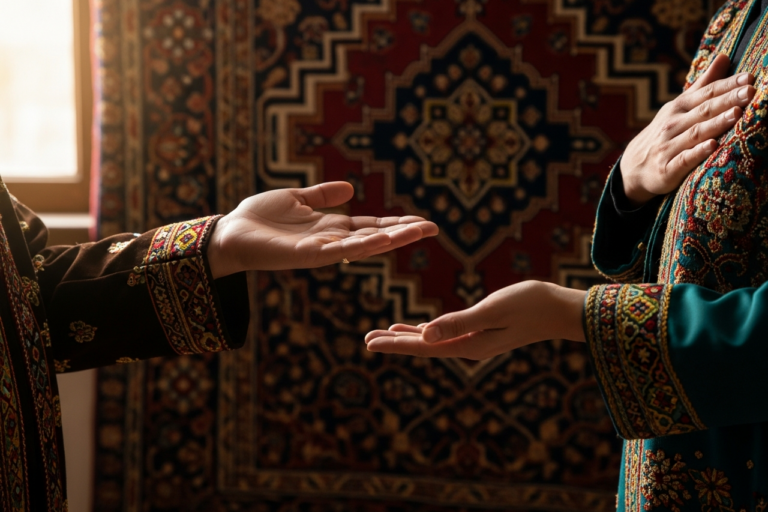
Respectful Gestures: Most men in Iran put their right hand over the heart and nod a little when they meet women. If you are a woman from the West, you can also bow your head to greet a man and then wait to see if he offers a handshake.
-
Cheek Kisses: Two or three soft cheek kisses between friends who are the same gender are common.
This is a good way to greet someone for the first time in iran. Starting with “salam” or a “good morning,” and knowing about formality can make your talk go well.
Common Ways to Say Hello in Iran
When you meet people in Iran, knowing a few common phrases can help a lot. The most used Persian word is “salam.” It means “hello.” People use it all the time, whether they are in busy markets or at formal events. If you visit Iran, this is the first Farsi word you should learn.
“Salam” is what most people use, but there are other greetings too. One word you might hear is “dorood.” Each word has a different feel to it. When you know these common greetings, you will feel better and more sure when you talk with Iranians. So, let’s look at “salam” and some other favourite greetings here.
The Everyday “Salam”
The word “salam” is the most important way to say hello in the Persian language. The pronunciation is easy for people who speak English. You just say it like “suh-laam.” You can use this versatile greeting almost anywhere. It works for formal or informal speech, so it is very helpful if you want to get started in a new language.
There are a few simple ways to use “salam.” Just say “salam,” or you can add something like, “How are you?” This greeting is easy for anyone to get. You will look friendly and polite. You can use it when you walk into a shop, meet a friend on the street, or go to a business meeting. In Iran, “salam” is the right thing to say.
When you talk in an informal way, “salam” is often enough all by itself. You do not need other phrases. Later, when you know more about the language, you can use other greetings. But “salam” will always be a good, simple way to start any talk. It is a big part of daily life and how people speak to each other in Iran.
Other Popular Greetings: Dorood and Beyond
While “salam” is the main way that people greet each other in Persian, there are a few other ways to say hello. “Dorood” is another word that people use a lot. It is seen as more old-fashioned or poetic. You can think of it as a little more formal than the usual hello. This word also shows warmth and respect to the person you are talking to.
Persian speakers use many kinds of greetings, and these often change based on where you are and who you are talking to. That gives their talks a special warmth and depth. You may hear native speakers using phrases that sound like “What’s up?” or “How’s it going?” with their friends and family.
Some other usual informal greetings are:
-
Che khabar?: This one means “What’s the news?” but people use it just like “What’s up?” when they talk to their friends.
-
Chetor peesh meere?: This means “How’s it going?” and is an easy way to ask how someone is.
-
Khoob-ee?: This is a simple way to ask, “Are you well?” Friends who know each other well often use this.
Greetings by Time of Day
Just like people do in Canada, Iranians have their own greetings for each time of day. When you use the right words for that time, it shows you want to know more about the Persian language and culture. Saying “good morning,” “good afternoon,” or “good evening” in Persian is a simple and kind way to connect with others.
These greetings help your talks feel more clear and fit the situation. They are often used in both casual and formal times. Here are the phrases you can use at different times of the day.
Morning, Afternoon, and Evening Variations
Using time-specific greetings is a wonderful way to connect with people in Iran. These phrases are common and show that you’ve made an extra effort to learn the language. The morning greeting is particularly popular and often paired with a warm smile.
You can use these greetings on their own or after saying “salam.” For example, you might say, “Salam, sobh bekheir!” to wish someone a good morning. This adds a friendly and polite touch to your interaction.
Here is a simple guide to the Persian word for each time of day greeting, along with a pronunciation tip.
|
English Greeting |
Persian Phrase |
Pronunciation |
|---|---|---|
|
Good Morning |
Sobh Bekheir |
sohb be-khayr |
|
Good Afternoon |
Ba’d az zohr Bekheir |
bad as zohr be-khayr |
|
Good Evening |
Asr Bekheir |
asr be-khayr |
Regional and Seasonal Expressions
While people in Iran mostly use the same greetings, you may hear some slight changes in the way people speak or in their choice of words, depending on the area. These changes are not big. The Persian language is not just spoken in Iran. People in Afghanistan and Tajikistan also speak it. Each country has the, and also makes, its own small changes to how greetings are said. Still, if you are a traveller in Iran, the usual greetings that people use will work and be understood everywhere you go.
People also have special ways of greeting each other during big times of the year. The best example is Nowruz, which is the Persian New Year. It happens when spring starts. When you tell someone “Happy New Year” during Nowruz, it means a lot and is one of the most important customs.
Here are some greetings to know:
-
Nowruz Mobarak / Eid-eh Shoma Mobarak: When you wish someone “Happy New Year” during Nowruz with these Persian phrases, you show respect for the holiday.
-
Saleh No Mobarak: You can also say this, and it means “Happy New Year,” too.
Knowing how to say these simple but important happy new year greetings is a good way to join in the celebrations that matter most in Iran, Afghanistan, and many places where Persian is spoken. It helps you meet people and show that you care about their ways of life.
Formal vs. Informal Greetings
Knowing the difference between formal and informal speech is very important in Persian. In fact, it is often more important than in English. The formality you use changes depending on your relationship with the other person, how old they are, and what their social standing is. If you use the wrong level of formality, people may think you are rude or too relaxed.
In Persian, you use formal greetings when you talk to elders, people in charge, or someone you just met. You switch to informal speech when talking with friends, family, or those who are the same age as you. Next, we will see how to use the right greetings and formality in different situations.
Meeting Someone for the First Time
When you meet someone for the first time in Iran, you need to be formal. Always say a person’s title and their last name. This shows respect and is the way things should go during a first conversation. For men, you say “Agha.” For women, use “Khanoom.” For example, you can call someone “Agha Tehrani” or “Khanoom Tehrani.”
If the person is a doctor or has a PhD, use their work title instead. Wait until they tell you it’s okay to use their first name. This means your relationship has become less formal.
During the first time you greet a woman, a handshake might not be right. Let her decide what greeting to use. For women when they greet men, a small bow or nod works well and shows respect. The next time you meet, greetings could feel a bit less strict. Still, it is always good to be careful and polite.
Friendly and Family Exchanges
When you greet friends and family in Persian, the tone gets warmer. People let go of formal titles, and use informal speech instead. There is more room for real closeness.
A simple “hello” is not enough for native speakers. They often go further in greetings. They might ask about each other’s well-being and families to show they truly care.
In these moments, you will notice these things:
-
Informal Language: Friends say “chetor-ee?” for “how are you?” instead of using a formal style.
-
Cheek Kisses: People of the same gender often kiss each other’s cheeks two or three times.
-
Embraces: Women who are good friends may first shake hands, then embrace each other the next time they meet.
These are some ways that greetings in Persian culture turn simple talks into warm and real connections.
Conclusion
When we look back at our talk about greetings in Iran, we can see these greetings are a big part of their culture. People often say “Salam,” but greetings change with the time of day or who you meet. Knowing about these greetings will help you get along with people and makes meeting others feel good. It does not matter if you meet someone for the first time or you see an old friend, these greetings play a big part. Saying a warm hello in Iran is the start of many good relationships. If you want to know more about greetings or traditions in Iran, feel free to ask for more info!
Frequently Asked Questions
How do you ask “How are you?” politely in Persian?
The most polite way to ask “How are you?” in Persian when you are meeting someone for the first time is “Hālé shomā chetor-é?” You say it like this: “haa-leh sho-maa che-tor-eh?” If you are talking with friends, you can just say “Chetor-ee?” Persian speakers will like it when you use the formal way the first time you meet them.
What’s the proper way to respond to a greeting in Iran?
When someone says “salam,” the usual thing to do is say “salam” back. If they ask how you are, you can say, “Khoobam, merci,” which means “I’m well, thank you.” It is polite to ask them how they are, too.
How do Canadians adapt to Iranian greeting customs?
Canadians can adapt when they notice and respect others. It is good to start with a spoken hello and a small nod. When men meet women or women meet men, do not begin with a handshake. Wait to see if the other person offers first. Showing cultural awareness matters most in the first conversation.