Key Highlights
-
To have a good time in the United Arab Emirates, it is important to know the basics of UAE culture.
-
Learning a few Arabic greetings helps you show respect and also makes your cultural awareness better.
-
The most common greeting is “As-salaam ‘alykum.” It means “peace be upon you.”
-
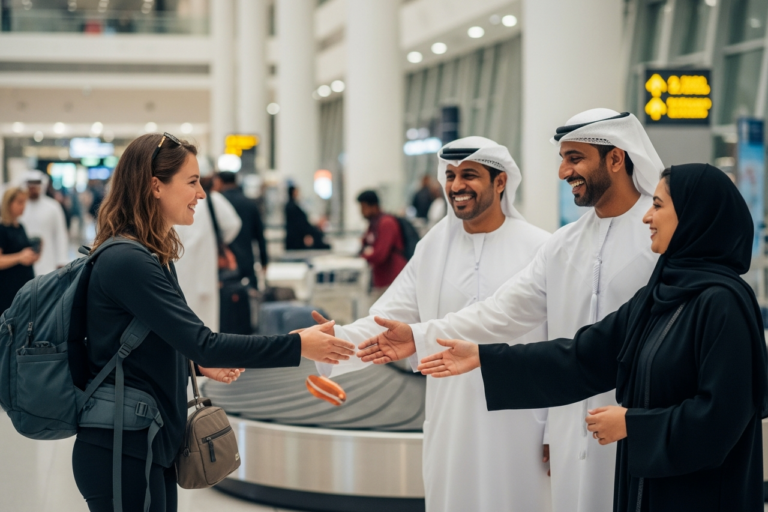
Men in the UAE usually greet with a handshake, but you should be careful when greeting the opposite gender.
-
Hospitality is a big part of Emirati life. It is often shown by serving Arabic coffee.
-
Always use your right hand when greeting or making gestures. This shows a sign of respect.
Introduction
Welcome to the United Arab Emirates! If you plan to go there, it helps to learn about the local ways. People in the UAE are famous for their good hospitality and love to welcome guests. This can be seen in how they greet others. Using some basic Arabic greetings can go a long way and help you connect with people you meet in the UAE. It is a good way to show respect and take in all that is special about UAE culture. When you use even a few words in Arabic, people see your effort and treat you well. This small step helps make your visit better.
Understanding UAE Greeting Customs: An Overview for Canadians
When you visit the UAE, you will see that a greeting is more than just saying “hello.” In the Arab world, a greeting is an important part of how people connect with each other. It is tied to hospitality and respect. When you greet someone, you share warmth and welcome. That greeting helps shape how the rest of your talk will go.
For Canadians, it is good to learn how people greet each other in arabic and know about arab culture. This helps you in the arab world and lets you connect well with others. Most times, people use a simple word or phrase to greet a person. They may add a gesture too. This shows how strong the feeling of hospitality is in the region.
The Role of Hospitality and Respect in Emirati Culture
Hospitality is a big part of life in the UAE. You will find it in everything people do. It is more than being nice or good to others. It shows a real sign of respect and comes from Islam. When you meet someone in the UAE, you will notice people are welcoming right away.
This friendly way of life is in many small things. When arab men meet each other, they may shake hands and touch noses. This is a common greeting. You might also be given arabic coffee as a welcome. The way someone gives you the coffee also matters. If you get a half-full cup, it means you should stay and talk. If your cup is full, it means this visit is short.
All of these actions show how much people value giving and sharing. They also show mutual respect. If you take part in these customs, like taking arabic coffee, it shows you give respect to the local culture. This is a big part of the way people in the UAE live.
Common Greetings and Their Meanings in Emirati Arabic
Learning a few basic Arabic phrases is a great way to connect with people in the UAE. The most common of all Arabic greetings is “As-salaam ‘alykum,” which translates to “peace be upon you.” It’s a beautiful expression that reflects the cultural values of peace and goodwill. The standard reply is “Wa ‘alaykum as-salaam,” meaning “and upon you, peace.”
Besides this universal greeting, there are other friendly ways to say hello. “Ahlan” is a simple and versatile “hello” you can use anytime. For a more formal version, you can say “Ahlan wa Sahlan,” which means “welcome.” You’ll also hear time-specific greetings, like “Sabah al-khayr” for “good morning” and “Misa’ al-khayr” for “good evening.”
Here are some common greetings you can use:
|
Greeting (Arabic) |
Meaning |
|---|---|
|
As-salaam ‘alykum |
Peace be upon you |
|
Ahlan |
Hello |
|
Marhaba |
Welcome |
|
Sabah al-khayr |
Good morning |
|
Misa’ al-khayr |
Good evening |
What Canadians Need to Know Before Greeting in the UAE
Before you start using new Arabic phrases, it’s good to know the etiquette that comes with them. In UAE culture, the way you greet people holds just as much value as the words you say. Having some cultural awareness can help you move through social settings in a smooth and respectful way.
If you know the social rules, your greetings will land well with people. For example, using the right hand and knowing about gender in greetings both matter a lot. A bit of preparation can really help. Here are some rules and gestures to keep in mind when you use Arabic phrases in the UAE.
Important Etiquette Rules and Social Norms
Following local etiquette is a sign of respect in the UAE. When you are greeting someone, your body language and actions tell as much as your words. It is good to greet each person in a group one by one, not just to talk to everyone as a group. People see this personal touch as very polite.
One of the top rules is to always use your right hand for greetings. You should use it when you shake hands, give a gift, or take something from someone. The left hand is seen as unclean, so you should not use it for these things. For arab men, using a handshake is very common for a greeting. The handshake might last longer than what you do in Canada.
Here are some of the main rules of this etiquette:
-
Always use your right hand for greetings and exchanges.
-
When you go into a room, greet each person alone, if you can.
-
Stand up when an elder or someone more important comes in the room to show them respect.
-
Look people in the eye and smile to show you are sincere.
Gender Considerations and Greeting Gestures
Greeting men and women in the UAE needs some thought and a sense of what is respectful. A handshake is normal between Arab men. But most physical contact does not happen between men and women, especially if they have strong traditional values.
If you are a man meeting a woman, or a woman meeting a man, it is good to wait and watch. Look to see if they start to offer a handshake or not. This is because many Arabs will not want contact with the opposite gender. This is because of the way religion and old customs are in the UAE. If there is no handshake, just give a small smile and nod your head. This is an okay and kind way to say hello.
To walk through these times well:
-
When you greet the opposite gender, let them start if there is going to be a handshake or other physical greeting.
-
If there is no handshake, use words, give a kind nod, and that’s good.
-
If someone does not agree to shake your hand, do not take it badly. This is just how people greet in the UAE and is not about you.
This way, you show you care about local ways when you greet Arab men, women, and all the other people you meet while in the UAE.
Beginner’s Guide: How to Greet in the UAE
Ready to try some basic greetings? It is easier than you think. When you learn a little bit of Arabic, you show that you have respect and interest in the local culture. This is a great way to show cultural awareness while you are in the UAE. Even a small effort like this can help you have better interactions with people.
If you get even a few words right, people will notice. They will like that you tried. This guide will help you with the basics of Arabic greetings, and what gestures to use too. You will know what to say, and you can meet people with more confidence.
What You’ll Need to Get Started – Language Tips and Cultural Awareness
To start using greetings in the UAE, you need to be open to learn and have some cultural awareness. You don’t have to know basic Arabic, but if you learn a few key phrases, it will help a lot when you talk to people. Try to get the pronunciation close and say the words in the right way for what you want to express.
When you use the language, people in the UAE will notice and they will feel good that you tried. They will see that you took time to know about their culture. Having a friendly smile and being polite will always help and will work well with anything you say.
Here are a few language tips to get you going:
-
Start with “Ahlan” (hello) or “Marhaba” (welcome) if you want an easy, all-round greeting.
-
Listen to how people around you say the words and try to copy them.
-
Use a small smile and a little nod with your spoken greeting.
-
Don’t worry about making mistakes; trying is what really matters.
Step-by-Step Guide to Greeting Like a Local
Now, let’s bring everything together. Greeting someone like a local is a great way to be part of the culture. You need to use the right arabic greetings and also show the right body language. It is important to know when you should just say hello and when you need to use a more formal version. This can really help a lot.
This step-by-step guide will show you what to do. If you follow these simple steps, you will be able to use basic arabic phrases and easy gestures with confidence. This will help you make real connections with people. You will soon find greeting in arabic can feel good and easy.
Step 1: Choosing the Right Words and Phrases
The first thing to do is pick the right words for the time and place. There are many types of arabic greetings, and they fit different people, levels of greeting, or times. It’s best to start out with a few key phrases that you can use almost anywhere. The one that people use the most is “As-salaam ‘alykum.” This is a greeting that has a lot of respect.
When someone says “As-salaam ‘alykum” to you, you should respond by saying “Wa ‘alaykum as-salaam.” If you want to use something more easy and not as formal, go with “Ahlan,” which means hello, or “Marhaba,” which means welcome. These two are good for saying hello to all kinds of people, like shopkeepers or even people you meet for the first time. The word “Salaam” is the most relaxed version, much like just saying hi.
Here are some key phrases for arabic greetings:
-
As-salaam ‘alykum: A formal and often-heard greeting that means “peace be upon you.”
-
Ahlan: This is a friendly way to say “hello.”
-
Marhaba: Use this when you want to give someone a nice warm “welcome.”
-
Salaam: This is a casual type of “hi.”
-
Wa ‘alaykum as-salaam: This is what you say back to “As-s
Step 2: Appropriate Gestures and Body Language
After you pick your words, you need to match them with the right actions. Body language is important when you talk to people in the UAE. The main rule is to always use your right hand when you talk, give a handshake, or pass something to someone. This is a strong sign of respect.
When you greet someone, there is also a big focus on being warm and kind. People may pour rose water on your hands to greet you. This is an old Bedouin way to show that you are welcome. Sometimes, you may get offered Arabic coffee. These are all ways people show hospitality. If you take what is given, it is a polite way to show you feel thankful.
Key gestures to keep in mind:
-
Always use your right hand for a handshake or when you give or get anything.
-
A smile with eye contact is a good way to show you mean well and respect the other person.
-
If you get Arabic coffee or rose water, accept it to show you feel happy to be welcomed.
This is how people in the UAE use body language, a warm greeting, and little things like Arabic coffee, the right hand, and rose water as a simple sign of respect.
Greetings in Formal and Informal Situations
Greeting people in the UAE can be different based on where you are. A formal greeting in a business meeting is not the same as what you might say when you meet friends in Dubai. It helps to know these differences, as they make social life much easier for you.
You need to know how to change your greeting if you are in a work place or just with friends. We will talk about how greetings change at work or with friends, and how you can show respect to elders in the UAE.
Business Settings vs. Social Occasions
In a business setting in the UAE, greetings tend to be more formal and structured. A firm handshake (with the right hand, of course) and a formal greeting like “As-salaam ‘alykum” are standard. It is important to address people by their titles, such as “Mr.” or “Dr.,” followed by their first name, until you are invited to be more familiar.
On the other hand, social occasions allow for more relaxed and warm greetings. You might use phrases like “Ahlan” or “Marhaba.” When greeting shopkeepers or staff in a restaurant, a friendly and simple greeting in Arabic will be warmly appreciated. The key is to match the formality of your greeting to the situation.
Here’s a quick comparison:
|
Situation |
Recommended Greeting |
|---|---|
|
Business Setting |
“As-salaam ‘alykum,” firm handshake, use of formal titles. |
|
Social Occasion |
“Ahlan” or “Marhaba,” possibly a cheek kiss between same-gender friends. |
Greeting Elders and People of Higher Status
In Emirati culture, showing respect to elders and those in higher positions is very important. This is a value that comes from prophetic traditions. When someone older or a person with more authority enters the room, you should stand up to show respect right away.
It is good for you to start the greeting, as this is seen as a sign of respect. A gentle handshake is common. Sometimes, people kiss the elder’s hand or forehead, which is a strong way to show reverence. Using polite arabic phrases and calling them by formal titles also demonstrates your respect.
Here’s how you can show proper respect:
-
Always stand when an elder or someone of higher status comes in.
-
You should start the greeting.
-
Use formal titles and respectful arabic language.
-
If you are younger, you might kiss the forehead or shoulder of a well-respected elder.
Responding to Greetings and Special Occasion Phrases
Knowing how to greet someone in the UAE is important. But the polite response is just as key in UAE culture. The right answer shows you respect them. It also shows you are part of what is going on. For example, when you hear “Ahlan wa Sahlan,” it is good to answer with “Ahlan bik” if the person is a man, or “Ahlan biki” if it is a woman.
Greeting is not only for every day. There are also greetings for special times. Some of these are for religious holidays and big national celebrations. If you learn these words, you will get to join in the joy. It will help you make better ties with people in the UAE. Being able to say “ahlan” and “sahlan” in the right way helps you to fit in and be part of the moment.
Polite Ways to Reply in Emirati Culture
Politeness is very important when you answer a greeting in the UAE. The main thing to know is that you should always say “Wa ‘alaykum as-salaam” after someone says “As-salaam ‘alykum” to you. If you do not say this, people will see it as rude. This back-and-forth is common in Arabic talks.
There are also other set replies to different greetings. When someone says “Marhaba” (welcome), you should reply with “Marhaban bik” if it is a man or “Marhaban biki” if it is a woman. When you hear “Sabah al-khayr” in the morning, it is normal to answer with “Sabah an-noor” which means “morning of light.”
Here are some good and polite ways to answer greetings:
-
To “As-salaam ‘alykum,” reply with “Wa ‘alaykum as-salaam.”
-
To “Ahlan wa Sahlan,” reply with “Ahlan bik/biki.”
-
To “Marhaba,” reply with “Marhaban bik/biki.”
-
To “Sabah al-khayr,” reply with “Sabah an-noor.”
-
To “Misa’ al-khayr,” reply with “Misa’ an-noor.”
Examples of Greetings for Religious and National Holidays
While you are in the UAE, you might have a chance to take part in a religious or national holiday. Saying the right greeting on these days is a good way to join in and show you care. For the two big Islamic holidays, Eid al-Fitr and Eid al-Adha, people say “Eid Mubarak.” This greeting means “Blessed Eid.”
When it is the holy month of Ramadan, you can use “Ramadan Kareem” to say “Generous Ramadan,” or “Ramadan Mubarak,” which means “Blessed Ramadan.” When it’s UAE National Day on December 2nd, you can give your best wishes for the country’s growth and happiness.
Some greetings you can use for special occasions in UAE:
-
Eid Mubarak: Say this during Eid al-Fitr and Eid al-Adha.
-
Ramadan Kareem/Mubarak: Use these during Ramadan.
-
Kul ‘am wa antum bi-khayr: You can say this on holidays and at New Year. It means “May you be well every year.”
Knowing these ways to greet people will help you take part in celebrations in the UAE and show respect for local customs.
Conclusion
To sum up, it is good for Canadians to know about greeting customs in the UAE. This helps you build good ties and show respect for local ways. The welcoming and kind nature of Emirati people means greetings are important, both in business and in daily life. When you know the right phrases and gestures, you can feel sure when you meet people. Giving a warm hello does more than just start a chat. It also shows you respect the rich mix of culture in the UAE. Before you go, try to learn a bit about how to greet people. You will get more from your time there and have good moments with the people you meet. If you want tips or want to know more about Emirati culture and hospitality, you can ask for a free consultation!
Frequently Asked Questions
What is the most common way to greet someone in the UAE?
The most common greeting to use in the UAE is “As-salaam ‘alykum.” This Arabic greeting means “peace be upon you.” People often use it in many different situations. It is very respectful and simple to say. Of all the Arabic greetings in the UAE, you will hear this one the most. It’s a good greeting to know first if you want to use the right words.
Are there greetings that should be avoided in the UAE?
There are not any special arabic phrases you need to stay away from. It is more about the way you act. Try not to be too casual with older people or when you are in a formal place. For example, if you just say “hi” and wave, some people might think it is rude. It is good to show that you understand cultural awareness by using a more formal greeting in arabic. That is always a smart choice.
How do you greet someone of the opposite gender in the UAE?
When you greet someone of the opposite gender, it is good to wait for them to make the first move. Do not put out your hand for a handshake right away. Just saying hello with a kind nod and a smile is a good and proper way to show respect if they do not give their hand.
How do you say hello in Emirati Arabic?
There are many ways to say “hello” in Arabic. The word “Ahlan” is a simple and friendly greeting. Another word, “Marhaba,” means “welcome,” but people use it often for saying hello too. If you want to use a more formal greeting, you can say “Ahlan wa Sahlan.” All these arabic greetings like ahlan, sahlan, and ahlan wa sahlan are good to use every day when you talk to people.