Key Highlights
-
Switzerland has four official languages. Which greeting you use depends on the region. These languages are Swiss German, French, Italian, and Romansh.
-
“Grüezi” is the most well-known Swiss German greeting. It is a polite way to say hello when you meet someone you do not know.
-
People often use informal greetings like “Hoi,” “Sali,” and “Salü” when talking with friends or among younger people.
-
Swiss greetings often change with the time of day. For example, people say “Guete Morge” when they want to say good morning.
-
In places where people speak French, “Bonjour” is the main way to greet. In Italian-speaking parts, “Buongiorno” is used instead.
-
It is important to know if you should use a formal or informal greeting in Switzerland. This is a key part of Swiss etiquette.
Introduction
Welcome to Switzerland! If you are from Canada and here as a visitor, you will see that giving a simple greeting can help you speak with people. Most of the time, things like “hello” will work, but the swiss culture is full of life. There are four official languages in daily life. That is why a greeting in switzerland can feel new and not like back home.
This guide shows you the different ways people say hello all over switzerland. For example, in swiss german, people say “Grüezi.” If you are in the west, you might hear “Bonjour.” This will help you know how to greet people as you travel around.
Common Ways People Greet Each Other in Switzerland
The first thing you should know about greeting someone in Switzerland is that there are many ways to do it. This is because Switzerland has four official languages. These are German, French, Italian, and Romansh. So, the common greeting will be different based on where you are in the country. A lot of people use swiss german dialects in their day-to-day life. But as you go from one place to another, you will hear other greetings.
The way you greet people also depends on the moment. Are you seeing someone for the first time, or are you with a good friend? The situation makes a big difference because swiss greetings can be either more or less formal. Many people in Swiss cities know and use English. Still, when you use a greeting in the local language, you show respect for the person you meet. Now, let’s take a look at some of the most common ways to say hello in Switzerland.
1. Grüezi – The Classic Swiss German Greeting
If you want to learn just one swiss german greeting, pick “Grüezi.” This word is the polite way to say hello in the german parts of switzerland. It is a formal greeting and good for someone you do not know, for shopkeepers, and for business talks. The way to say it can be tough for learners. It sounds like “Gryətsi” or “Groo-et-see.”
“Grüezi” comes from the old polite sentence, “Ich grüsse Sie,” which means “I greet you.” Because of this, it is formal. If you need to greet more than one person, say “Grüezi mittenand.”
Even though it is a formal greeting, lots of people use it, so it is a safe and friendly greeting for most daily moments in swiss german regions. This word is good to know if you want to make a good first impression.
2. Hallo and Its Use Across Switzerland
You may wonder if you can just say “Hallo” when you are in Switzerland. The answer is yes. “Hallo” is a common greeting in German-speaking places. It is much like the English “hello” and easy for people to know what you mean. Many younger people use “Hallo” when they greet friends or people they know, especially in informal situations.
It is true that “Hallo” is more casual than saying “Grüezi.” Still, you can hear “Hallo” in some formal settings that are not too strict. The word comes from High German, so anyone who knows standard German can understand it.
“Hallo” is a good, everyday greeting that works for many purposes. No matter if you are in a big city or out in a small town, you’ll notice people use this word often. It is a safe and friendly way to say hello while you are in Switzerland and fits well in your daily life.
3. Hoi, Salü, and Sali – Informal Hellos
When you are with friends, family, or people you know well, you can use more informal greetings. In Swiss German areas, “Hoi,” “Salü,” and “Sali” are common. These words help make the atmosphere friendly and casual, like saying “hi” or “hey” in Canada. Many younger people use “Hoi” the most.
Swiss German greetings are one of the key differences from how people say hello in Germany. In Germany, “Hallo” is the usual way to greet someone informally. But in Swiss German, there are special common phrases you can use. When you talk to a group of friends, say “Hoi zäme.” It means “Hi everyone.”
Here is a quick look at some informal greetings:
-
Hoi: This sounds like “Hoy” and is a common and casual way to say “hi.”
-
Salü/Sali: These are said “Sa-loo” or “Sa-lee.” They come from French and people use them with acquaintances.
-
Ciao: You say this as “Chow.” It comes from Italian and is a popular way to say both hello and goodbye.
4. Guete Morge, Guete Daag, and Guete Abig – Greetings by Time of Day
Just like in Canada, Swiss greetings often change depending on the time of day. Using these phrases is a polite way to acknowledge the time and is appropriate in both formal and informal settings. These greetings are straightforward and easy for visitors to learn and use.
For instance, “Guete Morge” is the perfect way to start your day when entering a bakery or greeting someone on the street before noon. As the day progresses, you can switch to “Guete Daag.” In the evening, “Guete Abig” is the standard.
Here is a simple table to help you remember these useful phrases:
|
Swiss German Phrase |
Pronunciation |
English Meaning |
|---|---|---|
|
Guete Morge |
Goo-eh-ten more-gen |
Good morning |
|
Guete Daag |
Goo-eh-ta togg |
Good day |
|
Guete Abig |
Goo-eh-ten ah-beeg |
Good evening |
5. Bonjour, Buongiorno, and Allegra – Greetings in French, Italian, and Romansh Regions
Switzerland shows its language mix when you travel from one part to another. In the west of the country, people speak French. The usual greeting here is “Bonjour.” You can say it in both formal and casual settings, and it means “good day.” If you want to say hello to friends in a more relaxed way, you can use “Salut.”
If you go south, to the canton of Ticino or the lower part of Graubünden, you’ll hear Italian spoken. People greet each other with “Buongiorno,” which means “good morning” or “good day.” “Salve” works well as a neutral greeting, and friends will often say “Ciao” to each other. If it’s the evening, say “Buonasera.”
A smaller group in Switzerland speaks Romansh. You will hear it in some valleys in Graubünden. To say an informal hello in Romansh, use “Allegra.” If you want to say “good day,” try saying “Bun di.”
Regional Variations in Swiss Greetings Canadians Should Know
As you go through Switzerland, you will see that people say hello in different ways. Even when people in the same part speak Swiss German, how they greet you can change a little. The way people in Zurich talk and use words can sound different from how people speak in Bern. These small changes are a big part of who the people in each place are.
If you are visiting from Canada, these different ways of greeting are not a big deal. Most people in the German part of Switzerland will know the word “Grüezi.” They use it a lot, and people understand it everywhere. Still, if you learn about these little differences, it can help you enjoy your trip more. It will also show the people there that you care about their Swiss culture. Let’s take a look at some greetings you might hear in each region.
6. Typical Greetings in Zurich and Urban Areas
In a busy city like Zurich, you will find people have many ways to greet one another. This shows how the city has people from all over the world. “Grüezi” is still the main way to say hello in daily life. The local swiss german dialect brings its own tone to greetings. You will often hear it on trams, in cafes, and at the markets.
People in Zurich speak a dialect known as Züritüütsch. This is just one of the swiss german dialects you may hear. The locals use greetings for parts of the day, like “Guete Morge” for good morning, and “Guete Abig” for good evening. Zurich is a big city with many visitors and people from other places, so you may also hear “Hallo” or even the english “Hello.” These are common, especially with younger people and those at work.
The way they say the words, or their pronunciation, can change a bit from other parts of Switzerland. You should not let that worry you. People in Zurich are used to people from other places and other accents. They will like that you try to use a swiss greeting. If you are unsure what to say, use a simple and friendly “Grüezi.” It suits every situation and will be welcome.
7. Unique Ways People Greet Each Other in Bern and Other Cantons
The canton of Bern has a dialect that is easy for even other Swiss people to spot. People in the Bern region use their own common greeting, and you will hear it spoken in their own way. “Grüezi” is still known here, but the sound of their greeting can be different. Sometimes, the words are a bit different too. This shows how rich the culture is in Switzerland.
The differences in greeting and pronunciation are in other cantons, too. For example, you will notice that Basel has its own way. You may hear other informal greetings in cantons like Aargau, Solothurn, Fribourg, or Valais. Every region is proud of its way of saying hello. Each one brings something special to the big Swiss picture.
If you are just visiting, there is no need to know how to use every single local dialect. The most important thing is to listen and look at how people say hello around you. If you use the standard common greeting like “Grüezi” or “Bonjour,” people will get what you are saying. You will be welcome in any canton.
Essential Etiquette for Greeting Strangers and Locals in Switzerland
When you say hi to people in Switzerland, a little good manner makes a big difference. The Swiss people care about being polite and a bit formal. This is even more important when you are meeting someone for the first time. No matter if you are in a big city or in a little mountain town, it is the way to greet people you see on a walk or when you go into a small store.
If you are Canadian, you will see that Swiss people are friendly. But at first, they might be a bit more quiet or reserved. Giving a simple and polite formal greeting is a good way to start talking. Always say something formal like “Grüezi” or “Bonjour” to people you don’t know, adults you have just met, and in work places. This kind of greeting shows you have respect. For the Swiss, it is an important part of daily life, and they expect it each time you meet someone for the first time.
8. Do’s and Don’ts of Greeting Customs for Canadian Visitors
Meeting people for the first time in a new country can be tough. It almost feels like you need to learn a new language. In Switzerland, you just need to follow some easy rules. This will help you feel sure of yourself and polite. The biggest thing to remember is to say hello to people. It is seen as nice to greet someone in many places.
This polite greeting is a big part of Swiss life. When you walk into a doctor’s office or a small shop, you should give a quiet and friendly greeting. It may be small, but it means a lot. You can think about your greeting skills as handy as a Swiss army knife. They help you fit in.
If Canadians are visiting, here are a few tips you can use:
-
Do greet people when you walk into small shops, places to eat, or lifts. You can say “Grüezi” or “Bonjour” to be friendly.
-
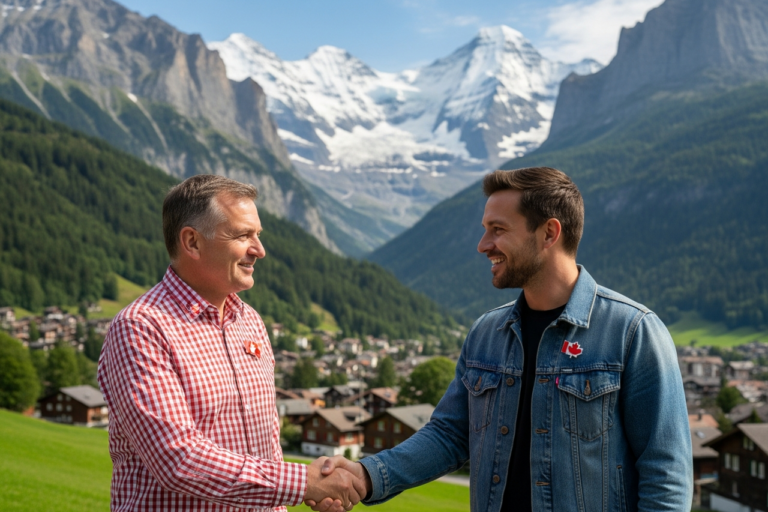
Do look at the person and shake hands when you meet someone for the first time.
-
Don’t use informal greetings such as “Hoi” or “Ciao” if you do not know the person, or if they are older than you. You should use the polite form for greetings.
-
Don’t speak too loud or act too casually. The Swiss often like it when people be calm and respectful.
Conclusion
To sum up, knowing how people say hello in Switzerland can really help you enjoy your time in this beautiful place. You might hear the classic “Grüezi” or the easy-going “Hoi.” Using these greetings shows you care about local ways and helps you be friendly with Swiss people. Remember, different places in Switzerland may have their own ways of saying hello, so learn what fits best where you go. When you use these simple greetings, you show respect and make a good mark. If you want to learn even more about swiss life and the customs in Switzerland, get a free consultation with our travel experts today!