Key Highlights
-
Singapore is a multicultural country. The way people greet each other in Singapore comes from Chinese, Malay, and Indian groups.
-
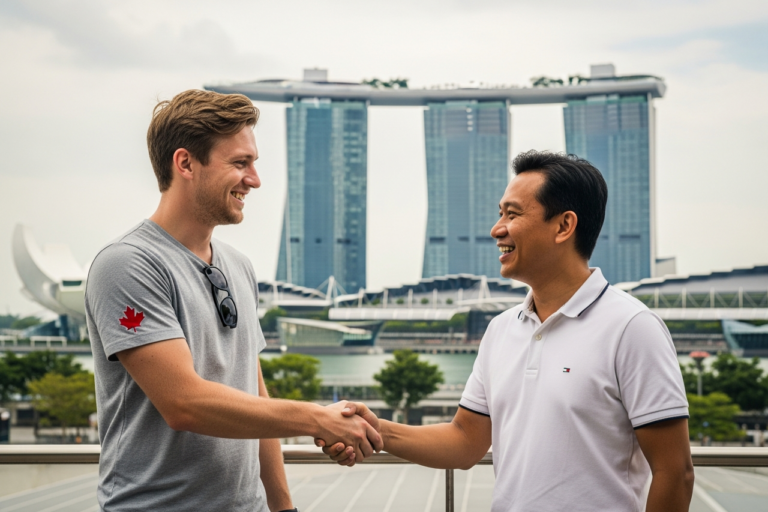
The most usual and customary greeting in Singapore is a handshake. It is good to use at most social times and in business meetings too.
-
People speak English a lot, but learning some basic phrases in Mandarin, Malay, or Tamil can show respect for Singaporean culture.
-
“Singlish” is a local creole in Singapore. It has its own greetings, like “Hello, lah!”, which the locals often use when they talk with each other in informal moments.
-
In Singapore, business etiquette is quite formal. It is important to be on time, have a good handshake, and follow a way of giving and getting business cards.
Introduction
Welcome to Singapore! If you are from Canada and you are visiting this multicultural country, you will soon see how different people come together here. Singapore is the kind of place where many cultures, ways of life, and languages are all part of the daily scene. Knowing how to greet others is a key to meeting people. When you use the right greetings, you show respect and open the door to good talks.
This quick guide helps you with greetings in Singapore. It covers how to say a simple “hello” when you meet someone out in the city, and what you should do in more formal business meetings. With this guide, you can feel sure and polite when talking to others in Singapore, no matter the place or situation.
Understanding Singapore’s Multicultural Society
Singapore is known for being a multicultural country. The people here come from many backgrounds. Most are Chinese, Malay, or Indian. This mix is at the heart of Singaporean culture. It touches every part of life, from food to how people act.
When you talk to people in Singapore, you will see that English is used by many. Still, people can speak in a way that is not always direct. This is different from how it might be in Canada. The rich blend of cultures shapes how people greet each other. You may hear greetings in different languages and see many customs, all in one place.
Major Ethnic Groups and Their Influence on Greetings
The way people greet each other in Singapore comes from its main groups: Chinese, Malay, and Indian. Each of these groups has its own way of doing things, and this shapes how greetings are done. Most of the time, a handshake is good and people use it often. Still, there are some small changes. For example, some older Chinese people in Singapore may choose to give a small nod instead of taking your hand.
In the Malay group, it is common to touch hands softly and then place a hand over the heart. People do still use a handshake here as well. For those from India, shaking hands is normal too, but sometimes you might see the “namaste” as a greeting.
If you use a greeting in someone’s own language, like Mandarin or Malay, it is seen as a sign of respect. Singaporeans will notice when you try, and it shows that you want to connect to their roots. Even saying a short phrase in their language in a nice way can mean a lot.
Languages Spoken and Regional Variations in Greetings
Singapore has four official languages: English, Mandarin, Malay, and Tamil. English is the language of business and administration, making it a convenient common ground for Canadians. However, you’ll hear a rich tapestry of languages and dialects spoken across the island.
Making an effort to learn a few basic phrases in the other official languages can make your interactions more meaningful. It’s a simple gesture that shows you respect the multicultural nature of the country. Singaporeans are generally welcoming and will appreciate your attempt to connect with them in their mother tongue.
Here is a table of some useful greetings you can use during your visit:
|
Language |
Hello |
How are you? |
Thank you |
|---|---|---|---|
|
Malay |
Selamat (pagi/tengah hari/malam for morning/afternoon/evening) |
Apa khabar? |
Terima kasih |
|
Mandarin |
Nǐ hǎo (你好) |
Nǐ hǎo ma? (你好吗?) |
Xièxie (谢谢) |
|
Tamil |
Vaṇakkam (வணக்கம்) |
Eppati irukkirirkal? (எப்படி இருக்கிறீர்கள்?) |
Naṉṟi (நன்றி) |
Everyday Greetings You’ll Hear in Singapore
When you are out in Singapore, you will notice people use many ways to say hello. The easiest way is to say “hello” or “hi” because most people in Singapore speak and understand English. This way is good and friendly in almost any daily meeting.
In Singapore, you may also hear other types of greetings. Some people say “auntie” or “uncle” when they talk to older people they do not know. This is a sign of care and respect. The way people mix English and other words is something special about greetings in Singapore.
Common English Phrases and Canadian Perspectives
When you are in Singapore, you can use English for your greetings, and you will fit right in. English is one of the main languages in Singapore. People use it for most work and for school. You can say “Hello”, “Good morning”, or “How are you?” and most people will say it back. This helps things go well when you meet someone for the first time.
The most common way to greet someone is with a handshake. This is like what many people do in Canada. The handshake in Singapore is usually firm but may not be as strong or last as long as what you might use back home. It is still friendly and good to know that bit of the local way.
Here are a few things you should know:
-
Politeness comes first. Always say words like “please” and “thank you.”
-
Show respect to elders. Say “Mr.” or “Mrs.” when you talk to them.
-
You can always use normal English greetings to start a talk. They are a good way to be polite and make a good start.
Singlish Expressions: “Hello” and Other Local Greetings
When you spend some time in Singapore, you will hear Singlish, the special and lively kind of English spoken there. Singlish mixes English with words and grammar from Malay, Mandarin, and Tamil. You may not get it right away, but knowing some basic phrases can help you follow what people say in singapore.
A typical greet in Singlish starts with “Hello,” and people often add the word “lah” at the end, like “Hello, lah!” This is a very casual way to greet and is used between friends and those you know well. Singaporeans usually switch to normal english when they talk to people who are not local, so you may not get greeted this way, but it’s helpful to know this basic singlish word.
Here are some other informal greetings in Singlish:
-
“Makan already?” (Have you eaten?) People say this to check in on someone and show care.
-
“How’s it going, leh?” This is another casual and friendly greet people use.
-
Pay attention to how words sound; Singlish is full of feeling and what is said often changes by who you are with and what is happening.
Singlish is an important part of how singaporeans talk and adding words like “lah” makes talking in singapore fun and local. Pick up a few basic phrases, and you will get closer to the way people in singapore greet each other.
Navigating Formal and Informal Greeting Situations
Yes, greetings in Singapore change based on where you are and who you talk to. At business meetings or when you meet elders, it is good to use a more careful and polite way to say hello. This shows respect and matches what is expected in these formal places. For relaxed times with your friends, family, or others you know well, you can use a more simple or easygoing greeting.
It is important to know the difference between formal and casual times in Singapore. If you want to make a good mark, you should know about singaporean culture and the right way to speak. There is a high value put on respect and knowing about the hierarchy. Make sure you change your greeting when you need to. You should also look at things like what people wear, the place you are in, and how others act so you know the best greeting to use.
When to Use Formal vs. Casual Greetings
Knowing when to switch between formal and casual greetings is a good skill to have in Singapore. You should use formal greetings in work situations, when you meet someone for the first time, or when you talk to someone older or with more power. When you add titles like “Mr.,” “Mrs.,” or “Doctor,” it is a clear sign of respect.
Casual greetings are better for friends, family, or colleagues you know well. Saying lines from Singlish or simple questions like “Have you eaten?” are okay in these relaxed times. It is a good idea to go with a formal greeting first. Then you can wait for your Singaporean counterparts to show if being casual is fine.
If you are not sure what to do, it is better to pick a formal greeting. This shows you care and you think about local customs. Your hosts in Singapore will see this as a sign of respect. If you can be informal, they will tell you.
Key Differences in Family, Social, and Work Contexts
The way people greet each other in Singapore depends a lot on the place and the group. In the family, it is very important to show respect to those who are older. People usually say hello to the oldest in the group first. They may also give a slight bow or a nod to show their respect.
When you are with friends or others of the same age, people are more relaxed. They may just say “hello,” shake hands, or give a friendly wave. People talk more easily, and the feel is open. But if you meet someone new, it is good to start with a polite handshake.
At work, the way people greet is more serious, and they follow the hierarchy.
-
You should always speak to people by their job title and surname unless they say you can use their first name.
-
Business meals are normal, but they are mostly for getting to know people and not for talking about work.
-
It is important to greet the person with the highest position in the room first as a sign of respect.
Essential Greeting Etiquette for Canadians Visiting Singapore
If you are a Canadian going to Singapore, it is good to know how people greet each other there. Paying attention to local greeting etiquette is a big sign of respect. Some ways will be the same as back home, like shaking hands. But, there are a few small things that are not the same. These differences matter in Singapore. Watch for things like body language and certain gestures. This will help you get along better with people.
When you know about these things, it shows you want to learn about their culture. This is a good way to make new friends and have people welcome you, both for work or fun. Here are some tips that will help you know what to do and what not to do when meeting people in Singapore.
Do’s and Don’ts: Gestures, Bodily Cues, and Respectful Behaviour
In Singapore, it is very important to know how non-verbal communication works. The way you move or what your body does can tell others a lot. For example, when you give or take things like business cards or gifts, it is good to use your right hand or both hands. This shows a sign of respect to the other person. Some people in Singapore think the left hand is not clean, so you should not use it.
Keeping good eye contact lets the other person know you are interested in what they say. But do not stare for too long, as that may look unfriendly. Watch the facial expressions of singaporeans because they often share their feelings in small ways. A simple and gentle nod can show you are listening and that you care. When talking to someone, it is also best to stand at least an arm’s length away to respect their space.
Here are a few key points:
-
Do use both hands or your right hand to give and receive items.
-
Don’t point with your index finger; instead, use your whole hand to gesture.
-
Don’t touch someone on the head, as it is considered the most sacred part of the body.
Greeting Elders, Authority Figures, and Peers
There is a strong respect for hierarchy in Singapore. You can see this in the way people greet each other. When you meet elders or people with more authority, your greeting needs to be more formal and to show respect. It is common to give a small bow of the head with your handshake. This is a clear sign of respect.
You should also call elders or people who hold authority by their formal title and their last name. For example, say “Mr. Tan” or “Dr. Lee.” It is not polite to use their first name unless they ask you to do it. In a group, start your greeting with the eldest or most important person first, then greet the others next.
When you meet someone your own age, things are not as strict. It is fine to give a friendly handshake and say “Hello.” You may also use first names sooner with people who are the same age or status. But if you are not sure, it is always good to start more formal. This way you show that you understand their culture about sign of respect and hierarchy.
Greetings in Business Settings in Singapore
If you are going on a business trip to Singapore, it is good to know the local business etiquette. When you are in a work scene, greetings are formal and there is a set way to do things. Being on time is very important. You must arrive on time for business meetings.
The first few moments matter a lot and can set the whole mood for this meeting. You start with a handshake, then you exchange a business card, and follow other business rules. If you get these first steps right, you show you respect your Singaporean counterparts and their ways of working. Now, let’s see what you need to do in these important meetings.
Proper Handshakes, Exchanging Business Cards, and Professional Etiquette
A strong, sure handshake is how people usually greet each other in Singaporean business settings. When you meet someone, reach out your hand and give a firm handshake. This helps break the ice between different people and leaves a good first impression.
Handing out a business card is one of the most important things during a meeting. People see the card as very important, almost as if it’s a part of them. When you give your card, use both hands or your right hand, and make sure the other person can read the text on it. If you get a card, take a short moment to look at it before you put it in a cardholder or lay it on the table. Do not just stuff it in your pocket or write on it.
To stay on track with what’s expected:
-
Be on time for all your meetings; being late is seen as very rude.
-
Call people by their job title and their surname.
-
Wear clothes that are simple and fit in with a formal work setting.
Avoiding Common Greeting Mistakes in Professional Environments
In a business setting in Singapore, even small mistakes in how you act can be noticed. A common problem is when people are too friendly too fast. It is best to start with a formal approach. Let your Singaporean colleagues decide when it is time to be more casual. You should not use first names until they ask you to do that.
How you handle a business card is also important. Do not just put the business card in your pocket or wallet without looking at it, as this is not polite. Do not use only your left hand when you give out or take anything, like a business card. It is a sign of respect to use your right hand or both hands in these situations.
When you are in talks or meetings, avoid being loud or acting too strong. People there put a lot of value on peace and careful actions. If you get upset or raise your voice, it could hurt your work relationship. Using patience and being polite works better in a Singapore business, every time.
Conclusion
If you are from Canada and plan to visit Singapore, learning about greetings in this city is important. The way people say hello in Singapore is shaped by many cultures. Knowing these customs shows you have respect for others and helps you talk with people in both work and social spaces. From using Singlish words to saying the right greeting for formal times, small details matter. This can help you get close to locals and make your time in Singapore better. Making a good impression and showing respect go a long way. If you want more tips or advice on singapore greetings or singlish, you can ask for help and make your trip even better!
Frequently Asked Questions
Is it okay to use English greetings everywhere in Singapore?
Yes, it is fine to use English greetings all over Singapore. English is one of the official languages and is spoken by most people in this multicultural country. If you say “hello” and give a handshake, it will be seen as a usual and good way to greet people in Singapore. This is what many Singaporeans do, and it works in almost any situation. With this simple greeting, you’ll fit in well with their customs.
How should I address someone if I’m unsure of their preferred greeting?
If you are not sure, it is better to be more formal. Call your Singaporean counterparts by their job title and surname. This is a sign of respect. Doing this shows you are polite and that you care. After that, you can see how they react or wait to see if they offer you a more casual way to address them.
What are some greeting customs to avoid as a Canadian tourist?
Do not hug or pat someone’s back the first time you meet. Try not to give things or take things with your left hand or your second hand. Remember that hierarchy is important in Singaporean culture. Do not forget formal business rules because they are a big part of working there.