Key Highlights
-
Greetings are a big part of Swahili culture in Kenya. People often greet each other with words and a handshake.
-
“Jambo” is a word that many tourists hear, but people who live there use other Swahili phrases like “habari yako?” to say hello during normal days.
-
There are formal Swahili greetings, like “shikamoo,” which you say to older people, and there are friendly ones like “mambo” you use with friends.
-
You should always use your right hand for the handshake. It’s good manners to greet everyone who is in the room.
-
It is always important to show respect when you greet, especially if you greet older people.
-
The way people of Kenya greet each other shows how warm they are. The people there want everyone to feel welcome.
Introduction
Welcome to Kenya! This place is full of beautiful views and the people here are very friendly. In Kenya and swahili culture, saying hello is not just a wave, it helps people connect, give respect, and make new friends. When you visit from Canada, it helps a lot if you know about these social ways. It can turn a good visit into something you will always remember. This guide will show you ways to say a greeting in swahili and kenya. That way, you can meet others with both confidence and kindness.
Common Ways to Greet People in Kenya
In Kenya, the most common way to greet someone is with words and a warm handshake. It is normal to take time to say hello to each person, even if you are with a group. Doing this shows good manners and respect to local people.
Besides the handshake, saying the right Swahili phrases is important. People greet each other in different ways depending on the time of day. It’s like saying “good morning” or “good afternoon.” If you learn a few Swahili greetings, you will do well around East Africa. Here are some of the main greetings you may use or hear.
Traditional Verbal Greetings Across Regions
While Swahili is spoken by many in Kenya and Tanzania, Kenya has a lot of ethnic groups. Each group has its own language and ways of greeting people. This makes verbal greetings change a lot from region to region. You can use Swahili greetings with the people there, but local greetings often make people happy when you use them.
For example, in places mostly lived in by the Kikuyu, Luo, or Maasai, you will hear different phrases. You may not learn these local languages, but knowing about them shows you respect the country and its many cultures.
If you travel, you might notice that the greeting you learned in Nairobi is not used in a small village. The best thing you can do is listen to the people and be open to new ways. Using swahili greetings is always good and respected by all, but you should know these too:
-
“Hujambo”: This is a basic Swahili greeting that people use to ask how someone is doing.
-
“Jambo”: This is a simple version. You’ll hear it a lot among the people.
The Role of Swahili Phrases in Daily Interactions
Swahili phrases are at the heart of daily talks in Kenya. When you use these greetings, it is more than just saying “hello.” You also ask about how someone is doing, how their family is, and how their day has been. This shows that you care about them. For native speakers, these ways to talk can be the most important part of how people connect.
Words like “Habari yako?” (How are you?) or “Habari gani?” (What’s the news?) are used by many people to start chats. These open things up so you can have a better chat. You don’t just give a nod or wave; with these phrases, you start a real talk.
If you learn a few basic Swahili phrases, you will find it much easier to connect with people. Here are some useful and easy ones to try:
-
Habari yako?: The most common way to ask one person “How are you?”
-
Mzuri sana: This is a normal, happy answer. It means “Very good” or “I am very fine.”
-
Asante: This means “Thank you.” It’s always nice and people will like that you use it.
Swahili Greetings: Formal and Informal Contexts
Just like in Canada, the way you greet someone in Kenya depends on the moment and who you are talking to. The swahili language, also called kiswahili, has many ways to say hello for different times and who you are with. Picking the right greeting shows you respect others and know how things work. You would choose a formal greeting with someone older or a boss, but a relaxed one is best with friends.
One formal greeting in kiswahili is “Shikamoo”. People use it to show respect to elders. On the other hand, “Mambo” is an informal greeting. It’s common among younger people. Knowing this difference helps you get along in kenya without trouble. Now, let’s look at some phrases you can use in these situations.
Choosing Between “Jambo”, “Hujambo”, and “Shikamoo”
You may have heard “Jambo” as the go-to greeting in Kenya, but the reality is more nuanced. While “Jambo” is widely understood, it’s often seen as a simplified version for tourists. For more authentic interactions, it’s helpful to know the difference between it and other polite expressions like “Hujambo” and “Shikamoo.”
“Hujambo” is a more traditional and complete way to ask “How are you?” to a single person. The expected response is “Sijambo,” meaning “I am fine.” “Shikamoo,” on the other hand, is a special greeting reserved for showing respect to an elder or someone of high status. The response from the elder is “Marahaba.” Using “Shikamoo” is a beautiful way to honour Kenyan culture and its respect for older people.
To help you decide which greeting to use, here’s a simple breakdown:
|
Greeting |
Who to Use It With |
Context |
Formality |
|---|---|---|---|
|
Jambo |
Tourists, informal settings |
A very simple, colloquial “hello” |
Very Informal |
|
Hujambo |
One person, friends or strangers |
A standard, polite “how are you?” |
Semi-formal |
|
Shikamoo |
Elders, respected figures |
Greeting an older person to show respect |
Formal |
Casual Swahili Greetings for Everyday Conversation
When you walk in a market or say hello to people your age, you will hear some easy and fun Swahili greetings. These swahili greetings are what people use with friends and people they know. The words feel relaxed and give off a friendly mood. If you use these, you get to sound more like someone from there, and not just like you are a tourist.
A very common way to greet someone is to say “Mambo!” or “Sasa!”. It’s kind of the same as saying “What’s up?” in English. The normal answer to mambo is “Poa.” That means “Cool.” People also like to ask “Habari gani?” That can mean “What’s the news?” or “How are things?”
These greetings are not long or hard to remember. If you use them, you will likely get a warm smile. The words below are easy to add to your swahili vocabulary:
-
Mambo? (What’s up?) — Reply with Poa (Cool).
-
Sasa? (How now?) — Reply with Nzuri (Good) or Poa.
-
Hujambo? (How are you?) — Reply with Sijambo (I am fine).
Etiquette and Customs: How to Make a Positive Impression
Making a good first impression in Kenya is about more than what you say. In Swahili culture, how you greet someone is just as key. It is a show of respect when you take time to greet people in the right way. You should do this when you go into a shop or meet a group. If you rush, it can seem rude.
Tourists should be warm, open, and patient. Always greet someone before you ask for help or buy something. Saying “Habari?” first shows good manners. In lots of parts of Africa, people want a good chat before they help you. The next part will tell you more about the signs to use and what to do in different times.
Keywords: swahili culture, swahili, kenya, greeting, habari, africa
Greeting Gestures: Handshakes, Smiles, and Body Language
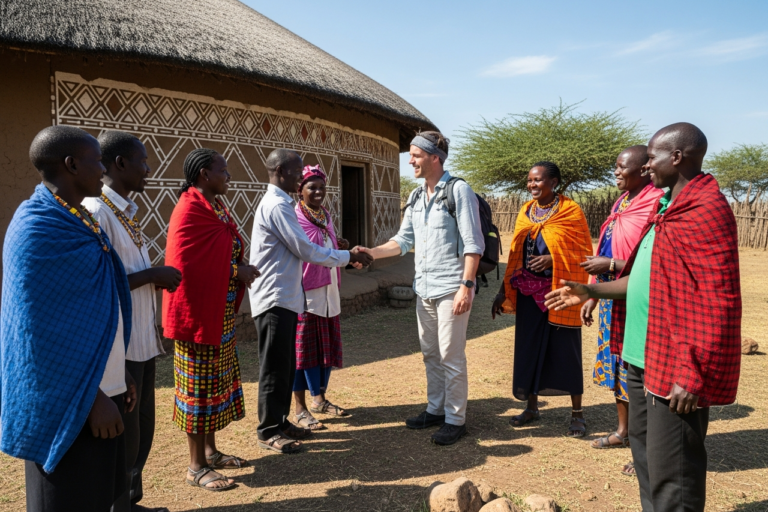
In Kenyan and Swahili culture, people usually give a warm greeting with some special gestures. The handshake is the most common greeting. But it is not like the quick and firm handshake you see in Canada. In Swahili culture, it is often a gentle handshake that lasts a bit longer. You should always use your right hand for the handshake, because the left hand is seen as unclean.
If you greet an elder or someone with higher status, you should support your right forearm with your left hand when shaking hands. This shows that you have respect and humility. Giving a real smile is also very important. A simple smile makes any warm greeting better and is always welcome.
While people mostly use handshakes, there are other ways to greet each other. Close friends—mainly men—might hug. Female friends might hug and sometimes share a small kiss on the cheek.
-
The Handshake: Give a soft handshake, always with your right hand.
-
Show Respect: Hold your right arm with your left hand when greeting an elder.
-
A Smile: This is your best way to make a friendly connection.
Meeting Someone for the First Time: Tips for Canadian Travellers
When you meet someone for the first time in Kenya, the way you say hello can shape how the whole talk will go. If you are a Canadian traveller, it is good to begin with a kind and respectful greeting to connect with local people. Many people speak English, especially if you are in cities or on a safari. But if you try a few polite expressions in Swahili, it will make a good impression.
A nice way to start is by saying “Hujambo?” This means “How are you?” and is a safe greeting for most times. You should give a handshake with your right hand and add a warm smile. Don’t stress too much about how you say the words. Most Kenyans will like that you tried.
Once you have said hello, you can ask about the person’s day or family. This shows you care about them. For example, you can say, “Habari yako?” If you are not sure what to say, start with a simple “Habari” and the other person will lead the talk. It really matters that you want to communicate.
Conclusion
To sum up, greetings in Kenya are about much more than just the words you use. They help you be part of the culture and form strong ties with people. If you want to use traditional sayings or fit in with how things are done there, a warm greeting will always leave a good mark. When you know some main ways to greet someone and pay attention to the time and place, you will see your talks get better and feel deeper. So, if you are getting ready for a trip, or talking with a friend from Kenya, remember that saying “Jambo” or “Shikamoo” can help bring people together and start new friendships. If you want to know more about life in Kenya or want advice, you can easily ask for a free consultation!