Key Highlights
-
Ethiopian greetings are not just about saying hello. They are a key part of the culture. They show respect and help people build strong connections.
-
“Selam” means peace in Amharic and is the most common way to greet someone in Ethiopia. People use it before asking how you are.
-
There is more formality in greeting older people or anyone with higher status. You will hear or use special phrases for elders.
-
The way you use your eye contact and handshake is important in Ethiopian greetings. This body language shows what you feel and gives respect.
-
If you learn a few simple Amharic phrases like “Dehna neh?” (said to a man) and “Dehna nesh?” (said to a woman), you will make a good impression.
-
Ethiopian greetings can change in each part of Ethiopia. People often use Amharic, but you will also find unique greetings in other languages like Oromo or Tigrinya.
Introduction
Are you a Canadian going to Ethiopia? If you take time to learn the local customs, your trip can be much better. In Ethiopia, a simple “hello” means a lot. Ethiopian greetings are a big part of life and show warmth, respect, and a real care for others. People in Ethiopia use these each day.
In this guide, you will get to know the main rules when it comes to greeting in Ethiopia. You will learn common Amharic phrases and also see which non-verbal signs people use along with these words. If you learn how to use these Ethiopian greetings, you will find it easy to talk with people. You will also give a great first impression wherever you go.
Understanding Ethiopian Greetings and Their Importance
In Ethiopia, a greeting is much more than just a quick formality. It is an important social act in ethiopian culture. People in Ethiopia spend time when they greet each other. They ask about family, health, and all of daily life first. They do not just jump into what they want to say. This shows the value that ethiopian people put on community and being close with each other.
If you visit Ethiopia, learning ethiopian greetings shows great respect for their traditions. It will help you fit in with people. You will get to enjoy better talks and it will help build trust. Now, let’s talk about why a greeting is so important in this ethiopian culture and when you will use it.
Why Greetings Matter in Ethiopian Culture
In Ethiopian culture, a greeting is more than just saying hello. It’s a sign of peace, unity, and real respect. When you greet someone, you show that you see them and that you value them. This greeting starts things off in a good way, helping everyone feel close and part of the group. If you skip the greeting and begin talking right away, it is seen as rude.
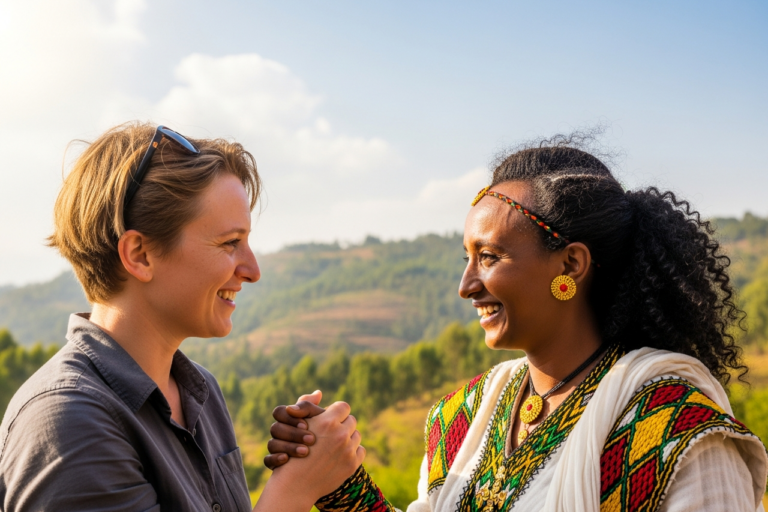
The greeting doesn’t stop at words. Body language in Ethiopian culture is very important too. You use a warm smile, give direct eye contact, and offer a handshake. If you are greeting a close friend, you might also touch their shoulder or give them a hug. These actions show your friendly feelings and that you care.
Greeting someone the right way in Ethiopia tells them that you respect the culture. It helps you make a good connection with the person. You do not have to say every word right; what counts most is that you try. People notice your effort and appreciate it. You will leave a good impression and make a lasting connection.
Keywords used: eye contact, ethiopian culture, body language, greeting, ethiopian, ethiopia, pronunciation, handshake
Common Situations to Use Greetings in Ethiopia
Greetings are an important part of day-to-day life in Ethiopia. People use them in almost every meeting with others. When you go into a shop, meet someone new, or walk by your neighbor on the street, you are expected to greet them. It is normal to greet each person you see, even if it is not the first time that day.
When you meet someone for the first time, you can give a handshake with your right hand. If you want to show more respect, mostly for an elder, you can hold your right forearm with your left hand while shaking. That shows good manners to them. After the handshake, people will often ask how you are, or how your travel was.
If you meet a group of people, it is good manners to greet every person. You can say “Selam” to the group, then give each one a handshake. The greeting “Selam” is usually used no matter the time of day. But some questions people ask after that may change a bit, depending on if it is morning or evening. When you take the time to join in with this custom, the people will really appreciate it.
Types of Greetings in Ethiopia: Formal vs Informal
Ethiopian greetings change a lot, depending on the situation. The level of formality matters in these greetings. If you know when to use a formal or informal greeting, you show respect. The Amharic language has phrases that you use based on the age, gender, and role of the person you talk to.
For example, you say a simple “How are you?” to your friends. But you use a more polite greeting with an elder or someone you do not know. It is important to know this difference when you are learning a language. Here, we will look at how Ethiopian greetings are different. We will show the vocabulary you can use, like “good morning,” depending on the formality of the greeting.
How Greetings Differ by Context
The way people say hello in Ethiopia depends a lot on who they are talking to. Being polite is very important. If you use a greeting that is too relaxed with the wrong person, it can seem rude. A friendly and relaxed hello is meant for people you know well, like friends, classmates, or people your age. In these moments, it is okay to be less serious.
On the other hand, it is a must to use a very polite greeting when you talk to older people, to people you do not know, or to people with power. This shows you know and care about their age or place. In Amharic, there are special ways of speaking when you want to sound more formal, even if you talk to just one person. For example, instead of saying the informal “Dehna neh?” to a man, you should say the formal “Dehna nachihu?”.
Here is a fast way to see which words to use and when:
-
Informal: Use these with friends and people like you. It is common to say “Endemin nesh?”.
-
Formal: Use these with older people, people you do not know, or for someone important. You also use words like “Ato” for Mr. and “Weizero” for Mrs.
-
Time of Day: You might start with “Selam” at any time, but the next thing you say can change. There are not as many greetings for
Gender, Age, and Regional Variations in Ethiopian Greetings
Greetings in Ethiopia are not one-size-fits-all; they adapt based on gender, age, and even the region you are in. When speaking Amharic, the phrase for “how are you” changes depending on whether you are talking to a man or a woman. This distinction is an important grammatical feature that shows attentiveness.
Age is another critical factor. Elders are highly respected in Ethiopian culture, and greetings reflect this. You should always use the formal, plural form of “you” when addressing an older person, even if you are speaking to them alone. It is a sign of deference and politeness. A slight bow of the head can also accompany a verbal greeting to an elder.
Furthermore, with over 80 languages spoken in Ethiopia, greetings vary by region. While Amharic is the official working language, you will encounter different greetings in areas where Oromo or Tigrinya are more prevalent.
|
Language |
Common Greeting |
Meaning |
|---|---|---|
|
Amharic |
Selam |
Peace |
|
Oromo |
Akkam |
How are you? |
|
Tigrinya |
Selam |
Peace |
Beginner’s Guide: How Canadians Can Start Greeting in Ethiopia
Want to start greeting people like a local? If you are new, this can feel hard at first. But it is not as tough as you think. You just have to start with a few easy phrases. Be open to learn as you go. People in Ethiopia notice your effort, and even a basic greeting gets you far.
There are lots of things to help with language learning. You will find language learning apps and other guides online. When you spend time on things like good pronunciation and simple etiquette, you get more sure of yourself. This will help you start talking with people and meet new friends. Let’s look at the steps together.
Essential Resources for Learning Amharic and Other Ethiopian Languages
If you are in Canada and want to learn Amharic greetings, there are good ways you can start. Language learning apps work well for beginners. An app like Ling gives you lessons you can try, audio from native speakers to help with your pronunciation, and dialogues with real-life conversations. This keeps the vocabulary simple and not boring.
Online dictionaries and phrasebooks help a lot, too. You can use sites that translate English to Amharic so you can look up words and phrases fast. Many have audio clips as well, which are important for learning the Amharic alphabet and mastering its unique sounds. Some sites also offer tools for languages like Oromo and Tigrinya.
To make your language learning strong from the beginning, try these resources:
-
Language Apps: Choose an app that has native audio and exercises you can do.
-
Online Dictionaries: These are handy for quick vocabulary searches.
-
YouTube Channels: Many people from Ethiopia teach Amharic on their channels.
-
Community Classes: If your city has them, they let you talk with others in person.
Step-by-Step Guide to Greeting Like a Local
Greeting someone in Ethiopia is more than just saying hello. It is a mix of the right words, actions, and respect. The steps below will help you greet people for the first time and feel confident. The most important thing is to be genuine and to watch how people act.
To start, learn a few key phrases used in greetings. Focus on both the way you say the words and how you use body language. In Ethiopian culture, these are very important. Ethiopians are often warm and will not judge you for making mistakes. Trying your best shows you respect their culture.
Here’s how to begin:
-
Learn the most common greeting phrases in Ethiopian culture.
-
Practice pronunciation by listening to audio and repeating the sounds.
-
Notice and try the body language people use when they greet each other.
-
Think about the social setting and choose your greeting based on that.
Step 1: Learn Key Amharic Greeting Phrases
The first Amharic greeting you need to know is “Selam” (ሰላም). This word means “peace.” It is the most common greeting in Ethiopia. People of all ages and religions use it, and you can say it any time of day. “Selam” is a good way to start a talk or meeting.
After you say “Selam,” you ask, “How are you?” The way you say this will change based on who you talk to. If it’s a man, you say “Dehna neh?”. If it’s a woman, you say “Dehna nesh?”. When you talk with a group of people or an elder, you use “Dehna nachihu?”.
A simple answer to “How are you?” is “Dehna, igziabiher yimesgen.” This means “Fine, thanks to God.” Giving thanks to God in your answer is common and shows how much people think about God in their daily lives and greetings in Ethiopia.
Step 2: Practice Pronunciation and Etiquette
Once you learn the basic phrases, you should start to work on your amharic pronunciation. There are some sounds in amharic that are not in english. The fastest way to get better is to listen to people who speak it every day. You can use apps or online videos to hear the right rhythm and intonation. Do not stress about being perfect. What matters most is that you try.
It is also important to learn the etiquette that comes with a greeting. Most times, you give a gentle handshake with your right hand. When you greet someone, make good eye contact and give a warm smile. This kind of body language shows respect and that you mean what you say. With friends, the handshake may be followed by a small shoulder bump or a hug.
Do not use gestures that are too familiar, especially with new people. It is always good to start with a respectful and simple greeting. If you say a word wrong, just smile and say it again. People will see that you respect their culture by the effort you put in.
Step 3: Understand Cultural Sensitivities and Adjust Accordingly
Knowing about cultural sensitivities is key if you want to get good at Ethiopian greetings. In Ethiopia, formality matters a lot. People do not like it if you act too casual with elders or someone you do not know. It is best to use the formal greeting, “Dehna nachihu?” in these cases. This greeting is a small thing, but it shows a lot of respect.
Ethiopian greetings are not quick. Do not try to rush when you greet someone. People often ask about family, work, and how you feel. You should listen and wait for their answers. The greeting lets people connect, so taking time is important. If you hurry, people may think you are not polite.
Be careful about physical contact when it comes to greeting someone. Most of the time, people use a handshake, but notice how the other person acts. Sometimes, it is better to just give a verbal greeting or a light bow, for example, when you meet a woman you do not know. Changing how you greet people based on who they are and where you are is a big part of the right way to use Ethiopian greetings.
Conclusion
To sum up, knowing how to greet someone in Ethiopia is much more than just learning the language. It helps you step into the heart of Ethiopian culture. When you understand the right phrases, work on your pronunciation, and pay attention to local ways, you connect better with the people. Saying “Selam” or showing respect to elders matters and shows you care. Before you travel, give yourself time to learn these customs. It will make your trip feel richer, be more fun, and help you build lasting memories. Enjoy greeting others on your visit to Ethiopia!
Frequently Asked Questions
What are the most common greetings used in Ethiopia?
The most common greeting in Ethiopia is “Selam.” It means “peace.” People use this word at any time of day. After that, they ask “how are you” in Amharic. If you talk to a man, you say “Dehna neh?” If you talk to a woman, you say “Dehna nesh?” That’s how greetings go in Ethiopia.
How do you say hello and respond in Amharic?
To say hello, you can say “Selam” (ሰላም). If you want to ask a man how he is, you say “Dehna neh?” It is common for him to reply, “Dehna, igiziabiher yimesgen,” which means “Fine, thanks to God.” Your pronunciation does not have to be perfect. Giving it a try matters most.
Are there special greetings for elders or different genders?
Yes. When you greet someone older, you should say “Dehna nachihu?” That shows respect. If you greet a man, you say “Dehna neh?” For a woman, it is “Dehna nesh?” If you also support your arm with your other hand when you do a handshake, it shows even more respect to an elder.
How do greetings vary across Ethiopian cultures and regions?
While Amharic is the most spoken language in Ethiopia, people in the country use different ways to greet each other. In Oromo, you can say “Akkam” when you want to ask, “how are you?” In Tigrinya, many people use “Selam,” but there are also other types of greetings, depending on where you are from. This shows how the culture and languages in Ethiopia are very rich and full of variety.