Key Highlights
-
In South Africa, people greet in many ways because there are 11 official languages and many different cultures.
-
The most common and polite greeting is a firm handshake and a smile, especially when it is a formal meeting.
-
In urban areas, friends often greet each other with “Howzit.” It’s a relaxed and friendly way South Africans say hello.
-
South Africans like to spend time on greetings. Don’t hurry or skip the small talk.
-
If you learn a few words in african languages, people in Africa may find it warm and welcome.
-
For Canadians who visit, giving a smile, making direct eye contact, and adding a good handshake will help you make a great first impression.
Introduction
Going to South Africa? If you are from Canada, it is good to know a bit about local ways. This can really add to your trip. A good first step is with greetings. South Africa is in Africa and has many different people. People call it the “Rainbow Nation” because there are so many cultures and 11 main languages. When you can say “hello,” it can help you meet people and feel welcome. In this guide, you will learn about greetings and how to act with others. This will help you meet people, whether you are in big cities or small towns.
Ways People Greet Each Other in South Africa: Essential Etiquette for Canadians
When you meet people in south africa, it’s very important to show respect by greeting in the right way. Even a small thing like a smile and looking someone in the eye can make a big difference. It lets people know that you are polite and care. If you do not greet or you ignore someone, it can feel rude. This is something people in africa take very seriously, especially outside of big cities.
If you are from Canada and you travel to south africa, you’ll see that the way people greet each other changes a lot. It depends on where you are in south africa, what language is being used, and if you are in a formal or casual setting. Let’s take a look at how south africans say hello in different places and situations.
1. Greetings in the 11 Official South African Languages
South Africa’s diversity is beautifully reflected in its 11 official languages. Pre-1994, English and Afrikaans were the only official languages, but the new constitution recognized the most widely spoken languages to protect the rights of its indigenous population. Using a greeting in someone’s home language is a wonderful sign of respect.
You might use “Sawubona” in KwaZulu-Natal, where isiZulu is common, or “Molo” in the Eastern Cape, where isiXhosa is prevalent. Even if you don’t get the pronunciation perfect, the effort is usually appreciated. Here’s a quick guide to saying “hello” in South Africa’s official languages.
|
Language |
Greeting (Singular) |
Greeting (Plural) |
|---|---|---|
|
English |
Hello |
Hello |
|
Afrikaans |
Hallo |
Hallo |
|
isiNdebele |
Lotjhani |
Salibonani |
|
isiXhosa |
Molo |
Molweni |
|
isiZulu |
Sawubona |
Sanibonani |
|
Sesotho sa Leboa |
Dumela |
Dumelang |
|
Sesotho |
Dumela |
Dumelang |
|
Setswana |
Dumela |
Dumelang |
|
siSwati |
Sawubona |
Sawubona |
|
Tshivenda |
Ndaa (Male) / Aa (Female) |
Ndaa / Aa |
|
Xitsonga |
Xewani |
Xewani |
2. Popular Informal Greetings and Slang (e.g., “Howzit”, “Shap Shap”)
Beyond normal greetings, there is a strong slang culture in South Africa, especially in the cities. People in urban areas use these greetings to make the talk relaxed and friendly. The most common greeting you will hear is “Howzit.” This is short for “how is it going?” It is both a question and a way to say “hello” in South African English.
These types of greetings in Africa are best for friends, people you know, or if you are meeting up in a casual spot. You would not use “Howzit” when you meet a business person for the first time. Here are a few examples:
-
Howzit: This is the main south africa greeting. It is both “hello” and “how are you?” in one.
-
Shap Shap: This phrase means all is good, okay, or cool. It works as a greeting or to show you agree with something.
Using these slang greetings helps you sound like you are from South Africa. But take your time to see what fits before you try them. If you are not sure what to say, a simple “hello” or “hallo” always works.
3. Greeting Etiquette When Meeting Someone for the First Time
When you meet someone for the first time in South Africa, the best way to say hello is with a handshake. The handshake is common all over the country and most people use it. The way you shake hands does not matter as much as it does in Canada. There, people might want a strong grip. But in South Africa, you just need to add a warm smile and look the other person in the eye.
In South Africa, people also feel that greetings should not be rushed. Take your time and do not hurry when you talk the first time. If you rush, people may think it is rude. After you both shake hands, it is good to ask how the other person is or how they are feeling. When you meet for the first time, use formal titles like “Mr.” or “Mrs.” with their last name. Only switch to their first name when they tell you it is okay.
A man may also wait for a woman to reach out her hand first before he does. This little thing shows respect. The whole way of greeting is close to Canadian greetings but people in south africa and africa put more focus on stopping for a short chat before going on with talks about other things.
https://www.everyculture.com/Sa-Th/South-Africa.html
4. Unique Ways South Africans Greet Strangers
Greeting strangers in South Africa can change based on where you are. In small towns, it is usual to greet everyone you meet. People expect a nod, a smile, and a hello. If you walk past someone and say nothing, it is seen as rude. This helps build a strong community.
But in big urban areas like Johannesburg or Cape Town, the situation is not the same. These cities in South Africa are much like busy Canadian cities. Many people do not stop to talk or greet strangers when they are out and about. Still, if you say a kind hello to a shopkeeper or a security guard in these urban areas, it is normal and people like it. South Africans are welcoming, even in large cities.
If they notice you are visiting Africa, many south africans act warm and want to know more about you. Saying “hello” in english is always okay. But if you use a greeting in one of the different languages, you will see a big smile and get extra kindness. People feel happy that you like to learn about their culture.
5. Gestures and Customs: Handshakes, Hugs, and More
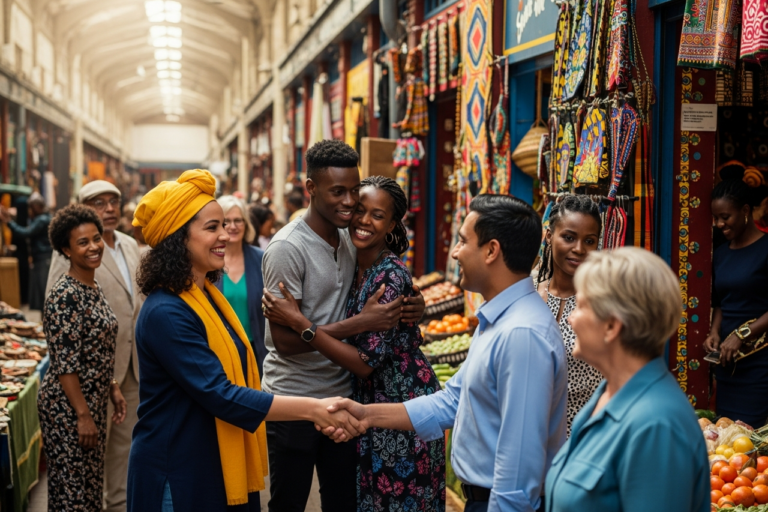
Gestures play a big part in greetings in South Africa. They help make the meeting warmer and more meaningful. You will see that a handshake is normal, but there are other greetings too. People change how they greet, depending on how close they are and their culture. The best thing for you is to watch the south africans you meet. See what they do and follow their way.
When you know these ways, it becomes easier to get along in social situations in South Africa. Keep an eye on these greeting gestures that are common in africa:
-
Standard Handshake: This is the usual greeting, mostly at work or when you meet someone for the first time.
-
Two-Handed Handshake: In some smaller towns or villages, people might use both hands when greeting. This is their way to show high respect.
-
Hugs and Kisses: Friends and family often hug. Very close friends might even say hello with a kiss on the lips, and it does not matter if it’s a man or woman.
Personal space and how much contact feels right can be different from person to person. A safe way to greet in south africa is to start with a simple handshake. If the other person wants to do more, like give a hug, let them begin.
6. Regional and Cultural Variations in South African Greetings
Greeting customs in South Africa are not the same in every place. They change a lot because of the mix of culture and where you are. The country has nine provinces, and each one brings its own language and way of doing things to the table. For example, in the Eastern Cape, isiXhosa is spoken by many people at home. You will hear “Molo” when someone says hello to one person and “Molweni” if talking to more than one.
Things look a bit different if you go to the Free State. More people there speak Sesotho, so it’s common to say “Dumela” as a greeting. When you travel to Limpopo, you can see it is a mix of many languages like Sesotho sa Leboa, Xitsonga, and Tshivenda. Over in the Northern Cape, you find a lot of people talking Afrikaans and Setswana.
These differences between provinces show that each place in south africa has a deep connection with its home language and culture. You will see greetings change from Zulu to Tswana or Xhosa, not only in words but also in how people use body language or what they wait for as a reply. If you watch and try these things, you show trust, care, and respect for their way of life.
7. Typical Responses to Greetings in South Africa
Knowing how to respond to a greeting matters just as much as knowing how to give one. In South Africa, people expect a polite and friendly answer when they greet you. If someone says the most common greeting, “Howzit?”, you can say “Sharp sharp” or “Good, and you?” This works well with friends.
In african languages, greetings often go back and forth between people. If someone says “Sawubona” (in isiZulu, it means “I see you”), you reply with “Yebo, sawubona” (“Yes, I see you too”). If the greeting is “Dumela” in Sesotho, you can say “E, dumela.” After that, it is usual to ask how they are (“O kae?”).
The idea is to join in the greeting. That means not just saying one word. A short answer can seem unfriendly. Asking about health or family is big in these greetings. For example, if someone says “Hoe gaan dit?” (in Afrikaans, it means “How are you?”), you can answer “Goed dankie, en met jou?” (“Good thanks, and with you?”).
Conclusion
To sum up, knowing how to greet people the right way in South Africa is important. It helps you connect with others and show respect in the different cultures you will come across. There are many greetings in the country’s official languages, and phrases like “Howzit” are used a lot in everyday life. These greetings help make your talks with others better. You should notice the local customs when you meet someone new, like what gestures to use and how to act, as this leaves a good first impression. Following these small details can make your time in South Africa nicer, and you will also get to know more about Africa’s different cultures. So, when you plan your trip, keep these greetings in mind. It will help you talk to locals in south africa and enjoy their culture even more.
Frequently Asked Questions
What are the most common ways to greet someone in South Africa?
The most common greeting in South Africa is a simple handshake. People also smile and look you in the eye. In cities, it’s normal to hear “Howzit” in casual talks. Across south africa, greetings come from the country’s african languages. Folks may say “Sawubona” from isiZulu or “Molo” from isiXhosa.
How should Canadians greet South Africans when visiting?
Canadians should meet south africans with a friendly smile and look them in the eyes. Give a handshake when you meet for the first time. Take your time and do not rush when you say hello. It’s good to ask how they are doing. It’s best to use formal titles like Mr. or Ms. until they say you can use their first name.
Is it common to use gestures like handshakes when greeting in South Africa?
Yes, people in South Africa use gestures a lot. The handshake is the normal way to greet others in most situations. Many south africans hug their friends, too. In some rural places in africa, people may do a two-handed handshake to show respect. You can watch what others do to see which gestures to use.