Key Highlights
-
Learning basic Hebrew greetings is a great first step for language learning and helps you connect with Israeli culture.
-
“Shalom” is a versatile word. You can use it to say both hello and goodbye, but there are other Hebrew greetings for different situations.
-
Use phrases like “Boker Tov” which means “good morning” to sound more like a local.
-
It’s good to use special greetings, such as “Shabbat Shalom,” for holidays and important days. They show your respect and understanding of the culture.
-
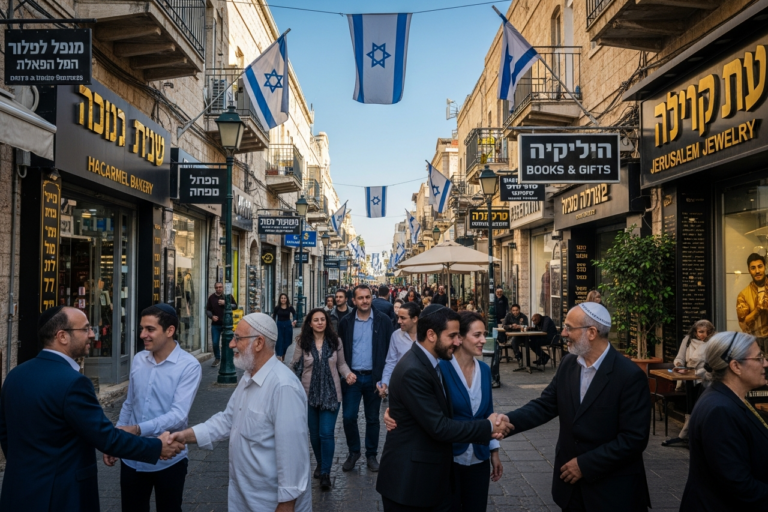
In Israel, body language is important. A handshake and direct eye contact go with verbal Hebrew greetings.
-
It helps to know the difference between formal and casual greetings, so you can fit in well at social events.
Introduction
Are you thinking about a trip to Israel, or do you want to talk with friends who speak Hebrew? Learning some basic Hebrew greetings is a great way to start. These simple words help you open up real talks and learn more about Israeli life. When you start with greetings in your language learning journey, you will feel more sure of yourself in your first meet-up. This guide will show you the main expressions you need, so your time in Israel will be even better.
Common Hebrew Greetings Canadians Should Know
Hebrew greetings are the friendly doorway to talk with people. They help you say what you want and show you care for local traditions. If you know some basic hebrew words, you can quickly get along with hebrew speakers. This also helps you get better at your conversational skills.
As you try to improve your language skills, you will see that modern hebrew has many ways to say hello. You can use “Shalom,” which everyone knows, or pick from other easy sayings. Each greeting gives you a new way to meet and talk with others.
Saying Hello in Israel: Formal and Informal Variations
When you first get to Israel, you will see that the way people greet each other can change depending on where you are. The best-known greeting in Modern Hebrew is “Shalom” (שָׁלוֹם). This is a versatile word. It means “peace,” and people use it for both “hello” and “goodbye.” Shalom is simple. It works at formal events, random chats, or any time you want to wish someone a good day.
If you are with younger people or in a casual setting, you may hear “Ahlan” (אַהְלָן). This one comes from Arabic. It is a popular word that is often used in daily life to say “hi.” You will also probably hear people use “Hey” or “Hi” (הַי/הֵיי). These come right from English, and people in Israel use them among friends.
Here are some simple and common ways to say hello in Israel:
-
Shalom (שָׁלוֹם): The classic, versatile word for both hello and goodbye.
-
Ahlan (אַהְלָן): This is a well-liked and casual greeting.
-
Boker Tov (בּוֹקֶר טוֹב): If you want to say “good morning,” use this. People usually say it until noon.
-
**Hey/Hi (הַי/
Greeting Someone for the First Time
When you meet someone new in Israel, using good Hebrew greetings can help you give a nice impression. Saying “Shalom” is always a safe way to greet someone for the first time. This word is polite, friendly, and everyone knows it. That’s why it is one of the first things students of all levels learn.
After you say hello, you may want to say it is nice to meet them. You can do this with “Na’im meod” (נָעִים מְאוֹד). When you use this phrase, you are showing good manners and that you want to have real conversations. It helps you set a good mood with others.
If you want to introduce yourself, you can say “Shalom” and then your name. For example, you can say, “Shalom, I’m [Your Name]. Na’im meod.” This short line is great for all kinds of first meetings, like at work or just hanging out with people.
Greetings Based on Time of Day
Just like in Canada, Israelis use different greetings depending on the time of day. Using these specific phrases will make you sound more natural and show that you’ve put effort into learning the language. Starting your day with “Boker Tov” is the standard way to say “good morning.”
As the day progresses, the greetings change. You’ll want to switch to the appropriate phrase for the afternoon or evening. For example, “Erev Tov” is used for “good evening,” while “Laila Tov” is reserved for “good night,” usually when you’re about to go to bed. Knowing these will help you navigate conversations throughout the days of the week.
Here’s a simple guide to time-specific greetings:
|
English Greeting |
Hebrew Greeting |
Pronunciation |
When to Use It |
|---|---|---|---|
|
Good morning |
Boker Tov (בּוֹקֶר טוֹב) |
BO-ker TOV |
From sunrise until noon |
|
Good afternoon |
Tzohorayim Tovim (צָהֳרַיִם טוֹבִים) |
tso-ha-RYE-im to-VEEM |
From midday until a few hours before sunset |
|
Good evening |
Erev Tov (עֶרֶב טוֹב) |
EH-rev TOV |
From sunset onwards |
|
Good night |
Laila Tov (לַיְלָה טוֹב) |
LAI-la TOV |
When saying goodbye at night or going to bed |
Making a Positive First Impression
In Israel, making a good first impression is about more than just what you say. The way you move and act matters just as much as your words. If you give a warm smile, look someone in the eye, and have a strong handshake, you show respect and that you are open to meeting others.
If you want to get better at Hebrew greeting skills, working with language tutors can help you a lot. It does not matter if you are new to Hebrew or if you are coming back to it after some time. When you practice how to greet and act with people, you become more comfortable. You also find it easier to meet and talk with Israelis in a real way. Next, we will go over the phrases you can use and the actions that can help you fit in.
Respectful Ways to Say ‘Nice to Meet You’
After you say hello, it is good to show that you are happy to meet someone. In Hebrew, people often say “Na’im meod” (נָעִים מְאוֹד) to mean “nice to meet you.” This phrase means “very pleasant.” You can use it in both formal and casual times.
When you start to learn a new language, it’s about more than just words. You also learn the small details of how people use the language. Saying “Na’im meod” is polite and helps you connect with people fast. In live lessons, tutors can give you practical insights by using this phrase in real situations—just like in a classroom.
Here are some things to say when you first meet someone:
-
Na’im meod (נָעִים מְאוֹד): This is the polite and common way to say “nice to meet you.”
-
Shalom: Start with this common way to say “hello.”
-
Later, you can ask “Ma shlomcha?” to a man or “Ma shlomech?” to a woman. This means “How are you?”
-
Smile and look at the other person while talking. This helps show you mean what you say.
Appropriate Gestures and Body Language
Understanding how to use the right body language is important for good greeting etiquette in Israel. People in Israel are often open and show their feelings, so the way you move and act can really make a difference in the kind of welcome you get. In most business settings and when you meet someone for the first time, it is normal to give a firm handshake.
When you greet someone, you should look them right in the eyes. This shows that you are honest and sure of yourself. If you look away, some may think you are not interested or not sure. Among friends and family, greetings can be a lot more relaxed. Sometimes you will see people give hugs or pat each other on the back.
Here are some key points about gestures:
-
Handshake: A firm handshake is common when you meet someone new or are in a formal setting.
-
Eye Contact: Keep direct eye contact to let the other person know you are with them and you mean what you say.
-
Personal Space: Israelis might stand closer to you than you are used to in Canada. This is normal for them.
-
Hugs and Kisses: With close friends and family, cheek kisses and hugs are a usual way to say hello.
Greeting Etiquette and Cultural Differences
Getting used to greeting people in a new place can be tough, but just knowing a bit really helps. In Israel, the greetings are usually direct and friendly. People talk in an open way because it feels like everyone knows each other well. The greeting you use might change. It can depend on who you meet, where you are, or what is happening.
If you are a complete beginner, it is a good idea to watch how the local people act with one another. Online Hebrew tutors can help you learn what to say in different situations. Now, let’s look at some ways Canadian and Israeli customs are not the same.
Israeli vs. Canadian Greeting Customs
While the people in Canada can be reserved, they will often give a simple “hello” or a nod when saying hi. On the other hand, in Israel, greetings are to be more open and express more feeling. What feels like a standard Canadian greeting may feel cold or a bit closed off in Israel, as people there value being direct and warm. There, people do not worry much about personal space, and they are okay with touching others when they greet you.
A handshake in Canada often happens just for business or formal times. In Israel, handshakes are common and can be used even when you first meet someone in a casual way. You will also find that, in Israel, people quickly start using first names. If you are curious about more usage tips or want to learn more about culture, a global online learning platform can be helpful for you.
Here’s a quick comparison:
-
Formality: Greetings are often less formal in Israel than in Canada.
-
Physical Contact: In Israel, people will hug more and may put a hand on your arm when you meet.
-
Directness: When they talk or meet, Israelis are much more direct.
-
Personal Space: Be ready for less space when you talk to someone in Israel.
Informal Greetings Among Young Israelis
Among young Israelis, the way people greet each other is pretty relaxed. You hear lots of slang and easy going phrases. People often use words that you might not find in schoolbooks. One you will get to know fast is “Ahlan” (אַהְלָן). It just means “hi.” It is very friendly, and you can use it any time.
Another word is “Ma kore?” (מָה קוֹרֶה). This one means “What’s happening?” People also use it like we use “What’s up?” in English.
There is also “Ma nishma?” (מַה נִשְׁמַע). It means “How’s it going?” Kids and adults both use it, but younger people say it often. You can try some quick practice activities, or even work on the Hebrew Kapara app, to learn how to say all of these phrases.
Here are some common informal greetings:
-
Ahlan (אַהְלָן): A casual and very common “hi.”
-
Ma kore? (מָה קוֹרֶה): “What’s happening?” or “What’s up?”
-
Ma nishma? (מַה נִשְׁמַע): “How’s it going?”
-
Hey/Hi (הַי/הֵיי): The English words are also very common
Religious and Special Occasion Greetings
Israel has a culture that comes from its strong religious traditions. You can see this in how people greet each other. On Jewish holidays and on Shabbat, there are special phrases people say. These words have deep meaning, being part of their culture and religion. Saying these greetings is a good way to show respect and be part of what local people do.
A phrase like “Shabbat Shalom” is not just simple words. It links you to a big history that starts in Biblical Hebrew. When you learn greetings or know some words from the Hebrew alphabet, you can have a better understanding of what makes this culture special.
Greetings for Jewish Holidays and Shabbat
When you celebrate Jewish holidays or the Sabbath, you use certain greetings to show it is a special time. The one that most people know is “Shabbat Shalom” (שַׁבָּת שָׁלוֹם). This means “Peaceful Sabbath.” People say this from Friday evening to Saturday, which is the time of Shabbat. It is a nice way to wish someone a restful and peaceful day.
There are other greetings for other holidays. For example, during Rosh Hashanah, which is the Jewish New Year, people say “Shanah Tovah” (שָׁנָה טוֹבָה). This means “Happy New Year.” A hebrew tutor can share good lesson insights about different greetings for holidays that come up during the year.
Here are some key greetings for special times:
-
Shabbat Shalom (שַׁבָּת שָׁלוֹם): People say this on the Sabbath from Friday evening to Saturday evening.
-
Shanah Tovah (שָׁנָה טוֹבָה): This is said during Rosh Hashanah, the Jewish New Year.
-
Chag Sameach (חַג שָׂמֵחַ): This is a good way to say “Happy Holiday” for many Jewish holidays.
-
**Mazal Tov (מ
Common Religious Expressions and Their Meaning
Beyond greetings just for Jewish holidays, you may hear many religious sayings in daily life in Israel. A lot of these phrases come from Biblical Hebrew. These words carry big meaning. One of the most formal and polite greetings is “Shalom Aleichem” (שָׁלוֹם עֲלֵיכֶם). It means “Peace be upon you.” People often reply with “Aleichem Shalom” (עֲלֵיכֶם שָׁלוֹם), which means “And upon you, peace.”
People might say “Shalom Aleichem” in some traditional or religious groups, but it can feel a bit too polite for talks with friends. Even so, it’s a very nice way to greet someone and shows a lot of respect and goodwill.
Here are some usual religious expressions:
-
Shalom Aleichem (שָׁלוֹם עֲלֵיכֶם): This is a formal way to say “Peace be upon you.”
-
Baruch Hashem (בָּרוּךְ הַשֵּׁם): This means “Blessed is the Name.” People say it often as an answer to “How are you?” to mean “Thank God, I’m well.”
-
B’ezrat Hashem (בְּעֶזְרָת הַשֵּׁם): This means “With
Conclusion
To sum up, it is important for Canadians to know the little details of greetings in Israel if you want to connect with people there. When you understand common Hebrew phrases and pay attention to the way people use body language and gestures, you can make your time with locals much better. No matter if you meet someone in a formal setting or just run into them on the street, following local customs shows that you respect others and are open to new experiences. Trying to greet someone in their own language always gives a good impression and helps you make real connections. So, try these greetings before you visit next time. It’s a good way to show you value Israeli culture. Have a great trip!
Frequently Asked Questions
How do you say goodbye in Hebrew?
The most common way people say goodbye is by using “Lehitra’ot” (לְהִתְרָאוֹת), which means “See you later.” Another simple word you can use is “Shalom” (שָׁלוֹם). This word means both hello and goodbye. In day-to-day talk, many Israelis often use the English word “Bye” (בַּיי) as well. It is now a popular and easy word you will hear often.
How should you respond to a Hebrew greeting as a Canadian?
If someone says “Shalom” or “Boker Tov” to you, it is easy to answer. You can just say the same words back to them. If you smile and speak with confidence, it means a lot. Do not worry about making mistakes. People in Israel like when you try. They will often help you with your conversational skills.
Are there any gestures to avoid when greeting someone in Israel?
Israeli greeting rules are mostly laid-back. But, you should not use very close gestures when you meet someone for the first time. A weak handshake can make people think you are not sure of yourself. Usually, a simple and strong handshake along with a smile is a good way to greet someone when you see them for the first time.