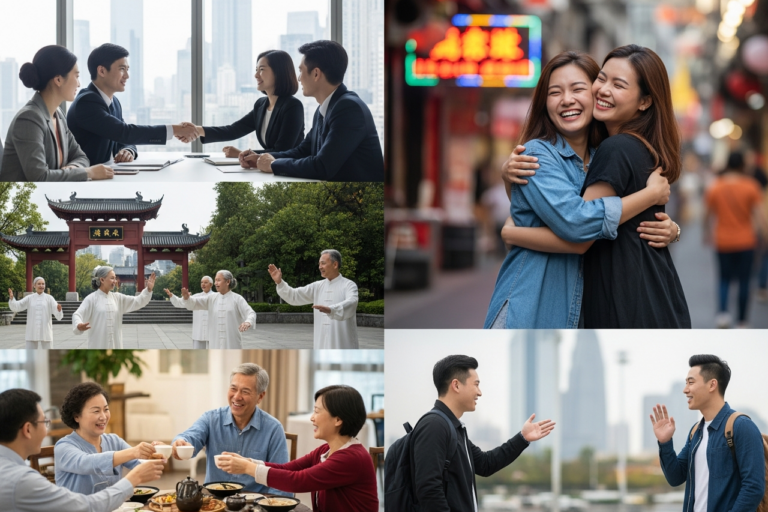
Key Highlights
-
Many people know “nǐ hǎo,” but this is not the most common casual greeting in Chinese culture.
-
People use formal greetings to show respect. This is very important in business and when you speak with elders.
-
Phrases for different times, like “good morning” (zǎoshang hǎo), are used every day.
-
For a casual greeting, friends sometimes ask if you have eaten.
-
Younger people often talk with English loanwords, for example, “hāi” (hi), in their chats.
-
To use Chinese greetings the right way, you need to know the right context. This shows politeness in Chinese culture.
Introduction
Are you going to China or do you want to learn more about chinese culture? One of the first things to do is find out how people say hello. You may know “nǐ hǎo,” but there are many chinese greetings to use and learn. Using the right greeting can help you make a good impression and show respect for chinese culture. In this guide, you will see different chinese greetings for different times and places in china.
Common and Polite Ways to Greet in China
The most common way people say hello in Chinese is with “nǐ hǎo” (你好). For most learners, this is the first time they use one of the polite greetings. It is a good starting point to build your Chinese language skills. But, its use is more limited than you might think.
“Nǐ hǎo” is good when you meet someone for the first time. If you use it with friends or people you know well, it may sound too formal or distant. Native speakers do not say it a lot with their friends. Knowing when to use “nǐ hǎo” and when to pick another greeting is important for anyone learning Chinese.
The Meaning and Use of “Nǐ Hǎo” (你好)
“Nǐ hǎo” (你好) is a Chinese phrase that means “you good.” In English, this is the same as saying “hello.” The pinyin, which is “nǐ hǎo,” shows you how to say the words if you do not know Chinese writing. People teach this greeting in almost every first time chinese class. Anyone who speaks chinese will know what it means.
But when you look at how people use it, “nǐ hǎo” is used most when you greet someone for the first time. For example, if you meet a new friend or start talking with a new business partner, you use it. It is polite and what people expect in those moments.
If you keep saying “nǐ hǎo” after you have met someone, it might feel unfriendly or cold. It can make the other person think you forgot who they are. This is why, after the first time, chinese speakers pick other greetings. So, “nǐ hǎo” is best for first meetings only. The sound, the pronunciation, and using pinyin can help you learn the word right.
Alternatives to “Nǐ Hǎo” for Everyday Greetings
If you want to sound more like a native speaker, it is good to know some essential Chinese greetings, not just say “nǐ hǎo.” Using the right greeting for the right context shows that you know more about the culture. The chinese people you talk to will see the effort you put in.
A good way to greet someone you know is to ask about their well-being in a way that shows you care. For example, “nǐ chīle ma?” (你吃了吗?) means “Have you eaten?” This is a very common chinese greeting. It is like saying “How are you?” This saying came about when life was harder and food was not always available. So, asking this question was a caring way to look out for someone.
Here are some other ways you can say hello with chinese greetings:
-
最近好吗? (zuì jìn hǎo mā): “How have you been?” This one is good for someone you have not seen for a long time.
-
好久不见 (hǎo jiǔ bú jiàn): “Long time no see!” If you bump into an old friend or someone you have not met for a while, you can use this.
-
去哪?(qù nǎ): “Where are you going?” It might sound personal, but among chinese people, this is actually a friendly greeting you use when you see someone on the way out.
Try
Formal Greetings and Etiquette
When you are in formal situations in China, it’s good to know the right way to greet someone. Using formal greetings is a clear sign of respect. In formal settings like work or when you talk with someone older or someone with authority, people expect this kind of greeting. It shows that you understand and respect the formality in China.
Sometimes just saying “nǐ hǎo” is not enough in formal settings. You might need to say a more respectful greeting. You could also need to call the person by their title. Knowing these rules about greetings can help you make a good impression, whether it’s a business meeting or a family event.
Addressing Elders and People of Respect
In Chinese culture, it is very important to show respect to elders and to people with higher status. The language has some special greetings for this. You should not use “nǐ hǎo,” for these people. You need to say the more polite “nín hǎo” (您好). The word “nín” (您) is a respectful way to say “you.” Using this word is a clear sign of respect and it is not an option you can skip.
In chinese culture, when you talk to someone, you should say their surname and then their title. For example, if your teacher’s surname is Wang, you say “Wáng lǎoshī” (王老师) which means “Teacher Wang.” People do this for many jobs and for anyone with higher status.
If you use just a person’s first name, that can be too friendly and may seem disrespectful, especially if you just met. You should always use their surname and title unless the person says you can call them something else. Doing this is an easy way to show politeness, chinese culture, and that you know about signs of respect with chinese greetings and surname.
Business Greetings and Proper Conduct
In a business setting in China, making a good first impression is vital, and it starts with the greeting. Proper conduct involves a blend of verbal and non-verbal cues. Formal greetings are the standard, and “nín hǎo” (您好) is a safe and respectful choice.
Handshakes are common in a business setting, but they are often softer than a firm Western handshake. It’s also polite to offer a slight nod as you shake hands. When being introduced, address the person by their surname and professional title to show respect. For example, “Manager Li” would be “Lǐ jīnglǐ” (李经理).
Exchanging business cards is also a key part of the introduction. Always present and receive the card with both hands. Take a moment to read the card before putting it away carefully. This shows you value the connection.
|
Greeting Etiquette |
Description |
|---|---|
|
Verbal Greeting |
Use “nín hǎo” (您好) for formal situations. Address individuals by their surname and title (e.g., Director Wang). |
|
Handshake |
A gentle handshake is common. Accompany it with a slight nod of the head as a sign of respect. |
|
Business Cards |
Present and receive business cards with both hands. Read the card respectfully before storing it. |
Casual and Friendly Greetings Among Peers
When you are with chinese friends or even with people you know, you do not have to stick to the formal rules. The type of greetings people use in daily life tend to be much more relaxed. If you use words that are too formal, it might make you seem cold or far away. People like to keep things friendly and warm, so it helps to learn these easy ways to greet someone.
Most of the time, instead of saying a very proper hello, chinese people pick short questions or quick phrases. This way of greeting others shows that their friendship or connection is not new. It is part of showing kindness and being close. If you pick up these types of greetings, you will feel more natural and linked with your chinese friends or acquaintances. It also helps you show real friendliness when you talk in your daily life.
Popular Informal Phrases Used by Friends
If you want to say hi to your friends like native Chinese speakers, you do not have to use the formal “nǐ hǎo.” The best way to show you feel good and relaxed is by using casual greetings that you might hear every day.
One very common and friendly greeting is “nǐ chīle ma?” (你吃了吗?), or “Have you eaten?” This is not an offer for food, but more like saying, “How are you?” You can give a simple answer like, “chīle, nǐ ne?” (“I’ve eaten, and you?”). This lets people know you care about them in a casual, natural way.
Here are some other casual greeting words you can say to friends:
-
嗨 (hāi): It is said the same as “hi” in English, and this is another easy, everyday greeting.
-
哈罗 (hā luō): This word comes from the English word “hello,” and many young people like to use it.
-
去哪?(qù nǎ?): This means “Where are you going?” You can use this to notice friends and be friendly if you see them out and about.
Try these ways of saying hi when you want your Chinese greetings to sound natural and friendly. Casual greeting words work well, and they help you blend in with native Chinese speakers, especially with young people who often use a mix of Chinese and English greetings.
Texting, Online, and Youthful Greetings
The digital world comes with its own style of speaking, and this is the same in China. When young people text or chat online, they often go for greetings that are fast, easy, and shaped by internet life. Many of these greetings come from english speakers, and they have been made to fit mandarin.
Some greetings, like “hāi” (嗨) and “hā luō” (哈喽), are very common in texting and on social media. They sound a lot like the english words “hi” and “hello.” This helps learners pick them up fast. These greetings are informal and work well for starting a chat with your friends online.
There is another greeting, “wèi” (喂), that young people use only for picking up the phone. You say it with a rising tone, almost the same way you say “Hello?” when you answer. Even though this greeting is just for phone calls, it is a big part of how people in china talk today.
Situational and Group Greetings
In China, picking the right greeting can change based on the time of day or who you talk to. If you are saying good morning to one person or if you say hello to a group, the words for your greeting will be different. Knowing the types of greetings for each time helps you get along well with people.
Using a right greeting, like saying good morning or choosing the right phrase for a room full of others, shows that you care about the small things. These small actions help you look respectful, and they can change the way people in China think of you.
Time-Specific Greetings (Morning, Afternoon, Evening)
Just like in English, people in China often greet others by using the time of day. It is seen as the polite thing to do. These greetings can help you make your vocabulary bigger and you can use them when talking to anyone, either in a formal or casual way.
The way to say these words is simple. You just put the word for the time of day together with “hǎo” (好), which means “good.” For example, to say good morning, you say “zǎoshang hǎo” (早上好). If you are talking to friends or with your coworkers, you can make it shorter and just say “zǎo” (早), which stands for morning. This short version is very common with people you know well.
Here are some greetings you can use based on the time of day:
-
早上好 (zǎoshang hǎo): Good morning
-
下午好 (xiàwǔ hǎo): Good afternoon
-
晚上好 (wǎnshàng hǎo): Good evening
-
晚安 (wǎn’ān): Good night (used when you leave or go to bed)
Using a greeting about the time of day is a good way to say hello to people in china. It shows that you care and helps people feel welcome all day long.
Greeting a Group or Entering a Room
When you walk into a room or meet a group of people, just saying “nǐ hǎo” is not enough. The right way to greet more than one person is to use “nǐmen,” which means you are talking to all. So, you would say “nǐmen hǎo,” and it means hello everyone.
This small change shows politeness. It tells the group that you see each of them. If you are in a formal place, such as a classroom or a meeting, you can also use “dàjiā hǎo.” This also means hello everyone and is a common and polite greeting.
When you greet the group, your body language matters too. Giving a slight nod or a friendly smile can help show you are warm and open. This is a good way to make your greeting feel real. It can help you get along with the group, as it fits with your words and shows respect.
Conclusion
To sum up, knowing the small details of chinese greetings in china can help you make good first steps and build strong ties. The way we talk to elders is often more formal, while friends greet each other in a more relaxed way. Each one means something and carries weight in their culture. When you find yourself in these situations, keep in mind that being honest and open is always good, no matter who you are talking to. Try to use these tips with chinese friends, colleagues, and acquaintances. This will help you show respect for their ways and will also make your own time in china better. If you have questions or want to know more, just reach out!
Frequently Asked Questions
Are handshakes, bows, or other gestures expected when greeting in China?
Handshakes are common in chinese culture, mostly in the business world. The handshakes are often gentle and not too firm. People also like to add a slight nod when they greet with words. This slight nod is very common and shows politeness. Deep bows are not often done in chinese culture unless it is for a special event. But a small bow or nod is a good way to be polite.
What should Canadians avoid when greeting people in China?
Canadians need to be careful not to do things like pat someone’s back or give a hug in formal settings. People may think this is intrusive. You should not use someone’s first name unless they tell you it is okay. Use their title and surname instead. Doing this is a sign of respect. Politeness matters the most, so try to keep your greetings calm and not too loud or expressive.
How can I greet someone for the first time in a business context?
To create a good first impression in a Chinese business setting, you should use formal greetings such as “nín hǎo.” You can also give a gentle handshake and a slight nod. It is best to call the person by their surname and title. Show respect by giving and taking business cards with both hands in this type of business setting.