Key Highlights
-
Mastering thai greetings is a key part of thai culture. It helps show respect.
-
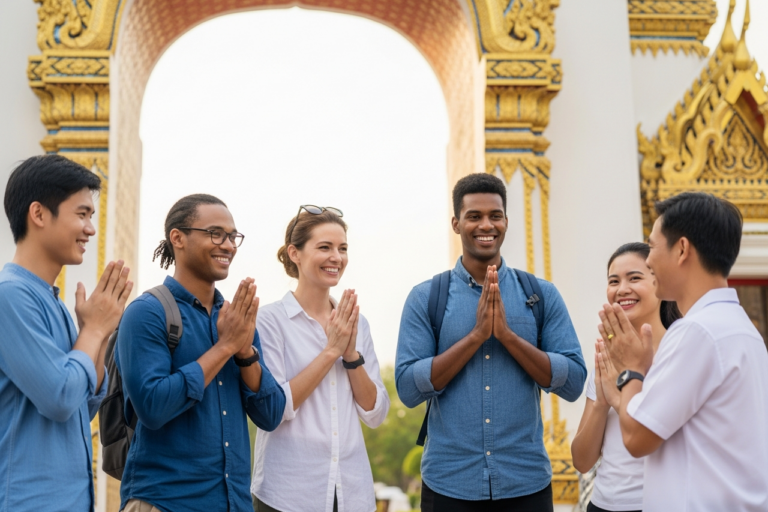
The “wai” greeting is common in thailand. You press your palms together and bow a bit.
-
“Sawasdee” is a versatile greeting in the thai language. You can use it for “hello” or “goodbye” at any time of day.
-
People add polite particles like “krap” (for men) and “ka” (for women) to basic phrases. This is crucial.
-
Learning some basic phrases in thai can make your travel experience better.
-
How you greet others depends on their place in the social hierarchy. People say different greetings to elders than they do to peers.
Introduction
Are you getting ready for a trip to the beautiful country of Thailand? Knowing a bit about thai culture is a good way to have a better travel experience. It helps you connect with friendly thai people. Learning about thai greetings is not only about saying a new word. It will show you a warm part of thai culture.
This guide will help you learn the key thai greetings, as well as easy gestures and manners that you will use. It will help you make a great first impression. It can make your trip better and more meaningful.
Understanding Thai Greeting Traditions
Greetings in Thailand are based on respect and building good relationships. The traditional Thai greeting is not just a handshake. It has meaning and helps create a good start to any talk. It shows you respect the other person’s social level and that you are polite.
If you are from Canada and it is your first time there, learning about these customs can turn quick meetings into real connections. Taking time to learn the local culture shows you care. It also makes you look friendly and knowledgable about the country.
Cultural Significance of Greetings in Thailand
In Thai society, saying hello is more than just a simple word. It’s a big part of showing respect, being polite, and knowing social rules. The traditional Thai greeting is important in daily life and helps people know their place and build good ties, if you meet for the first time or spend time with family and friends. It’s very important to follow the right way when you greet someone.
This habit helps build warmth and kindness, and that is a big part of Thai culture. When you meet people by chance or come together for special occasions, the way you say hello can change how the rest of the talk will go. It helps make a good and friendly feeling.
Using the right greeting can bring out the famous Thai smile, as people feel welcome and happy. When you try to greet others the right way, you show you care about their culture. This can go a long way in making real links with people when you travel.
The Role of Respect and Hierarchy in Thai Greetings
Thai culture puts a lot of focus on respect and knowing where people fit in the social order. You can see this in the way people greet each other. How you say hello to someone depends on your age and theirs, and also their place in society compared to yours. This is a key part of showing that you are polite and give the right kind of respect.
If you are greeting an older person or someone with more authority, you should be more formal. A younger person will start the “wai” gesture and bow a bit lower than if they were greeting someone the same age. This is to show that you value and respect the other person, which matters a lot in Thai culture.
But when you greet your close friends or people your own age, things are more relaxed. There is respect, but it does not look as serious. The way you move and the words you choose are not as formal. Knowing the differences in how to greet people is important in Thailand, so you show respect and make sure you get along well with others.
Essential Thai Greetings Canadians Should Know
Learning a few thai greetings can help your talks with people in Thailand. You do not have to be fluent in the thai language, but knowing some basic phrases makes it easy to talk to others. It also shows that you care about their culture. This is an excellent start for anyone who wants to learn a new language.
You can use easy words like “good morning” or “hello” while you are on your trip. These are simple to get and you can say them anywhere, at any time. In this guide, we will look at some of the most common thai greetings. You will see when to use them and how to make good use of these greetings in real life.
Common Thai Greeting Phrases for Travelers
Before you go, it’s a good idea to learn some basic phrases. This will make your trip better. The word “Sawasdee” is easy to use and very handy. You can say it anytime, for hello or goodbye. It works for any time of day. There is no need to learn separate greetings like “good morning.” Remember, men use “krap” after the greeting, and women say “ka.” These polite particles help you sound nice.
“Sabai dee mai?” is another phrase to use. It means “Are you doing well?” It’s good to ask this, and it shows you care. If you are talking to friends, you might hear “Bpen ngai baang?” It means “How’s it going?” and sounds friendly.
Here are a few basic phrases you should know:
-
Hello/Goodbye: สวัสดี (Sawasdee). Men say “Sawasdee krap,” and women say “Sawasdee ka.”
-
Thank you: ขอบคุณ (Khob khun). Men say “Khob khun krap,” and women say “Khob khun ka.”
-
Excuse me/Sorry: ขอโทษ (Khor thot).
-
How are you?: สบายดีไหม (Sabai dee mai?)
Using these words, even just once or twice, will help you connect with people and make your trip go smoother. It’s a good way to show respect
Differences Between Formal and Informal Greetings
Understanding the difference between formal and informal greetings is key to communicating appropriately in Thailand. Formal greetings are essential in professional settings, when meeting new acquaintances, or when addressing elders and superiors. These situations call for polite language and respectful gestures.
In contrast, informal situations with close friends or family allow for more casual language. For example, you might use a shortened version of a greeting or a friendly phrase like “Wâa ngai” (“What’s up?”). These are common in everyday settings among people who know each other well.
Knowing which greeting to use shows cultural awareness. Here’s a simple breakdown of some specific phrases for different contexts:
|
Situation |
Formal Greeting/Phrase |
Informal Greeting/Phrase |
|---|---|---|
|
Greeting Someone |
สวัสดีครับ/ค่ะ (Sawasdee krap/ka) |
ว่าไง (Wâa ngai) – “What’s up?” |
|
Asking “How are you?” |
สบายดีไหมครับ/คะ (Sabai dee mai krap/ka?) |
เป็นไงบ้าง (Bpen ngai baang?) – “How’s it going?” |
|
Saying “Goodbye” |
ลาก่อน (La gon) or สวัสดี (Sawasdee) |
บ๊ายบาย (Bye-bye) |
What You Need to Get Started with Thai Greetings
Starting with thai greetings is simple. The first step is to get to know the main phrases in the thai language. You should also learn about the customs that go with them. You do not have to be perfect. People there like it when you try.
Focus on how you say each word. Try to know when to use different thai greetings. This is the best way to begin. To learn a bit of thai language is good for you. It can help you have real moments with people. Here are some basic tips and customs to use.
Basic Language Tips and Pronunciation
Getting perfect pronunciation in the thai language is not easy. This is because it uses tones. But don’t feel you have to give up. The most common way to say hello in Thailand is “Sawasdee.” You should add the right polite particles after your hello. If you are a man, say “krap” with a high tone. If you are a woman, say “ka” with a falling tone. This simple step makes your greeting mean a lot more to thai people.
When you start to learn, hear how native speakers talk and say these words. There are lots of online language courses you can use that will help you make your pronunciation better. The most important thing is to show you want to make an effort. Thai people notice this.
Here are some tips to help you along the way:
-
Always use “krap” or “ka.” These polite particles matter in talks with others.
-
Listen and repeat. Try to say the sounds and tones just like a thai person says them.
-
Smile! Your smile will go a long way. Even if your perfect pronunciation is not there yet.
Familiarizing Yourself with Local Customs and Etiquette
To really get along with people in Thailand, you need to do more than just speak the language. You have to know the local ways and what people there think is the right thing to do. The Thai way is about showing respect. People there also use a lot of polite words, and do not like fighting or raising their voices. The Thai culture is built on these things, and knowing them will help you in daily life.
One thing you have to learn is the “wai” gesture. This is a way to say hello, and you do it most when you meet elders or people who are above you in age or job. Another important part of etiquette is to keep smiling and stay calm. The Thai way is not to fight or shout at others. People often show thanks by doing nice things, not just saying it with words.
To make sure you are doing the right thing in daily life, remember these rules:
-
Show respect to elders and those who are higher up.
-
Use the “wai” gesture when it is a good time to do so.
-
Smile and be friendly.
-
Do not use tough or rude words.
These are a key part of getting to know thai culture, and will help you when you work, travel, or live with people in Thailand.
Step-by-Step Guide: How to Greet Someone in Thailand
Now that you know how important thai greetings are in local culture, let’s look at the steps one by one. If you use the right verbal greeting and gesture, you can make a great first impression. This shows respect for the people you meet. The process is simple. You say the right words, and you use the right gesture.
If you follow these steps, you will feel good about talking with others. By picking the right words and knowing how to do the “wai” gesture, you will be ready for any greeting in Thailand. This is the first step to connecting with people through thai greetings.
Step 1: Choosing the Right Greeting for the Situation
The first thing you need to do for good Thai communication is to pick the right greeting. The most common way to say “hello” is easy to use in most situations. “Sawasdee” (สวัสดี) is what you can say to greet someone or when you say goodbye.
You don’t have to use one phrase for morning and another for night like in English. “Sawasdee” can be used at all times of the day. This is a perfect starting point if you are new to Thailand. Be sure to add “krap” if you are a man or “ka” if you are a woman to be polite.
With close friends or in informal situations, you can try a casual greeting like “Bpen ngai baang?” (How’s it going?). If you are not sure what to say, just use “Sawasdee”. It will be respectful and safe for you.
Step 2: Using the Wai Gesture Correctly
The “wai” is a traditional Thai greeting. This respectful gesture is a big part of Thai culture. To do the wai, you press your palms together like you are about to pray. Hold your hands near your chest. People use the wai to greet others, say thank you, or apologize. In everyday situations, you will see the wai much more often than a handshake. Sometimes a handshake is used in business or with people from outside Thailand, but the wai is still more common.
When you do the wai, the height of your hands and how much you bow will show how much respect you are giving. If you greet someone the same age as you, your fingertips should be near your chin. If you greet an older person or someone in a higher position, put your fingertips near your nose. If you greet a monk or someone from royalty, your fingertips should be close to your forehead.
If you are from another country, people do not always expect you to start the wai. But if someone does it to you first, it is polite to do the wai back. Usually, the younger person or the one with lower social status starts the wai. Giving a wai along with a smile is a good way to show respect for thai culture, especially in everyday situations.
Step 3: Greeting Elders vs. Peers Appropriately
Showing respect for hierarchy is important when you say hello to people in Thailand. You need to greet elders and people with higher status with more respect than you do with friends. When a younger person meets an elder, the younger one should start the greeting.
When you greet an elder, your “wai” needs to be higher. Put your fingertips near your nose, and make a deeper bow. Say the verbal greeting and use polite particles like “krap” or “ka.” This way, you show a lot of respect. It tells them that you know and honour their seniority.
For friends or for someone younger, you can do a lower wai, with your fingertips at your chin. A slight nod works as well. This greeting is more easy-going, but it stays polite. Knowing this difference is a key part of how you move through social situations in Thailand well. It also shows that you understand Thai cultural nuances.
Step 4: Responding Politely to Thai Greetings
Knowing how to answer when someone greets you is as important as saying hello first. When someone gives you a “wai,” it is good manners to give one back. If a younger person greets you, you can bring your hands to your chest and give a small nod in return.
If someone says “Sabai dee mai?” (which means “How are you?”), you can answer with “Sabai dee, khob khun” (I’m fine, thank you). Try to add the polite particles “krap” or “ka” to your verbal greeting and when you answer. These polite particles make your words sound more respectful.
After you answer, you can ask them, “Laew khun la?” which means “And you?” This helps keep the talk going and shows you are thinking about them too. It is a good way to be friendly and make a better connection.
Conclusion
In short, if you understand and use Thai greeting customs, your travel experience will be much better. It is important to show respect and understand who is older or more senior when you meet people in Thailand. Learn some key phrases and know how to do the wai gesture the right way. This shows you care about their culture and want to get along with local people. Remember, saying hello in Thailand is not just about words. It’s also about showing kindness and respect.
Before you go, think about these ways to greet people and try to practice them. When you do this, you make your meetings with others better, and people will remember you for it. Have a good trip, and enjoy being a part of the lovely culture in Thailand!
Frequently Asked Questions
Is it more appropriate to use the wai or shake hands in Thailand?
In Thai culture, the “wai” gesture is the main way people greet each other. You might find that some Thai people give a handshake in work or formal places, but you should still be ready to do a wai. It is a respectful gesture, and people use it a lot every day in that country.
What is the polite way to say goodbye in Thai?
The most polite way to say goodbye in the Thai language is to use the word “Sawasdee.” You say this for both hello and goodbye. If you want to show an added layer of respect, men say “Sawasdee krap,” and women say “Sawasdee ka.” This is one of the most useful basic phrases you can learn in Thai.
Are there common mistakes foreigners make when greeting in Thailand?
A lot of people from other places get it wrong by using greetings that are too casual when they are in a formal place. Some also do the “wai” the wrong way, for example by keeping their hands too low when they meet someone older. Many also forget to say the polite particles like “krap” or “ka”, and this is a common mistake.
How should Canadians greet elders compared to younger people in Thailand?
When you meet elders in Thailand, Canadians need to show extra respect. A younger person should start the greeting. You do this by making a higher “wai” with your fingertips at your nose. You also give a deep bow.
If you say hello to someone your own age or someone younger, a lower “wai” works fine. Hold your hands at your chest or chin. A small nod is good too.