Key Highlights
-
Japanese greetings are more than just words. They are very important to show social awareness and respect.
-
The importance of greetings in Japan comes from the goal of keeping social harmony, also called wa.
-
There are many types of encounters you may have. Each one has a special greeting, from formal Japanese greetings to a simple hello.
-
Bowing is a main part of greetings. Different kinds of bows show different levels of respect.
-
People change greetings based on the time of day, such as saying “Ohayou gozaimasu” for the morning only.
-
Using a respectful tone is needed if you want to build a good relationship.
Introduction
If you are going to Japan or talking with Japanese coworkers, knowing Japanese greetings (aisatsu) is important. In Japan, greetings are a big part of showing respect and keeping social harmony. Using the right greetings shows that you are polite and helps you build a good relationship from the start. Learning a few main phrases and gestures will give you a deeper insight into their complex culture and help you understand their culture of respect.
Essential Japanese Greeting Phrases Canadians Should Know
Learning some basic japanese greetings can help you feel sure in daily talks. Phrases like “good morning,” “good afternoon,” and “good evening” are some of the most useful phrases you can get started with. Being able to say hello in Japanese without feeling out of place is all about knowing when to use the right one.
Using a general greeting such as “Konnichiwa” works well. But, if you know when to use other phrases, it shows people that you care. It is also good to know the proper responses, so your chat goes well and everyone feels good about it.
Everyday Hellos: Konnichiwa, Ohayou Gozaimasu, and Konbanwa
Japanese greetings often change as the time of day changes. You say “Ohayou gozaimasu” when you want to give a polite “good morning.” People usually use this before noon. If you are talking to friends or people you know well, you can say a simple “Ohayou” instead. These common Japanese greetings are part of daily life and you hear them a lot during the morning rush.
After the morning rush, when it’s afternoon, the main greeting is “Konnichiwa.” This is probably the most well-known Japanese greeting. It means “hello” or “good afternoon.” You can use “Konnichiwa” in many ways. It is good when you meet someone for the first time or even when you see people you already know.
When it gets dark and the hour of the day moves into evening, people begin to use “Konbanwa.” This means “good evening.” You can use “Konbanwa” with anyone—in both casual and formal moments. These greetings show that you know what to say at the right time of day. It’s also a way to show respect and to know more about Japanese culture.
Unique Situational Greetings: Moshi Moshi, Irasshaimase, and Okaerinasai
Beyond saying hello every day, Japan has many ways to greet people, depending on the situation. Maybe you wonder what to say when you pick up the phone. People usually say “Moshi moshi” for a simple, casual phone call. But if it is a business call, saying “Hai” (yes) is more common and sounds more professional. These useful Japanese phrases help you talk with people in all kinds of encounters.
You will also hear “Irasshaimase” many times. Shop workers and staff in restaurants use this to welcome customers. You do not have to reply. It is only their way to show their politeness when you walk in. At home, a greeting like “Okaerinasai” is used for family members who are coming back. It means “welcome back” and brings a warm feeling to the home.
Here are a few more greetings people use in specific situations:
-
Otsukaresama desu: This phrase is very common as a workplace greeting. People say it to show thanks for your hard work.
-
Tadaima: Say this when you get home. It means “I’m back” and is a way to let everyone know you have returned.
-
Ojama shimasu: Use this when you enter someone’s home. It lets them know you are sorry to step in but also that you respect their space.
-
Hajimemashite: This one is for the
Bowing in Japan: The Heart of Respectful Greetings
In Japan, you will see that words are only one part of saying hello. People also add a respectful bow, called ojigi. This gesture, along with the right greetings, is a big part of the culture of respect. When you bow, it shows a respectful tone that words alone cannot. This added gesture can show higher levels of deference. It also lets others know that you are sincere.
It is important to know the right greetings. But, using the correct bow with your words is what tells others you truly understand and respect them. How deep you bow and how long you stay in that position depends on the person and the situation you are in. We will look at the different kinds of bows next.
Types of Bows and When to Use Them
Understanding the different types of bows is key to navigating any social setting in Japan. Bowing is not a one-size-fits-all gesture; the angle of your bow indicates different levels of formality and respect. This awareness of social hierarchy is crucial, as using the wrong bow can be seen as impolite or awkward.
There are three main types of bows, each suited for a specific context. A casual bow is fine for friends, but a deeper bow is required when greeting a superior or in a formal business meeting. Your choice of bow reflects your understanding of the relationship you have with the other person.
Here’s a simple guide to the different bows:
|
Type of Bow |
Angle |
When to Use It |
|---|---|---|
|
Eshaku |
15 degrees |
Casual situations, with friends or people you know well. |
|
Keirei |
30 degrees |
Formal introductions and business settings. |
|
Saikeirei |
45 degrees |
Greeting someone of high status, apologizing, or showing deep gratitude. |
Common Mistakes Canadians Make with Bowing
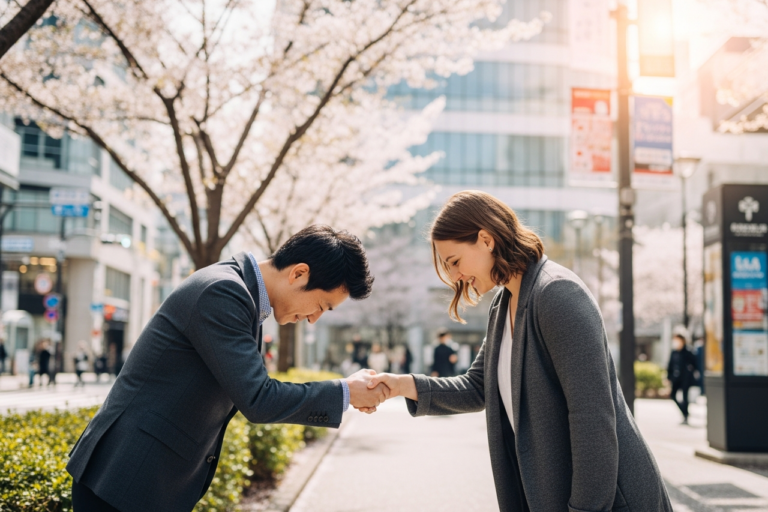
When you try to show respect, you might make some small mistakes with bowing. A common mistake is bowing and shaking hands at the same time. This can be strange. In Japan, the bow is the main way for formal salutations. You should stick with just bowing unless the Japanese person starts the handshake first.
Some people also bow too fast or not long enough. Bowing with just a quick nod does not have the same respectful tone. You need to use your body and take your time with the bow. A slow and steady bow is better than a rushed one.
Here are a few things to avoid when bowing:
-
Bowing from the neck instead of the waist.
-
Keeping eye contact during the bow; you need to look down.
-
Bowing while walking; stop first, then bow.
-
Responding to a store worker’s bow by giving a full bow yourself; a nod or a quick smile is enough.
Formal vs. Informal Greetings in Japanese Culture
Japanese culture puts a lot of value on the different levels of formality in how people talk to each other. This is true for japanese greetings, too. You have to know when to use formal or informal greetings. It is important for keeping social harmony. If you meet someone for the first time, or if you talk with elders or people at a higher level, it is best to go with formal japanese greetings. That is always safer and shows respect.
Informal greetings are for close friends and family members. You can use them with a group of peers who are at the same level as you. But if you use informal greetings in the wrong setting, it can look disrespectful. The next sections will give more examples about these levels of formality.
Greetings at Work and in Business Situations
In a Japanese place of work, the way you greet others is very important. People use special workplace greetings to show respect for the hierarchy and to help the team work together better. When you walk into the office, you are expected to use these proper greetings. For example, people say “Ohayou gozaimasu” to everyone in the morning no matter what their job is. This phrase helps people start the day together in a good way and also shows respect.
One good workplace greeting is “Otsukaresama desu.” It is a phrase you can use a lot on the job. It means something like, “thank you for your hard work.” You can use it all day to let your co-workers know you see what they do. Some people use this phrase as both a hello and a goodbye, or just to show someone you notice them and appreciate them. Using extra politeness like this at work is always a good thing, especially in business calls and other formal settings.
Here are some key greetings people use at work:
-
Osewa ni natte orimasu: This phrase is very formal and is most often used in business calls or emails. It means, “Thank you for your continued support.”
-
Ohayou gozaimasu: This is what people say to each other every morning when they come into the office.
-
Otsukaresama desu: People use this a lot during the day to say
How Greetings Differ Among Friends, Family, and Strangers
The way you greet someone in Japan can really change based on the person you talk to. When you speak with strangers, older people, or in formal situations, you have to use formal japanese greetings. If you meet someone for the first time, you need to say “Hajimemashite” (“Nice to meet you”). You should bow too.
If you talk with close friends or family members, you use casual greetings. People leave out the formal ending “-gozaimasu.” So, “Ohayou gozaimasu” is just “Ohayou.” Sometimes, young men say “Ossu.” Young women might say “Yah-hoh!” These are really informal greetings.
Here’s a quick comparison:
-
With strangers: Use “Konnichiwa” and other formal japanese greetings. Add honorifics like “-san.”
-
With close friends: Say things in a casual way. Phrases like “Yaa” or “Yo!” are common.
-
With family members: Use greetings like “Tadaima” (“I’m home”) and “Okaerinasai” (“Welcome back”). These help the bond between family members.
These japanese greetings help you show respect for others in all kinds of situations, whether it’s the first time, with close friends, or family members. You get to use different language, from formal japanese greetings to informal greetings, based on who you talk to.
Conclusion
As we finish looking at greeting customs in Japan, you can see that knowing these things will help a lot when you talk with people there. The simple “Konnichiwa” or a friendly bow shows kindness and respect. These are the ways that people in Japan share their tradition and good manners. If you are from Canada and visit Japan for travel or business, you should be aware of these small but important acts. They help you make friends and show you care for their way of life. Always try to do things the local way because it helps you get along with people. When you get ready for your trip, think about these greetings. You will get to meet new people and have a great time with Japanese hospitality. Have a safe trip!
Frequently Asked Questions
Is a handshake ever appropriate when greeting someone in Japan?
Bowing is the usual way people do Japanese greetings. But now, more people use handshakes in worldwide business. A handshake shows an egalitarian gesture. If your Japanese partner gives you their hand, be nice and shake it. Still, you should always get ready to bow, because it is the main greeting and people see it as very respectful.
How do Japanese children greet adults versus their peers?
Japan has a complex culture where children learn to show respect for others from a young age. They will bow and use formal Japanese greetings, such as “Ohayou gozaimasu,” when they see adults, teachers, and older family members. When talking with others their own age, they act more relaxed. They may just use casual japanese greetings. A wave or a small nod is often good for friends.
What should I avoid saying to ensure my greeting is polite?
To be polite, do not use very laid-back japanese greetings like “Ossu” or “Yo!” unless you are with close friends. This is a fair warning because saying these in the wrong social setting can look rude. It is good to show extra courtesy with formal words until you know for sure that you and the other person are close.