Key Highlights
-
The most common way to greet someone in Morocco is to say “Salam alaikum.” This means “peace be upon you.” When people are just being casual, they will often say “Salam.”
-
Greetings are a big part of moroccan culture. They show respect, politeness, and hospitality.
-
People in morocco speak a local dialect called moroccan arabic or darija. If you learn a few phrases in it, your trip will be better.
-
The kind of greetings you use can change with the time of day. There are phrases for “good morning” and “good evening.”
-
For close friends of the same gender, a handshake or cheek kiss is normal.
-
In morocco, it is good manners to use your right hand when you greet someone or do other things with people. This is seen as a sign of respect.
Introduction
Are you planning to go to Morocco? This country is full of life. You will see great views, busy markets, and the people are known for their good hospitality. If you want to understand the local culture better, try learning some Moroccan greetings. Many people there speak French or English, but saying a few words in Moroccan Arabic, also called Darija, will show respect. Using some Arabic greetings helps you meet people in a good way. The most common one is “Salam alaikum.” You’ll hear this warm greeting almost everywhere you go in Morocco.
Understanding Greetings in Moroccan Culture
In Moroccan culture, saying hello to someone means much more than just greeting them. In daily life, these greetings are an important way to connect with others. People use them to show respect, warmth, and that they care about the other person.
When you visit Morocco, you will see that people often take more time with greetings. These can turn into short talks. If you learn how these greetings are done in Moroccan Arabic, or Darija, it can help you fit in better. It also shows you have respect for Moroccan culture and the way people live in Morocco. Learning these small parts of Moroccan life can help you make better and closer connections with others.
The Importance of Greetings in Daily Life
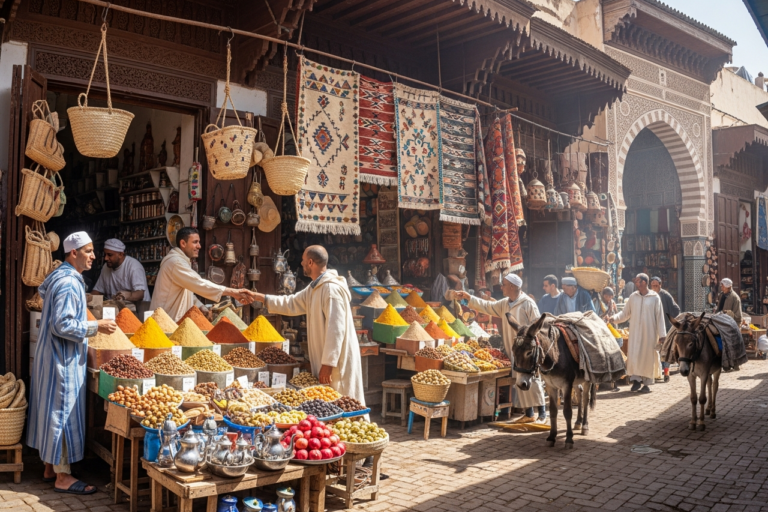
Greetings are a big part of daily life in Morocco. People say hello many times each day. You will see this everywhere, from the busy markets in Marrakech to quiet towns. Friends, shopkeepers, and even people you don’t know greet each other often.
Saying hello is not just a fast word you use. It means the person matters and you care about them. That is an important piece of Moroccan hospitality. When you greet someone, you show respect and make them feel part of the group. A simple greeting can make two people feel close, even if they just met.
In everyday life in Morocco, people often ask how you are after hello, with words like “Ki dayr?” (How are you?). People want to know if you feel good. This is not small talk—it is real and makes each person feel at home. This way of sharing kindness is one of the best parts of visiting Morocco. Just a little effort, a kind word, or a question will give you a smile and a good welcome.
Cultural Values Reflected in Moroccan Greetings
Moroccan greetings give you a look into the heart of Moroccan culture. They show how much people care about politeness, respect, and hospitality. People most often say, “Salam alaikum,” which means “peace be upon you.” This greeting comes from a religious place and shows a wish for peace and joy for everyone. It helps set a good tone for any talk.
When you greet elders or someone who has an important job, you need to be even more respectful. People sometimes do a small bow or put their right hand over their heart after shaking hands. This shows that they truly mean what they say and that they think highly of the person. When it is time to greet family members, things are warmer and more loving. Family and close friends will often hug or give kisses.
Greeting people in Morocco is about more than just saying hello. It is a way to show everyone is welcome and that there is a strong sense of community. This also shows off the famous hospitality that you find in Morocco. When you learn what these greetings mean and how to do them, you can join in with respect and feel more at home in Moroccan culture.
Essential Words and Phrases for Moroccan Greetings
Learning a few main words in Moroccan Arabic, or Darija, will help you a lot. It makes your talks with people more fun and friendly. You do not have to know all the words, but using simple greetings shows that you want to learn about their culture.
Start with easy words like “hello,” “thank you,” and “how are you?” These are good to use when you meet someone. You can also say “good morning” or “good evening” in Moroccan Arabic. People in Morocco hear these greetings every day and will be happy when you use them.
Common Ways to Say Hello and Goodbye
The most universal greeting in Moroccan Arabic is “Salam alaikum,” translating to “peace be upon you.” The standard reply is “Wa alaikum salam,” meaning “and peace be upon you too.” In more casual situations, you’ll frequently hear this shortened to a simple “Salam.”
After the initial greeting, it’s common to ask how the person is doing. You can use “Ki dayr?” (How are you?) or “Labess?” (Are you well?). “Labess” can also be used as a response, meaning “I’m fine.” A common and polite reply is “Labess alhamdu lillah” (I’m fine, thank God). When it’s time to part ways, “Bislama” is the customary way to say “goodbye,” which translates to “go with peace.”
Here is a simple table with some key greetings and phrases:
|
English |
Moroccan Arabic (Darija) |
Pronunciation Note |
|---|---|---|
|
Hello (Peace be upon you) |
Salam alaikum |
Sa-LAM a-lay-KOOM |
|
And peace be upon you (reply) |
Wa alaikum salam |
Wa-a-lay-KOOM sa-LAM |
|
Hello (casual) |
Salam |
Sa-LAM |
|
How are you? |
Ki dayr? |
Kee DYE-rr? |
|
Goodbye |
Bislama |
Biss-LA-ma |
|
Thank you |
Shukran |
SHOOK-ran |
Greetings at Different Times of Day
Just like you see in Canada, people in Morocco greet others in different ways depending on the time of day. Saying the right thing at the right time can really show that you want to understand and care about the local ways. Taking that small step brings more politeness to the way you talk with others.
When it is morning, people say “Sbah lkhir,” which means “good morning.” You can answer with “Sbah lkhir” too, or you could use “Sbah nour,” which means “morning of light.” Once it is evening, you switch to saying “Msa lkhir,” which means “good evening.”
You hear these greetings all across Morocco, in busy cities and in rural areas as well. Using these polite, time-specific greetings is a good way for us to make a real connection with people in Morocco.
-
Good Morning: Sbah lkhir
-
Good Evening: Msa lkhir
Beginner’s Guide: How to Greet Locals in Morocco
Are you ready to put what you know into practice? Meeting and saying hi to people in Morocco is a nice thing to do. It feels good, too. When you talk to shopkeepers in a busy souk or get asked to have some Moroccan mint tea, a friendly hello always helps.
It’s okay if you do not get things right the first time. People will like that you try to speak a little Darija. They often give you a big smile for your effort. This simple guidebook will help you with the basics of the language. It also shows what to do with your body and steps you can use for Moroccan greetings with confidence.
What You Need to Get Started (Language Basics and Body Language)
To start learning Moroccan Arabic, or Darija, it is good to use some basic phrases. The way you say words may feel hard, but don’t let that stop you from trying. People in Morocco like it when you try. Many people will help you with the right way to say things. You can start with greetings like “Salam alaikum” and “Shukran,” which means thank you. These are simple and important words in Moroccan Arabic.
When you meet people in Morocco, the way you act with your body is just as important as your words. A smile is always good and helps to show you have good intentions. In Morocco, people use their right hand when they greet, eat, or hand over something. The left hand is not used in these ways, as it is thought of as not clean.
Keep these things about body language in mind when you say hello:
-
Always use your right hand for a handshake.
-
A smile helps to show warmth and good hospitality.
-
If you greet someone of the other gender and you do not know them well, just saying hello is good enough.
Try to use these easy ways to show greetings and respect in Moroccan Arabic. You will find that a little effort means a lot in Morocco.
Step-by-Step Guide to Greeting Someone in Morocco
Greeting someone in Morocco is easy and feels warm. To get along with people there, you just need to follow a few simple ways. With this small guide, you will feel better about meeting people during your time in Maroc.
Begin with a verbal greeting like “Salam alaikum.” When you say it, look the other person in the eye and give a real smile. You can also give a handshake, but that depends on who you are talking to and the time. Make sure you use your right hand.
After you say hello, it’s nice to ask how they are feeling. You can say “Ki dayr?” or “Labess?” This tells them you care about more than just saying salam.
-
Step 1: Start with a verbal greeting (“Salam alaikum”).
-
Step 2: Smile and make friendly eye contact.
-
Step 3: Offer your right hand for a handshake, if appropriate.
-
Step 4: Follow up by asking, “Ki dayr?” (How are you?).
Step 1: Choosing the Right Phrase (Formal vs. Informal)
The right greeting will depend on who you are talking to and where you are. For most times when you meet someone as a visitor, it is good to be a bit more formal. This shows politeness and is safer.
You can say “Salam alaikum.” This is a great all-purpose greeting. It works well with shopkeepers, elders, and people you do not know yet. This phrase gives respect and is polite, so you can’t go wrong with it.
If you know someone well, like close friends or family members, the greeting can be shorter. People may just say “Salam.” In Darija, greetings are even more relaxed with these people. There can be friendly questions and hugs or kisses too. As someone visiting, you should use “Salam alaikum” until you feel more comfortable. This way, you always show respect.
Step 2: Using Appropriate Gestures (Handshakes, Kisses, and More)
Gestures are important in Moroccan greetings. When people meet in Morocco, a handshake is normal, mostly between men. Your handshake should be gentle, not too strong. Always use your right hand for this. After the handshake, some people in Morocco will put their right hand on their heart. This shows they feel warm and honest.
When people of different genders greet each other, things can be more careful. If you are a man meeting a conservative woman, you should wait to see if she wants to shake hands first. If she does not, you can just say hello with a smile and nod a little. That is the best and most respectful way. People in Morocco, like close friends and family members, often kiss each other on the cheek. But, this is only for people who are very close and of the same gender. Do not do this with shopkeepers or with strangers.
Here are a few key things to keep in mind about gestures in Moroccan greetings:
-
Handshakes: People do this a lot between men or with women. Always use your right hand.
-
Hand to heart: Many Moroccan people put their hand on their heart after a handshake to show they care and are honest.
-
Kisses: Only close friends and family members, and just with people of the same gender, should kiss on the cheek.
These little touches are a big part of how people greet and show respect in Morocco.
Conclusion
To sum up, knowing how to greet people in Morocco is a key part of connecting with the locals and showing respect for their culture. Greetings in Morocco are not just something you do; they show the warmth and hospitality that are a big part of Moroccan culture. When you learn the usual words, actions, and understand how these greetings can change during the day, you get to know people better. If you pay attention to these small but important parts of moroccan culture, your time in Morocco will be richer, and your meetings with people will feel better. As you get ready for your trip, remember that a simple greeting can make a big impact. If you want more advice about moroccan hospitality or greetings, just reach out!
Frequently Asked Questions
How do greetings differ between Moroccan Arabic and Standard Arabic?
Many greetings in moroccan arabic come from standard arabic, but how people say and use them in morocco is different. For example, you can hear “Salam alaikum” in both, but in moroccan arabic (darija), you will get lots of other local greetings. People also ask follow up questions that are not in standard arabic. This makes darija the language you use for everyday talk in morocco.
What should I avoid when greeting someone in Morocco?
In Moroccan culture, you should not start with big gestures like hugging or kissing cheeks, especially if you do not know the other person well. When you greet a woman, be careful. In rural areas, men should wait until the woman offers her hand before shaking it. You also need to use your right hand for greetings.
How do Moroccans greet elders or respected people?
When you greet elders in Morocco, you show them a lot of respect. You usually say the formal “Salam alaikum.” After that, you might kiss their hand or forehead to show even more respect. People also put their hand on their heart after a handshake. This is a way to show you are sincere and have deep respect for them.
Do greetings change depending on whether you know the person?
Yes, greetings in Morocco can be quite different. When people meet strangers, they usually say “Salam alaikum” and shake hands. But with close friends and family members, the greetings are much warmer. People may give cheek kisses, hugs, and spend more time asking about how the other is doing. These greetings feel more personal.