Key Highlights
-
Guru Purnima 2026 in Canada will be on 29 July. This is based on the hindu calendar and the full moon day of Ashadha.
-
People also call this holy festival Vyasa Purnima. It is a time to show respect for Sage Ved Vyasa and the long line of gurus.
-
On this day, many people do guru puja, say prayers, give offerings, and spend time thinking about their teachers.
-
The festival is special in hindu, buddhist, and jain traditions.
-
In Canada, temples and families change their customs a bit to match local time and when the community can meet.
Introduction
Guru Purnima is an ancient festival. It is about the bond between a teacher and a seeker. On this day, many people stop and say thank you. They also think about the ones who give wisdom and help guide life. In Hindu thought, the day is linked with Ved Vyasa and the idea of the first guru. This first guru helps others move from not knowing to understanding. In Canada, families, temples, and spiritual groups also find meaning in Guru Purnima.
Date and Time of Guru Purnima 2026 in Canada
Guru Purnima will be held in 2026 on Wednesday, July 29. This day is set by the hindu calendar. It comes on the full moon of ashadha month, which is what many old calendars call it.
Canada has many time zones, so the time people start prayers or go to temple might be different for each place. Even with the time changes, the main event always happens on the same lunar date. Every group of people makes their own plans to fit with their local time. In the next parts, you will see the date details and how communities across Canada get ready for this day.
Specific date, purnima timing, and how the festival aligns with the lunar calendar
In 2026, Guru Purnima is observed on 29 July, a Wednesday. This answers a common question clearly: when is Guru Purnima celebrated in 2026? It is marked on the full moon day of Ashadha, following the lunar calendar and the Hindu calendar rather than a fixed solar date.
The tithi begins on 28 July 2026 at 6:18 PM and ends on 29 July 2026 at 8:05 PM. Because the festival is based on the purnima tithi, the sacred timing matters just as much as the calendar date for many devotees.
|
Detail |
Information |
|---|---|
|
Festival date |
29 July 2026, Wednesday |
|
Purnima tithi begins |
28 July 2026, 6:18 PM |
|
Purnima tithi ends |
29 July 2026, 8:05 PM |
|
Hindu month |
Ashadha |
|
Festival basis |
Full moon day in the lunar calendar |
Regional time differences and preparations by the Indian diaspora in Canada
Across Canada, time zones affect the way the Indian community gets ready for Guru Purnima events. For example, a temple in Toronto may have a different programme time than one in Vancouver. Both honour the same important day, but each area makes changes so families can join in more easily.
Most plans are simple and focused on showing faith. People clean their prayer spaces, put out flowers, and get offerings ready before they go to satsangs or take part in things at the temple. Some people also spend quiet time thinking about the part a guru or mentor plays in their lives.
Common preparations include:
-
arranging home altars or temple offerings in advance
-
checking local temple schedules based on regional time differences
-
planning family prayer, seva, or community participation
Meaning and Historical Significance of Guru Purnima
The meaning of Guru Purnima comes from feelings of thanks, learning, and getting help for your spirit. This day is about saying thank you to teachers who take away our lack of knowledge. They help people go from not knowing to understanding more. That is why this day brings deep feelings and matters so much for the spirit.
Guru Purnima goes way back in time and matters across different traditions and writings. In Hindu ways of thinking, people connect the day to Ved Vyasa. He was part of sharing sacred learning, like Vedanta and many other big ideas that were key to Indian spiritual life. If you want to know more about this festival, you should look at what the name means and where it fits with other beliefs.
Etymology and cultural origins: Unpacking the term ‘Guru Purnima’
The word Guru Purnima is simple but strong. In Sanskrit, “gu” means darkness or not knowing, and “ru” means one who takes away. So, a guru is someone who helps get rid of the darkness in your life. “Purnima” means the full moon day. So, this day is meant to honour a guide who brings you light and shows you the way.
The roots of this festival are in very old Indian spiritual ways that respect the bond between a teacher and student. Guru Purnima is also called Vyasa Purnima. This connects it with Sage Ved Vyasa, who split the four Vedas and was the one who wrote the Mahabharata and the Puranas.
This day has another deep meaning with the story of the first guru. Some people link this day to Lord Shiva, who is also called Adi Yogi. He gave the first lessons about the yogic sciences to the Saptarishi. That is why Guru Purnima is more than just a festival. It is a day that many people take as a chance to think about their teachers and honour the wide spiritual link of this full moon day.
The roots of Guru Purnima in Hindu, Buddhist, and Jain traditions
In the Hindu tradition, Guru Purnima is also called Vyasa Purnima. People honor Ved Vyasa on this day. He is known as one of the greatest gurus in Indian literature and spirituality. Ved Vyasa is remembered for the way he put together the Vedas and wrote some major sacred books. This is why the day is important for those who follow the Hindu tradition.
In the Buddhist tradition, Guru Purnima is about Lord Buddha and his first sermon at Sarnath after he became enlightened. This teaching, known as the Dhammacakkappavattana Sutta, was the time when he first began to speak about Dharma in public. It is still very important for people when they think about the Buddhist way.
Within Jain traditions, the festival comes at the beginning of Chaturmasya and shares a deep link with Mahavira’s teachings. This day is also tied to Gautam Swami, who is seen as the first disciple of Mahavira. Jains spend the day in prayer, meditation, and by doing acts of charity. These acts focus on truth, compassion, and inner purity.
Why Honouring Gurus Matters on Guru Purnima
Honouring a guru on Guru Purnima is important. A true guide will help you get past confusion, ego, and not knowing what’s real. The guru helps you remember your ultimate goal. They want you to keep moving forward on your spiritual path.
This idea is not just about religion. Mentors, elders, and teachers help with higher learning. They shape the way you think, live, and deal with different things in life. That’s why a lot of people use this day to show respect. They honour not just saints, but also anyone whose support has helped them grow and get better.
The guru’s role as a spiritual guide across different faiths
A guru is respected because a spiritual guide does more than just tell you facts. A guru will help you look at the bigger questions in life and steers you toward knowing yourself better. In many teachings, this kind of help is more valued than mere bookish knowledge. It changes the way that a person lives.
Hindu teachings say the guru will lead seekers to learn about atma and Paramatma. The guru is honoured in traditional verses as Brahma, Vishnu, and Mahesh. This shows the high place that enlightened teachers get in spiritual life.
Some beliefs even say this role started with Lord Shiva, who is seen as the first yogi and the first guru. When you look at it that way, all the ways of learning about the spirit come from this first guidance. In every system of faith, the guru stands for insight, discipline, and caring guidance.
Relevance of gurus and mentors in contemporary Canadian society
In Canada today, Guru Purnima still has meaning because people in modern life need help and clear guidance more than ever. Every day, the pressure, fast pace, and material pursuits can make things hard. The right mentor can help you steady yourself, see things clearly, and find more purpose.
So, there are people who honour not just religious figures on this day. Academic teachers, parents, elders, or other mentors in your life also shape who you are. They help people with ethical living, making good choices, and growing the knowledge of an individual beyond only books or job skills.
This is why it’s okay to honour teachers and mentors who may not come from a religious background on Guru Purnima. The festival is about anyone who helps remove doubt and guides us to be better, so it’s good to show gratitude and respect to them, too.
Customs and Rituals Associated with Guru Purnima Celebration
Guru Purnima customs are about showing respect, giving thanks, and thinking deeply inside. One key part is guru puja, where people honour their teacher. They do this with prayer and special acts to show respect. These acts show how humble a person can be, not just to put on a show.
Offerings matter, too. People might give flowers, clothes, money, or their help. What they offer can change, based on their tradition. The most important thing is that people have a true wish. They want guidance and extra strength as they walk their spiritual path. The sections that come next will take a closer look at the rituals and prayers.
Rituals performed: Prayers, offerings, and traditional practices
On Guru Purnima, many people take part in special rituals. They often say prayers for the guru and sing songs of praise. People also show acts of deep reverence at this time. In earlier times, it was common for devotees to honour the guru’s feet. This act is a show of surrender, humility, and trust in the guidance that the guru gives.
Some old stories talk about Charanamrit. This is water that has touched the guru’s feet and was used as a sacred drink in some groups in earlier times. Many also like to offer cloth, blankets, or money. These things are more than just customs. They help people say thank you for the wisdom they get.
Common traditional practices are:
-
performing guru puja with prayers and devotional singing
-
offering flowers, garments, or monetary gifts
-
showing respect at the guru’s feet or the feet of the guru in symbolic worship
Special prayers and mantras chanted on Guru Purnima
Yes, special prayers and mantras are often done on Guru Purnima. During guru puja, many people say verses that talk about the guru as someone who clears away the darkness and brings wisdom to all. One of the most well-known lines starts with, “Gurur Brahma, Gurur Vishnu, Gurur Devo Maheshwaraha.”
The main thing about prayer on this day is not how hard or detailed it is but how real and full of heart you make it. People sometimes say the well-known Guru Stotram, sit in quiet and think, or just say a few words to show how thankful they are. In groups who follow teachers like Sri Sri Ravi Shankar, it is now popular to come together to sing and take time to reflect with each other.
Common ways people pray for guru puja or higher learning on this day:
-
reciting the Guru Stotram
-
chanting easy mantras during guru puja
-
sitting in silence and saying thanks for all the guidance, clear understanding, and higher learning they get
How Guru Purnima is Celebrated by the Indian Community in Canada
In Canada, people of Indian background often honor Guru Purnima together. They bring devotion and local time together during this celebration. Satsangs, temple events, and prayers at home all help keep this special tradition alive, even if people are far from their old home.
The feeling is much like how it is in many parts of India. This day is all about giving thanks to the guru and coming together in worship. In Canada, you will find that feeling not only in mandirs, but also in at-home gatherings and spiritual meeting places. The coming parts tell how families and people in the community join in to make the day special.
Community events, satsangs, and temple gatherings
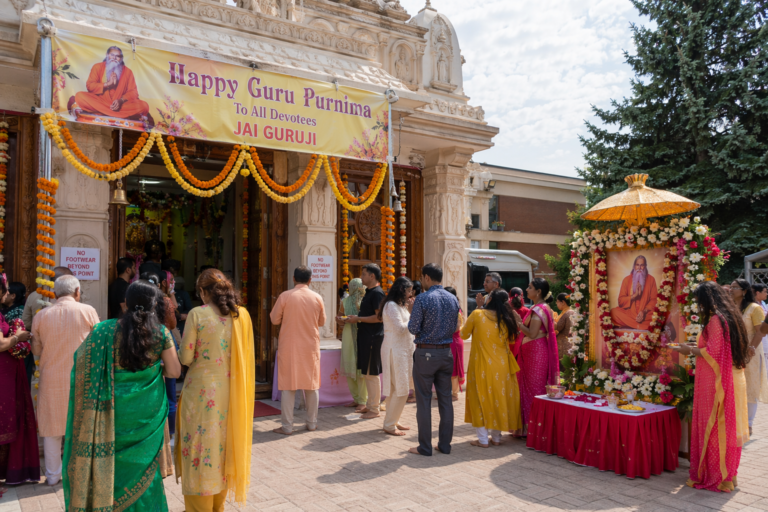
Many Guru Purnima events in Canada take place in temples and with spiritual groups. People from the Indian community come together for prayer, to remember, and to learn at these events. Some groups, like BAPS, have remembered this day for a long time with big gatherings and by honouring their gurus.
In temples, people often join in singing, listen to talks about life, and take part in a group guru puja. At some places, they come for darshan, arti, and to pray with others. These events are much like what people do in India. There, students and followers meet to show respect for their teachers and remember the lessons they learned.
You may see activities such as:
-
satsangs with bhajans and talks on the guru-disciple bond
-
temple gatherings focused on prayer and offerings
-
community events that bring families together for seva and reflection
Family traditions and participation of younger generations
At home, family traditions make Guru Purnima feel close to the heart. Parents talk to their children about the value of gratitude, respect, and being humble by simple prayer, telling stories about Ved Vyasa, or just having a chat about teachers who help us in life. These things help to keep the day good for all and easy to understand.
Younger people join this time by doing humble acts, not just following old rituals. They help get things ready, go to satsang, or do seva. This means the festival is not just for one age group. It shows that anyone can learn to honour those who show us the way, as long as they do it with real feeling.
Some families also do acts of charity as part of how they mark the day. This idea links to the spirit found in Jain traditions and other ways of life. Here, helping others, being open-handed, and having self-control come together. By doing these good things, families pass down the values of Guru Purnima to their children.
Modern Observances: Spiritual Organizations and Broader Communities
Modern Guru Purnima celebrations show how an old festival can still be important today. Many spiritual groups keep honouring their gurus through prayer, talking about teachings, and holding events in the community. They also find new ways to connect with people, including in the digital world and by meeting local needs.
At the same time, this day can help bring people of different faiths together in Canada. That is because it teaches us to value wisdom, thank people who guide us, and show respect for good advice. These ideas speak to all people, not just those of one faith. The next parts will show how groups and communities take part in this special day now.
How modern spiritual organizations mark Guru Purnima
Modern spiritual groups mark Guru Purnima by blending old ways with today’s outreach methods. There are prayer meetings, talks, and guided reflection that focus on the bond between a guru and follower. This keeps the true essence of Guru Purnima in place without letting go of its deep roots.
In today’s digital world, these teachings can now get to people who may not join in person. With recorded messages, online satsangs, and virtual chanting, people in different places can feel linked. That is important in a big country like Canada, because distance can stop some people from joining in.
Some groups are shaped by modern gurus and famous teachers. People often mention sri sri ravi shankar, swami vivekananda, and the dalai lama along with their ideas on mindfulness, helping others, and knowing yourself. The way they reach out lets people connect the old wisdom to the way we live now.
Participation by non-Hindu communities and interfaith observance in Canada
Guru Purnima is not just for Hindus. The day also connects with Buddhism and Jainism. In Canada, this lets many groups see it as a time to honour wisdom, teachers, and those who give moral guidance.
With many faiths together, there is more meaning in the celebration. For Buddhists, Guru Purnima reminds people of Lord Buddha’s first sermon. This moment helps both lay followers and monks take time for deep reflection. For Jains, the day honours Mahavira and Gautam Swami. It brings up thoughts about inner purity and discipline.
This wider meaning works well in Canada. Here, people from different faiths can join in, show respect, and take part in temple open houses, talks, and community events. These moments are all about gratitude and ethical living. The main message is simple: honour all who help people find truth and compassion.
Conclusion
Guru Purnima is a time to come together and show respect to our spiritual teachers and guides. The day is important for many people, no matter where they come from. It is well known in Hindu, Buddhist, and Jain traditions. These groups give special honour to their gurus. Today, many people see how important good advice and guidance are in our world.
In Canada, people in the Indian community mark this day with lots of lively customs and rituals. Those who are not from India are joining in too, making it a festival that helps all people feel close and show respect. Different cultures now celebrate Guru Purnima together.
This year, think about what your teachers have done for you. Take a moment to give thanks. You might even want to be part of community events for this day. If you are curious about Guru Purnima or want to find where to join in, you can ask for help to learn more or connect with others who care about Jain traditions.
Frequently Asked Questions
Is Guru Purnima only celebrated by Hindus in Canada?
No. Guru Purnima is closely tied to Hindu practice. But people in non-Hindu groups also feel connected to it through the Jain traditions and the buddhist tradition. In Canada, the Indian community may lead many of the events. Still, the idea of honouring teachers is for all people and not just a part of one faith.
What are the most popular rituals during Guru Purnima?
The most common rituals are guru puja, prayers, singing songs for devotion, and giving gifts like flowers. In some old customs, people honor the guru’s feet or give respect to the guru’s feet in a special way. Doing this shows the people’s humility, thanks, and respect for the guru’s spiritual help.
Can teachers or mentors outside of religious contexts be honored on Guru Purnima?
Yes. In modern life and in Canadian society, many people show respect to mentors, academic teachers, parents, and elders during Guru Purnima. The main idea of the festival is to say thank you to those who guide you. This could be anyone who helps you with wisdom, supports you in living an ethical life, and gives you a sense of purpose and direction.