

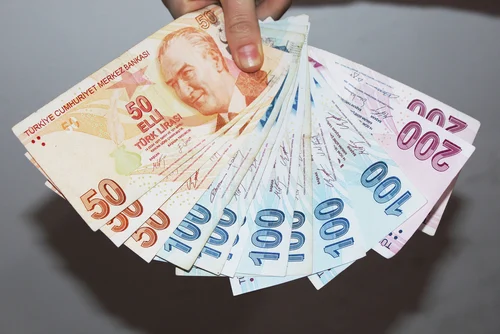
Turkey’s official currency is the Turkish lira (TRY), split into 100 kuruş and issued by the Central Bank of the Republic of Turkey. You’ll find banknotes in denominations of 5, 10, 20, 50, 100 and 200 lira, plus coins from 1 kuruş up to 1 lira. Here’s what else Australians should know before travelling or sending money to Turkey.
What Is the Turkish Currency?
Officially called the Turkish lira and represented by the ISO 4217 code TRY, Turkey’s currency has used its ₺ symbol since 2012. One lira equals 100 kuruş, similar to how one Australian dollar (AUD) equals 100 cents. Unlike the AUD, which trades in a fairly narrow band, the lira’s value moves considerably, so it’s better to check the current rate before you travel or send money, rather than relying on a fixed figure. While you’re getting ready for your trip, you might also want to check out our guide to visas in Turkey.

A Brief History of the Turkish Lira
The Ottoman Empire introduced the lira in 1844, replacing the kuruş with Arabic script notation. Following Turkey’s 1922 founding, the Central Bank issued lira with Turkish script. According to the Central Bank of the Republic of Turkey, the lira saw significant shifts over the 20th century, with a more than threefold price increase during WWII and major structural forms in the 1980s. In 2005, the government removed six zeros from the currency, introducing the “new Turkish lira” (Yeni Türk lirası) to restore confidence and simplify everyday transactions. The “Yeni” prefix was dropped in 2009. The Central Bank of the Republic of Turkey has also reported renewed inflationary pressure on the lira since 2021, which is worth factoring in if you’re budgeting for a trip or planning a transfer. Current denominations include 5, 10, 20, 50, 100, and 200 lira banknotes, plus coins in 1, 5, 10, 25 and 50 kuruş and a 1 lira coin. The modern lira plays a role in many Turkish traditions, including as a common gift at Turkish weddings.
Turkish Lira Banknotes and Coins: What to Know
Every lira banknote features Mustafa Kemal Atatürk, the republic’s founder and first president, on the front. The reverse of each note features a different historical Turkish figure or cultural landmark. Current President Recep Tayyip Erdoğan does not appear on any denomination. The ₺ symbol has an interesting backstory: the Central Bank ran a public design competition in 2012, and engineer Tülay Lale’s winning design — a half-anchor crossed with two upward-facing lines — was chosen to represent a currency in a “safe harbour.” Small kuruş coins are rarely used in everyday transactions, so don’t be surprised if a shopkeeper rounds a price rather than counting out change. Notes from before the 2005 redenomination are no longer legal tender — the exchange window closed in 2019, so any pre-2005 lira you come across now are collector’s items only. If you’re curious how other countries balance historical figures and cultural landmarks on their banknotes, the Egyptian pound offers an interesting comparison.

How to Spot a Genuine Turkish Lira Banknote
Counterfeit notes do circulate, particularly around busy tourist areas, so it helps to know what to check.
- Genuine notes are printed on cotton fibre paper, giving them a distinct texture.
- A watermark of Atatürk’s portrait and the note’s denomination becomes visible when held up to light.
- A holographic foil strip shifts colour and pattern as you tilt the note.
- A security thread woven into the note reads “TL” alongside the denomination when backlit.
- Genuine notes don’t have a fluorescent glow under UV light.
Money changers at informal stalls or unlicensed tourist kiosks carry more risk than banks, hotels, or licensed exchange offices, so try to stick to recognised providers when you can.
Practical Cash Tips for Australians in Turkey
Turkey runs largely on cash, especially outside major cities, so it helps to plan ahead.
- Carry lira for bazaars, small restaurants, and taxis, where cards often aren’t accepted.
- Visa and Mastercard are widely accepted in hotels, larger restaurants, and shops in cities like Istanbul, though acceptance becomes patchier in rural areas.
- ATMs generally offer better rates than airport exchange counters. It’s often worth waiting until you land rather than exchanging cash at departure.
- Tipping in lira is customary. Cash tips are appreciated in restaurants, for tour guides, and with hotel staff, even where a card covers the bill.
- The Australian dollar isn’t accepted for everyday purchases, so plan to exchange AUD or withdraw lira locally through a licensed provider.
Adjusting to a cash-first culture isn’t unique to Turkey. Travellers exchanging South African rand often navigate similar norms in smaller towns.

Frequently Asked Questions About Turkish Currency
What is the currency of Turkey?
Turkey’s official currency is the Turkish lira (TRY), symbolised by ₺ and issued by the Central Bank of the Republic of Turkey. It’s divided into 100 kuruş and comes in banknotes from 5 to 200 lira, plus coins from 1 kuruş to 1 lira.
What is the ISO code for the Turkish lira?
The Turkish lira’s ISO 4217 code is TRY. The ₺ symbol was designed by engineer Tülay Lale and adopted in 2012 after a public competition run by the Central Bank of the Republic of Turkey.
Can Australians use AUD in Turkey?
No, the Australian dollar isn’t accepted for everyday purchases in Turkey. You’ll need to exchange AUD for lira at a licensed exchange office or withdraw lira directly from an ATM, which typically offers more competitive rates than airport counters.
Are old Turkish lira banknotes still valid?
No. Banknotes issued before the 2005 redenomination stopped being legal tender once the exchange window closed in 2019. Any pre-2005 notes you come across today are collector’s items rather than usable currency.
Who is on Turkish lira banknotes?
Mustafa Kemal Atatürk, the founder of the Turkish Republic, appears on the front of every current banknote. The reverse of each note features a different historical figure or cultural landmark from Turkey.
How can I tell if a Turkish lira note is genuine?
Check for cotton fibre paper, a watermark of Atatürk’s portrait, a holographic foil strip, and a backlit security thread reading “TL” with the denomination. Genuine notes don’t appear fluorescent under UV light.
Is Turkey a cash or card economy?
Turkey is a mixed economy that leans cash-heavy. Cards are widely accepted in cities, hotels, and larger restaurants, but bazaars, small eateries, and tipping usually call for cash, so it’s always worth carrying some lira.
Key Takeaways
- Turkey’s official currency is the Turkish lira (TRY), divided into 100 kuruş and issued by the Central Bank of the Republic of Turkey.
- Every banknote features Atatürk on the front; the ₺ symbol was designed by Tülay Lale and adopted in 2012.
- Notes issued before the 2005 redenomination are no longer valid — the exchange window closed in 2019.
- Turkey is largely a cash economy outside major cities, so carrying lira for markets, small eateries, and tips is worth planning for.
- The Australian dollar isn’t accepted directly, so exchanging AUD or withdrawing lira through a licensed provider is the practical option for Australian travellers.
From exchanging currencies to getting the right visa, learn everything you need to know about visiting Turkey from Australia before you depart. And if you need to send money to family or friends in Turkey or other countries, Remitly can help.
Last reviewed: August 2026



