

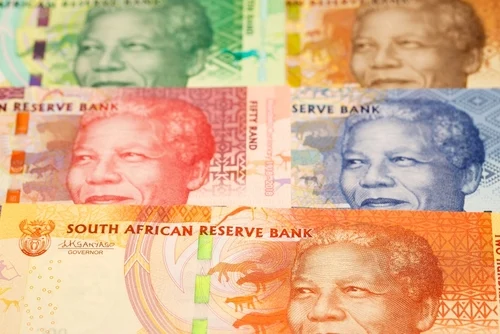
South Africa’s official currency is the South African rand, abbreviated ZAR with the symbol R. One rand equals 100 cents. The South African Reserve Bank (SARB) issues and manages the currency, which has been South Africa’s official money since 1961, when it replaced the South African pound as part of the country’s move to decimal currency. You’ll also find the rand used as legal tender in Eswatini, Lesotho, and Namibia.
At a glance
- Currency: South African rand (ZAR), symbol R, divided into 100 cents.
- Issued by the South African Reserve Bank (SARB), the country’s currency since 1961.
- Also legal tender in Eswatini, Lesotho, and Namibia under the Common Monetary Area.
- Banknotes run from R10 to R200, featuring Nelson Mandela and the Big Five animals.
- Australians can order rand before travel or rely on ATMs and cards in South Africa’s cities.

What Is South Africa’s Currency?
South Africa’s currency is the rand, commonly abbreviated ZAR or shown with the symbol R. One rand is made up of 100 cents, and you’ll find the ZAR currency in both coin and banknote form. The South African Reserve Bank (SARB), based in Pretoria, issues the currency, while banknotes are produced locally by its South African Bank Note Company subsidiary. Looking back at rand history, South Africa introduced the currency on 14 February 1961 as part of the move to decimal currency, replacing the South African pound. The country became a republic later that year, on 31 May. If you’re planning a trip or sending money to South Africa, the rand is the currency you’ll need to understand.
South African Rand Banknotes and Coins
Rand banknotes and coins have a distinctive look, and recognising them makes it easier to handle cash confidently while you’re in South Africa.
Banknotes currently in circulation:
- R10 – green, with a rhinoceros
- R20 – brown, with an elephant
- R50 – red, with a lion
- R100 – blue, with a Cape buffalo
- R200 – orange, with a leopard
The upgraded banknotes introduced in 2023 feature Nelson Mandela on the front and Big Five animal families on the reverse. They circulate alongside earlier Mandela-series notes, which remain legal tender. In 2018, the SARB also released a Nelson Mandela Centenary series depicting scenes from his life instead of the Big Five animals. These commemorative notes also remain legal tender.
Coins currently in circulation:
- 10c – Cape honey bee
- 20c – bitter aloe
- 50c – Knysna turaco
- R1 – king protea
- R2 – springbok
- R5 – southern right whale
South Africa introduced its fourth decimal coin series in 2023, with designs celebrating the country’s natural heritage. Cent coins are predominantly copper or bronze in colour, rand coins are silver-coloured, and the R5 is bi-metallic, combining bronze and silver colours.
You may still come across older coin designs, as previous series remain legal tender. The 1c, 2c and 5c coins are no longer minted and aren’t considered part of the six current circulation denominations. The 1c and 2c stopped being produced and routinely distributed for circulation in 2002, so they’re now rarely encountered in everyday transactions.

A Brief History of South African Currency
South Africa’s currency has changed hands several times over the centuries:
- Dutch guilder (1600s) – Dutch traders introduced this currency to the Cape, followed by the rix dollar, South Africa’s first paper money, in 1782.
- British pound and shilling – Britain took control of the region and introduced its own currency; the first locally issued South African pound appeared in 1910.
- South African pound (1910–1961) – remained the official currency until independence.
- South African rand (1961–present) – introduced when the newly formed Republic of South Africa adopted a decimal system and moved away from the pound.
The name “rand” is derived from the Witwatersrand, the ridge and historically important gold-mining region around Johannesburg. The SARB was founded in 1921 and marked its centenary in 2021. It is Africa’s oldest central bank.
Where Is the South African Rand Used?
South Africa, Eswatini, Lesotho, and Namibia form the Southern African Common Monetary Area (CMA), and the rand is legal tender in all four countries. Eswatini, Lesotho and Namibia also issue their own currencies – the lilangeni, loti and Namibian dollar respectively – each pegged 1:1 to the rand. Botswana participated in an earlier regional monetary arrangement but withdrew before the modern CMA was established, introducing the pula in 1976. This is useful to know if your itinerary covers more than one CMA country, since you can use rand cash across these borders rather than exchanging currency at every stop. Older SARB banknotes also remain legal tender and retain their face value even after newer series are introduced. Find out more about currency across Africa with Remitly.

What Australians Need to Know About Using Rand
If you’re heading to South Africa from Australia, a little planning around currency goes a long way. It’s also worth checking visa requirements for South Africa alongside your currency planning, since both are part of getting ready for the trip.
- Accessing rand before you go: some Australian banks and specialist foreign-exchange providers offer rand, though it’s not always held in-branch, so ask well ahead of your trip.
- ATMs in South Africa: ATMs are widely available in cities and major tourist areas, and withdrawing rand locally is usually straightforward. Choose ATMs in secure, well-trafficked locations where possible, don’t accept help from strangers, and check whether your card issuer charges overseas withdrawal or foreign transaction fees.
- Card payments: Visa and Mastercard are widely accepted at hotels, restaurants, shops, and many other businesses in urban and tourist areas. You generally won’t need to carry large amounts of cash, but it’s worth checking your card’s international fee structure beforehand.
- Carrying cash: keeping some rand on hand can still be useful for smaller businesses, markets, some rural areas, and situations where card payments aren’t available.
- Older and newer currency: don’t be surprised if the banknotes or coins you receive look different from one another. Older South African currency series continue to circulate alongside newer designs and remain legal tender, so you may come across older Mandela banknotes, 2018 Mandela Centenary notes, upgraded 2023 banknotes, and older coin designs.
Because exchange rates move day to day, it’s worth checking a live currency converter close to your travel dates rather than relying on a figure you saw earlier. If you’re also sending money to family or friends while you’re there, our guide to sending money from Australia covers the practical steps involved.

Frequently Asked Questions About South African Currency
What is South Africa’s official currency?
South Africa’s official currency is the rand, abbreviated ZAR and represented by the symbol R. It’s issued by the South African Reserve Bank and has been the country’s currency since 1961, when it replaced the South African pound.
What do South African rand banknotes and coins look like?
Rand banknotes come in denominations from R10 to R200. The upgraded 2023 notes feature Nelson Mandela on the front and Big Five animal families on the reverse. Current circulation coins are 10c, 20c, 50c, R1, R2 and R5, with the fourth decimal coin series featuring South African flora and fauna including the Cape honey bee, bitter aloe, Knysna turaco, king protea, springbok and southern right whale.
How many cents are in a rand?
One South African rand is made up of 100 cents, similar to how the Australian dollar is divided into 100 cents. Coins are available in both cent and rand denominations.
Can I use Australian dollars in South Africa?
You generally can’t spend Australian dollars directly in South Africa, so you’ll need rand for cash purchases. Cards linked to an Australian account usually work at businesses that accept Visa or Mastercard, though it’s worth checking with your Australian bank about foreign transaction fees first.
Where else can I use South African rand?
The rand is legal tender across the Southern African Common Monetary Area, which includes Eswatini, Lesotho, and Namibia alongside South Africa itself. If you’re travelling to more than one of these countries, rand can simplify carrying cash across borders.
How can I access rand while still in Australia?
Some Australian banks and specialist foreign-exchange providers offer South African rand ahead of a trip, although availability and lead times vary. It’s worth checking before you travel and comparing rates and fees between providers.
Where does the name “rand” come from?
The rand is named after the Witwatersrand, the ridge and historically significant gold-mining region around Johannesburg. “Rand” means “ridge” in Afrikaans.
Key Takeaways: South Africa’s Currency at a Glance
- The South African rand (ZAR) has been South Africa’s official currency since 1961, when it replaced the South African pound.
- The rand is legal tender not just in South Africa but across the Common Monetary Area, including Eswatini, Lesotho, and Namibia.
- Current banknotes feature Nelson Mandela and the Big Five animals, while coins are grouped into red, yellow, and white denominations.
- Australians travelling to South Africa can generally rely on ATMs and card payments in cities, with cash recommended for markets, rural areas, and tips.
- Exchange rates change daily, so it’s worth checking a live converter close to your travel dates rather than a rate you saw earlier.
Whether you’re planning a trip or getting ready to send money to family and friends in South Africa, understanding how the rand works can help you feel more prepared. If you’d like to explore South African culture beyond its currency, our guide to South African wedding traditions is a good place to start.
Last reviewed: September 2026



