

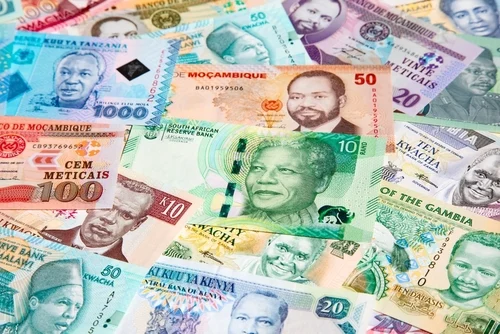
What is currency like in Africa?
Africa is home to 54 countries and more than 40 currencies, so there’s no single “African currency” to plan around. Cash still dominates in most places, though cities like Nairobi and Cape Town have strong card and mobile payment options, while others, such as Lagos, remain largely cash-based even in city centres. At Remitly, we’ve put together this guide to help you work out what to carry, region by region, before you go.
At a glance
- 54 countries, dozens of currencies, there’s no single “African currency.”
- Cash is the default outside major cities; cards and mobile money work best in urban centres.
- West and Central Africa share the CFA franc, but as two separate zones: XOF and XAF.
- Australian dollars can be difficult or impossible to exchange in some African countries; US dollars and euros are often more widely exchangeable.
African currencies by region: what Australian travellers will encounter
Rather than one currency, Africa’s money landscape is best understood region by region – what’s accepted, where cards work, and when cash is still your only option.
East Africa (Kenya, Tanzania, Uganda, Ethiopia, Rwanda)

Kenya’s currency is the Kenyan shilling (KES), and mobile money is widely used – M-Pesa, run by Safaricom, covers everything from market stalls to taxi fares. Nairobi is also highly digital on the card side, and Kenya has even launched Tourist Tap, letting international visitors make card-funded mobile payments to merchants without traditional card terminals. Tanzania’s shilling (TZS) is widely used locally; US dollars may be accepted in tourism areas but not for everyday transactions. Travellers will generally need cash in Uganda, although some larger businesses and tourist establishments accept cards. Ethiopia’s birr (ETB) is often used in cash form; card acceptance is growing in Addis Ababa but remains limited in rural areas. Rwanda’s capital, Kigali, is increasingly card-friendly at hotels, restaurants and larger establishments too, though still behind South Africa’s major cities for travelling almost entirely without cash.
Southern Africa (South Africa, Zimbabwe, Zambia, Mozambique, Namibia, Botswana)

South Africa is the region’s financial hub, and its rand (ZAR) is widely accepted and supported by ATMs and credit card systems (also worth checking the visa requirements for South Africa). Cape Town is probably the strongest example of this on the continent, with cards and contactless payments widespread across restaurants, supermarkets, hotels, attractions, fuel stations and retailers. Johannesburg is similarly card-friendly, with cards routinely used for everyday urban spending.
Zimbabwe introduced a new currency, the ZiG (Zimbabwe Gold), in 2024, though US dollars still circulate widely – worth confirming locally, as the situation has shifted more than once. Zambia’s kwacha (ZMW) and Mozambique’s metical (MZN) are both used day-to-day, but cash is more reliable outside Lusaka or Maputo.
Namibia is relatively card-friendly in cities and tourist areas – major credit cards are widely accepted in Windhoek, particularly at hotels, restaurants and established businesses – though travellers should still carry Namibian dollars or South African rand for smaller businesses and remote areas where card facilities may be limited. Botswana is similarly straightforward for cards, with Visa and Mastercard widely accepted at hotels, restaurants, retailers, and safari companies in Gaborone, according to Botswana Tourism.
African Indian Ocean islands (Mauritius, Seychelles)

Mauritius and Seychelles round out the region with a different profile again – both economies run heavily on tourism, and payment infrastructure reflects that. Mauritius uses the Mauritian rupee (MUR). Cards are widely accepted at hotels, resorts, and restaurants in tourist areas, and ATMs are readily available around the island, though it’s still worth carrying some rupees for markets, taxis, and smaller vendors. Seychelles uses the Seychellois rupee (SCR), though US dollars and euros are also commonly accepted at resorts and tour operators alongside local currency. Cards work well at most tourist-facing businesses, but smaller islands and local shops are more cash-reliant.
North Africa (Egypt, Morocco, Tunisia)

Egypt’s pound (EGP) is used throughout the country; cards and ATMs are common at established hotels and resorts, though cash is useful elsewhere. Morocco’s dirham (MAD) and Tunisia’s dinar (TND) tend to be more card-friendly in tourist areas and large cities than in the countryside. Tunisia prohibits travellers from importing or exporting Tunisian dinars. Morocco also restricts the import and export of dirhams, although travellers may carry up to MAD 2,000 in banknotes. Check current rules before travelling and exchange excess local currency before departure.
West Africa (Nigeria, Ghana, Senegal, Côte d’Ivoire)

Nigeria’s naira (NGN) has its own mobile payment apps, including OPay and PalmPay, alongside cash. The country is heavily digital for local bank transfers and fintech, but that doesn’t necessarily translate into easy acceptance of foreign Visa or Mastercard cards for an Australian tourist, even in Lagos. Ghana’s cedi (GHS) is the standard currency day-to-day. Senegal and Côte d’Ivoire both use the West African CFA franc (XOF) – a different currency from the Central African CFA franc (XAF) used further south, despite the similar name and shared peg to the euro, so a note from one zone won’t work in the other.
Cash, cards, and mobile money in Africa: what actually works

Which payment method works best depends on where you are and varies significantly between countries and cities: cards and ATMs are strongest in South Africa’s major cities and in tourist hubs elsewhere on the continent; mobile money is widely used in parts of East and West Africa, and cash is often the most reliable option in rural areas and smaller towns. It’s worth notifying your bank before you travel regardless. Mobile money services – M-Pesa in Kenya, MTN Mobile Money and Orange Money across West Africa – let people pay by phone without a local bank account. Multi-currency cards from providers like Wise or Revolut cut conversion fees but don’t work at every ATM, so carry some cash as a backup outside major centres.
Preparing your finances before you leave Australia

- Notify your bank of international travel to avoid card blocks.
- Load a multi-currency travel card before you go, so you’re not relying on a single account while overseas.
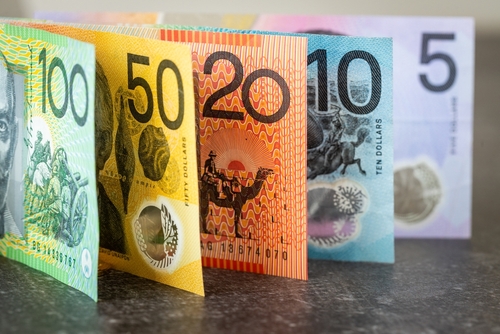
- Carrying some USD or EUR can be a useful backup as AUD is difficult to exchange. Check the currency advice for your destination first.
- Check Smartraveller for the latest advice on currency limits, cash declaration rules, and safety updates for each country on your itinerary.
- Carry low-denomination bills to simplify transactions in cash-based markets.
FAQs
Which currencies do I need for a trip across several African countries?
It depends on your route. Most African countries use their own currency, though Senegal and Côte d’Ivoire share the West African CFA franc. It’s usually simpler to carry USD or EUR as a backup and convert smaller amounts to local currency as you arrive in each country.
Where can I expect to use a card instead of cash?
Card and ATM use is most reliable in major cities such as Cape Town, Johannesburg, Windhoek, Gaborone, Nairobi, and Cairo. Nigeria is a notable exception – it remains largely cash-based even in Lagos, and foreign cards can have limited acceptance there. Rural areas and smaller towns across most of the continent are still largely cash-based, so carry enough local currency for a few days at a time.
What is M-Pesa, and do I need it as a tourist?
M-Pesa is a mobile money service, widely used in Kenya, that lets people send and receive money and pay for goods by phone rather than cash or a card. Access requirements for visitors can vary, so check Safaricom’s current SIM registration and M-Pesa requirements before relying on it as your main payment method.
Is it safe to use ATMs in Africa?
ATMs inside banks, hotels, and shopping centres are generally the safer option in urban areas. Avoid standalone machines in low-traffic locations, check for signs of tampering, and withdraw during daylight hours – the same precautions you’d take anywhere unfamiliar.
Can I use Australian dollars in Africa?
No, AUD generally isn’t accepted for everyday purchases in Africa, and it can be difficult or impossible to exchange in some countries – check the rules for your destination. USD and EUR are often more widely exchangeable, or use a multi-currency card that handles the conversion for you.
Do I need to declare cash when crossing borders in Africa?
Many African countries require travellers to declare cash above a set threshold, and rules vary by border. Check Smartraveller and the entry requirements for each country on your route – failing to comply with declaration requirements can result in penalties or confiscation, depending on the country.
What should I do with leftover local currency?
Exchange leftover local currency before you leave each country, since many African currencies are hard to convert back to AUD once you’re home. Some banks and airport exchange bureaus will convert small amounts, but rates are rarely favourable.
Key takeaways for currency in Africa
Africa’s currencies are as varied as the continent itself, and no single approach covers all 54 countries. Carrying a mix of local cash, a backup currency, and a multi-currency card will see most Australian travellers through most itineraries, and mobile money is worth exploring wherever it’s available.
- There’s no single “African currency” – each country (or regional bloc, like the CFA franc zones) has its own.
- Cash still leads in rural areas; cards and mobile money are strongest in major cities.
- Australian dollars can be difficult or impossible to exchange in some African countries, so check the rules for your destination before you leave.
- Mobile money (M-Pesa, MTN Mobile Money, Orange Money) is worth setting up if you’re spending time outside tourist hubs.
- A little planning before you leave Australia (bank notifications, a multi-currency card, some backup cash goes a long way).
Planning what to eat as carefully as what to carry? Our guide to African cuisine is worth a look, too. And if you’re sending money to family or friends overseas, Remitly can help you move it internationally.
Last reviewed: August 2026



