
English (US) – Page 61

Moving to Japan in 2025: A Complete Guide for Expats

Plan your move to Japan with our guide on visa options, moving costs, finding housing, banking, cost of living, cultural tips, and employment for expats.

English (US)

Japan is a place where centuries-old traditions sit right next to innovative modern technology. You can grab a quick bite of ramen on a neon-lit street in Tokyo one day, then find quiet in a Kyoto temple the next. It’s not just a country; it’s an experience that stays with you.

Japan has become a popular destination for expats. At the end of 2024, there were over 3.75 million foreigners living there. Many are drawn to Japan by its high-quality healthcare, low crime rates, and rich culture. Americans, while a small percentage of the expat population, are growing in numbers.

If you’re planning to move to Japan in 2025, there’s a lot to think about. At Remitly, we know how overwhelming it can feel to start fresh somewhere new, so we’ve put together this guide to inform you about key areas such as visas, housing, daily routines, and how to handle your money between two countries.

Understanding visa options

The first step in moving to Japan is securing the appropriate visa. Japan has several visa categories, each with its own specific requirements. In 2025, options include various work visas, the Highly Skilled Professional Visa, and visas for entrepreneurs.

Types of visas available

  • Work visas: These are category-specific, such as “Engineer/Specialist in Humanities/International Services” and “Intra-company Transferee.” Generally, these require a sponsoring employer in Japan.
  • Specified skilled worker visa: This visa was introduced to address labor shortages and targets specific industries. There are two types: Type 1 is for up to five years and requires demonstration of Japanese language level. Type 2 is for more experienced workers and has no stay limit (but must be renewed).
  • Highly Skilled Professional (HSP) visa: This is a points-based system that grants preferential treatment to individuals with advanced skills, education, and professional backgrounds.
  • Startup visa: Some municipalities offer this visa to foreign entrepreneurs aiming to establish a business in Japan. Requirements vary depending on the local government.
  • Working holiday visa: Available to citizens of select countries (typically for ages 18-30), allowing for an extended stay and the opportunity to work while traveling. Check the Ministry of Foreign Affairs of Japan (MOFA) website for the list of eligible countries.
  • J-Find visa: The “Japan System for Future Creation Individual Visa,” also known as the J-Find visa, was launched in 2023. It aims to attract recent graduates from leading global universities who wish to look for employment or prepare to launch a business in Japan.
  • J-Skip visa: A new HSP category for high earners (JPY 20 million annually) or master’s degree holders with work experience. It offers a fast track to permanent residency after one year.

Eligibility criteria for top visa categories

  • Work visas: Usually require a contract with a Japanese employer, a relevant bachelor’s degree or significant professional experience, and sometimes Japanese language skills, depending on the role.
  • Highly Skilled Professional visa: Applicants must score 70 points or more based on criteria like academic background, professional experience, salary, research achievements, and Japanese language proficiency.
  • Startup visa: Requires a solid business plan approved by the relevant municipal government.

Required documents and application process 

Standard required documents include a valid passport, a visa application form, photos, and supporting documents specific to the visa type (e.g., employment contract, educational certificates).

A key document for most long-term visas is the Certificate of Eligibility (CoE). Your sponsor in Japan (e.g., your employer or school) applies for your CoE from the Immigration Services Agency of Japan. Once the CoE is issued and sent to you, you apply for the visa at the Japanese Embassy or Consulate in your country of residence.

Pro tip for 2025 applicants

Visa processing times can vary, so begin your application well ahead of your planned travel date. Check the official MOFA website and your local Japanese embassy or consulate to stay up-to-date with the latest requirements, timelines, or any changes to procedures, including potential digital application options.

Estimating your moving costs

The overall cost of relocating to Japan typically includes airfare, shipping belongings, and initial accommodation expenses. Expenses are affected by factors such as your departure location and the volume of goods shipped. Traveling during peak seasons like cherry blossom season (usually late March to April) or major holidays can also increase the costs of flights and temporary accommodation.

Ways to save

  • Travel during the off-peak season if possible.
  • Minimize belongings to reduce shipping costs; consider buying larger items—like furniture—in Japan.
  • Join expat groups online for tips on budget accommodations or potentially sharing shipping resources.

Checklist of expected moving costs

  • Visa application fees
  • Airfare to Japan
  • Shipping costs for personal items
  • Initial temporary accommodation (e.g., 2-4 weeks)
  • Deposits for long-term rental (can be several months’ rent, including “key money,” security deposit, and agent fees)
  • Funds for daily living before your first salary
  • Setting up utilities and essential furnishings
  • Emergency fund

Navigating Japan’s housing market

Finding suitable housing is part of settling in, and Japan’s rental market has some unique aspects. You can find housing through temporary solutions like Airbnb or hostels while searching for long-term rentals via real estate agents or online portals.

Best tips 

  • Use a local real estate agent or services that specialize in helping foreigners. They can help navigate language barriers and explain rental agreements. 
  • Be aware of differences in renting etiquette and costs, such as “key money” (a non-refundable gift to the landlord, often 1-2 months’ rent), and security deposit, usually 1-2 months’ rent, which is often partly refundable. Many landlords require a Japanese guarantor—you can use a guarantor company for a fee. Expect to also pay a rental agency fee, often one month’s rent plus tax.
  • Expat-friendly communities or resources like GaijinPot can provide assistance. If you’re considering buying property, check out our guide: Buying Property in Japan: Your 2025 Guide for Foreigners.

Regions best suited for expats based on lifestyle preferences

  • Tokyo: Ideal for young professionals seeking career opportunities and vibrant city life
  • Kyoto: Appeals to those interested in traditional culture, history, and a slightly calmer pace. Often favored by academics and retirees.
  • Osaka: A major commercial city known for its lively atmosphere and food scene
  • Fukuoka: A modern city with a good quality of life, known for its growing tech and startup scene
  • Yokohama: A port city near Tokyo with a more relaxed, international feel

Setting up essentials

Once you have housing, arranging essential services is the next step.

Opening a bank account

Opening a bank account is necessary for salary payments and managing daily finances. Steps usually involve:

  1. Choosing a bank: Recommended banks include Mitsubishi UFJ (MUFG), Sumitomo Mitsui Banking Corporation (SMBC), Mizuho Bank, and Japan Post Bank (Yucho Ginko).
  2. Gathering required documents, which usually include your Residence Card (Zairyu Card), passport, Japanese phone number, and sometimes a personal seal (hanko/inkan), though signatures are often accepted for foreigners.
  3. Visiting a branch to complete the application, though some banks are expanding online services. When your account is ready, you can manage international transfers easily using services like Remitly.

Getting around

Japan has a highly efficient public transport system. Here are the basics of the subway and bullet train systems:

  • Major cities have extensive subway and train networks operated by companies like JR (Japan Railways) and private lines.
  • IC cards (like Suica, Pasmo, ICOCA) are rechargeable smart cards used for most public transport and even small purchases at stores and vending machines.
  • The Shinkansen (bullet train) network connects major cities quickly and comfortably.

For expats who wish to drive, an International Driving Permit (IDP) based on the 1949 Geneva Convention can be used for up to one year. After that, or if your IDP is not recognized, you’ll need to convert your home country license (if eligible) or obtain a Japanese license. License conversions for Americans and Canadians depend on specific agreements and may require tests.

Cost of living in Japan

Japan’s cost of living varies significantly by region, with Tokyo being among the most expensive cities in the world.

Breakdown of monthly expenses (Tokyo vs. smaller cities)

Here’s a general idea of monthly expenses (which can vary greatly). At the time of writing, USD 1 is equivalent to JPY 144.

  • Housing: Rent in Tokyo for a one-bedroom apartment can be JPY 100,000-¥200,000+, while in smaller cities it might be JPY 40,000-80,000.
  • Utilities: JPY 10,000-15,000
  • Food: JPY 40,000-60,000 (more if eating out often or buying many imported goods).
  • Transportation: JPY 8,000-15,000 for a local monthly pass
  • Internet/Phone: JPY 7,000-12,000

Comparing Japan’s cost of living with that of cities in the US/Canada

Tokyo is often compared to New York City or San Francisco in terms of overall costs, especially housing. Smaller Japanese cities can be more comparable to mid-sized North American cities. Groceries, particularly fruit, can be more expensive in Japan.

Budget-friendly options for expats

  • Shop at local supermarkets and “shotengai” (local shopping streets) rather than department store food halls.
  • Utilize 100-yen shops for many household items.
  • Cook at home more often.
  • Take advantage of Japan’s excellent and affordable public transportation. 

Cultural tips for everyday life

Understanding key Japanese customs will help you adapt smoothly.

Key Japanese customs

  • Bowing (ojigi): Used for greetings, thanks, and apologies. The angle and duration vary depending on the situation.
  • Removing shoes indoors: Expected in homes, temples, traditional establishments, and some restaurants
  • Public transport etiquette: Avoid loud conversations on phones, and queue neatly and patiently.
  • Gift giving: Beautifully wrapped gifts are an important part of many interactions.
  • Chopstick etiquette: Learn basic rules, like not sticking chopsticks upright in rice.

Importance of learning basic Japanese phrases

Japanese people are generally polite and understanding if foreigners make an occasional etiquette misstep. A respectful attitude and willingness to learn are appreciated.

While English is understood in some tourist and business settings, learning basic Japanese will greatly improve your daily interactions and show respect for the local culture. 

Working and employment opportunities

Japan offers a range of job opportunities for foreign nationals, especially in certain sectors.

Japan’s job market for expats

Industries that often hire foreigners include:

  • English teaching: At public schools (e.g., JET Programme) or private language academies
  • IT and Technology: High demand for software engineers, developers, and IT specialists
  • Engineering and Manufacturing: Especially in the automotive and electronics industries
  • Finance: In international firms, mainly in Tokyo
  • Hospitality and Tourism: Roles in hotels and tourism services

The growing availability of remote work opportunities

Remote work is becoming more common in Japan. There are also growing discussions around Digital Nomad Visas, making it potentially easier for those who can work online for companies based outside Japan.

Exploring your new home

Once you’re settled, you can start to explore all the wonderful things that Japan has to offer. From historic sites like Fushimi Inari Taisha to contemporary hubs like the Shibuya shopping district, you’ll discover a country with a beautifully varied and vibrant culture.

And wherever you’re based, take the time to visit the varied landscapes—the serene beaches of Okinawa, the snowy peaks and hot springs of Hokkaido, the breathtaking views of Mount Fuji, and so much more. With the right preparation, your Japanese adventure is within your reach.

FAQs 

What is the climate like throughout the year in Japan?

Japan experiences four distinct seasons: mild springs with cherry blossoms; hot, humid summers with a rainy season; cool, crisp autumns with colorful foliage; and cold winters, especially in the north and mountainous areas, with heavy snowfall.

How tough is it to obtain permanent residency in Japan?

Permanent residency in Japan usually requires 10 years of continuous residence, though this can be shortened for spouses of Japanese nationals or permanent residents, or for those qualifying under the Highly Skilled Professional visa (potentially 1-3 years). Applicants must demonstrate good conduct and financial stability.

Can digital nomads live and work in Japan?

Japan has introduced a specific Digital Nomad Visa. It allows for a stay of up to six months for remote workers employed by foreign companies who meet an annual income threshold of around JPY 10 million (around USD 70,000). Be sure to check the latest official requirements from the Ministry of Foreign Affairs.
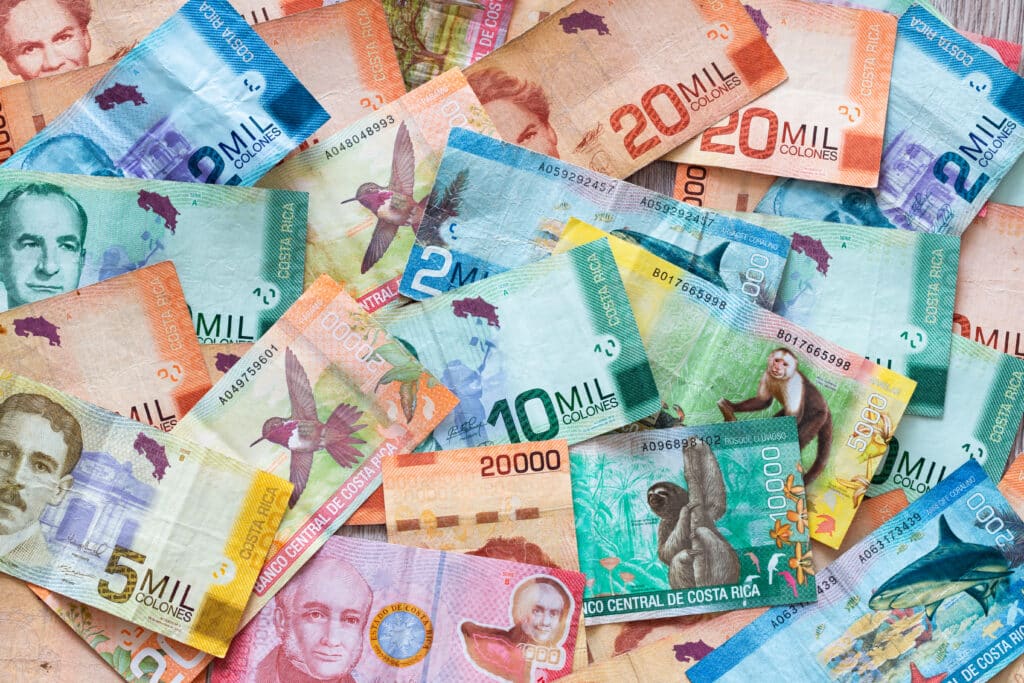
In 2020, Costa Ricans received 524 million United States dollars in personal remittances from people outside Costa Rica. Sending money to their home country is common for families and individuals who immigrate to the U.S., Canada, Australia,  the U.K., or other countries.

Like you, they want to help their loved ones back home. If you’re looking for a secure and straightforward way to send money to Costa Rica, consider Remitly. It is reliable, easy to use, safe, and offers low fees. With Remitly, you can also send money securely to Peru, making it an excellent choice for those with loved ones in multiple countries. Their user-friendly app allows you to track your transfers in real-time, ensuring peace of mind every step of the way. Plus, their customer support team is always available to assist you with any questions you may have.

With Remitly, you can easily convert your USD, CAD, AUD, and GBP into Costa Rican colónes (CRC) and send them to Costa Rica. With the transparent pricing structure and bank-level security, you can rest easy knowing your money is in good hands.

In this article, we will cover how to send money to Costa Rica with Remitly and common FAQs.

Send Money to Costa Rica

Why should I use Remitly to send money to Costa Rica?

Remitly helps you send more of your hard-earned money to Costa Rica by offering low fees and competitive exchange rates. Quick delivery and high levels of security bring you peace of mind.

The pricing structure for sending money to Costa Rica is simple with no hidden fees.

Send money to Costa Rica in 5 easy steps

Sending money to your loved ones with Remitly is simple. The first step, if you haven’t done so already, download the app.

  1. Select Costa Rica as your destination country.
  2. Enter the amount you wish to send.
  3. Select your preferred delivery methods, such as bank deposit or cash pickup.
  4. Enter all the necessary recipient details, including the recipient’s name, bank account number, and phone number. The required information will vary depending on your selected delivery method.
  5. Add your payment methods such as your credit card or debit card.

Remitly may ask for additional documentation depending on the amount you send or if we’re unable to verify your identity.

With Remitly, Which Banks/Providers Can I Send Money To?

Remitly has a vast network to transfer money to many banks and providers worldwide. TeleDolar is a popular option in Costa Rica. Please visit our website or check the Remitly app for a complete list of eligible provider recipients in Costa Rica.

How much money can I send to Costa Rica with Remitly?

To ensure top-quality customer service while adhering to strict security standards and international regulations, Remitly has implemented sending limits, and these limits apply when you first open your Remitly account.

If you need to transfer amounts beyond this, Remitly will ask you for more information. For more information about raising your transfer limits, check out details here.

Additional sending limits may apply depending upon your choice of payout partner or receiving location.

How much does it cost to send money to Costa Rica with Remitly?

Please check the Remitly app or website to see the latest transfer fees and currency exchange rates.

At the time of this posting, transfer fees to Costa Rica when your recipient receives in CRC are as follows:

Wonder how much 1 USD (US dollar) can exchange for the CRC (Costa Rica colón)? Check out Remitly’s website for the latest currency exchange rates.

Questions about Exchange Rates? Get Answers to 12 Common Exchange Rate Questions on our blog.

Is it safe to send money to Costa Rica with Remitly?

Millions of people around the globe trust Remitly because of the secure and smooth money transfer service experience we provide. You can learn more about how Remitly goes above and beyond to keep your information and money safe.

Remitly uses multiple levels of security so you can send money home with peace of mind. Your data is protected 24 hours a day through fraud monitoring and encryption. For more information about our security, please visit here.

You and your recipients can track the transfers in real-time and receive notifications, so you won’t have to worry about where the money is. If you have questions throughout the process, we offer help 24/7.

You can have peace of mind that the money you’ve worked hard to earn will safely get to its destination.

More about Costa Rica

Costa Rica is a popular Central American vacation destination. It’s noted for its beautiful beaches, scenic landscapes, lush rain forests, and long history as a democracy. Spanish is the national language, and almost 75% of the nationals are Roman Catholics.

The nation’s currency is the Costa Rican colón (CRC) named for Cristóbal Colón–the Spanish name for Christopher Columbus. The colón replaced the peso in 1896.

Though it has less than five million people, Costa Rica is very diverse. San Jose, Puerto Limón, Heredia, Cartago, Alajuela, and Liberia are the country’s largest cities.

This scenic destination draws people from around the world, and not just to vacation. Immigrants make up nearly 10% of the population. But Costa Rican natives are less likely than people from other countries to move away. Those peoples who live outside their native land represent only 3% of the total Costa Rican population.

Send Money to Costa Rica

The app that helps you send money to Costa Rica

Remitly makes international money transfers faster, easier, more transparent, and more affordable. Since 2011, over 5 million people have used our secure mobile app to send money with peace of mind.

New customers can get a special offer on their first transfer. Check out Trustpilot to see what other customers like about Remitly.

Visit the homepagedownload our app, or check out our Help Center to get started.

You might also like

If you’re moving to Canada to work, live, or study, it’s crucial to be able to send money in a safe, reliable way. Transfer fees and exchange rates for the Canada dollar to USD can vary greatly depending on the company you use.

Before you exchange, convert, or transfer USD to CAD, there are a few important things to know. The team at Remitly has created this guide to explain how these money transfers work, as well as the various factors that could impact how much your recipients receive in Canadian dollars.
Currency exchanges in a nutshell

When you think about the exchange rate for the Canadian dollar, you might only be concerned when you need to convert that cash before a big trip. However, the exchange rate is also significant if you’re sending money to and from Canada because that’s when the value of your currency really stacks up against the Canadian dollar.

For example, let’s say you’re currently in Mexico. Looking at the current exchange or Canadian dollar rate, you’ll see that 12.88 Mexican Pesos = 1 CAD at this time of writing. This means you can purchase one Canadian dollar with 12.88 pesos.

The exchange rate we’ve referenced isn’t set in stone, and it will fluctuate, sometimes every day, even every hour. This means that the Canadian dollar rate for today for those Mexican pesos could cost you more or less on a different day at a different time, depending on various factors.
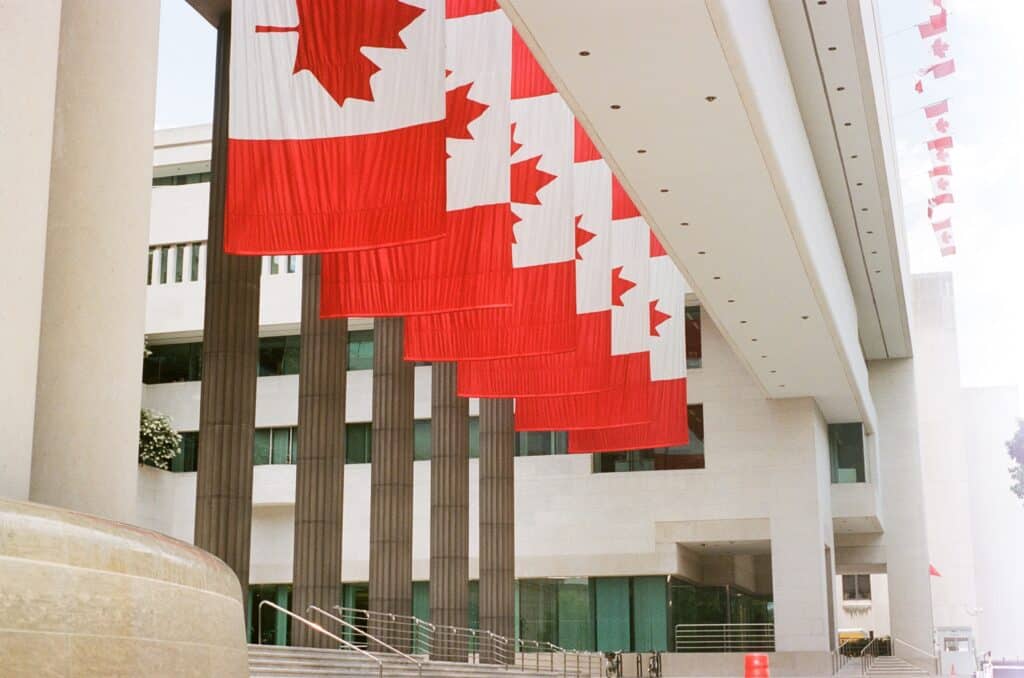
A variety of things can cause currency conversion fluctuations, like:

  • Inflation and interest rates
  • Current political/economic policies
  • Government debt and political stability
  • How much Canada is importing and exporting
  • Demand on currency markets

If Canada is dealing with a major natural disaster, it could affect the exchange rate dramatically. A change in interest rates could also affect the Canadian dollar rate today versus a week or month ago, albeit likely not as significantly or as quickly.

canadian dollars

About the Canadian dollar

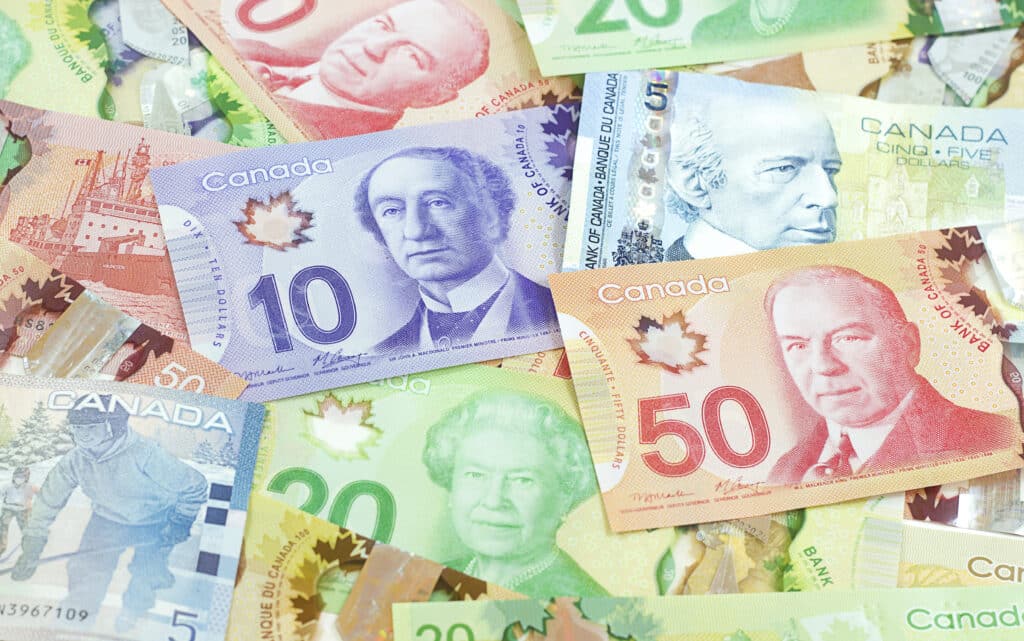
The Canadian dollar was introduced in 1858 and uses the $ symbol as well as CA$, Can$, and C$. It was developed by Canada’s central bank and is issued in denominations of $5, $10, $20, $50, and $100, while one dollar is divided into 100 cents.

The CAD is the fifth most-held reserve currency in the world after the US dollar and others. If you want to get the best deal possible when sending money to or from Canada, shop around to find the most secure and cost-effective remittance company available.

Sending money to Canada: converting to the Canadian dollar

No matter what currency you’re converting to CAD, several choices are available to you when you need to exchange. Some people choose to make the transfer through their bank, or they may opt to use a money transfer company.

Banks

For many, sending money to Canada through the bank is an obvious choice. The money is already sitting in your account, and all you need to do is tell your bank to make the remittance. However, this option isn’t always the cheapest or most affordable if you need to send money abroad.

Money transfer companies

A dedicated remittance or money transfer company can be an excellent choice if you need to send money to Canada. Do some research online and look for companies that have lower transfer fees along with competitive exchange rates. Since online companies don’t have to pay for the overhead associated with a brick-and-mortar location, you could save a significant amount of money.

Using Remitly to send money to Canada

Remitly is an online-only remittance company with over five million users globally. We’ve partnered with several financial institutions in Canada, including HSBC, BBC Royal Bank, Scotiabank, CIBC, and others. This allows you to transfer funds straight to your recipient’s bank account at home.

The option to send money to mobile money accounts or designate a cash pickup location where your loved one can collect money in person is also available. Setting up a Remitly account quickly via the website or downloading the app is easy.

All you need to do is add your personal information, a preferred payment method, and the recipient’s details. Remitly may ask for additional information, but it usually depends on the amount you’re sending or if we can’t verify your identity.

Check Remitly’s current US-to-Canadian dollar exchange rate or other rates by clicking here.

Sending money from Canada: converting CAD to another currency

The exchange rates will vary if you want to transfer Canadian dollars out of the country. However, although the currency’s value varies based on the international market, transferring money to another country is generally the same.

Canadian nationals can talk to their bank or check on rates with several money transfer companies to compare and get the most competitive rates possible.

Exchanging CAD outside Canada

Canadians working or living abroad should be able to convert their Canadian dollars to local currencies in various ways. Some of your options include:

  • Purchasing local currency in person at a bank branch or currency exchange
  • Converting CAD online and then having the bank notes and/or coins posted to you
  • Using your Canadian bank debit or credit card at local ATMs

Some people abroad look for currency exchange kiosks to purchase local currency. These kiosks are easy to find and help you make the request as quickly as possible.

Banks are also a traditional choice for many travelers. One downside to using banks is that you could potentially pay a higher fee than you would with some other, more affordable options.

Using a bank card to make a purchase or withdraw cash from a local ATM is an easier way to pay for goods or services while you’re abroad. However, you could incur international bank charges, which can add up quickly. It might be best to open a bank account in Canada if you plan to stay there for a long time.

Finding the best Canadian dollar exchange rate

Whatever way you choose to send money to Canada, using the most accurate and up-to-date conversion calculation is key. This can be done automatically by any bank or money remittance company, and you may also check rates on several websites before you convert currency. It’s always wise to have a basic understanding of current exchange rates and how they work before you send or receive currency in any form.

Here’s the formula for the conversion, which is fairly straightforward:

Send Currency x Exchange Rate = Amount Received

Let’s examine how this conversion works in a few different real-world scenarios. Keep in mind that you can adapt these examples to fit whatever country you’re living in at the moment.

How to find British pound to Canadian dollar rates

Say you’d like to send 100 GBP (Pound Sterling); hypothetically, the current exchange rate is 1 GBP = 1.69 $CAD. The conversion formula would look like this:

100 GBP x 1.69 $CAD = 169 $CAD

It’s very important to note that this doesn’t mean your loved one living back home will receive 169 Canadian dollars. All relevant fees charged by the remittance company will be subtracted first.

For example, if the company charges 5 GBP per transfer, the fee would equal to 8.45 in $CAD. To see what the recipient in Canada would actually receive once the transfer is complete, you may use this calculation as an example:

169 $CAD – 8.45 $CAD = 160.55 $CAD

Currently, Remitly charges a small fee to customers sending money to Canada. However, there are no fees if you send any amount of $1,000 or more. That means your loved one could potentially receive more money when you use Remitly compared to other transfer companies.

How to find the US dollar to Canadian dollar exchange rate

Let’s say you are planning to transfer 100 USD to Canada. The calculation of the conversion rate from the US dollar to the Canadian dollar is based on a hypothetical current rate of 1 USD to 1.34 CAD and would look like this:

100 USD x 1.34 $CAD = 134 $CAD

Just like the prior scenario, all you need to do is subtract any fees associated with the transfer to determine the final amount in Canadian dollars.

Getting the best deal

Whether you’re providing critical financial support to loved ones or sending cash gifts for holidays and other occasions, sending money to Canada could be an important priority for you.

Take some time to research the easiest way to send money and the options available to you to determine which one offers the best possible deal.

You’ve worked hard to earn a living in a new country, and you’ll want to be able to send as much of that money as possible to friends and family when making an international payment. Consider Remitly if you need to send money to Canada from anywhere in the world.

If you are working abroad and want to send money home to the Maldives — or if you plan to travel to the island nation — you may need to turn your USD, CAD, euros, or pounds into Maldivian rufiyaa. The Maldivian rufiyaa is the official currency of the Republic of Maldives. It was introduced in 1947, replacing the Sri Lankan rupee. The rufiyaa’s currency code is MVR, and it is often written as “Rf.”

The currency is controlled by the Maldives Monetary Authority. Bills are printed by a company called De La Rue, and coins are minted by the Ministry of Finance. The rufiyaa is subdivided into 100 laari.

Banknotes

  • Banknotes in circulation are in the following denominations: Rf 5, Rf 10, Rf 20, Rf 50, Rf 100, and Rf 500. The Rf 1,000 and Rf 5,000 notes are also in circulation but are used more rarely.

Coins

  • Coins in circulation are in the following denominations: 25 laari, 50 laari, Rf 1, and Rf 2. One-, 2-, 5-, and 10-laari coins are in circulation but used less frequently.

5 Interesting Facts About the Maldivian Rufiyaa

1. The rufiyaa was nominated for “Bank Note of the Year” in 2016.

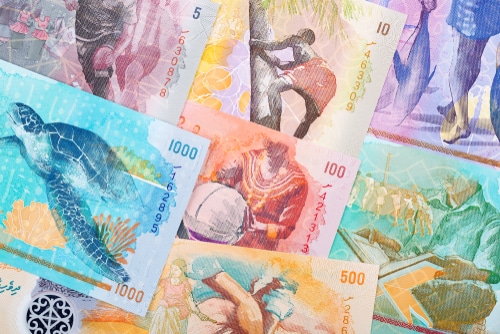
The International Bank Note Society, a trade publication and group of people who collect and trade rare paper currency, nominated the 1,000-rufiyaa bill for its “Bank Note of the Year” contest. The theme of the bill (pictured above) is “The beauty in our surroundings.” The back depicts a whale shark (with an underprint that gives shading to its skin), and the front depicts a green turtle.

2. Shells were the first currency used in the Maldives.

Hundreds of years ago, the currency of the Maldives was cowrie shells. Historical travelers’ accounts indicate that shells were traded as currency as late as the 13th century.

Strips of silver called “larin” were later used as currency throughout the Persian Gulf, India, and countries in the Indian Ocean before coins were introduced in the 1600s.

Coins called “laari” were introduced in the 19th and 20th centuries.

3. Rufiyaa means “silver.”

The word “rufiyaa” is derived from the Sanskrit word “rupyakam,” meaning “silver coin.”

“Rupyakam” is a common base word for currency names in this part of the world, due to the influence of India. Other countries that call their currency “rupee” or similar include India, Nepal, Bhutan, Sri Lanka, and Pakistan.

4. Maldivian rufiyaa are printed in Europe.

Like many small countries around the world, the Maldives prints its currency abroad. Specifically, the Maldives has its money printed by a British printer called De La Rue. For a small island nation, the cost of printing bills domestically can often exceed the face value of the bills themselves. Thus, production is often supplemented with imports.

5. Rufiyaa notes feature scenes and symbols of the culture and history of the Maldives.

Since their most recent issuance in 2015, Rufiyaa banknotes have showcased the Maldives’ culture, sights, and history.

  • 5 Rf: This gray-and-red note features people playing football on the front and a conch shell on the back.
  • 10 Rf: This yellow-and-brown note features people playing traditional drums on the front and a more detailed image of the drum on the back.
  • 20 Rf: This pink-and-purple bill showcases fishermen catching skipjack tuna on the front and a “dhoni,” a traditional Maldivian boat, on the back.
  • 50 Rf: This green banknote shows men pulling boats from the beach onto the water on the front and the minaret of the Friday Mosque on the back.
  • 100 Rf: This red banknote features locals in traditional attire working on traditional crafts on the front and an early form of Maldivian writing called “Dhivehi scripture” on the back.
  • 500 Rf: This orange bill also displays locals building traditional crafts on the front (such as brooms) and a traditional hand-carved vase on the back.
  • 1,000 Rf: As mentioned above, this blue note features a green sea turtle on the front and a whale shark on the back.

About the Maldives

The Maldives is an island country in the north-central Indian Ocean, about 370 miles off the southwest coast of India. The archipelago consists of approximately 1,200 small coral islands and sandbanks, of which about 200 are currently inhabited, grouped in clusters or atolls. The islands were formed from the crowns of a submerged, ancient volcanic mountain range, and all the islands are less than 10 feet above sea level (making the Maldives the flattest country in the world).

Nearly all the population belongs to the Maldivian ethnic group. More than half of the population of 540,000 lives in rural areas, and about a quarter of the country’s population lives in the capital city of Malé. Since the 1970s, the economy of the Maldives has developed rapidly, with tourism surpassing fishing as the primary source of GDP.

If you live in India and need to open a bank account or send money to a loved one, it’s helpful to know more about some of the most popular banks in the country.

This guide aims to help you identify some of India’s most popular commercial banks, many of which offer a broad spectrum of financial services for residents, international senders, and tourists.

Identifying the most popular Indian banks and understanding how their offerings suit your needs can help you select the best one for you. These banks were chosen based on the variety of products and services available, their accessibility throughout India, and their presence abroad.

Popular Banks in India

The History of Banks in India

Despite being the second-most populated country globally, with 1.38 billion residents, India is still considered a developing country. And, like all developing countries, its banking system helps drive economic growth.

Although there are many popular Indian banks today, that was not always the case — even though India’s banking history dates back to before the country gained independence in 1947.

Because of this, we’ve broken down India’s banking history into the pre-independence period (1786-1947) and the post-independence period (1947 to date).

  • The first bank of India, the Bank of Hindustan, was established in 1770.
  • Over 600 banks were registered during the pre-independence period, but only a few managed to survive.
  • Three banks were established during British rule, which later merged into a single bank, the Imperial Bank of India, in 1921.
  • The nationalization of the Imperial Bank occurred in 1955 when it was named The State Bank of India. It is currently the largest public-sector bank and is run by the government of India.
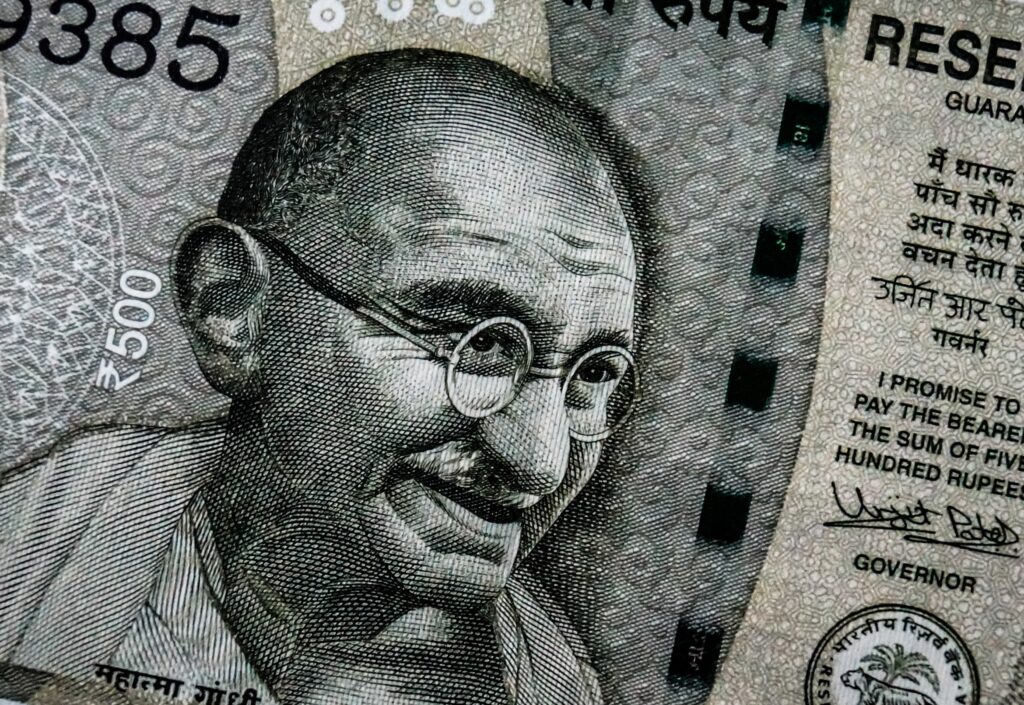
  • Currently, the Reserve Bank of India (RBI) is the central bank of India.

The most significant development was the introduction of private banks. Today, the following large banks are some of the most popular in India.

Axis Bank

Axis Bank is India’s third-largest private sector bank, with 4,000+ branches and 11,000+ ATMs at the time of this writing. Winning dozens of awards over the years, Axis Bank is known for its leadership, digital services, and excellence in operations. There are several products to choose from, including but not limited to personal savings accounts, debit and credit cards, home insurance, mutual fund investments, and much more.

Axis Bank also has many partner banks around the globe, assisting with international fund transfers.

Learn how to send money to Axis Bank with Remitly.

Bank of India

First founded in 1906, the Bank of India was under private ownership until 1969, when it was nationalized with 13 other banks. As a result, it has experienced immense growth, having started with one office in Mumbai and now boasting over 5,000 branches in India and 45 branches and offices abroad, including those in major cities such as New York, Hong Kong, London, Paris, and Tokyo.

The Bank of India remains at the forefront of innovative services and systems, combining traditional ethics and values with modern infrastructure. The products and services offered include home loans, credit cards, regional rural banks, and salary accounts.

This bank recently made headlines when it doubled its consolidated net profit.

Popular Banks in India

Canara Bank

As they say at Canara Bank, it is the ideal destination for all personal banking needs. There are also several corporate banking and investment options. Being the third-largest nationalized bank in India, it is under the ownership of the government. Customers can get assistance with everything from mutual funds to approved housing project services.

Canara Bank has branches around the globe, including London, Hong Kong, New York, Dubai, and Moscow.

HDFC Bank, Ltd.

HDFC Bank is known for its diverse portfolio of banking services and financial products. Incorporated in 1994, HDFC operates through retail banking, treasury, wholesale banking, and other banking operations, such as third-party product distribution and credit cards.

HDFC Bank has received many awards over the years, with some of the most recent including Best Private Bank in India (PWM Global Private Banking Awards 2021), Best Large Bank (25th Business Today – KPMG Best Bank Study), and Best Bank in India (FinanceAsia Country Awards for Achievement 2021).

Learn more: How to Send Money Safely to HDFC Bank in India in 5 Easy Steps

ICICI Bank, Ltd.

ICICI Bank is a leading private sector bank offering personal banking and financial investment services. What makes ICICI Bank one of the most popular in India is its extensive network of national branches.

Much like SBI, ICICI Bank also has a strong presence abroad, with branches in the United States, China, South Africa, Dubai, and several other countries, as well as subsidiaries across Canada and the United Kingdom.

Some of the products offered include loans, fixed deposits, debit and saving accounts, life insurance services and credit cards.

Here’s how to safely send money to ICICI Bank.

Kotak Mahindra Bank, Ltd.

First established in 1985 as Kotak Mahindra Finance, Ltd., Kotak Mahindra Bank has become one of the largest private sector banks. After acquiring ING Vysya Bank in 2015 and establishing a solid brand with excellent products, Kotak Mahindra Bank quickly emerged as a favorite in India.

Some of the services offered include life and general insurance, wealth management, a variety of investment options, checking and savings accounts, debit and credit cards, and loans.

Punjab National Bank

After merging with the United Bank of India and the Oriental Bank of Commerce, Punjab National Bank has become India’s second-largest public sector bank (PSBs). This bank offers corporate, wholesale, retail banking, treasury, and other banking operations.

Its broad spectrum of services and products contributes to roughly INR 8 trillion in overall business as of this writing. These include housing loans, education loans, vehicle loans, deposits, and international and capital services.

Related: How to Send Money Safely to Punjab National Bank (PNB) in India in 5 Easy Steps

Popular Banks in India

The State Bank of India (SBI)

Throughout the history of banks in India, the State Bank of India (SBI) has been the country’s largest public-sector bank, acting as its financial foundation. With nearly half a million customers as of 2022 along with 22,500 global branches and 208 foreign offices in 36 countries, SBI maintains its position as one of the most influential Indian banks.

In recent years, SBI has focused on its digital capabilities, partnering with IBM to connect people throughout India and beyond. For example, creating the mobile app YONO, one of the world’s largest digital banks, helped SBI respond to the COVID-19 pandemic. Services include but are not limited to ATMs, home loans, personal loans, credit cards, and saving accounts.

Recommended reading: How to Send Money Safely to State Bank of India in 5 Easy Steps

Sending Money to India?

If you need to send money to India, you’ll also want to get great exchange rates and avoid hefty fees. With Remitly, that’s possible. You can choose to deposit money into your recipient’s bank account in India. Transfer money to major banks, including Bank of Baroda, IndusInd Bank, IDBI Bank, Bank of Maharashtra, Union Bank of India, YES bank, the banks listed above, and many more.

You can also send money to a UPI virtual payment address or opt for cash pickup.

France’s minimum wage, known as the SMIC (Salaire Minimum Interprofessionnel de Croissance), is designed to ensure fair compensation for your hard work. The French government regularly adjusts the SMIC to help you keep up with rising living costs and protect your purchasing power.    

Recently, the SMIC increased again to support workers through ongoing global economic challenges. Whether you’re adjusting to wage changes or sending money back home, Remitly is here to make managing your finances easier and stress-free.

What is the current minimum wage in France?

As of November 1, 2024, France’s gross hourly minimum wage increased to €11.88 EUR. This translates to about €1,801.80 EUR per month for full-time employees working 35 hours a week. These figures represent the legal minimum wage that employers in both the private sector and public sector are obligated to pay their employees.

The SMIC is adjusted each year in line with inflation. The most recent increase is a 2% rise from the previous year, as part of a broader effort to address the rising costs of living. Forecasts suggest that further increases may occur in 2025, depending on inflation trends.

In 2024, the average net salary—after taxes and deductions—is about €1,426.30 EUR per month, depending on your individual circumstances. If you have a part-time role or a temporary position, wages can vary depending on your contracted hours and job terms.

Understanding the cost of living in France

Although the SMIC sets a standard income for all workers across France, the cost of living varies significantly between regions. This means that, depending on your location, minimum wage can be more or less sufficient for your needs.

Paris

As the capital city, Paris ranks among France’s most expensive places to live. You can expect to pay, on average, between €1,000 EUR and €1,500 EUR for a one-bedroom apartment in Paris, depending on the location and size. Monthly groceries, public transport, and other costs can easily add another €500 EUR to €600 EUR to your expenses.

Lyon and Marseille 

These cities are somewhat more affordable than Paris. Rent for a one-bedroom apartment in Lyon can range from €700 EUR to €1,000 EUR, while in Marseille, you can spend as low as 600 Euros for a similar apartment. Groceries and public transport costs are still significant but comparatively lower than in Paris.

Other regions 

Smaller cities and rural areas generally offer a lower cost of living: rent typically ranges from €400 EUR to €700 EUR for a one-bedroom apartment. In these areas, the minimum wage may be more sufficient to cover living expenses.

In high-rent areas, the SMIC often falls short of meeting essential expenses. This is especially true for individuals and families living in major cities like Paris, where many people rely on money-saving tips, extra sources of income like teaching English, social benefits, or even government assistance.

How does France’s minimum wage vary?

Even though France has a defined national minimum wage, there are still key differences depending on factors like age, industry, and where you live. These variations are mostly designed to encourage youth employment or to account for differences in living costs across regions:

Age 

If you’re under 18 or just starting out, you’ll likely earn less than the full SMIC. For example, workers under 17 with less than six months of professional experience earn 80% of the minimum wage, while those aged 17–18 earn 90%.

Apprenticeships 

Apprentices also earn a reduced wage while training, which depends on their age and how far along they are in their apprenticeship.

Industry-specific variations 

Some sectors, like hospitality or agriculture, have their own wage agreements that don’t follow the standard minimum. These are usually negotiated by trade unions and can sometimes include higher pay or extra benefits.

How does the French minimum wage compare to other European countries?

To understand how France’s minimum wage measures up, let’s compare it to a few of its European neighbors.

  • Germany’s gross monthly minimum wage is €2,151 EUR, based on a 40-hour week, which is a bit higher than France’s. However, Germany has a slightly higher cost of living compared to France, which helps balance things out.
  • Belgium’s monthly minimum wage comes in higher at an average of €2,070.48 EUR per month for full-time employees working at least 38 hours a week. While this puts Belgium ahead of France in terms of remuneration, the cost of living there is also slightly higher.
  • Luxembourg takes the top spot in Europe with a minimum wage of €2,571 EUR per month for 40-hour work weeks. This reflects the country’s high living costs but also means workers enjoy one of the best standards of living in Europe.
  • The Spanish minimum wage is much lower at €1,323 EUR per month. However, with Spain’s overall lower cost of living—especially outside major cities like Madrid and Barcelona—it’s still possible to live comfortably.
  • In the Netherlands, the minimum wage is €2,134.10 EUR per month. However, urban centers like Amsterdam have a higher cost of living, which eats into workers’ budgets.
  • Italy doesn’t have a national minimum wage, relying instead on industry-specific contracts. In Ireland, the minimum monthly wage is €2,146.30 EUR, which is higher than France’s but similar to Germany’s.

In France, you’re protected by strong legal rights when it comes to your pay and social security contributions. Here’s what you’re entitled to:

  • Equal pay: Your employer must pay you equally for equal work, no matter your gender, nationality, or other personal factors.
  • Social security: A portion of your wages funds essential services like healthcare, pensions, and unemployment insurance, providing you with a reliable safety net.
  • Wage adjustments: Your wages are reviewed annually to account for inflation and cost of living changes, ensuring your income holds its value over time.

So, how can you ensure you’re receiving fair pay? Here are some helpful tips:

  • Verify your wages: Use reliable job boards to check if your salary meets the legal minimum wage.
  • Stay updated: Keep an eye on announcements from trade unions and the French government for changes to the minimum wage.
  • Negotiate benefits: Discuss opportunities for overtime pay or additional perks before signing your contract.

Additional resources

France’s minimum wage is there to give you a financial safety net, but how far it stretches really depends on where you’re living. If you’re in an expensive city like Paris, it might be tough to get by without additional income.

Want to stay in the know about SMIC updates and labor laws? Head over to the French government’s official labor website, check out expert webinars, or consult reliable sources like Eurostat for additional information.

If you’re planning to move to France or study there, let Remitly guide you through the best ways to send money home and manage your finances.     

FAQs 

Is €3,000 a good salary in France?

A €3,000 monthly salary provides a comfortable standard of living in most cities but may feel stretched in Paris due to higher expenses.

What is a livable wage in Paris?

To live comfortably in Paris, a monthly salary of €3,500 or more is generally needed.

How often is the minimum wage updated in France?

The national minimum wage is reviewed annually and adjusted for inflation and economic challenges.

Do younger workers earn the full minimum wage?

Workers under 18 years of age may earn less than the full SMIC in line with their growing professional experience.

More minimum wage guides

Navigating the Dutch tax system as a nonresident can seem daunting, but anybody who receives income from sources in the country must present a tax declaration. This latest Remitly taxation guide provides a comprehensive overview of how expats can manage their tax obligations in the Netherlands.

Who needs to file taxes as a nonresident in the Netherlands?

Any nonresident who earns income from sources registered in the Netherlands must comply with Dutch tax laws. You must therefore file a tax return if any of the following apply to you:

  • Employment income: You work for a Dutch employer.
  • Self-employment income: You provide services or conduct business in the Netherlands.
  • Real estate income: You earn rental income or capital gains from Dutch real estate assets.
  • Investment income: You hold shares in Dutch companies or earn interest from other sources in the country.
  • Substantial interest: You have a significant shareholding (typically more than 5%) in a Dutch company.

What do you need to file your Dutch tax return as a nonresident in the Netherlands?

These are the documents you will need if you’re filing a nonresident Dutch income tax return:

  • Passport or ID
    Proof of identity for tax purposes.
  • BSN (Citizen Service Number)
    The personal number you use for any interactions with the Dutch authorities.
  • DigID
    Really important—this allows you to access the Dutch government’s online services and file your tax return easily from anywhere in the world.
  • Income statements
    Proof of any income from Dutch sources, including employment income, business earnings, and investment income.
  • Bank account details
    Required for receiving any applicable tax refunds.
  • Expense receipts
    Evidence of any deductible items such as business expenses, healthcare costs, or home ownership expenses.
  • Tax return forms
    The one you need to complete depends on your situation:

    • C-Form: If you lived outside the Netherlands for the entire year but received personal income from Dutch sources.
    • M-Form: If you were resident in the Netherlands for some but not all of the calendar year.
  • Double taxation certificates
    To make sure you aren’t being taxed twice on the same income.

How to file taxes as a nonresident in the Netherlands

We’ll assume you already have a BSN number, a personal ID a bit like the USA’s social security number. Everyone who has spent time living and working in the Netherlands receives one at some stage.

If you don’t have one, you can read about how to apply for one as a nonresident.

Here’s the step-by-step process for presenting your taxes:

  1. Register for a DigID: Online is by far the easiest, especially as a nonresident. Even if you prefer to post the form eventually, you must have a DigID to get access to it.
  2. Choose the correct form:
    • C-Form: For nonresidents with Dutch income. The C-Form requires you to fill in certain categories of Dutch income sources.
    • M-Form: Applicable to individuals who moved to or away from the Netherlands during the tax year.
  3. Fill out your tax return:
    • Online: You can complete the whole process using the Belastingdienst website, the most straightforward method for nonresidents.
    • Paper: Alternatively, you can download and fill out the appropriate form.
  4. Submit your tax return: Use the Belastingdienst website to submit your forms electronically, or you can post a paper version to the Dutch tax office if you prefer.
  5. Pay any taxes due: Pay what you owe to avoid any fines or surcharges. We make it easy to send money to the Netherlands from outside if you need to!

Key tax deadlines in the Netherlands

Just like in much of Europe, the Netherlands’ tax year runs parallel to the calendar year. This makes it easier to remember the key dates for filing your tax declarations.

  • Annual tax return deadline: Nonresidents must typically file their tax return by May 1 of the following tax year. For example, your 2024 tax return should be presented before May 1, 2025.
  • Extended deadline: If you opt to contract the services of a tax advisor, you’ll get an extra few months. File the taxes of the previous year up until September 1.
  • Prepayments: Self-employed individuals and anyone with a significant non-wage income may have to make quarterly tax prepayments. These are due one month after the end of each quarter: January 31, April 30, July 31, and October 31.

Penalties

The Dutch tax authorities are initially quite understanding in this regard. In fact, you will even receive a letter reminding you to file your taxes if you miss your deadline.

They will follow this with a formal notice, known as the “10-day note.” Your completed return must be received within 10 working days of receiving it and providing you comply, you’ll still avoid any fines.

However, after this deadline, you’ll be issued with a €385 penalty. If you miss the deadlines repeatedly, the fine could reach anywhere up to €5,514.

What are the tax rates and deductions for nonresidents in the Netherlands?

Tax Rates

Dutch income tax is split into three categories, called “boxes,” depending on the source. Each box has different applicable tax rates:

  • Box 1, Income from employment: Wages in the Netherlands are taxed progressively up to a maximum of 49.50%.
  • Box 2, Substantial holdings: Up to €67,000 income from shareholdings will incur a tax rate of 24.5% in 2024. Anything above that and it’s 33%.
  • Box 3, Assets: Tax on things like savings and second homes depends on the level of assets. There is an annual exemption of up to €57,000 in 2024.

Deductions and tax credits

Depending on your individual tax situation, as a nonresident you may also be able to deduct the following elements:

  • Mortgage interest: Deductible if you own property in the Netherlands.
  • Healthcare costs: Expenses for some medical treatments and insurance.
  • Some business expenses: Applicable for self-employed individuals and entrepreneurs.
  • Charitable donations: You can deduct donations to approved organizations.
  • Double taxation relief: Provided according to tax treaties.

Common mistakes to avoid when filing taxes as a nonresident in the Netherlands

Filing your tax return as a nonresident in the Netherlands can be complex. Here are some tips to avoid some of the common pitfalls.

  • Use the correct tax form: make sure you fill out the correct form (C-Form, M-Form, P-Form) for your situation.
  • Don’t miss the deadlines. Always file on time to avoid penalties.
  • Avoid inaccurate reporting. Make sure all of your sources of taxable income are correctly reported.
  • Seek professional advice: a tax advisor can help navigate complex situations. They will make sure you avoid inaccuracies and can often help you save paying unnecessary tax.
  • Take advantage of double taxation agreements: be aware of tax treaties to avoid being taxed twice on the same income.

Where to get help filing taxes as a nonresident in the Netherlands

  • Tax consultants: professional advisors simplify filing and ensure compliance.
  • Belastingdienst: the Dutch tax office offers extensive resources and support on its Belastingdienst website.
  • Online tax services: there are various platforms offering different tax return preparation tools.

Finally, if you’re filing taxes from a country of residence outside the Netherlands, the official Dutch websites are all available in English.

FAQs

Who needs to file taxes as a nonresident in the Netherlands?

Nonresident taxpayers must file if they earn income from Dutch sources, such as employment, business activities, or investments.

What documents are needed to file taxes as a nonresident in the Netherlands?

Required documents include tax forms, proof of income, bank account details, and other relevant Dutch tax documentation.

How do I file taxes online as a nonresident in the Netherlands?

You can file your tax return online using the Belastingdienst website or by following other approved Dutch tax administration procedures.

What is the deadline for filing taxes as a nonresident in the Netherlands?

The tax filing deadline is typically May 1.

What tax rates and deductions apply to nonresidents in the Netherlands?

As is the case for a resident of the Netherlands, nonresident tax rates vary across Box 1, Box 2, and Box 3. Eligible tax deductions include mortgage interest, healthcare costs, and business expenses.

What are common mistakes to avoid when filing taxes as a nonresident?

Avoid common tax filing mistakes like using the wrong form, missing deadlines, inaccurate income reporting, and ignoring tax treaties. Professional advice can help prevent these issues.

Where can I get help with filing my taxes as a nonresident in the Netherlands?

Assistance is available from the Belastingdienst website, tax consultants and other online tax services.

Do I have to report income I earned in other countries?

Yes. Non-residents only pay taxes on Dutch-source income but you must report your worldwide income to determine the applicable tax rate.

Am I eligible for the “30% ruling?”

The special, partial nonresident Dutch tax status that allowed tax-free income for foreign workers will be abolished from January 1, 2025.

Can I file my Dutch taxes in English?

Most of the tax forms and online Belastingdienst platform are available in Dutch only. Although there is no official system for filing taxes directly in English, there are lots of English resources available online and some tax advisors even provide English versions of the forms for nonresident tax payers.

Serbia is a country in Southeastern Europe on the Balkan Peninsula. It isn’t part of the European Union, and it uses its own currency, the Serbian dinar. Serbia’s currency has a long and fascinating history and is one of the oldest currencies in the world.

If you’re planning to live in Serbia or travel there, you’ll want to get familiar with Serbia’s currency, including its denominations, design, and exchange rate.

Here’s our handy guide to the Serbian dinar, including some tips on how to get the best exchange rate when traveling or transferring money overseas.

The history of Serbia currency

The story of the Serbian dinar starts in 1214—at least, that’s the first time it shows up in the history books. During the Middle Ages, Serbia was famous for its silver mines, and it used this silver to mint coins inspired by a Venetian coin called the grosso.

Many of these early coins featured religious imagery, and they became so famous that Italian writer Dante Alighieri even mentions them in The Inferno.

This period was brief, however, and the Ottoman Empire soon conquered Serbia, ruling from the 1400s to the 1800s. The Ottomans minted coins in Belgrade, Novo Brdo, and other parts of Serbia, including a Turkish coin called the “para.”

After Serbia became an independent state in 1817, Serbian rulers struggled to keep track of all of the foreign coins in circulation. Finally, in the 1860s and 1870s, Serbia rolled out a series of coins and banknotes of its own, using the “dinar” as its unit of currency and “para” for its subdivisions.

This first issue lasted until World War I, when Serbia became part of Yugoslavia and switched to the Yugoslav dinar.

Serbia currency denominations

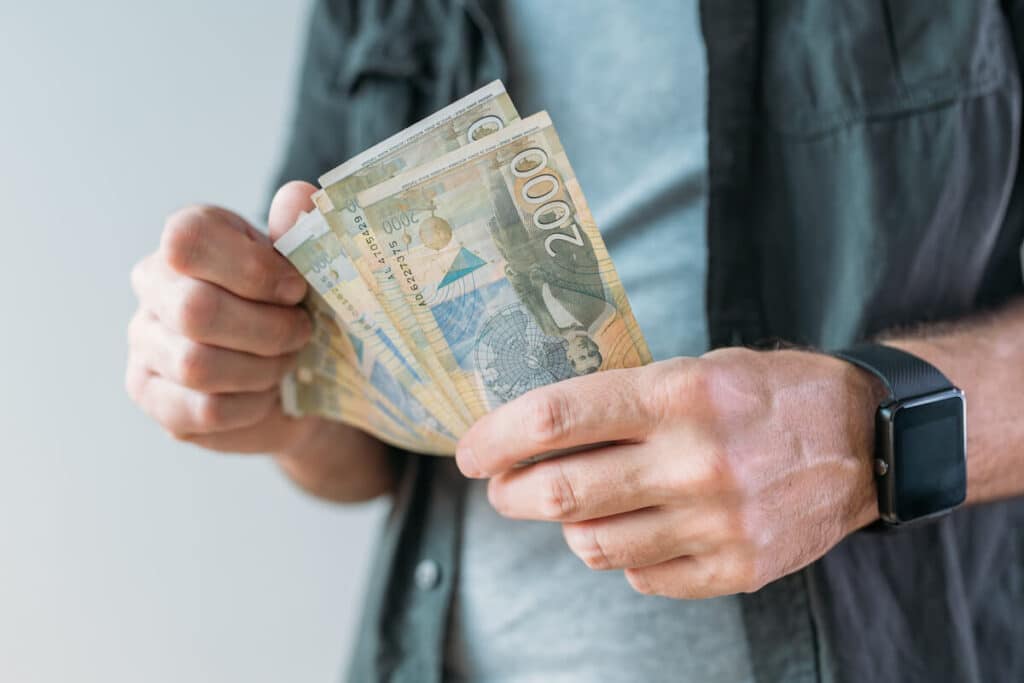
Today, the dinar is the official currency of Serbia. Although there are still technically 100 para to each dinar, the National Bank of Serbia no longer issues this subunit. All coins and banknotes come in “dinar” units only.

Dinar banknotes are available in the following denominations:

  • 10
  • 20
  • 50
  • 100
  • 200
  • 500
  • 1,000
  • 2,000
  • 5,000

Dinar coins come in these five denominations:

  • 1
  • 2
  • 5
  • 10
  • 20

The Serbian dinar uses the currency code RSD (for Republic of Serbia dinar) and the currency symbol DIN. (That’s дин in Cyrillic). The plural of dinar is dinari or dinars.

If you can’t read Cyrillic script, that’s OK. Serbia’s currency uses Arabic numerals, and the text appears in both Latin and Cyrillic.

6 essential facts about Serbia currency

Before heading to Serbia, it’s worth taking some time to appreciate Serbia’s currency. Not only will you learn about some key historical figures, you’ll also better understand Serbia’s relationship with the rest of the world.

Here are six key facts about Serbia’s currency to help you get started:

1. Serbia isn’t the only country to use the dinar.

Although Serbia’s currency is only used in Serbia, several other countries also call their currency the “dinar.” As of this writing, these countries are:

Croatia also used the dinar before switching to the kuna in 1994 and adopting the euro (EUR) in 2023. Montenegro used the Yugoslav dinar until 1999, when it switched to the German Deutsche Mark, followed by the euro.

2. The dinar was initially pegged to the franc.

Shortly after introducing the dinar, Serbia joined the Latin Monetary Union—a precursor to the Eurozone that aimed to make all of its member currencies interchangeable with one another. During this time, the Serbian dinar was pegged to the French franc, and the two currencies had the same value from 1873 to 1894.

3. Serbia briefly used the Yugoslav dinar and krone.

From 1920 to 2003, Serbia was part of the unified country of Yugoslavia and then the Union of Serbia and Montenegro.

For most of this time, it used the Yugoslav dinar (also called the Yugoslav krone). This dinar went through many issues and revaluations, including the hard dinar, convertible dinar, and reformed dinar.

The central bank re-introduced the Serbian dinar in 2003.

4. Serbia issued a new dinar during World War II.

During World War II, Serbia’s currency went through another upheaval. Although it was using the Yugoslav dinar at the time, its German occupiers issued a new dinar pegged to the Reichsmark. From 1941 to 1944, 1 Reichsmark was worth 250 dinars.

5. One banknote features inventor Nikola Tesla.

Dinar banknotes feature major historical and cultural figures, such as composer Stevan Stojanović Mokranjac and painter Nadežda Petrović.

You’ll also find inventor Nikola Tesla, who became famous for his work in the U.S., but was ethnically Serbian. Both Serbia and Croatia honor him on their currency because the area he grew up in is now part of Croatia.

6. You can’t use Serbian currency in Kosovo.

The Republic of Kosovo is a “partially recognized state” that has a complicated history with Serbia. If you’re traveling to Kosovo, you’ll want to exchange your dinars for euros (EUR). Kosovo has been using the euro as its de-facto national currency since 2002.

Understanding and using Serbia currency

Person holding Serbian dinars

Serbia’s currency features colorful designs and famous faces, so even people who are new to the country should have little trouble telling its various denominations apart. But how easy is it to exchange money in Serbia, and do you need to carry cash?

Serbia has a modern economy, and many retailers accept international credit cards and debit cards. You’ll also find plenty of ATMs in Belgrade and other major cities. Still, it’s worth carrying some cash for taxis, small purchases, and tipping.

If you use ATMs or credit cards, remember that your bank or credit card issuer might charge a fee for international purchases.

Serbian currency exchange rate

If you’re wondering where to exchange currency in Serbia, that depends on where you are. Serbian currency can be hard to get outside the country, so you may need to wait until you arrive to exchange your money for dinars.

Some Serbian banks may only exchange major currencies like the British pound (GBP), euro (EUR), and the U.S. dollar (USD), so consider exchanging your money into one of these currencies before you arrive.

Other currencies, like the Australian dollar (AUD) and Canadian dollar (CAD), may be harder to exchange or may result in a less favorable exchange rate.

You can look up the current exchange rate between the Serbian dinar and your home currency using an online currency converter.

If you don’t want to carry or exchange large amounts of cash, traveler’s checks and international money transfers are also an option.

Whatever you do, don’t exchange money on the street; it’s against Serbian law. All money changers need a license from the National Bank of Serbia.

Send money overseas the easy way

Person using a phone

Cash may still be king in Serbia, but credit cards and digital wallets are gaining steam. Using a mobile app like Remitly to transfer money can take the hassle out of sending money overseas. You can fund your transfer with a debit or credit card, and track it every step of the way via SMS or email notifications.

Whether you need to send money to friends and family, or to your own international bank account, Remitly makes it easy to send Serbian currency overseas. We offer transparent transfer fees and a competitive exchange rate.

Over 5 million people have used Remitly to send money internationally. Download the app today to start your first transfer!

Further reading

The Tihar festival is often equated to the Hindu festival of Diwali, but it’s not quite the same. In fact, Diwali is better aligned with Dashain, although the Tihar comes right after.

This festival falls in the autumn, sometime between October and the end of November. It is closely related to the goddess Laxmi. Like Christmas or New Year’s Day in other places, it’s a huge family event. Worship and specific pujas are important, and for many Nepalis, this is one of the most festive times of the year.

For Nepalis abroad, like many of our Remitly customers, it can be a quiet time (unless they’re living in India). No matter what, though, it’s possible to make Tihar a special experience.

Tihar: The Reason for the Season

Tihar follows Dashain, the festival of lights, and is one of the most important festivals of the year in. Nepal. It’s a nostalgic time for Nepalis living far from home. Tihar brings family gatherings, sweets, gifts, firecrackers, and a break from exams.

But Tihar is more than a national holiday. It’s also a period of thanks, remembrance, and reconnecting.

One of the most well-known Tihar stories is about Yama, the god of death, reuniting with his sister Yamuna. When attempting to contact him, Yamuna sends a crow, a dog, and a cow—all important during the festival. Tihar is about keeping Yama satisfied and bringing prosperity into the household.

For the Newari community, it also marks the new year—which takes place on the fourth day of the festival.

The Five Days of Tihar

Tihar is a five-day festival, also known as Yama Panchak. This translates to “five days of Yama.”

Each day in Tihar has its own meaning and celebration:

  1. The first day of Tihar is Kaag Tihar, or crow puja, where people leave food for crows. Crows are often considered messengers of death. Feeding them on this day brings good luck.
  2. The second day is Kukur Tihar, where you give a garland to dogs and put a red tilak on their forehead.
  3. The third day is for Cow and Laxmi Puja, where cows and oxen are decorated and given certain foods. These animals are vital to sustaining agriculture and bringing prosperity and wealth. For that reason, this day is called Gai Tihar. Clay oil lamps are lit outside the home, and people come to visit. You’ll also hear firecrackers well into the night. This is a time to invite the goddess of wealth, Laxmi into the household.
  4. The fourth day of Tihar is called Goru Tihar, which is when families perform Govardhan Puja and Maha Puja. They also exchange Tihar gifts and have a family feast. This is also considered the New Year for the Newar community in the Kathmandu Valley.
  5. The fifth and last day, Bhai Tika, is geared towards brothers and sisters. Sisters add a tika to their brother’s foreheads. They may also give them garlands and small candy. Their brothers then do the same to them.

While some of these activities can be hard to celebrate while abroad, it’s not impossible!

a dog decorated for tihar celebrations

13 Ways to Celebrate Tihar Abroad

There are many ways to celebrate Tihar outside of Nepal. Some ideas include:

  • Lighting clay oil lamps inside and outside your home
  • Adding decorative lights
  • Cooking home-cooked food
  • Inviting local friends for a meal or potluck
  • Having a virtual celebration with your friends and family back home
  • Listening to your favorite Nepali music or Hindu devotional songs
  • Creating rangoli designs
  • Hosting or sponsoring a community puja
  • Donating money for a community meal
  • Sending money back home for friends and family
  • Watching your favorite Nepali movies
  • Have an art contest within the community for children to draw their favorite aspect of Tihar
  • Launch firecrackers, if allowed

There may be few cows that you can decorate abroad, to be fair. Still, you can add a tilak to the family dog during the Kukur Tihar. You can leave food for the local birds. You can get a gift for your sibling during Bhai Tika, and ask a pandit to perform the pujas in your household.

Celebrating in the US and Canada

Nepalis living in the United States, Canada, and Mexico comprise a small fraction of Nepalis living abroad. Still, that doesn’t mean there isn’t support for these immigrant communities.

Many Nepali organizations may organize local Tihar events, such as:

You can find authentic ingredients from local Nepali, Indian, or Asian markets. Some will deliver to your doorstep, such as Nepali eMarket and the Mallko Store. These shops tend to have Dashain-Tihar sales as well, so keep an eye out for extra savings.

There are also many options for buying gifts for friends and family. Outside of Etsy and Amazon, you can also purchase books from Nepali publishers like Thuprai or Nirala Publications.

It’s also easier than ever to watch favorite Nepali films thanks to streaming services. You can find some free on YouTube. Cinema-Ghar also provides Nepali-language serials and movies for 500 Nepali rupees per year.

Celebrating in India

Over 600,000 Nepali expats live in India. This doesn’t include those originally living in Indian states, such as in Sikkim and West Bengal.

Celebrating Tihar is easier in India, given the similarities in culture and trade. Authentic foods and ingredients are available, even if they aren’t the same Nepali brands.

That said, many Nepali residents may choose to travel back home to celebrate with the family. They may even go on to Sikkim and West Bengal for a nice holiday vacation.

Sending Money to Nepal

You may decide to send physical gifts to your friends and family for Tihar—especially for your nieces and nephews. But there are times you want to send money, too.

Freelancing offers flexibility. You choose your projects, your hours, and your workspace. Working with international clients, however, can introduce additional administrative steps — especially when it comes to getting paid.

Different currencies, banking systems, and transfer processes can create uncertainty around timing and final amounts received.

If a client suggests using Remitly or Remitly Business to pay you, you may have questions. Do you need a new account? How does the process work? What happens after payment is sent?

This guide outlines what freelancers should understand when using Remitly to receive payments.

Understanding Remitly for Freelancers

Remitly for Freelancers is a payment transfer tool intended for freelancers, contractors, and remote workers who receive payments from international clients.

Instead of sharing full banking details directly over email, users can generate a payment request through the platform. The service supports receiving funds directly to your local bank account or mobile wallet, or into a Remitly USD wallet where funds can be held before being transferred or converted — whichever works best for you.

It is not a bank account and does not replace a traditional financial institution. It is designed specifically to support the receipt and management of client payments.

Common Challenges with International Payments

Challenge Reason
Limited Payment Visibility After sending an invoice, it can be difficult to know when a client has initiated payment or when funds will arrive. Limited visibility may create uncertainty in cash flow planning.
Currency Conversion Timing Exchange rates change over time. When payments are received in one currency and converted into another, the final amount depends on the rate applied at the time of conversion.
Sharing Banking Information Providing full bank routing details over standard email may not be ideal for every freelancer. Some professionals prefer alternatives that reduce direct sharing of sensitive information.

How the Payment Process Works With Remitly

Freelancers can create a payment request using the Remitly app or website and share it with their client.

Clients complete the payment using the link provided. In many cases, clients can follow the instructions in the link without navigating a complex onboarding process.

Once the payment is completed, funds are sent to your chosen destination — directly to your local bank account or mobile wallet (such as GCash, Maya, or Nequi), or into your Remitly USD wallet if you prefer to hold in USD.

From there, users can review available options for holding or transferring funds, subject to platform availability and applicable terms.

The USD Wallet: Managing Received Funds

Payments received through the platform are sent to your chosen destination — your local bank account, mobile wallet, or Remitly USD wallet.

If you choose the USD wallet option, you can decide when to initiate a transfer or conversion. Or, skip this step entirely by having funds paid directly to your local bank account or mobile wallet.

Before confirming a transfer or currency conversion, applicable fees and exchange rate information are displayed within the transaction flow. Users can review these details prior to proceeding.

Payment Tracking

The platform provides status updates on payment requests and completed transactions within the user interface.

Users can view when a request has been sent and when a payment has been received in their wallet. This visibility may reduce the need for repeated manual follow-ups with clients.

Frequently Asked Questions (FAQs)

How are fees shown?

During the transfer or conversion process, applicable fees and exchange rate information are presented before a transaction is finalized.

Do clients need to download the app?

Clients typically complete payment using the link shared with them in the app or online. Requirements may vary depending on payment method and location.

Is my information secure?

The platform incorporates security features designed to help safeguard user accounts. Using a payment request link may reduce the need to share full bank account details directly over email.

Managing International Client Payments

Freelancers often manage multiple responsibilities beyond their core work. Having a structured process for requesting and receiving international payments can help organize the financial side of freelancing.

If your client uses Remitly, the platform provides a way to request payment, monitor its status, and receive funds directly to your local bank account or mobile wallet — or into your Remitly USD wallet if you’d like to hold in USD first.

Using tools designed for cross-border payments may help streamline administrative steps associated with international work.

Legal Disclaimer

Product availability may vary by jurisdiction and is subject to change. Not an offer or solicitation where Remitly or its affiliates are not licensed or otherwise authorized. Availability and use of the products and services is subject to compliance with applicable law.

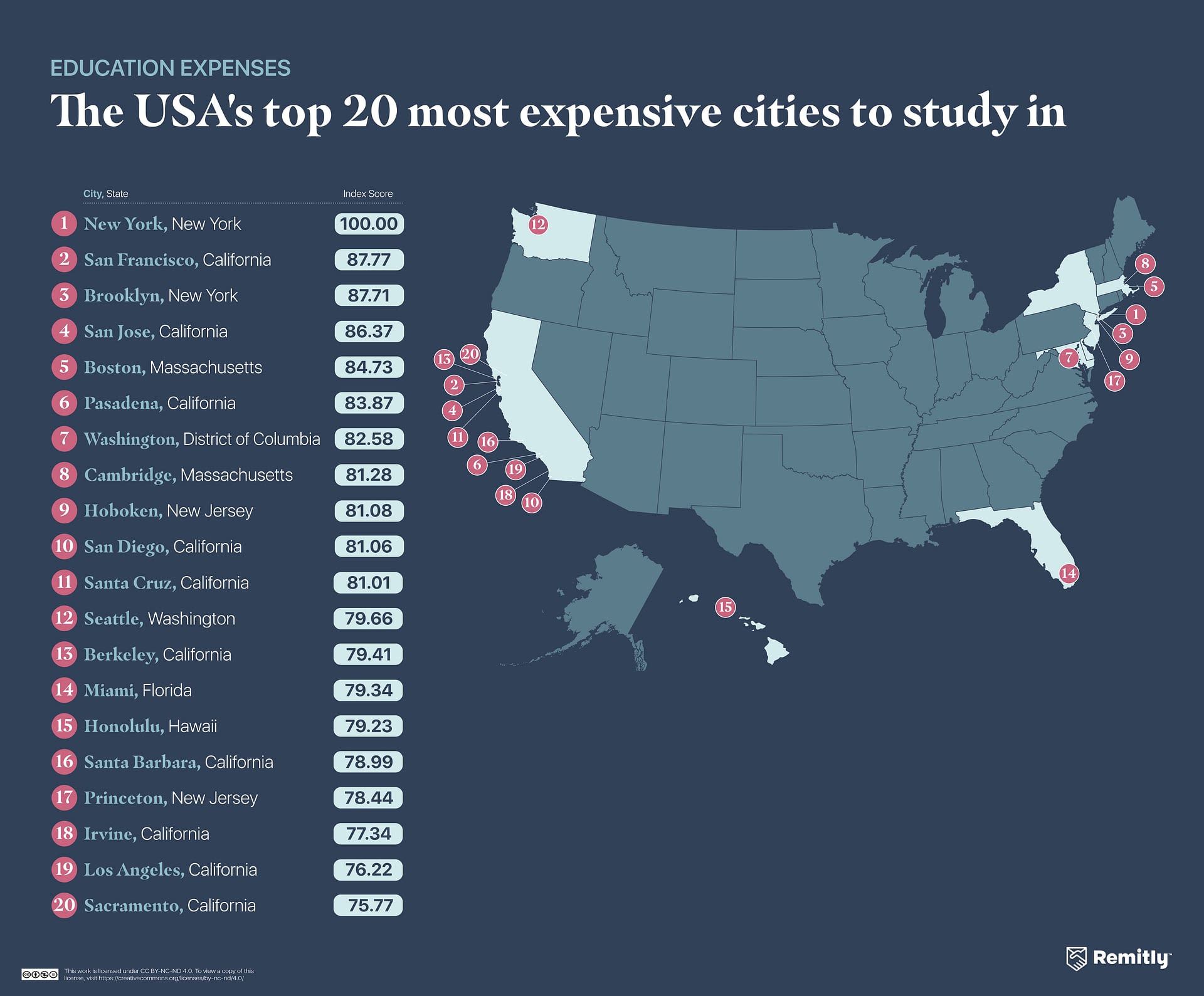
For ambitious students with international dreams, the world is full of opportunities, but for those hoping to study abroad, the costs can vary dramatically. When you’re planning your educational journey, understanding the financial landscape of visa costs, tuition fees, and the cost of living in your preferred city can make all the difference to your experience while you’re there.

To reveal where in the world is home to some of the best value university educations for international students, we analysed data from over 1,700 universities and cities around the world to reveal where your dollars, euros, yen, or pesos will stretch the furthest. To determine the best value destinations, we analysed the average cost of living (measured by Numbeo’s metric of the average cost of commonly used goods and services such as household items, groceries, transportation etc), average rent, student visa fees, and national average tuition fees. Based on these factors, we assigned each city an ‘Education Expenses Index score’ out of 100, with lower scores indicating the most affordable destinations.

Our key findings:

  • Europe is home to some great value education destinations, with Azerbaijan’s Baku topping the European rankings, followed by Halle in Germany and Thessaloniki in Greece.
  • Asian destinations provide remarkable affordability for international students with Chinese cities dominating the top 10, led by Zhenjiang and followed by Lanzhou.
  • Canada outshines the US for North American value, with Winnipeg offering the continent’s most budget-friendly quality higher education.
  • Hidden gems exist on every continent, from Cairo (the world’s most affordable city for studying, scoring an impressive 8 out of 100 on our index) to Wollongong (Oceania’s best value destination).

Cheapest countries and cities to study abroad in Europe

Figure showing the top 10 most affordable cities to study in Europe.

Europe has always been an attractive destination for international students seeking quality education, cultural immersion and fantastic connections when it comes to travel. The ease of rail or air travel between countries makes it perfect for those hoping to explore more of their new home alongside their studies.

Leading the pack in terms of value is Baku, Azerbaijan, with an affordability score of 16.47 out of 100. This cosmopolitan city on the Caspian Sea combines incredibly low average monthly rent ($533) with minimal living costs, offering unbeatable value for international students. Germany ranks second, with the university town of Halle, home to the historic Martin Luther University Halle-Wittenberg, scoring 22.24 in the study. With the remarkable value of Germany’s tuition-free public universities coupled with reasonable living costs, this German town is a great option for those hoping to gain an affordable education in Europe. Students coming from the EU will benefit from the zero visa costs, while those coming from non-EU countries will have to pay a student visa cost of around €75.

The Mediterranean ranks highly with Greece’s historic Thessaloniki and its university named after the ancient Greek philosopher Aristotle, taking third place with a score of 22.61. Again, EU students can make the most of not paying for a visa to study in Greece, and those coming from further afield will have to pay between €90 to €150, depending on their nationality. Italian cities claim four of the top 10 spots, with Perugia, Catania, Pisa and Bari all featuring, thanks to their world-renowned education, rich culture, and manageable costs for students looking to study on a budget. Italy’s visa costs for EU students are zero, and those applying from international countries will usually have to pay a low fee of just €50 to be able to study, making it one of the more affordable countries.

Rank City Country Cost of living ($) Average monthly rent for one bed apartment ($) Visa cost ($) Average tuition fee ($) Education Expenses index score (out of 100)
1 Baku Azerbaijan 14.89 533.26 25.00 1,022.22 16.47
2 Halle Germany 21.12 678.51 0.00 0.00 22.24
3 Thessaloniki Greece 20.78 635.80 0.00 1,660.00 22.61
4 Perugia Italy 19.71 643.72 0.00 4,516.85 23.42
5 Catania Italy 20.39 587.67 0.00 4,516.85 23.65
6 Athens Greece 21.73 811.73 0.00 1,660.00 25.02
7 Granada Spain 16.61 848.50 56.52 7,200.23 26.22
8 Pisa Italy 20.83 865.37 0.00 4,516.85 26.38
9 Nancy France 23.12 669.66 0.00 4,108.93 26.94
10 Bari Italy 21.34 882.27 0.00 4,516.85 27.03

Cheapest countries and cities to study abroad in North America

Figure showing the top 10 most affordable cities to study in North America.

Contrary to popular belief, studying in North America doesn’t have to break the bank. Our study reveals Canada’s city of Winnipeg as the continent’s most affordable university education destination, with a score of 50.62. The Canadian city has a good balance of affordable living costs and a strong sense of community, perfect for newcomers, especially students. The University of Winnipeg itself is also known for having smaller class sizes, great for those who want a more personal education experience.

Canadian cities claim three more of the top five spots, with Montreal (51.20), Kingston (51.57), and Edmonton (52.60) all offering significant value. The combination of quality institutions such as the University of Montreal and McGill University, more moderate rental markets, and lower visa costs gives Canadian cities a distinct advantage over their American counterparts.

For those set on studying in the United States, the Midwest has some of the best choices for budget-conscious international students. Columbia, Missouri (52.76), Lansing, Michigan (53.18), and Lincoln, Nebraska (53.42) all provide authentic American college experiences at substantially lower costs than coastal education hubs in New York and San Francisco. 

Rank City Country Cost of living ($*) Average monthly rent for one bed apartment ($) Visa cost ($) Average tuition fee ($) Education Expenses index score (out of 100)
1 Winnipeg Canada 21.78 1,176.47 84.92 30,697.13 50.62
2 Montreal Canada 20.49 1,408.06 84.92 30,697.13 51.20
3 Kingston Canada 20.65 1,433.95 84.92 30,697.13 51.57
4 Edmonton Canada 22.47 1,331.63 84.92 30,697.13 52.60
5 Columbia United States 20.11 1,227.08 159.13 30,748.98 52.76
6 Lansing United States 20.89 1,180.50 159.13 30,748.98 53.18
7 Lincoln United States 19.80 1,346.50 159.13 30,748.98 53.42
8 Waterloo Canada 20.21 1,738.76 84.92 30,697.13 53.62
9 Saskatoon Canada 24.82 1,237.41 84.92 30,697.13 54.24
10 Ottawa Canada 21.73 1,657.06 84.92 30,697.13 54.51

*$ refers to USD

Cheapest countries and cities to study abroad in Australia and New Zealand

Figure showing the top 10 most affordable cities to study in Oceania.

Australia and New Zealand are renowned for their exceptional universities and high quality of life, but studying in this part of the world typically comes with a higher price tag. For those determined to experience education here, our study reveals the more affordable locations.

Australia’s coastal city of Wollongong tops the affordability list with a score of 56.98, offering the same stunning landscapes and educational excellence as Sydney but at a significantly lower cost. With gorgeous beaches, stunning coastal walks and a delicious culinary scene, it’s great for students who want to really make the most of life outside of studying. New Zealand’s historic university town of Dunedin claims second place (58.35) while Australia’s Geelong rounds out the top three (58.93). Deakin University – the university based in Geelong – is known for its courses in sports science, nursing, education and business and is a great choice for those who want to be close to bigger cities such as Melbourne while enjoying a slightly quieter university experience.

Interestingly, our analysis shows that both Brisbane (61.54), home to University of Queensland, and Adelaide (62.52), home to the University of Adelaide, offer better value for students than larger cities such as Melbourne (64.74) and Sydney (which doesn’t even make the top 10).

Rank City Country Cost of living ($) Average monthly rent for one bed apartment ($) Visa cost ($) Average tuition fee ($) Education Expenses index score (out of 100)
1 Wollongong Australia 23.71 851.07 452.00 15,469.23 56.98
2 Dunedin New Zealand 20.51 1,070.12 424.69 21,881.69 58.35
3 Geelong Australia 22.55 1,235.84 452.00 15,469.23 58.93
4 Brisbane Australia 20.92 1,757.82 452.00 15,469.23 61.54
5 Adelaide Australia 24.42 1,440.17 452.00 15,469.23 62.52
6 Perth Australia 22.92 1,652.56 452.00 15,469.23 62.73
7 Melbourne Australia 23.93 1,770.94 452.00 15,469.23 64.74
8 Newcastle Australia 25.62 1,571.30 452.00 15,469.23 64.84
9 Hobart Australia 25.84 1,575.25 452.00 15,469.23 65.09
10 Auckland New Zealand 23.57 1,594.36 424.69 21,881.69 65.78

*$ refers to USD

Cheapest countries and cities to study abroad in South America

A figure showing the 5 most affordable cities to study in South America.

Argentina’s vibrant capital, Buenos Aires, leads the continent’s affordability rankings with a score of 29.75, combining world-class education at the University of Buenos Aires with relatively low tuition fees for international students of $2,500 annually.

Chile’s capital, Santiago, claims second place (24.67), while Brazil dominates the remainder of the top five with São Paulo (22.28) home to the University of São Paulo in third, Campinas (20.17) in fourth, and Porto Alegre (19.25) in fifth. What makes these Brazilian options particularly appealing is their remarkably low cost of living, averaging out at $13.29 (the average cost of commonly used goods and services according to Numbeo) coupled with their affordable monthly rent averaging out at $579 a month – much lower than that of many European and North American cities.

The combination of both affordable tuition fees and lower living costs makes South America a great place to study for budget-conscious international students who want to gain a quality education while enjoying living in a vibrant and exciting city. If you or your family member wants to study abroad in one of South America’s affordable destinations, consider using Remitly to send money to Argentina or as a convenient option to transfer money to Brazil.

Rank City Country Cost of living ($) Average monthly rent for one bed apartment ($) Visa cost ($) Average tuition fee ($) Education Expenses index score (out of 100)
1 Buenos Aires Argentina 19.83 720.83 150.00 2,500.00 29.75
2 Santiago Chile 16.22 681.64 84.97 5,500.00 24.67
3 São Paulo Brazil 13.46 767.07 114.42 3,000.00 22.28
4 Campinas Brazil 13.26 534.22 114.42 3,000.00 20.17
5 Porto Alegre Brazil 13.15 436.30 114.42 3,000.00 19.25

Cheapest countries and cities to study abroad across Africa

A figure showing the top 5 most affordable cities to study in Africa.

For budget-conscious students, Africa offers the most economical study options globally. Egypt’s historic capital Cairo, home to Cairo University, as well as a host of other private institutions, ranks as the best value destination to study with an impressively low index score of 8.03. This remarkable score is thanks to the exceptionally low rental costs (averaging at just $251.21 monthly) and no visa fees for many international students.

South Africa provides four great affordable destinations to study in, with Durban (17.61), Pretoria (18.74), Johannesburg (20.18) and Cape Town (21.80) all delivering quality education options at a fraction of the cost of European or North American alternatives. Cape Town, home to the University of Cape Town, offers an unbeatable combination of scenic beauty, cultural richness, and academic opportunity at an accessible price point.

Rank City Country Cost of living ($) Average monthly rent for one bed apartment ($) Visa cost ($) Average tuition fee ($) Education Expenses index score (out of 100)
1 Cairo Egypt 9.31 251.21 0.00 2,166.50 8.03
2 Durban South Africa 14.43 492.98 32.49 3,518.00 17.61
3 Pretoria South Africa 15.18 536.46 32.49 3,518.00 18.74
4 Johannesburg South Africa 16.25 578.86 32.49 3,518.00 20.18
5 Cape Town South Africa 15.38 885.71 32.49 3,518.00 21.80

Cheapest countries and cities to study abroad in Asia

Figure showing the top 10 most affordable cities to study in Asia.

Chinese cities dominate the 10 most affordable Asian cities to study in, with Zhenjiang topping the list thanks to its low rental prices (averaging just $291.19 monthly) and modest cost of living ($8.62).

Chinese universities are gaining global recognition for providing outstanding education in topics including engineering and computer science and technology, while maintaining dramatically lower costs than their Western counterparts. For instance, Tsinghua University ranks 20th globally in computer science, while Shanghai Jiao Tong University ranks in 49th spot globally.

Cities such as Lanzhou (14.78), Chongqing (15.10), and Nanchang (15.71) offer a revered education at price points that make international study accessible to a much broader range of students.

India’s Ahmedabad, home to the Indian Institute of Management Ahmedabad, makes it into the top 10, ranking in sixth place (16.46). The city offers a vibrant cultural experience and high-quality education at remarkably affordable rates. The combination of low rental costs and reasonable tuition fees makes these Asian cities particularly attractive for students looking to access international education without lots of debt to pay back at the end of their studies.

Outside of the top ten, China continued to dominate with 85% of the top 20 cities being Chinese cities.

Rank City Country Cost of living ($) Average monthly rent for one bed apartment ($) Visa cost ($) Average tuition fee ($) Education Expenses index score (out of 100)
1 Zhenjiang China 8.62 291.19 95.85 5,580.00 14.23
2 Lanzhou China 8.82 332.70 95.85 5,580.00 14.78
3 Chongqing China 9.25 317.79 95.85 5,580.00 15.10
4 Nanchang China 10.47 239.80 95.85 5,580.00 15.71
5 Chengdu China 10.15 365.35 95.85 5,580.00 16.41
6 Ahmedabad India 7.81 224.03 150.66 7,300.00 16.46
7 Shenyang China 10.76 300.26 95.85 5,580.00 16.50
8 Wuxi China 10.30 361.18 95.85 5,580.00 16.53
9 Yangzhou China 10.64 357.99 95.85 5,580.00 16.86
10 Xi’an China 11.12 326.23 95.85 5,580.00 17.08

The world’s most expensive cities to gain an education in

A figure showing the top 20 most expensive cities to study in the world.

American cities dominate the top 20 most expensive cities to gain an education worldwide, with New York City topping the list with a top score of 100. While it’s undoubtedly an incredible city to study in, the astronomical rent prices (the average rent for an apartment in the city is over $5,000 a month) make it one of the costliest. San Francisco (87.77), Boston (84.73) and Pasadena (83.37) also rank in the top five most expensive cities to study in.

Three non-US cities make the top 20, with Singapore (94.24), Sydney (74.62) and London (74.22) all featuring as some of the costliest places to gain an education for students hoping to study internationally. London, home to world-renowned universities including Imperial College London, King’s College London and Queen Mary University of London, offers students an unforgettable experience and education. However, to live in such an iconic city and study at one of these colleges, students will have to find the funds to pay a little more than studying in other British cities thanks to the high cost of living in the capital.

Rank City Country Cost of living ($) Average monthly rent for one bed apartment ($) Visa cost ($) Average tuition fee ($) Education Expenses index score (out of 100)
1 New York United States 35.22 5,101.73 159.13 30,748.98 100.00
2 Singapore Singapore 24.34 3,630.65 67.00 64,460.00 94.24
3 San Francisco United States 31.67 4,054.39 159.13 30,748.98 87.77
4 Boston United States 30.21 3,864.47 159.13 30,748.98 84.73
5 Pasadena United States 31.89 3,550.00 159.13 30,748.98 83.87
6 Washington United States 30.47 3,570.58 159.13 30,748.98 82.58
7 Cambridge United States 29.11 3,582.29 159.13 30,748.98 81.28
8 San Diego United States 29.60 3,493.59 159.13 30,748.98 81.06
9 Santa Cruz United States 26.84 3,832.74 159.13 30,748.98 81.01
10 Seattle United States 31.89 3,036.26 159.13 30,748.98 79.66
11 Berkeley United States 28.65 3,411.67 159.13 30,748.98 79.41
12 Miami United States 27.47 3,549.84 159.13 30,748.98 79.34
13 Honolulu United States 32.51 2,906.51 159.13 30,748.98 79.23
14 Santa Barbara United States 26.53 3,624.90 159.13 30,748.98 78.99
15 Princeton United States 30.19 3,100.00 159.13 30,748.98 78.44
16 Irvine United States 26.80 3,389.64 159.13 30,748.98 77.34
17 Los Angeles United States 27.60 3,153.41 159.13 30,748.98 76.22
18 Sydney Australia 27.09 2,581.16 452.00 15,469.23 74.62
19 London United Kingdom 34.06 3,481.83 49.02 21,000.00 74.22
20 Chicago United States 28.08 2,837.03 159.13 30,748.98 74.12

A photo of a large building near palm trees and a lawn of grass.

Chasing the American dream: The most expensive and most affordable places to study in the USA

For many, studying in the USA is a dream come true. Getting to experience living on campus, studying in iconic institutions and living the American college dream – it’s what students from all around the world aspire to achieve. But where in America is the most expensive place to study, and where provides the best value educational experience?

The most expensive American cities for international students

Figure showing the top 20 most expensive cities to study in the United States.

The most expensive city to study in is New York City, scoring top points of 100 in our study. The Big Apple is at the top of a lot of international students’ wish lists when it comes to cities to move to, with access to the top-ranked universities including Columbia University and New York University, incredible networking opportunities and the chance to live in a lively city with so much to explore outside of studying. New York is, however, notoriously expensive, so it may come as no surprise to see it rank first as the priciest US city for international students to gain an education. While the cost of living isn’t the highest compared to other cities in the country, the eye-wateringly high average rental prices of over $5,000 a month are what places NYC at the top.

In second place is San Francisco, California, with a score of 92.62. Known for its iconic features, such as the Golden Gate Bridge, it’s also home to well-known institutions, including the University of California (UCSF), a leading research university with renowned medical facilities.

California dominates the top 20, with 10 cities in the state making the list, including San Jose, Pasadena, San Diego, Berkeley, Santa Cruz, Santa Barbara, Irvine, Los Angeles, and Sacramento.

California’s high scores are thanks to the state’s prestigious universities, such as Stanford University, California Institute of Technology and the University of California, all attracting global interest, and the high-priced housing across urban and suburban California. From tech-forward San Jose to beachside Santa Barbara, students pay for the lifestyle as much as the learning on the West Coast.

Rank City State Cost of living ($) Average monthly rent for one bed apartment ($) Visa cost ($) Average tuition fee ($) Education Expenses index score (out of 100)
1 New York NY 35.22 5,101.73 159.13 30,748.98 100.00
2 San Francisco CA 31.67 4,054.39 159.13 30,748.98 87.77
3 Brooklyn NY 31.67 4,045.68 159.13 30,748.98 87.71
4 San Jose CA 31.36 3,922.00 159.13 30,748.98 86.37
5 Boston MA 30.21 3,864.47 159.13 30,748.98 84.73
6 Pasadena CA 31.89 3,550.00 159.13 30,748.98 83.87
7 Washington DC 30.47 3,570.58 159.13 30,748.98 82.58
8 Cambridge MA 29.11 3,582.29 159.13 30,748.98 81.28
9 Hoboken NJ 24.66 4,114.58 159.13 30,748.98 81.08
10 San Diego CA 29.60 3,493.59 159.13 30,748.98 81.06
11 Santa Cruz CA 26.84 3,832.74 159.13 30,748.98 81.01
12 Seattle WA 31.89 3,036.26 159.13 30,748.98 79.66
13 Berkeley CA 28.65 3,411.67 159.13 30,748.98 79.41
14 Miami FL 27.47 3,549.84 159.13 30,748.98 79.34
15 Honolulu HI 32.51 2,906.51 159.13 30,748.98 79.23
16 Santa Barbara CA 26.53 3,624.90 159.13 30,748.98 78.99
17 Princeton NJ 30.19 3,100.00 159.13 30,748.98 78.44
18 Irvine CA 26.80 3,389.64 159.13 30,748.98 77.34
19 Los Angeles CA 27.60 3,153.41 159.13 30,748.98 76.22
20 Sacramento CA 31.68 2,587.34 159.13 30,748.98 75.77

Budget-friendly education: America’s hidden gems

Map showing the top 20 cities to study in based on affordability.

When it comes to stretching your education dollars, America’s heartland offers world-class education without the coastal price tags. Our study reveals some surprising educational hotspots where your money goes significantly further.

Topping our affordability list is Columbia, Missouri, with a score of just 52.76. Columbia, home to institutions including the University of Missouri and Columbia College, is known for its friendly atmosphere and affordable housing, where its average monthly rent of just over $1,200 is less than a quarter of what you are likely to pay in cities such as New York.

Lansing, Michigan (53.18), claims second place, home to the prestigious Michigan State University, which offers students academic excellence alongside relatively affordable living costs. MSU also boasts a proud football tradition, competing in the Big Ten Conference (one of the oldest and most prestigious collegiate athletic conferences in the United States).

Two Texan cities make the top 10, with both Lubbock (56.79) and College Station (57.27), ranking in sixth and eighth place, respectively. Home to Texas A&M University, College Station offers students a more suburban living experience, perfect for those who might not want to live in a fast-paced city. It’s also one of the most iconic college football destinations in the country, with Kyle Field seating more than 100,000 fans, and traditions such as the 12th Man and Midnight Yell giving the Aggie football culture a truly legendary status. Texas A&M provides robust scholarship support, including the Regents’ Scholarship for first-generation college students and generous athletic aid for recruited athletes.

The Midwest emerges as the clear affordability champion, claiming seven of the top ten positions. Despite US colleges having identical average national tuition costs ($30,748.98), the dramatic variations in rent, ranging nearly $900 between the most affordable (Lansing at $1,180) and pricier options in our top 20, highlight how location dramatically impacts overall costs.

Rank City State Cost of living ($) Average monthly rent for one bed apartment ($) Visa cost ($) Average tuition fee ($) Education Expenses index score (out of 100)
1 Columbia MO 20.11 1,227.08 159.13 30,748.98 52.76
2 Lansing MI 20.89 1,180.50 159.13 30,748.98 53.18
3 Lincoln NE 19.80 1,346.50 159.13 30,748.98 53.42
4 Columbia SC 20.76 1,417.50 159.13 30,748.98 54.99
5 Baton Rouge LA 20.41 1,668.58 159.13 30,748.98 56.68
6 Lubbock TX 23.75 1,263.46 159.13 30,748.98 56.79
7 Ames IA 23.54 1,346.88 159.13 30,748.98 57.25
8 College Station TX 22.34 1,498.38 159.13 30,748.98 57.27
9 Athens GA 20.00 1,877.38 159.13 30,748.98 57.97
10 Newark DE 20.90 1,775.00 159.13 30,748.98 58.06
11 Lawrence KS 25.21 1,277.81 159.13 30,748.98 58.41
12 Ithaca NY 21.32 1,803.75 159.13 30,748.98 58.72
13 Bloomington IN 22.74 1,636.46 159.13 30,748.98 58.81
14 Cincinnati OH 21.23 1,848.93 159.13 30,748.98 59.00
15 Tallahassee FL 19.83 2,055.93 159.13 30,748.98 59.26
16 Iowa City IA 22.45 1,729.08 159.13 30,748.98 59.27
17 Rochester NY 22.32 1,812.09 159.13 30,748.98 59.82
18 Eugene OR 22.72 1,823.54 159.13 30,748.98 60.33
19 Durham NC 21.04 2,051.67 159.13 30,748.98 60.48
20 Fort Collins CO 21.19 2,035.83 159.13 30,748.98 60.50

If you’re planning to study abroad, our research highlights the importance of looking beyond the most popular education hotspots. Studying in New York, London, or Sydney does provide undeniable opportunities; however, considering alternative destinations can help dramatically reduce your financial costs while still providing a quality education and an unforgettable experience.

For international students who need to manage their funds carefully or plan on regularly receiving money from home, choosing a more affordable city could make all the difference between financial stress and educational freedom.

Methodology: How we calculated the most and least affordable cities for international students

A combined list was compiled, consisting of the top 2,000 universities globally, across 89 nations (based on the Center for World University Rankings) and an additional 250 notable institutions. For countries represented in the list by fewer than five universities, high-ranking institutions were selected to ensure each country’s average cost estimates were based on a sufficiently representative sample.

Cost of living data for each city was sourced from Numbeo, calculated as the average cost of commonly used goods and services such as groceries, household items, transportation and more, expressed in USD. Rent data was also obtained from Numbeo. For national-level calculations, the corresponding country-wide figures from Numbeo were used.

Average tuition fee data for each country was gathered from a range of verified sources listed below. Where available, separate averages were collected for public and private universities, and a national tuition estimate was calculated as the mean of these two averages.

As visa costs differ depending on which country you are leaving and which you are moving to, costs were calculated using data from an average of 103 countries. This provides an estimate of visa fees, while acknowledging that this will differ per individual.

The final Cost of Education Index was calculated by equally weighting rent, cost of living, and tuition fees. Visa costs, which are typically lower, were weighted at 50% of the other components in the index.

All sources can be viewed in this document here.

Difference Between an Embassy and a Consulate

Embassies and consulates allow countries to talk to each other easily and provide essential functions for citizens, tourists, and visitors.

At Remitly, we know that embassies and consulates are important, particularly if you need a visa or live in a separate country from your family. Distinguishing between the two can be confusing, especially when some use the terms interchangeably, so here’s an easy guide to understanding their differences.

Is a consulate the same as an embassy?

Simply put: a consulate is not the same as an embassy. If you zoom out and look at them in the bigger picture, they both push for the broader ideas of cultural and economic diplomacy, travel, and otherwise, making sure countries stay friendly with one another.

But when you look closer, embassies and consulates serve wholly different functions.

An embassy handles diplomatic relations and is led by an ambassador. A consulate provides citizen services and is overseen by a consul.

What is an embassy?

An embassy is the primary form of diplomatic representation comprising diplomats and representatives serving within a foreign country. It’s the main point of contact between two governments (the home government and the foreign government). Most embassies are headquartered in a country’s capital city.

Embassy headquarters are considered “foreign soil,” meaning they operate under the home country’s laws, not the host country.

What is the purpose of an embassy?

The embassy serves a variety of functions involving broader state politics that probably won’t affect you. For example, embassies arrange state visits involving high-profile people, and they’re involved in preparing treaties between the two countries.

For travelers and non-citizens, embassies are a direct link to your home country. When traveling, you might seek aid from an embassy if you:

  • Have been arrested or detained
  • Lost your passport
  • Have been a victim of a crime
  • Experienced a natural disaster or civil disorder
  • Have a relative that has gone missing abroad

What is an ambassador?

The ambassador is the primary spokesperson and chief diplomat within an embassy. They are the highest-ranking representative of a home nation within a host country. They provide guidance on foreign policy and participate in negotiations or mediation between the host and home countries.

Most importantly, ambassadors act as the official liaison, ensuring the steady flow of information between the host and home countries. They send regular reports about the host country’s political, cultural, and economic conditions and provide any necessary information from the home country to the host country.

Why does a country have an embassy?

Embassies play an important role in diplomacy. They help to maintain peace between countries while fostering collaboration. It’s ultimately a symbiotic relationship that can help to build political and cultural relationships between nations.

Embassies also provide protection to citizens of a home country who are living, working, or traveling abroad.

Do all countries have a U.S. embassy?

Nearly all countries in the world have a U.S. embassy or diplomatic mission. However, some countries don’t have an embassy because they don’t have any diplomatic relations with the U.S. This includes:

  • Bhutan
  • Caribbean Islands
  • North Korea

Embassy

What are consulates?

While embassies are the primary diplomatic entity, consulates act as an extension of the embassy. In larger countries, you’ll likely see an embassy in the capital city and consulates in other major cities that are hubs for tourism or trade.

What is the purpose of a consulate?

Although consulates still play an important role in foreign diplomacy, they’re more involved with administrative duties, like providing information about immigration and processing visas. They’ll also typically be the ones to help replace a lost green card or renew passports for citizens of their home countries.

Basically, if you’re an expat or traveler, you’re more likely to find everyday assistance for non-emergencies via a consulate than an embassy.

What is a consul general?

A consul is a government representative who lives in a foreign country and serves general diplomatic functions. A consul general is the highest form of a consul and acts as the chief person at a consulate. Similar to an ambassador for an embassy, a consul general is the head member of a consulate.

A consul general follows the instructions of an ambassador, often carrying out more of the day-to-day work required to, for example, enact new foreign policies suggested by the ambassador.

Why does a country have a consulate?

Consulates are still important to general diplomacy, but their role is more focused on administrative duties and representing the general population of the host country.

Some embassies do offer administrative services, but that’s not always possible given the size of the country or the scope of an embassy’s work.

A consulate can take some of the more essential, everyday work involved with assisting tourists and expats, allowing embassies to focus on larger diplomatic functions.

Do all countries have a U.S. consulate?

As of this writing, the U.S. has 88 consulates in the world. Based on the size of the host country and other variables, some countries only have an embassy. Countries without an embassy (like those listed above) also do not have a consulate.

What is a diplomatic mission?

A diplomatic mission refers to an organization or group of people sent to a host country to represent a different country.

For example, if the United States sent a select group to Japan to discuss trade, that U.S. group would be considered a diplomatic mission.

Most of the time, when you hear “diplomatic mission,” it’s in reference to embassies and consulates. Both are types of state representation existing in their non-home state.

What are the types of diplomatic missions?

Although embassies and consulates are the most common diplomatic missions, they’re not the only types of diplomatic missions. Other diplomatic missions that you might hear about include:

  • High commission – An embassy of a Commonwealth country located within another Commonwealth country
  • Permanent mission – A diplomatic mission to an international organization (like the United Nations, NATO, or World Health Organization)
  • Consulate General – A diplomatic mission that exists in a major city and provides a full range of services
  • Consulate headed by honorary consul – A diplomatic mission that is led by an Honorary Consul but provides limited services.

This is good to know, but don’t worry about it too much. For the average person, you’ll only really deal with embassies and consulates.

US Embassy

Visa and passport services at embassies and consulates

Traveling abroad or settling in a new country? Then you’re likely to visit an embassy or consulate for visa and passport services. These key functions are among the most sought-after services provided by these institutions.

Embassies: Passport renewals and more

If you’re a U.S. citizen abroad and your passport has expired, lost its way, or encountered an untimely demise, the embassy is your go-to place.

Not just for renewals, embassies can issue emergency passports if you find yourself in a pinch. They are also crucial if you need to report a lost or stolen passport, ensuring you’re not left stranded.

Consulates: visa processing experts

Dreaming of exploring the U.S. or taking up a job or study opportunity? A consulate is where your journey begins. Here, visa applications for non-citizens are processed.

Whether it’s a tourist visa, student visa, or a work permit, consulates handle the applications, interviews, and all the nitty-gritty details.

Can I apply for a visa at an embassy or consulate?

One of the main functions of an embassy and consulate is to provide visas. Ideally, you want to get a visa before you arrive in a new country, but emergencies happen, and plans change.

Once you depart your home country, an embassy or consulate is your best route for getting a visa. The process is still the same and typically includes an interview, fee, and documentation.

How do countries establish diplomatic relations and open embassies or consulates?

Establishing mutual diplomatic relations is a complex process without any singular step-by-step process. It can take decades of exchange and communication to simply establish the most basic diplomacy with another country. Mutual consent is the key here.

Once that diplomatic relationship has been created, the countries can begin discussing opening embassies and consulates. The process for establishing an embassy is outlined via the Vienna Convention on Diplomatic Relations and Optional Protocols from 1961, but the basic process involves:

  • Negotiating the privileges, immunities, and other conditions for setting up embassies and consulates.
  • Identifying locations for potential embassy headquarters. Both the host and home countries must approve.
  • Creating new infrastructure or renovating existing buildings to meet functional and security needs.
  • Appointing an ambassador, consuls, and other staff members. The host country must approve of an appointed ambassador, and they are allowed to refuse a potential appointee without reason.

How do embassies and consulates protect their citizens abroad?

Protecting citizens abroad is one of the main roles of embassies and consulates. Much of that involves smaller administrative functions, like providing emergency passports, notarizing documents, and assisting with marriages and births.

While you shouldn’t treat an embassy or consulate like your personal customer service, they can definitely provide help or point you in the right direction in the event of an emergency. For example, an embassy can advocate for your rights within the host country’s laws and notify your family members if you have been arrested or detained.

If you are a victim of a crime, an embassy can provide legal and medical assistance, and during emergencies, an embassy can assist with evacuation.

You generally cannot transfer or exchange money at an embassy or consulate. However, an embassy can help a destitute citizen return to their home country under certain circumstances.

Embassy of Canada

Emergency situations: How embassies and consulates can help

When you’re abroad, emergencies can happen. It’s reassuring to know that embassies and consulates are your allies during these times. Their assistance can be invaluable, whether it’s a lost passport, a legal issue, or a crisis.

Embassies: Lifeline in a crisis

Imagine facing a serious medical emergency or getting caught in a political upheaval. Or what if you’re a victim of a crime? In such high-stress situations, the embassy is your sanctuary. They can help you connect with local authorities, provide vital information on medical facilities, and offer guidance on navigating the local legal system. In extreme cases, like natural disasters or civil unrest, your embassy is the go-to for evacuation assistance.

Consulates: Providing local support

Consulates, with their presence in various cities, can be more accessible in emergencies. They’re equipped to assist in situations like the loss or theft of a passport, offering temporary travel documents to help you get back home safely. Need legal advice or emergency funds? Consulates can guide you on these too.

List of countries with a U.S. embassy in 2024

  • Afghanistan
  • Albania
  • Algeria
  • Angola
  • Argentina
  • Armenia
  • Australia
  • Austria
  • Azerbaijan
  • Bahamas
  • Bahrain
  • Bangladesh
  • Barbados
  • Belarus
  • Belgium
  • Belize
  • Benin
  • Bolivia
  • Bosnia and Herzegovina
  • Botswana
  • Brazil
  • Brunei
  • Bulgaria
  • Burkina Faso
  • Burma (Myanmar)
  • Burundi
  • Cabo Verde
  • Cambodia
  • Cameroon
  • Canada
  • Central African Republic
  • Chad
  • Chile
  • China
  • Colombia
  • Comoros
  • Congo (Democratic Republic of the)
  • Congo (Republic of the)
  • Costa Rica
  • Côte d’Ivoire
  • Croatia
  • Cuba
  • Cyprus
  • Czech Republic
  • Denmark
  • Djibouti
  • Dominican Republic
  • East Timor (Timor-Leste)
  • Ecuador
  • Egypt
  • El Salvador
  • Equatorial Guinea
  • Eritrea
  • Estonia
  • Eswatini
  • Ethiopia
  • Fiji
  • Finland
  • France
  • Gabon
  • Gambia
  • Georgia
  • Germany
  • Ghana
  • Greece
  • Grenada
  • Guatemala
  • Guinea
  • Guinea-Bissau
  • Guyana
  • Haiti
  • Holy See (Vatican City)
  • Honduras
  • Hungary
  • Iceland
  • India
  • Indonesia
  • Iran
  • Iraq
  • Ireland
  • Israel
  • Italy
  • Jamaica
  • Japan
  • Jordan
  • Kazakhstan
  • Kenya
  • Korea (South)
  • Kosovo
  • Kuwait
  • Kyrgyz Republic
  • Laos
  • Latvia
  • Lebanon
  • Lesotho
  • Liberia
  • Libya
  • Lithuania
  • Luxembourg
  • Madagascar
  • Malawi
  • Malaysia
  • Maldives
  • Mali
  • Malta
  • Marshall Islands
  • Mauritania
  • Mauritius
  • Mexico
  • Micronesia
  • Moldova
  • Mongolia
  • Montenegro
  • Morocco
  • Mozambique
  • Namibia
  • Nepal
  • Netherlands
  • New Zealand
  • Nicaragua
  • Niger
  • Nigeria
  • North Macedonia (formerly Macedonia)
  • Norway
  • Oman
  • Pakistan
  • Palau
  • Panama
  • Papua New Guinea
  • Paraguay
  • Peru
  • Philippines
  • Poland
  • Portugal
  • Qatar
  • Romania
  • Russia
  • Rwanda
  • Samoa
  • San Marino
  • Saudi Arabia
  • Senegal
  • Serbia
  • Seychelles
  • Sierra Leone
  • Singapore
  • Slovakia
  • Slovenia
  • Somalia
  • South Africa
  • South Sudan
  • Spain
  • Sri Lanka
  • Sudan
  • Suriname
  • Sweden
  • Switzerland
  • Syria
  • Tajikistan
  • Tanzania
  • Thailand
  • Togo
  • Tonga
  • Trinidad and Tobago
  • Tunisia
  • Turkey
  • Turkmenistan
  • Uganda
  • Ukraine
  • United Arab Emirates
  • United Kingdom
  • Uruguay
  • Uzbekistan
  • Venezuela
  • Vietnam
  • Yemen
  • Zambia
  • Zimbabwe

Please note that the presence of an embassy can change due to diplomatic relations, and for the most current information, refer to the U.S. Department of State’s website.