

Moving to Japan in 2026: what to plan for
Moving to Japan from the US usually means securing a long-stay visa and a Certificate of Eligibility (CoE) arranged by a Japan-based sponsor, budgeting for upfront housing fees, and completing a first-week setup sequence: Residence Card (Zairyu Card), address registration, phone, and bank account. This guide is for people planning a legal, long-term move, not a short tourist trip.
We’re focusing on relocating for work, study, marriage, or a long-term visa pathway. If you’re just visiting for a trip, our guide to visas in Japan covers short-stay entry instead.
About this update: we reviewed this guide in September 2026 against current guidance from Japan’s Ministry of Foreign Affairs (MOFA) and Immigration Services Agency (ISA). Visa categories, fees, and processing times change from time to time, so confirm details with your consulate or municipality before you commit to a moving date.
All the facts at a glance:
- You’ll need an eligible visa category plus a CoE before you can move, in most cases arranged by an employer, school, or family sponsor in Japan.
- Expect JPY 300,000–600,000 or more in non-refundable and refundable upfront housing costs before you sign a lease.
- Your first two weeks revolve around a set order: Residence Card, then address registration, then a phone number, then a bank account.
- A Japanese guarantor, or a guarantor company, is standard for renting, even for long-term residents.
- Permanent residency generally takes years of continuous, legal residence, so it’s worth planning your visa pathway with the long game in mind.

Visa pathways for Americans moving to Japan (and how the CoE process works)
Most Americans can’t simply book a flight and start a new life in Japan. Understanding Japan visa requirements for Americans starts with knowing which category fits your situation, and in nearly every case you’ll also need a Certificate of Eligibility (CoE), obtained through Immigration Services Agency of Japan, before you apply for your visa at a Japanese consulate. A sponsor based in Japan, typically an employer, school, or family member, files the CoE application on your behalf, which is why lining up that sponsor early matters more than almost anything else in your timeline.
Which pathway fits depends mostly on why you’re moving:
- Employer-sponsored: if a Japanese company, or a US company’s Japan office, is hiring you directly, they’ll typically sponsor a work visa tied to your specific role, such as a Specified Skilled Worker Visa (Types 1 & 2) for skilled trades or a Highly Skilled Professional (HSP) Visa for higher-level roles.
- Spouse or family: marrying a Japanese national or joining family already living in Japan generally opens a spouse or dependent visa pathway with fewer restrictions on the work you can do.
- Graduate or early-career: the J-Find Visa, launched in 2023, lets recent graduates of top-ranked universities job-hunt in Japan for up to a year without a sponsor lined up yet.
- Entrepreneur: a Startup Visa, offered by select municipalities, gives you a limited window to get a business off the ground before switching to a standard business visa.
- High earner or advanced degree holder: the J-Skip Visa fast-tracks Highly Skilled Professional (HSP) status for people with a master’s degree or high salary, skipping some of the waiting periods standard HSP applicants face.
HSP status is points-based: applicants generally need to score 70 points or more based on criteria like academic background, professional experience, salary, research achievements, and Japanese language proficiency.

Visa pathway comparison
| Visa category | Best for | Sponsor required | Typical duration |
| Specified Skilled Worker (SSW Type 1/2) | Skilled trade or labor-shortage roles (e.g., caregiving, construction, food service) | Yes, employer | Up to 5 years (Type 1); longer and renewable (Type 2) |
| Highly Skilled Professional (HSP) | Applicants scoring 70+ points on a skills/salary/education matrix | Usually employer | Extended stay; faster path to permanent residency |
| J-Skip | High earners or master’s-degree holders who qualify for HSP | Employer | Same track as HSP, with fewer waiting requirements |
| J-Find | Graduates of top-ranked universities job-hunting in Japan | None to start | Up to 1 year to secure a job offer |
| Startup Visa | Entrepreneurs launching a business in a participating municipality | Municipality-backed | Typically 6–12 months, renewable |
| Spousal/Dependent | Spouses or dependents of Japanese nationals or visa holders | Family-based | Tied to the sponsor’s status |
These are general category descriptions; exact point thresholds, durations, and eligibility rules are set and updated by MOFA and ISA, so confirm current requirements before you apply.
A Certificate of Eligibility (CoE) is a document issued by Japan’s Immigration Services Agency confirming you meet the requirements for a specific visa category. Your sponsor in Japan applies for it on your behalf; once you have it, you take it to a Japanese consulate in the US to have your visa stamped in your passport. Most applicants can’t skip this step.
Japan’s consulates and its embassy divide the US by jurisdiction, so where you apply depends on where you live, not on where your sponsor is based. Check the consulate locator on the Ministry of Foreign Affairs’ website for the office that covers your state before you submit anything; applying at the wrong consulate is a common, avoidable delay.
If your pathway runs through an employer, our Japan work visa guide breaks down each work-visa category and its application steps in more depth.
Budgeting for your move: the real upfront costs (in JPY) Americans underestimate
Most of the sticker shock in a Japan move isn’t the flight. It’s the stack of upfront housing fees due before you get your keys. Budgeting for these in JPY, rather than converting on the fly, helps you avoid surprises when a landlord quotes a lump sum.
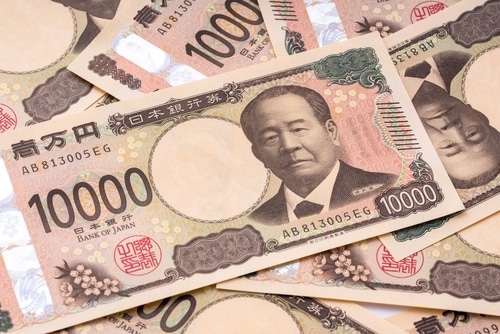
Rent upfront cost stack
| Item | Typical amount | Refundable? |
| Security deposit (shikikin) | 1–2 months’ rent | Often partly refundable |
| Key money (reikin) | 1–2 months’ rent | Non-refundable |
| Agent fee | About 1 month’s rent plus tax | Non-refundable |
| Guarantor company fee | Roughly 50–100% of 1 month’s rent | Non-refundable |
| First month’s rent | 1 month’s rent | N/A — paid in advance |
| Lock replacement | JPY 15,000–20,000 | Non-refundable |
| Rental (fire/contents) insurance | JPY 15,000–20,000 per year | Non-refundable |
Figures reflect typical ranges cited by Japanese relocation and real-estate agencies; confirm current fees with your specific landlord or agent, since they vary by property and region.
Add these up and a single-room apartment in central Tokyo can easily require JPY 300,000–600,000 before you’ve bought a single piece of furniture, on top of whatever your first month of daily expenses costs. Because your first paycheck in Japan may not arrive for four to six weeks after you start work, it’s worth arriving with enough savings to cover two to three months of costs without relying on income.

Tokyo vs. regional cities: monthly cost of living (JPY)
| Expense | Tokyo | Regional cities (e.g., Fukuoka, Sendai) |
| 1-bedroom apartment | JPY 100,000–200,000+ | JPY 40,000–80,000 |
| Utilities | JPY 10,000–15,000 | JPY 10,000–15,000 |
| Food | JPY 40,000–60,000 | JPY 40,000–60,000 |
| Transportation | JPY 8,000–15,000 | JPY 8,000–15,000 |
| Internet/phone | JPY 7,000–12,000 | JPY 7,000–12,000 |
Ranges are general estimates for a single person and vary by neighborhood and lifestyle; check current listings for the specific area you’re considering.
For a deeper breakdown of everyday spending once you’re settled, see our full cost of living in Japan guide.

Housing in Japan: how foreigners actually get approved (agents, guarantors, and paperwork)
- Book temporary housing first. Most people can’t sign a standard lease before they have a Residence Card and, often, a Japanese phone number, so plan on two to four weeks in a short-term rental, share house, or extended-stay hotel while you handle those first.
- Search with a foreigner-friendly agent. Some agencies specialize in helping non-Japanese speakers navigate listings and paperwork, which can save you from properties that quietly won’t rent to foreign tenants.
- Apply and get screened. Applications typically ask for proof of income or an employment contract, your Residence Card, and identification. Landlords or their management companies run a screening similar to a credit check.
- Line up your guarantor. Most landlords require a Japanese guarantor, or a guarantor company for a fee. Since most won’t accept a lease without one, you’ll either need a Japanese resident willing to act as guarantor or, more commonly for newcomers, a paid guarantor company, such as Casa.
- Sign the contract and pay the required up front deposits and initial rent. Review the lease terms carefully; some include automatic renewal fees or restrictions on subletting.
- Set up utilities. Electricity, gas, and water are usually arranged separately, sometimes requiring a Japanese phone number or bank account, which is why sequencing matters (see the next section).
What if you don’t have a Japanese phone number yet?
If you haven’t secured a Japanese phone number before you start apartment hunting, some agents and landlords will accept an email address and a temporary number for early communication, then require a local number before the contract is finalized. Prepaid SIM or short-term data plans can bridge that gap during your first days.
Renting is the standard path for a first move, but if you eventually decide to put down longer-term roots, foreigners can also buy property in Japan without special residency requirements. Our guide to buying property in Japan walks through how that process differs from renting.
First 14 days in Japan: the setup sequence (Residence Card, address registration, phone, bank, daily life)
Japan’s first-two-weeks setup follows a strict order: each step usually requires the one before it, so doing them out of order just means more waiting.

Day-by-day setup checklist
| When | Task | Where | What you’ll need |
| Day 1–3 | Receive or activate your Japan Residence Card (Zairyu Card); register within 14 days if not issued at the airport | Municipal (ward/city) office | Passport, visa, CoE copy |
| Day 1–3 | Register your address | Same municipal office | Residence Card, proof of address (lease or temporary housing confirmation) |
| Week 1 | Get a Japanese phone number/SIM | Mobile carrier or prepaid provider | Residence Card; bank account or credit card (varies by carrier) |
| Week 1 | Open a bank account | Bank branch | Residence Card, passport, phone number, sometimes a personal seal (hanko) |
| Week 2 | Set up utilities and internet | Utility providers | Address registration; sometimes bank details for auto-pay |
| Week 2 | Register for National Health Insurance and, if applicable, your workplace pension | Municipal office / employer HR | Residence Card, address registration |
Japan’s major banks, including Mitsubishi UFJ (MUFG), Sumitomo Mitsui Banking Corporation (SMBC), Mizuho Bank, and Japan Post Bank, are all reasonably foreigner-friendly, though requirements vary slightly by branch. You’ll typically need your Residence Card, passport, and a Japanese phone number, and some branches still ask for a personal seal (hanko or inkan) rather than a signature. If you’re sending money home or need to receive funds from the US while your Japanese account is still being set up, our guide on how to send money to Japan covers the fastest and lowest-cost ways to do it.
For everyday transit, prepaid IC cards like Suica, Pasmo, and ICOCA work on trains, buses, and at many convenience stores. If you plan to drive, an International Driving Permit (IDP) is valid for up to one year, but you’ll need to arrange it in the US before you leave since Japan doesn’t issue them. After that, converting a US license to a Japanese one depends on the state that issued your original license, because Japan’s reciprocal-conversion agreements are set state by state, not nationwide, so check with the driver’s license center in your new city for the current list and required paperwork.
A little cultural awareness goes a long way in these first weeks: small things like taking off your shoes indoors and using a slight bow in greetings are noticed and appreciated. Our guide to Japanese social customs covers more of what tends to surprise Americans most.
FAQs about moving to Japan (Americans, 2026)
Q: Can I move to Japan without a job lined up?
A: Generally, no. Most long-stay visas require a sponsor, such as an employer, school, or spouse, to file your Certificate of Eligibility. Exceptions include the J-Find Visa for recent graduates of top-ranked universities, which allows up to a year of job-hunting in Japan, and family-based pathways through marriage or a Japanese national relative.
Q: What exactly is a Certificate of Eligibility (CoE)?
A: A CoE is a document from Japan’s Immigration Services Agency confirming you qualify for a specific visa category. Your Japan-based sponsor applies for it on your behalf. Once issued, you bring it to a Japanese consulate in the US to have your visa stamped; most visa categories require this step before you travel.
Q: How much money do I need to move to Japan?
A: Beyond visa and travel costs, budget for up front housing fees, which are commonly JPY 300,000–600,000 or more for a deposit, key money, and agent fees. Factor in two to three months of living expenses, since your first paycheck may not arrive for four to six weeks after you start work.
Q: Is the Digital Nomad Visa a long-term option for living in Japan?
A: Not really. Japan’s Digital Nomad Visa allows a stay of up to six months for remote workers employed by a foreign company, with an income threshold of around JPY 10 million a year. It isn’t renewable the way work or spouse visas are, so most people treat it as a trial run rather than a permanent relocation pathway.
Q: Can I rent an apartment in Japan as a foreigner if I don’t speak Japanese?
A: Yes, though it’s easier with a foreigner-friendly agent or an agency offering English-language support. You’ll still typically need a Japanese guarantor or guarantor company, and some landlords remain hesitant to rent to non-Japanese-speaking tenants, so working with the right agent matters more than fluency.
Q: When can I open a Japanese bank account after I arrive?
A: Most banks require your Residence Card, passport, and a Japanese phone number before opening an account, so plan on doing it after you’ve registered your address and gotten a SIM, typically your first week. Some banks also ask newer residents to wait a set number of months, so check requirements at the branch you’re considering.
Q: How difficult is it to get permanent residency in Japan?
A: Standard permanent residency generally requires around 10 years of continuous, legal residence, though this can be shortened to roughly 1–3 years for Highly Skilled Professional visa holders or spouses of Japanese nationals under certain conditions. Applicants also need to show good conduct and financial stability; confirm current requirements with the Immigration Services Agency.
Key takeaways for moving to Japan
- You’ll need an approved visa category and, in most cases, a CoE arranged by a Japan-based sponsor before you can move.
- Upfront rental costs can be a shock: budget JPY 300,000–600,000 or more before you sign a lease, on top of moving and travel costs.
- Your first two weeks follow a set order: Residence Card, then address registration, then phone, then bank account.
- Visa and work rules are strict and can change, so verify current requirements with MOFA or the Immigration Services Agency before finalizing plans.
- Document preparation, consulate appointments, and guarantor arrangements all take lead time, and requirements vary somewhat by region and by which US consulate covers you.
Final checklist: confirm your visa path, budget the upfront fees, and plan your first two weeks
- Confirm which visa category fits your situation (employer, spouse, graduate, entrepreneur, or high earner) and identify your sponsor.
- Start your CoE application with your sponsor as early as possible; this step usually takes the longest.
- Find the Japanese consulate that covers your US state and check its specific document requirements.
- Budget for upfront housing costs in JPY, not estimated USD conversions, so you’re not caught short at signing.
- Arrange temporary housing for your first two to four weeks in Japan.
- Line up a guarantor or guarantor company before you start apartment hunting.
- Plan your first-week sequence: Residence Card, address registration, phone number, then bank account.
- Double-check every visa, tax, and residency detail with MOFA, the Immigration Services Agency, or your consulate before you finalize your move, since policies can change.
Once you’ve landed and settled your first-week essentials, Remitly can help you send money to Japan or manage finances across both countries while you get established.
Last reviewed: September 2026


