

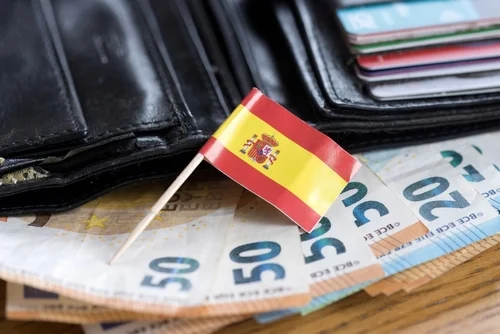
To open a bank account in Spain, choose a bank (traditional or online), confirm whether you need a resident or non-resident account, and prepare your passport, proof of address, and proof of income. Apply in-branch or online, complete identity verification, then receive your Spanish IBAN and set up direct debits. US citizens also complete FATCA self-certification.
What you’ll need most often:
- Passport
- Proof of address
- Proof of income
- NIE, if your bank requires one for the account type you choose. A NIE (Número de Identificación de Extranjero or foreign identity number) isn’t always required for non-resident accounts.
Whether you’re a non-resident, a US citizen settling in gradually, or you’re planning residency in Spain, this guide provides step by step information on the process, plus the questions US readers ask most about Spanish banking in 2026.
Apply online with some banks or in person, and you’ll get a Spanish IBAN number for direct deposits, direct debits, and transfers with Remitly and similar services.

Resident vs. non-resident bank accounts in Spain: what’s the difference?
A resident account is for people registered as living in Spain; a non-resident account is for people based elsewhere, including the US, who still want a Spanish IBAN.
| Account type | Who it’s for | Typical documents | Trade-off |
| Resident | Registered residents of Spain | NIE, padrón (address registration), nómina (payslip) or income proof | Full product range, but requires registration and often a branch visit |
| Non-resident | People based abroad, including US citizens | Passport, proof of non-Spanish address, sometimes an NIE or certificate of non-residence | Often opens online, but fewer products and occasional card-delivery delays |
It’s helpful to understand key Spanish banking terms. The NIE is a tax and ID number foreigners use for most official transactions, including banking, available to residents and non-residents alike. The TIE is the physical residency card issued once you have an approved residence permit, so a TIE confirms residency in a way an NIE alone doesn’t. A padrón is a record from your local town hall (ayuntamiento) confirming that you live in your specified municipality; domiciliación is what Spanish landlords and utilities call a direct debit.
If you’re not planning to live in Spain year-round, a non-resident account is usually the simpler start. Moving for work or study? Ask whether address registration comes before or after the account opens.

Documents needed to open a bank account in Spain (and how to avoid delays)
Non-resident applications generally fall into two groups.
Usually required: a valid passport; proof of address (a utility bill or bank statement, even a US one); and proof of income or employment, such as a pay stub or employer letter.
Sometimes required: an NIE or certificate of non-residence; proof of a deposit’s source; and a Spanish phone number, though several banks accept a US one.
Documents may require translation into Spanish by an official certified translator (traductor jurado), and verification with an apostille stamp may be necessary. Neither is required by every bank, so confirm with yours before you pay for either.
US applicants also complete FATCA self-certification: Spanish banks report US-held accounts to Spanish authorities, who share the data with the IRS. You’ll sign a form confirming your tax status, similar to how your Social Security number confirms identity back home. A mismatch between your passport and your proof-of-address details is one of the most common reasons an application stalls.

Step-by-step: opening a Spanish bank account (in a branch or online)
- Decide between a resident and non-resident account based on how much time you’ll spend in Spain.
- Compare a traditional bank and a digital option, since fees and requirements differ.
- Gather your documents — passport, proof of address, proof of income, an NIE if required, and FATCA self-certification if you’re a US citizen.
- Online, expect a video identity check; in a branch, book ahead and mention if you need English-language support.
- Wait for approval, which can take from a few days to a few weeks.
- Receive your Spanish IBAN, longer than a US routing and account number pair, and share it for incoming transfers.
- Activate online banking, order a debit card, and set up direct debits (domiciliación) once active; card delivery abroad can take longer.
Some banks let you set up your account entirely online; others require an in-person visit within a set window. Confirm with your bank beforehand if you’ll need a fully remote process.

What to compare when choosing a bank in Spain for expats
Compare accounts on important points rather than brand recognition alone:
- Monthly fees and whether they’re waived, for example with a minimum deposit
- Debit and ATM usage terms, including foreign withdrawal fees and overdraft protection
- SEPA transfer policies for moving money within the eurozone
- Whether the bank issues a non-resident certificate if you’ll need one elsewhere
- Support language, which varies by branch and by bank
Before applying, ask about the minimum opening deposit, any fee-waiver condition, and what happens if you don’t visit Spain for an extended period. Confirm fee figures directly with the bank, since they change.
Santander’s passport-only account, CaixaBank’s HolaBank service, and EU-wide digital banks such as N26 are worth comparing, much like online-only banks in the US: each trades in-person service for lower fees or a faster setup.

FAQ: Opening a bank account in Spain
Can I open a bank account in Spain online without an NIE?
Yes, many non-resident accounts accept a passport plus a certificate of non-residence instead, though resident accounts require an NIE. Ask your bank directly, since policies vary.
What’s the difference between an NIE and a TIE?
An NIE is an ID number for taxes and official transactions, open to residents and non-residents alike. A TIE is the physical card issued once you hold a residence permit, confirming residency in a way an NIE alone doesn’t.
Can US citizens open a Spanish bank account?
Yes. US citizens can open resident or non-resident accounts at most major banks, though you’ll complete FATCA self-certification so the bank can report the account under the US-Spain tax agreement.
Can I open a Spanish bank account online before I move?
Some banks let you start online from the US with a video identity check, though a few still require a branch visit afterward. Confirm this with your chosen bank first.
What is an IBAN, and where do I find mine?
An IBAN (International Bank Account Number) is the standard European account identifier, similar in purpose to a US routing and account number combined. You’ll find yours on your welcome documents, your bank’s app, or your first statement.
Why do banks refuse or delay non-resident applications?
According to Banco de España, common reasons include a passport-to-address mismatch, missing or unsworn translations, incomplete FATCA paperwork, or a bank that doesn’t serve applicants outside the EU.
Is there a language requirement to open a bank account in Spain?
No, however, you may not find English-speaking staff at your selected bank, thus you may wish to recruit the help of a professional translator or Spanish-speaking friend.
Key takeaways
- A passport, proof of address, and proof of income cover most non-resident applications; an NIE matters more for residents.
- US citizens can open Spanish accounts but will need FATCA self-certification.
- Some banks let you open an account online; others require a branch visit.
- Compare fees, ATM and overdraft terms, and support language, before selecting a bank.
- Passport and address mismatches are a leading cause of delays opening a bank account in Spain.
- Opening a non-resident is the fastest way to receive an IBAN.
Next steps: open your account and get set up for life in Spain
Once you’ve chosen resident or non-resident, gathered your documents, applied, and verified your identity, you’ll have a Spanish IBAN for direct debits and incoming transfers. Spain bank account requirements for foreigners vary by bank, so confirm specifics first.
If you’re stuck: ask the bank exactly which documents are required, consider a digital bank if branch visits aren’t practical, and keep your FATCA and passport details consistent throughout.
Once your account is open, sending money between the US and Spain with Remitly is straightforward, without changing how your Spanish account works day to day.
Last reviewed: September 2026.



