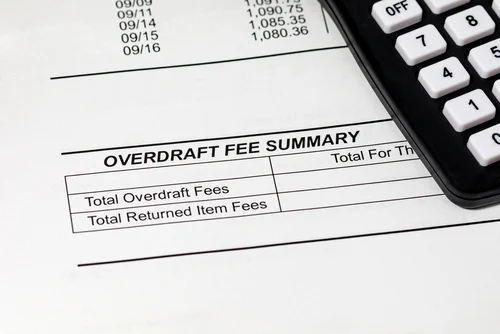
Overdraft protection is a bank service that covers a transaction when your checking account doesn’t have enough money, usually by transferring funds from a linked account or drawing on a credit line. It can help you avoid a declined payment or a returned check, but depending on how it’s set up, it may come with a transfer fee, an overdraft fee, or interest.
If you’re new to banking in the US, this guide from Remitly walks through how overdraft protection works, when your bank needs your permission to charge you, and practical ways to avoid the fee. Overdraft fees, NSF (non-sufficient funds) fees, and courtesy pay are related but are different charges, and which one applies often depends on how you made the payment, such as a card swipe, an ATM withdrawal, an ACH transfer, or a check.
What you’ll learn:
- How overdrafts happen, and the difference between your available and ledger balance
- What the differences are between overdraft protection, courtesy pay, and an NSF fee
- When your bank needs your permission before charging an overdraft fee
- What each type of overdraft protection usually costs
- Practical steps to avoid overdraft fees
TL;DR
- Overdraft protection covers a shortfall in your checking account, usually from a linked account or credit line.
- Under Regulation E, banks generally need your opt-in before charging an overdraft fee on ATM and one-time debit card transactions.
- Overdraft fees, NSF fees, and courtesy pay are related but different charges.
- Linking a savings account is typically the lowest-cost form of protection; credit-based options carry interest.
- Balance alerts and a small buffer in checking are simple ways to avoid overdraft fees.

How overdrafts happen: available balance vs. ledger balance
Your account actually tracks two numbers. Your ledger balance reflects transactions that have fully posted, while your available balance subtracts pending holds, like a gas station pre-authorization, a hotel deposit, or a restaurant tip added after you sign. When a hold ties up more than the transaction itself, the available balance in your checking account can look lower than you’d expect, and a payment that seemed safe can end up triggering an overdraft.
Imagine you have $50 in your checking account and a grocery bill of $70. Without overdraft protection, your card would be declined, or the bank might allow the transaction but charge a hefty non-sufficient funds fee. Either way, it’s stressful and inconvenient. With overdraft protection, your bank covers the $20 difference so the purchase goes through.
Common misunderstandings:
- The balance shown in your banking app may not reflect a pending hold.
- A hold can be larger than the amount you’re eventually charged, as with a gas pump pre-authorization.
- Weekend and holiday processing delays can make a balance look higher than it really is.
Hold policies vary by bank, so the timing in these examples is typical rather than universal:
| Scenario | What you see | What happens |
| Gas station fill-up | A hold well above the pump total | The final charge posts lower once the pump total is known, and the rest of the hold clears within a few days |
| Hotel check-in | A deposit hold added at check-in | The hold releases after checkout; timing varies by bank |
| Restaurant tip | A charge without the tip included | The final amount, including the tip, posts once the merchant settles it |
Overdraft coverage vs overdraft protection vs. NSF fees: what’s the difference?
These three terms get used interchangeably, but they describe different things. Overdraft protection uses a linked account to cover shortfalls. It typically pulls from a linked savings account, a credit card, or a line of credit you’ve set up in advance. Overdraft coverage, sometimes called courtesy pay, allows the bank to pay for transactions without a linked account, usually charging higher fees. An NSF, or non-sufficient funds, fee works differently: the bank simply returns the payment unpaid, and the transaction doesn’t go through at all.
| Term | Money source | Payment outcome | Common trigger |
| Overdraft protection | Linked savings, credit card, or line of credit | Payment goes through | Debit, check, or ACH exceeds your balance |
| Overdraft coverage (courtesy pay) | Bank’s discretion, no linked account | Payment goes through, fee charged | Bank chooses to cover a shortfall |
| NSF / returned item fee | None | Payment is declined or returned | Insufficient funds and no coverage used |
If you’ve banked outside the US, courtesy pay can feel similar to a formal overdraft line of credit offered by some banks abroad, but in the US it’s usually a discretionary, per-transaction bank decision rather than a pre-arranged credit product.

Opt-in rules in the US: when your bank must get your permission
Enrollment works differently depending on the transaction type. You have to opt in for this service. Banks are required by law, under the Federal Reserve’s Regulation E overdraft opt-in, to get your explicit consent before they can charge an overdraft fee on most one-time debit card and ATM transactions.
Recurring debit payments, ACH transfers, and checks are handled differently: banks can generally charge an overdraft fee on these even without your opt-in, since Regulation E’s consent requirement is specific to ATM withdrawals and one-time debit card transactions.
You can typically enroll through your bank’s website or mobile app, by phone, or by visiting your local branch in person. You can also cancel at any time if you decide it’s no longer useful.
| Transaction type | Opt-in required? | If you haven’t opted in |
| ATM withdrawal | Yes | Declined, no overdraft fee |
| One-time debit card purchase | Yes | Declined, no overdraft fee |
| Recurring debit payment | No | May be paid, with a fee charged |
| ACH transfer | No | May be paid with a fee, or returned as NSF |
| Check | No | May be paid with a fee, or returned as NSF |
How to check your opt-in status:
- Log into your bank’s app or website and look for “overdraft” or “overdraft protection” under account settings.
- Call customer service and ask directly whether you’re opted in for ATM and debit card overdraft coverage.
- Ask what happens to recurring payments, ACH transfers, and checks, since those aren’t covered by the opt-in rule.
A simple way to start that call: “Can you confirm whether I’m opted in to overdraft coverage for ATM and debit transactions, and what it would cost me if I used it?”
Types of overdraft protection (and what each one usually costs)
Banks generally offer a few ways to fund an overdraft, and the cost and risk vary between them. Exact fee amounts and interest rates differ by bank, so it’s worth checking your own fee schedule for current numbers rather than relying on a general figure.
| Option | Typical cost | Best for | Watch out for |
| Linked savings account | Often no fee, or a small transfer fee that varies by bank | People who keep a spare balance in savings | Running your savings down without noticing |
| Linked checking (secondary account) | Varies by bank; check your fee schedule | People who already have more than one checking account | Both accounts running low at the same time |
| Overdraft line of credit | Interest on the amount borrowed; rate varies by bank and credit history | People comfortable managing a small credit line | Interest accrues until the balance is repaid |
| Credit card cash advance | Cash-advance interest, often higher than the card’s purchase rate, plus a possible advance fee that varies by bank | Occasional, small shortfalls | Interest usually starts immediately, with no grace period |
Generally, a linked savings account carries the lowest risk of spiraling costs, followed by a linked choosing a checking account with lower fees, then an overdraft line of credit. A credit card cash advance tends to carry the highest ongoing cost if the balance isn’t repaid quickly.

How to avoid overdraft fees, step by step
A few habits can help you steer clear of overdraft fees altogether:
- Turn on low-balance alerts through your bank’s app, or a budgeting app that tracks your balance in real time.
- Check your available balance, not just your ledger balance, before a large purchase or an automatic payment.
- Keep a small buffer in checking that you treat as off-limits for everyday spending.
- If you link a savings account for protection, ask your bank whether it charges a transfer fee and how much.
- Ask your bank whether it offers a grace period or a cap on the number of overdraft fees charged per day.
- Schedule recurring bills for a day or two after your paycheck typically arrives.
- If overdraft fees keep coming up, compare accounts with lower fees, including banks that work well for non-residents.
What to do if you already overdrafted:
Contact your bank as soon as you notice the overdraft, as many will reverse a fee for a first-time or occasional overdraft if you ask. Before calling, have your account number, the transaction date, and a sense of how long you’ve banked with them ready. A simple script: “This is my first overdraft in a while, would you be able to waive the fee this once?”
FAQs
What is overdraft protection?
Overdraft protection is a bank service that covers a transaction when your checking account balance is too low, usually by pulling funds from a linked savings account, credit card, or line of credit. It helps prevent a decline or a returned payment, though it can come with a fee or interest, depending on the option you use.
Do I need to opt in for overdraft protection?
Yes, for ATM withdrawals and one-time debit card purchases. Under the Federal Reserve’s Regulation E, banks generally need your affirmative consent before charging an overdraft fee on these transactions. Recurring payments, ACH transfers, and checks aren’t covered by this opt-in rule, so banks can handle those differently.
What’s the difference between overdraft protection and an overdraft fee?
Overdraft protection is the service itself, such as a linked account or credit line that covers a shortfall. The overdraft fee is the charge some banks apply each time that service is used, so you can have overdraft protection and still pay a fee when it’s used.
What’s the difference between an overdraft fee and an NSF fee?
An overdraft fee applies when your bank covers a transaction and pays it anyway. An NSF, or non-sufficient funds, fee applies when your bank declines or returns the payment instead of covering it. Either way you’re charged, the difference is whether the payment goes through.
Is it worth trying to avoid overdraft fees?
For most people, yes. A small buffer in checking, balance alerts, and a low-cost linked savings account typically cost far less than repeated overdraft or NSF fees, which can add up quickly if they happen often.
Does using overdraft protection affect my credit score?
Overdraft protection itself typically doesn’t appear on your credit report, similar to
opening a checking account and your credit score. However, an unpaid balance on a credit-based option, like a credit card advance or an overdraft line of credit, can affect your credit score if it goes unpaid or is sent to collections.
How do I opt out of overdraft protection?
You can cancel the service at any time by contacting your bank by phone, through its app, or in person. Once you opt out, transactions that would overdraw your account are typically declined instead of covered, which avoids the fee but may mean a payment doesn’t go through.
Key takeaways
- Overdraft protection covers a shortfall in your checking account, usually through a linked savings account, credit card, or line of credit.
- Under Regulation E, banks generally need your opt-in before charging an overdraft fee on ATM and one-time debit card transactions.
- Overdraft fees, NSF fees, and courtesy pay are related but different charges, with different costs.
- A linked savings account is typically the lowest-cost form of protection; credit-based options carry interest.
- Balance alerts and a small buffer in checking are simple ways to reduce how often you need protection at all.
Conclusion: choosing the safest overdraft setup for your situation
If you rarely run short, a small buffer in checking plus balance alerts may be all you need. If you’d rather have a backstop, linking a savings account tends to cost the least. If you’re comfortable managing credit, an overdraft line of credit offers flexibility, but interest adds up if it isn’t repaid quickly, and it’s worth building credit as a newcomer the same way you’d approach any new credit relationship. Whichever setup fits your situation, reviewing your bank’s fee schedule and confirming your opt-in status take just a few minutes and can save you from an unexpected charge.