

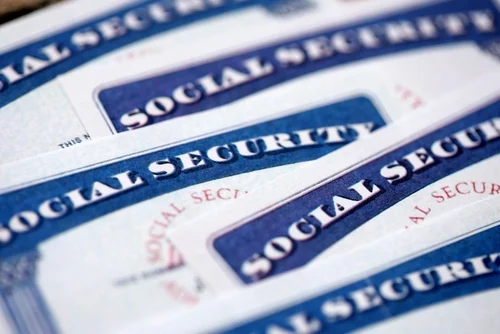
What is a Social Security number (SSN)?
A Social Security number (SSN) is a unique nine-digit ID issued by the Social Security Administration (SSA) to eligible US citizens and certain noncitizens. It’s used to track earnings and Social Security benefits, and is commonly required for jobs, banking, and credit. Protect it to reduce identity theft risk.
For newcomers, an SSN often matters when starting a job, filing taxes, opening a bank account, or building US credit. Not every organization that asks for it actually requires it, so it helps to know when you must provide it and when alternatives exist.
What you’ll learn :
- An SSN is a nine-digit number issued by the Social Security Administration.
- It’s used to track earnings, administer Social Security, and support employment and tax reporting.
- Banks and lenders may request it for accounts, loans, and credit, though requirements vary.
- Eligible immigrants and noncitizens may qualify based on immigration and work authorization status.
- If you’re not eligible for an SSN but need a tax ID, you may qualify for an ITIN from the IRS.
Because your SSN is sensitive, share it only when required or when you’ve verified a legitimate reason for the request, and keep your card stored securely rather than carrying it daily.

What an SSN is used for in the US (and when you may be asked for it)
When an SSN is commonly required
An SSN is commonly required when you:
- Start a job: Employers use SSNs for wage reporting and other employment-related requirements.
- File federal taxes: For most individuals, an SSN serves as their taxpayer identification number (TIN).
- Apply for certain government benefits: some programs require an SSN by law.
- Apply for credit: lenders commonly request an SSN to verify your identity.
When an SSN is commonly requested but may not always be required
Private businesses, including banks, schools, and utilities, may ask for your SSN even when federal law doesn’t require it. You can refuse, but the business may also refuse service or accept another ID instead; requirements vary by state, institution, and purpose.
Do you need an SSN for common newcomer tasks?
| Task | SSN required? | Possible alternative |
| Starting a job | Generally needed if you’re eligible for an SSN | ITIN doesn’t substitute for work authorization |
| Filing federal taxes | Usually, if you’re eligible for an SSN | ITIN for people with a federal tax purpose who aren’t eligible for an SSN |
| Opening a bank account | Often requested; varies by bank | Ask the bank which other TIN or identification documents it accepts |
| Applying for a credit card or loan | Commonly requested | Some lenders may have processes for applicants without an SSN; requirements vary |
| Building US credit history | Commonly used to match credit records | Some financial institutions offer products for newcomers without an SSN |
| Getting utilities or other private services | May be requested but isn’t universally required | Ask whether another form of identification or verification is accepted |
| Government benefits or licences | Depends on the program and applicable law | Alternative documentation depends on the agency and program |
What if you don’t have an SSN yet?
Newcomer tip: An ITIN doesn’t replace an SSN for every purpose; the IRS issues it for federal tax purposes to people who aren’t SSN-eligible, but it doesn’t authorize employment or provide immigration status. If you don’t have an SSN yet, ask why one is needed and whether another ID works instead.

Who can get an SSN? Eligibility for immigrants and noncitizens
Not everyone in the US is eligible for an SSN. SSA generally issues them to citizens, lawful permanent residents, and noncitizens authorized by DHS to work, with limited nonwork exceptions.
Four-step SSN eligibility guide
- Are you a US citizen?
You can generally get an SSN by meeting SSA’s identity, age, and citizenship requirements. - Are you a lawful permanent resident (Green Card holder)?
You’re generally eligible for an SSN. - Are you a noncitizen authorized to work in the US?
You may qualify if DHS has authorized you to work. - Are you a noncitizen without work authorization who needs an SSN for another reason?
SSA issues SSNs for nonwork purposes only in limited cases, such as a required benefit.
What do the restrictions on a Social Security card mean?
SSA issues three card types: one with no employment restriction for citizens and permanent residents, one marked “VALID FOR WORK ONLY WITH DHS AUTHORIZATION,” and one marked “NOT VALID FOR EMPLOYMENT” for a qualifying nonwork reason.
An SSN card isn’t the same as work authorization; DHS and USCIS determine that, not SSA.

SSN vs. ITIN: what’s the difference?
If you’re not eligible for an SSN but need a taxpayer ID for federal tax purposes, you may qualify for an Individual Taxpayer Identification Number (ITIN) from the IRS. An ITIN doesn’t provide immigration status or permission to work.
| SSN | ITIN | |
| Primary purpose | Tracks earnings; supports Social Security, taxation, and other uses | Federal tax ID for people who aren’t eligible for an SSN |
| Issued by | Social Security Administration (SSA) | Internal Revenue Service (IRS) |
| Who may qualify | US citizens, lawful permanent residents, qualifying work-authorized noncitizens, and limited nonwork cases | People with a federal tax purpose who aren’t eligible for an SSN |
| Authorizes employment? | Not itself; work eligibility depends on immigration status and DHS authorization | No. An ITIN does not authorize employment |
| Changes immigration status? | No | No |
| Used for federal taxes? | Yes, generally when the taxpayer is eligible for an SSN | Yes, for qualifying taxpayers who aren’t eligible for an SSN |
Never use someone else’s SSN
Never use, borrow, or provide someone else’s SSN as your own. Check your eligibility with SSA, and check ITIN eligibility with the IRS if you need a tax ID instead.

How to apply for a Social Security number (step-by-step)
First-time applicants should start with SSA’s official Social Security Number and Card service.
1. Confirm that you’re eligible for an SSN
Make sure you qualify first: citizens can request an SSN, and eligible noncitizens generally need DHS work authorization.
2. Gather the required documents
Required documents depend on your citizenship, age, and reason for applying, and generally include proof of identity and immigration status.
Documents checklist:
- Proof of identity, such as an acceptable government-issued identity document
- Proof of age, when required
- Proof of US citizenship, if applicable
- Current immigration documents showing lawful status and, when applicable, work authorization
SSA requires original or agency-certified documents; photocopies and notarized copies generally aren’t accepted. Check SSA’s official documents required for a Social Security card list before your appointment.
3. Complete the Social Security card application
The traditional application is Form SS-5, which SSA provides free of charge. In 2026, start at SSA.gov/number-card instead of assuming you need a physical SS-5; the online service directs you to the right process.
Depending on your circumstances, you may complete the request entirely online, or start online and schedule an appointment to finish at an SSA office.
4. Visit an SSA office if required
If an in-person visit is needed, schedule an appointment and bring your original or certified documents; SSA doesn’t keep them after reviewing. Applicants who start online can often self-schedule and must complete the visit within 45 calendar days.
Operational expectations: Your card isn’t issued the day you apply. After SSA verifies your documents, you should generally receive it within 10 business days; additional verification can take longer.
5. Receive your Social Security card by mail
Once approved, your card is mailed to you, generally within 5 to 10 business days, though verification can extend processing. Make sure your mailing address is accurate.
While you wait, keep your confirmation details safe. You rarely need to show the physical card, since knowing the number is usually enough, but never invent one or use someone else’s SSN. Contact SSA if your card doesn’t arrive on time.

How to protect your SSN (and avoid common newcomer scams)
Your SSN can unlock sensitive financial and identity information, so share it only when there’s a legitimate reason, and ask why it’s needed and what happens if you decline.
When should you share your SSN?
You may legitimately be asked for your SSN when starting a job, filing taxes, applying for benefits, or opening a bank account, loan, or credit card.
Be more cautious if an unfamiliar person contacts you unexpectedly asking for your SSN. Before giving it to a business, ask why it’s necessary and whether another form of ID works instead. Learn more about common money transfer scams to watch for.

Watch for Social Security imposter scams
Scammers may pretend to work for SSA or another agency and claim there’s a problem with your SSN, benefits, or identity. Caller ID isn’t proof of legitimacy, since scammers can spoof government numbers.
SSA will not threaten arrest, claim your SSN has been suspended, or demand immediate payment by gift card, wire transfer, or cryptocurrency. If there’s a real problem, SSA typically contacts you by mail.
| Red flag | What to do instead |
| Someone threatens arrest or legal action unless you act immediately. | End the conversation and contact SSA independently through its official website. |
| A caller says your SSN has been suspended. | Do not provide information or payment. SSA does not suspend Social Security numbers. |
| Someone demands gift cards, wire transfers, cryptocurrency, prepaid cards, or cash. | Do not pay. SSA identifies these payment demands as signs of an imposter scam. |
| An unexpected caller asks you to confirm your full SSN. | Do not provide it. Verify the caller independently first. |
| A message pressures you to click a link or open an attachment immediately. | Avoid the link or attachment and navigate to the agency’s official website yourself. |
| Caller ID appears to show SSA or another government agency. | Do not rely on caller ID alone. Government phone numbers can be spoofed. |
Practical ways to protect your SSN
If you believe your SSN has been exposed, consider a credit freeze with Equifax, Experian, and TransUnion. The FTC says freezes are free, don’t affect your credit score, and can stop identity thieves from opening new accounts in your name.
Newcomer tip: An official-sounding request isn’t necessarily legitimate. If someone pressures you for your SSN or money immediately, stop communicating and verify independently through SSA.gov, or report it via IdentityTheft.gov.
Frequently Asked Questions (FAQs)
What is a Social Security number used for?
A Social Security number (SSN) is primarily used to record earnings and determine eligibility for Social Security benefits. It’s also commonly used for federal tax reporting, employment, financial accounts, and credit applications. Requirements for other services depend on applicable law. Sources: SSA, IRS.
How can an immigrant apply for an SSN?
Eligible immigrants can start by confirming SSN eligibility, gathering identity and immigration documents, and completing the SSA application process, traditionally Form SS-5. Depending on circumstances, SSA may allow the process to begin online before requiring document verification or an office visit. Sources: SSA, USCIS.
Can an immigrant work in the US without an SSN?
An SSN doesn’t itself provide permission to work; employment authorization depends on immigration status and DHS rules. SSA says employers can generally hire someone authorized to work while they await an SSN. An ITIN does not authorize employment. Sources: SSA, IRS.
What is the difference between an SSN and an ITIN?
An SSN is issued by SSA and used for earnings records, benefits, taxation, and other authorized purposes. An ITIN is issued by the IRS for federal tax purposes to people who aren’t eligible for an SSN. An ITIN doesn’t provide immigration status or employment authorization. Sources: SSA, IRS.
How long does it take to get an SSN?
Processing time depends on the application and whether SSA must verify documents with another agency. SSA generally issues cards within 5 to 10 business days after completing the application, though additional verification can take longer. Source: SSA.
What should I do if my Social Security card is lost or stolen?
If your card is lost or stolen, you may be able to request a replacement through SSA. If you suspect identity theft, the FTC recommends reviewing your credit and considering a credit freeze. Losing your card does not change your SSN. Sources: SSA, FTC.
Should I carry my Social Security card with me?
Usually, no. SSA recommends keeping your card in a secure place rather than carrying it routinely, since knowing your SSN usually matters more than having the physical card. Take it only when you need to show the original document. Source: SSA.

Key Takeaways
- An SSN is a unique nine-digit number issued by SSA, used primarily to track earnings and administer Social Security, plus tax reporting and other authorized purposes.
- Whether you must provide an SSN depends on the service, institution, and applicable law, so ask about alternatives when it’s not legally required.
- US citizens, lawful permanent residents, and qualifying noncitizens may be eligible for an SSN, while people with a federal tax purpose who are not SSN-eligible may qualify for an IRS-issued ITIN instead.
- First-time applicants should follow SSA’s current application process, which may involve Form SS-5, required original or certified documents, online steps, and an in-person appointment depending on the applicant’s circumstances.
- Protect your SSN by storing the card securely, sharing the number only when necessary, verifying unexpected requests, and watching for government-imposter scams. Consider a credit freeze if your personal information has been compromised.
Next steps after you get your SSN
Once you receive your SSN, provide it where legitimately required, such as payroll, tax reporting, banking, and building US credit. Receiving an SSN doesn’t change your immigration status or independently authorize work.
Your next steps should include:
- Store your Social Security card safely. Don’t carry it in your wallet every day, and avoid sharing your SSN unless there is a legitimate need.
- Set up a personal my Social Security account on SSA’s official website to access services and review your record.
- Complete employment and tax paperwork by providing your SSN to your employer for payroll and wage reporting.
- Update relevant financial institutions, since banks and lenders may need your SSN for identification or credit purposes.
- Consider monitoring your credit. Regularly reviewing your credit reports can help you identify accounts or activity you don’t recognize.
For additional help settling into life in the US, explore Remitly‘s immigration and newcomer resources, including guides to US documents, banking, taxes, and everyday financial systems.
For SSN eligibility, applications, and account questions, rely on the Social Security Administration (SSA). Use the IRS for ITIN and federal tax guidance and the FTC for identity-theft and scam-prevention resources.
Last reviewed: August 2026



