

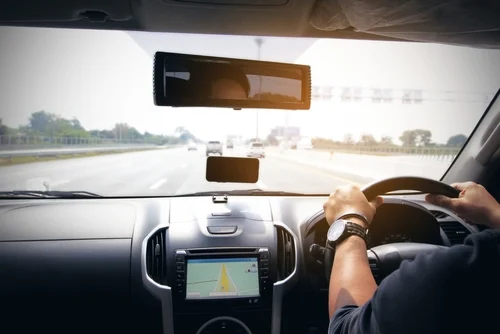
TL;DR: Around 76 countries and territories drive on the left, including the UK, Australia, Japan, and much of the Caribbean. Driving in one of these countries as a Canadian usually means a right-hand-drive rental and often an International Driving Permit from the CAA alongside your provincial licence.
What countries drive on the left side of the road? A quick answer for Canadian travellers
Around 76 countries and territories drive on the left, according to the World Standards Organization, among them the United Kingdom, Australia, Japan, India, and most of the English-speaking Caribbean. Canada drives on the right, so a trip to one of these destinations means adjusting to a right-hand-drive car and traffic flowing the opposite way.
This guide covers the regional breakdown, why these countries drive on the left, and what you need to sort out before getting behind the wheel: your licence, whether you need an International Driving Permit, and what to expect on the road.

Why do some countries drive on the left?
Countries that drive on the left do so largely because of history and empire. One theory traces it to mounted travellers, who kept left so they could draw a sword with their right hand. Britain adopted the convention and carried it to its colonies, from India to Australia to Jamaica, which is why so many Commonwealth countries still drive on the left.
Continental Europe went the other way: Napoleon and the French Revolution popularized right-hand, which later spread through the United States. Canada is on the right-hand drive countries list mainly because of this American influence, plus early road customs in French Quebec.

Complete list: which countries drive on the left?
The World Standards Organization counts 76 countries and territories that drive on the left today, broken down by region below, with the destinations Canadians visit most flagged.
Asia
India, Japan, Thailand, Sri Lanka, Bangladesh, Indonesia, Malaysia, and Singapore drive on the left, mostly due to British colonial rule; Japan developed the convention on its own. Japan, Thailand, and India are popular Canadian destinations. See our visa requirements for Japan.
Oceania
Australia, New Zealand, Fiji, and Papua New Guinea drive on the left, reflecting British and Commonwealth ties. Australia and New Zealand are popular overseas road-trip destinations for Canadians. See our visa requirements for Australia.
Africa
Left-side driving is common across former British territories in Africa, including South Africa, Kenya, Tanzania, Uganda, and Botswana.
Caribbean and the Americas
Many Caribbean nations drive on the left as a legacy of British colonial rule, including Jamaica, Barbados, Trinidad and Tobago, the Bahamas, and Saint Lucia. Jamaica and Barbados draw the most Canadian visitors, especially over winter. See our visa requirements for Jamaica.
Europe
In Europe, the United Kingdom, Ireland, Malta, and Cyprus drive on the left. The UK is a common stop for Canadians with British family ties or transiting to the rest of Europe. See our guide to driving in the UK.

What Canadian travellers need to know before driving in a left-side country
Do you need an International Driving Permit (IDP)?
Canadian travellers driving in most left-hand traffic countries will need an International Driving Permit, a translation document that accompanies, rather than replaces, your provincial licence. Japan, India, and South Africa require one; Australia recommends it. In Canada, the CAA is the only body authorized to issue them, at $32 CAD as of December 2025.
Is your Canadian driver’s licence valid abroad?
A Canadian provincial licence is generally accepted for short visits, but rules vary by country. The UK allows Canadian visitors to drive on their home licence for up to 12 months; Australia, New Zealand, Japan, and India also expect an IDP alongside it. Check the Government of Canada travel advisory for your destination first.
Car rental tips for left-side driving countries
Most left-hand traffic countries rent right-hand-drive vehicles, the opposite of what Canadian drivers are used to. An automatic transmission cuts down on what you have to think about while adjusting to the other side of the road. Check whether your credit card already includes rental car insurance; coverage varies by issuer.
How to adapt to driving on the left: practical tips
Here are a few left-side driving rules for Canadians that will make things easier:
- Expect some muscle-memory slip-ups, like drifting toward the curb on turns; it’s common and short-lived.
- Remember roundabouts run clockwise in left-hand traffic countries, opposite to Canada’s pattern.
- Keep the centre line to your right, not your left.
- Watch pedestrian crossings carefully, since traffic can approach from an unfamiliar direction.
- Rest before picking up a rental car if you’ve just landed; jet lag plus a new side of the road is a real risk.
Most incidents happen at intersections and right after stops, not on open roads.

Countries that switched driving sides: notable historical cases
A handful of countries have changed sides entirely. Sweden’s switch, Dagen H, took place on September 3, 1967, and involved a nationwide campaign to retrain drivers and adjust road markings and vehicle manufacturing. Okinawa reverted from right- to left-hand driving on July 30, 1978, once US administration of the islands ended. The most recent switch was Samoa, in September 2009, aligning with Australia and New Zealand and making right-hand-drive imports cheaper. No country is currently planning a switch.
FAQs
Which countries drive on the left side of the road?
Around 76 countries and territories drive on the left, according to the World Standards Organization, including the UK, Australia, Japan, India, South Africa, and Jamaica, most former British colonies or Commonwealth countries.
Do Canadians need a special licence or permit to drive in left-hand traffic countries?
Not a separate licence, but many left-hand traffic countries expect an International Driving Permit alongside it. You can get an international driving permit in Canada issued by the CAA. Japan, India, and South Africa are among the countries that require or recommend one for driving abroad as a Canadian.
Is it safe for Canadians to rent a car in a country that drives on the left?
Millions of Canadians do it every year and adjust within a day or two. The highest-risk moments are at intersections and right after stops, not on the open road.
Why does Canada drive on the right side of the road?
Canada drives on the right largely because of United States influence as the two countries’ road networks developed together, plus early driving customs in French Quebec.
What was the most recent country to switch driving sides?
Samoa switched from right- to left-hand driving in September 2009, the most recent country to do so. The government made the change to align with Australia and New Zealand and make right-hand-drive imports cheaper.
Key takeaways
- Around 76 countries and territories drive on the left, most former British colonies or Commonwealth nations, per the World Standards Organization.
- Canadians heading to Japan, India, or South Africa will likely need an International Driving Permit, available only through the CAA.
- The UK lets Canadian visitors drive on their home licence for up to 12 months; Australia and New Zealand also ask for an IDP.
- Most driving mishaps for visitors happen at intersections and right after stops.
Conclusion
Left-side driving covers many of the countries Canadians travel to most, from the UK to Australia to Jamaica, largely a legacy of the British Empire. Before you go, check the Government of Canada travel advisory for your destination, look into whether you need an IDP from the CAA, and confirm what your rental car insurance covers. If you’re sending money home while away, sending money from Canada can be worth setting up before you leave.
Last reviewed: September 2026



