Key Highlights
-
If you are not an Australian citizen, you must have a valid Australian visa before you enter the country.
-
Many Canadian travelers use a Visitor Visa, like the Electronic Travel Authority (ETA), for short visits.
-
The Australian Government Department of Home Affairs gives you official information and handles all visa applications.
-
Most visa applications are done online on the Home Affairs website.
-
You can get a visa for tourism, work, study, or to visit family, based on why you want to travel.
-
It’s best to apply for your visa early before your travel dates. This helps make sure there is enough time for the application process.
Introduction
Do you want to visit Australia? It has big cities and beautiful wild places. A trip here will be a special one. But, before you get ready to fly and pack your things, it’s important to know what you need to get in. If you come from Canada, you must have a valid Australian visa. This is part of their entry requirements. It does not matter if you want a short stay for fun and need a visitor visa, or if you plan to work or study for a longer time. Knowing how to get the australian visa is the first step in your plans.
Overview of Australian Visas for Canadians
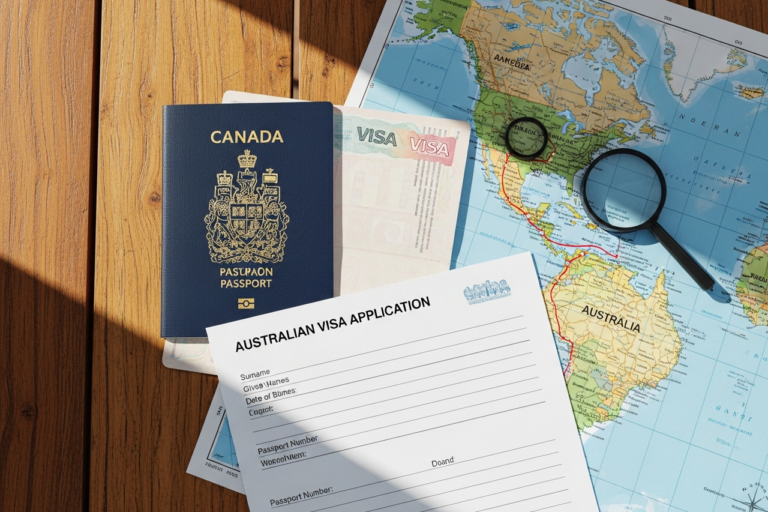
If you have a Canadian passport, you can get an Australian visa. The visa you need depends on why you are going. The Department of Home Affairs looks after all visa applications. They also give a lot of information about each visa type on their website.
You must have a valid visa before you leave Canada. The visa type you choose will depend on your reason for travel. You may go for tourism, work, study, or to join family. Looking at the different options is a good way to find what is right for you. We will talk more about these Australian visa types below.
Understanding Different Visa Categories
Australia’s visa system has a few main types, and each one matches a different need or reason for travel. You can get a visitor visa for a short stay, like coming for a trip. The skilled independent visa is for those who want to move and live there for good. It is important to know how a temporary visa is not the same as a permanent visa. This can help you as you go through the australian visa application process.
The Department of Home Affairs in Australia has a tool called “Visa Finder” on its website. You use this visa finder by answering questions about your nationality, age, why you want to visit, and how long you plan to stay. The tool then tells you what type of visa may work best for your specific circumstances.
This visa finder from the department of home affairs is meant to save you time and clear up confusion. You will have a better idea of what type of australian visa you should get. Once you know which visa to go for, it is easier to get your papers together and begin the application process. Using this tool gives you confidence that you have picked the right choice for your plans.
Options for Short and Long-Term Stay
The reason you want to travel will help you know if you need a visa for a short or long time in Australia. If you want to just visit for a holiday or a short business trip, you will most likely need a temporary visa. This type is for people who do not plan to stay forever.
If you want to live and work in Australia for a long time, there are some other choices. Getting permanent residence can take more steps. The “skilled migration” path means someone will look at what you know and your work history. These visas are for people who bring good skills to Australia’s economy.
Here are some of the most used visa types based on how long you plan to stay:
-
Visitor Visa: Good for a holiday or a short business visit. Most people use it for up to three months.
-
Temporary Visa: This lets you look at choices such as the Working Holiday Visa or a business visa for a short time.
-
Permanent Visas: These cover things like skilled migration or help from family, and they let you get permanent residence.
Visitor and Tourist Visa Options
For most people from Canada, getting a visitor visa is easy. Australia has many holiday visas that are made for short trips. You can see the great places and things to do in the country. The easiest way is to get one using a mobile app.
You should do your visa application online before you book your plane ticket. The length of your stay depends on the visa, but you can visit for up to three months each time. Now, let’s talk about the visitor visa choices you have.
Electronic Travel Authority (ETA) for Canadians
The Electronic Travel Authority (ETA), called subclass 601, is one of the easiest ways for Canadian passport holders to visit Australia for a short trip. This visa lets you enter and leave Australia many times in twelve months. You can stay up to three months each visit. It’s great for tourists and for short business trips.
Canada is one of the eligible countries. You can get an ETA if you live there. The application process is simple and you have to use the Australian ETA app on your phone. You will not be able to apply for this visa on the main Home Affairs website.
To apply for your ETA, you will need:
-
A valid passport from an eligible country.
-
To be outside of Australia when applying.
-
Access to the Australian ETA app, which asks for a live facial image to finish the application.
eVisitor Visa Details
Another choice for short-term trips is the eVisitor visa (subclass 651). This visa does not cost anything. You can use it to visit Australia more than one time. You can go for tourism or business purposes. Each stay can be up to three months in a year. It is good for people who qualify.
But the eVisitor visa is there only for passport holders from some European countries. Canada is not one of the eligible countries for this visa. If you want to see who can apply for an eVisitor visa, you can find the full list on the Department of Home Affairs website.
As Canadians are not eligible, you will have to look at other options like the ETA or the Subclass 600 Visitor visa. Always check visa requirements on the Department of Home Affairs website to be sure you apply for a visa you are eligible for.
Subclass 600 Visitor Visa Explained
The Subclass 600 visitor visa is a visa type that is open to all countries, including Canadians. This is a good choice if you can’t get an ETA or if you want to stay in Australia for more than three months. The ETA only lets you stay that long.
The visitor visa lets you come to Australia for tourism, to visit family or friends, or for some business purposes. This type of visa often lets you stay up to three months. In some cases, the Australian Government may let you stay for up to 12 months. The Australian Government looks at each visitor visa application one at a time before making a decision.
Here are some important things about the Subclass 600 visa:
-
This is a paid visa and not free like the eVisitor.
-
You usually send in your visitor visa application online by using an ImmiAccount.
-
You can use this visa for tourism or business purposes, but not for work.
Working Holiday and Work Visas
If you want to work in Australia, you will need a visa that lets you work there. Australia has different choices for people, like the Working Holiday Visa. This visa is popular for young travellers. There are also other visas for temporary work and for skilled migration. Australia uses these visas to fill jobs and to bring in skilled workers.
There are a few main things you need. Your age matters, and so do your qualifications. Sometimes you also need a job offer from an Australian employer. Each visa has its own rules and requirements you need to follow. Below, you will find more details about the Working Holiday Visa for Canadians and other visas for skilled professionals.
Working Holiday Visa for Canadians
The Working Holiday Visa (subclass 417) is a good way for young people from Canada to see what life is like in Australia. This type of visa lets you stay for up to 12 months. You can also work so you have money for your trip. Many people who are between 18 and 35 years old like this type of visa. It helps people travel and take on short-term jobs.
The Australian government has set a few rules for this visa. You need to have a passport from a country that is part of the program, like Canada. There are some age and health steps you need to meet. You can look at all the details and send your application on the Department of Home Affairs website.
Key points of the Working Holiday Visa:
-
The type of visa is good for one year.
-
You can work in any short-term or casual job.
-
You could get a second or even a third visa if you do the right work out in regional Australia.
Temporary Work and Skilled Migration Visas
For skilled workers who want longer jobs in Australia, the country has a few visa options. These choices are harder to get than visitor visas. They mostly need a business to back you up, or for a state or territory to pick you. You can see the official list of every Australian visa on the Department of Home Affairs website.
The Temporary Skill Shortage visa (subclass 482) lets bosses bring over skilled workers for jobs they can’t fill with people from Australia. Other good choices are the Skilled Nominated Visa (subclass 190) and the Employer Nomination Scheme (ENS) visa. These can sometimes give you a chance to stay for good, which means permanent residency.
Some of the top skilled worker options from the Department of Home Affairs are:
-
Temporary Skill Shortage (TSS) visa: Made for short-term jobs if you are picked by a boss.
-
Skilled Nominated Visa: You need to be picked by a state or territory in Australia.
-
Employer Nomination Scheme (ENS) visa: For those who want a long-term job and stay, with help from a boss.
You can use the Department of Home Affairs website to get the details on these, and to start your application. This is the first place to get help with skilled nominated, temporary skill shortage, employer nomination scheme, and other options for skilled workers who want to work, live, and maybe even get permanent residency in Australia.
Key Requirements and Eligibility Criteria
Every Australian visa has its own visa requirements. You have to meet these requirements for your application to be looked at. If you miss even one, your application could be delayed or turned down.
For sponsored visas, you and your employer both have roles. The employer must show the business is real and that there is a true need for the job. You need to show you have the right experience and skills for the work.
The application process needs close checking. You will have to give proof for each claim in your application. This includes things like your identity, who you are, your money situation, and your health. Be sure to check the exact requirements for the visa you want at the home affairs website before you apply.
Student Visas for Australians
Australia is a top place for people to go for school. Students from all over the world choose it. If you are from Canada and want to study in Australia, you will need to get a Student Visa (subclass 500). This student visa lets you stay in Australia for the whole time your course runs.
The visa application is handled by the Department of Home Affairs. You have to be signed up for a course that is on their list. One of the most important things you need is health insurance for all the time you will be in Australia. Let’s talk about what you need to do for your student visa step by step.
Applying for a Student Visa from Canada
The steps for a student visa start after you are accepted into a course at an Australian school. When you get your Confirmation of Enrolment (CoE), you can begin your visa application. You need to apply for your visa while you are still in your home country, Canada.
All parts of the application process are done online through the Department of Home Affairs website. You must make an ImmiAccount to do your visa application and upload all needed papers. It’s very important to make sure all your info is right so you do not run into delays.
It is a good idea to start your student visa application early, before your course begins. The time it takes to process your visa can change, and getting your visa approval ahead of time means you can plan your travel and place to stay without worry.
Student Visa Requirements and Documentation
Meeting the student visa requirements is a big step in your application. The Department of Home Affairs must be sure the main reason for you coming to Australia is to study. You need to give them proof that shows this.
One important thing you have to do is get Overseas Student Health Cover (OSHC) for all the time you are in Australia. This kind of health insurance is something all international students must have. You also need to show you have enough money for your school fees, travel, and to live there.
Essential documents usually include:
-
Your Confirmation of Enrolment (CoE) from your education provider.
-
Proof of your Overseas Student Health Cover (OSHC).
-
Evidence showing financial ability and a Genuine Temporary Entrant (GTE) statement.
Post-Study Opportunities
After you finish your program in Australia, you do not have to leave right away. The australian government gives you a chance to work after your studies. This will let you get skilled work and be a part of the job market.
The temporary graduate visa (subclass 485) is one option. This visa lets you stay and work in Australia for a set time after you graduate. How long you can use the visa will depend on what degree you have. It is a good way to use what you learned in school.
This type of work builds your skills in the workplace. Skilled work experience with a temporary graduate visa can help you get other skilled migration visas. It may open the door to permanent residency, if that is what you want.
Family and Partner Visa Options
If you have a family member in Australia who is an Australian citizen, a permanent resident, or a New Zealand citizen, you may be able to get a family or partner visa. These visas are made to help families stay together when living in Australia.
The Australian family member can be your sponsor, but they have to follow some clear rules. The application process can take a long time and often needs a lot of proof that your relationship is real. The sections below will explain more about the different visas you can get for partners, children, and parents.
Spouse, Partner, and Family Reunion Visas
If you are with an Australian, the partner visa is the way most people go. This visa lets the de facto partner or spouse of an Australian citizen or permanent resident stay in Australia. You first apply for a temporary visa. Later, you can move to a permanent one.
Showing your relationship is real is the most important step for the partner visa or spouse visa application. You have to give a lot of proof. This can be things like joint bank accounts, photos, and statements from their friends and family. The Department of Home Affairs uses this info to see if your relationship is honest and still going strong.
If a couple is engaged and not married yet, the Prospective Marriage visa (subclass 300) is for them. This is a temporary visa, and it lets you come to Australia so you can get married. After the wedding, you may apply for a partner visa. These family reunion visas help keep loved ones close to each other.
The keywords used are: home affairs, department of home affairs, visa application, permanent resident, australian citizen, prospective marriage visa, prospective marriage, temporary visa.
Child and Parent Visa Process
Australia also has visa options if you are a child or parent of an Australian citizen or permanent resident. A child visa lets the child live in Australia together with their parent. Which visa you apply for depends on if the child is in or outside Australia when they apply.
Getting a parent visa can be more hard and often takes a longer time and can cost a lot. There are a few types, including contributory choices, which cost more money but will be done much faster. Everyone who wants these visas must show they meet the health and character rules, and may also need medical treatment checks.
If you are applying for a child visa or a parent visa, someone has to be your sponsor. The sponsor is usually the parent or child who already lives in Australia. The person who sponsors you must be an Australian citizen, a permanent resident, or an eligible New Zealand citizen, and they must say yes to give money if you need help when you get there.
Sponsor Obligations for Canadian Applicants
When a visa needs sponsorship, the sponsor takes on big legal duties. The Australian government gives these sponsor rules. These rules make sure the visa holders get help with money. They also stop the use of the visa system in the wrong way. The Department of Home Affairs checks these rules very closely.
If you are a sponsor for family or partner visas, you have to look after the visa holder’s money needs. You might have to give them a place to stay and help with money when they first get to Australia. This help can last for years.
Sponsors must agree to:
-
Support the visa applicant during their first two years in Australia.
-
Give money and housing support when it is needed.
-
Tell Home Affairs if anything in their life changes.
If the sponsor does not do these things, there can be big problems for them.
Humanitarian and Special Category Visas
Australia offers more than just the regular visitor, work, and family visas. Some are made for people in special situations. The humanitarian program gives choices like the protection visa and refugee visa for those who need safety from harm.
One more different visa is the Special Category Visa. This one is only for people from New Zealand. These types of visas are all about specific circumstances. They each have their own rules and ways to apply. We will talk about these next.
Protection Visa Information
A Protection visa (subclass 866) is for people who are already in Australia and want asylum. This visa is for those who would face harm or danger if they go back to their home country. The application process can be hard, and you must meet Australia’s protection responsibilities under international law.
People who apply must show they have a real fear of harm. The department of home affairs looks at each case based on your specific circumstances. The australian border force may also do interviews and have a look at what you say.
This is a permanent visa. It lets you live and work in Australia, and you can get to things like Medicare. Because these claims are so serious, the application process is strict. Many people choose to get legal help to get through all the steps.
Refugee & Humanitarian Pathways
Australia’s Refugee and Humanitarian Program is for people who are not in Australia. They must face danger in their home country. These people need to move and rebuild their lives somewhere safe. The program has two main parts. The first is the Refugee category for people who the UNHCR says need this kind of help. The second one is the Special Humanitarian Program. This one is for people who have someone in Australia to help them.
This is not the same as an onshore protection visa. For a refugee visa, you have to be outside Australia when you apply for it. If you are accepted, you will usually get a permanent visa. This lets you begin a new life in Australia with safety.
Sometimes, you may get a temporary visa at first. This lets you stay safe while people finish the checks on your case. The main goal of the humanitarian program is to give people protection when they cannot go back to their home country.
Special Category Visa Details
The Special Category Visa (subclass 444) is made just for New Zealand citizens who want to come to Australia. When a New Zealand citizen gets to Australia, they are given this visa if they show a valid New Zealand passport and meet health and character rules.
This special category visa lets you visit, study, and work in Australia for as long as you want. It gives most of the same rights as being a permanent resident, but it is still a temporary visa. If you have this visa, you are not counted as an Australian permanent resident.
Home Affairs has made some new changes. Now, New Zealand citizens who have lived in Australia for a long time can apply for Australian citizenship without needing to get a permanent visa first. This change shows the strong link between New Zealand and Australia.
Australian Visa Application Process
Getting an Australian visa is now easier. Most people do this online. The Department of Home Affairs website is the best place to start. You can find the visa application forms there. The home affairs website also has checklists for each visa type.
When you begin the application process, you have to make an online account. Then fill out the forms with the right details. Be sure to upload all your paperwork. Stay organized so that your application goes well. Next, we will tell you how to send your visa application from Canada. We will also list the documents you need.
How to Submit Your Application from Canada
Applying for an Australian visa from Canada is easy. Go to the home affairs website. Use the visa finder on the department of home affairs website to choose the visa type that fits you. You can pick a visitor visa, skilled work visa, or student visa.
Make sure you have all the documents you need. You need your passport and health insurance. If you want help in your application process, you can get a registered migration agent to give expert guidance. This will help you with all the eligibility requirements and migration regulations.
Check everything on the department of home affairs website so you know what to do.
Required Documents and Supporting Evidence
You need to include supporting documents with every visa application. The documents you need can change based on the visa. But some are needed for almost any application. You must show that what you say in your visa application is true.
The Department of Home Affairs gives you a checklist of documents for each visa. You should look at this list before you start your visa application. Be sure to collect every document you need. Missing something important can slow down your process. If any of your documents are not in English, you have to get a certified translator to translate them.
Most people need to give these common documents:
-
A copy of their passport’s page with their details.
-
Proof that they have enough money for the trip.
-
Proof of health insurance if the visa asks for it.
Health, Character, and Other Requirements
All people who apply for an Australian visa must follow health and character rules. The Australian government can say no to giving you a visa if you do not meet these standards. This helps keep the Australian community safe.
Health rules may ask you to go for a medical check-up by a panel doctor that Home Affairs allows. This is needed if you plan to stay for a longer time or if you have some health issues. They want to make sure you are not going to bring a health risk to others.
To check your character, the government wants to know you are a good person. They will likely ask for police checks from each country you stayed in for 12 months or more during the last 10 years since you turned 16. The application process tells you everything you will need to give.
Australian Visa Costs and Processing Times
Two of the most common questions in the visa application process are about the cost and how long it takes. These things can change a lot, based on the type of visa you go for. The Department of Home Affairs website always has the latest info on this.
You should think about both the price and how long you may wait before you plan your trip. It is best to apply early. This way, you won’t have to worry so much at the last minute. Below, we talk about usual visa fees and what you can expect for processing.
Typical Fees for Each Visa Category
Australian visa fees can range from free to several thousand dollars. The cost depends entirely on the visa category. For example, a short-term visitor ETA has a small service charge, while a partner or skilled migration visa has a much more substantial application fee.
The Department of Home Affairs website has a Visa Pricing Estimator tool that can help you calculate the exact cost of your visa before you apply. Remember that visa fees are non-refundable, even if your application is refused. The payment is for the processing of your application.
Here are some approximate base application charges to give you an idea, but always check the official website for current fees:
|
Visa Category |
Approximate Cost (AUD) |
|---|---|
|
Electronic Travel Authority (ETA) |
$20 (service charge) |
|
Visitor Visa (Subclass 600) |
From $190 |
|
Student Visa (Subclass 500) |
From $710 |
|
Working Holiday Visa (Subclass 417) |
From $635 |
Timeframes and What to Expect
Visa processing times can change and be different for each person. The Department of Home Affairs shares global timeframes for most visa types, so you can get a rough idea of how long you might have to wait. These times usually show a range, like 75% of applications done in a certain number of days and 90% finished in another number of days.
How long your application takes can depend on many things. It can depend on how many applications the department of home affairs gets at that time. It also depends if you fill your application out right and send in all the needed papers. If you answer any requests for more information fast, your wait might be shorter.
If you are a visa holder, you will have to wait after you send in your application. You can check your application status on your ImmiAccount. It is best not to book any flights that you can’t get your money back for or make travel plans that can’t be changed until your visa from home affairs has been approved.
Conclusion
Getting an Australian visa can be hard to figure out for Canadian people who want to see its exciting places and beautiful nature. It’s important to know about the different visa types, how to apply, and what you need. This will help you make the right choice for your trip. You might want to come for a short visit, to work, or to study in Australia. No matter why you want to go, you should know the visa rules. Make sure you gather all the documents you need. It’s good to keep up with the costs and how long it takes for your visa to be ready. With the right planning, your trip to Australia can start soon. If you have any questions, or if you want help that is just for you, feel free to ask for a free consultation!
Frequently Asked Questions
Can Canadians travel to Australia without a visa?
No, if you are a Canadian passport holder, you cannot go to Australia without a visa. All foreign nationals, including Canadians, need to have a valid Australian visa before they travel. The Department of Home Affairs tells you that you have to apply for the right visa type, like an ETA or a Visitor Visa, before leaving Canada.
What are the common mistakes Canadians make when applying?
Some common mistakes when you apply for an Australian visa are choosing the wrong visa, giving the wrong details, or leaving out some needed info. You might also miss some papers that the process asks for. If you do not meet all the eligibility requirements or forget to look at the Home Affairs website for updates, this can slow down or stop your application process.
How do Canadians track their visa application status?
You can check where your visa application stands by logging in to your ImmiAccount on the Home Affairs website. When they make a choice, they tell you. You can also use the free Visa Entitlement Verification Online (VEVO) to look at your visa details and rules any time you want.