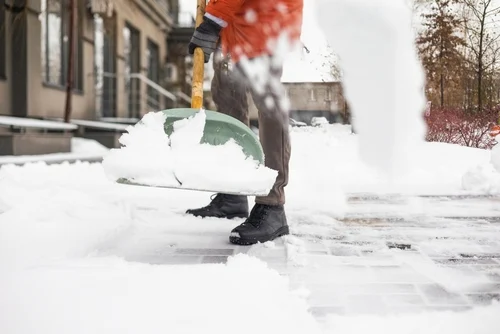
In Canada, snow removal is the legal responsibility of property owners, who must clear snow and ice from their property and adjacent public sidewalks within a set window (commonly 12 to 24 hours after snowfall ends). Exact timeframes and fines vary by municipality. Renters usually aren’t liable for the work itself; that stays with their landlord.
A snow removal by-law is a municipal rule, rather than a federal law, so it’s set, and enforced, one city at a time. At Remitly, we know how much there is to figure out when settling into a new country, and this guide covers what Canadian cities generally expect and what renters need to know.
Quick answer
Property owners are responsible for clearing snow and ice from their property and any public sidewalk next to it, typically within 12 to 24 hours of snowfall ending, though some cities allow longer or use an “as soon as possible” standard instead. Renters usually aren’t liable unless their lease says otherwise. The obligation sits with the landlord. Most cities enforce these rules through neighbour complaints rather than routine inspections, and an unpaid fine can end up on the property’s tax bill.
Toronto’s Municipal Code, Chapter 719, is a good example of what one of these by-laws looks like in writing.

Who is responsible for snow removal in Canada?
Responsibility for snow removal in Canada splits among municipalities, property owners, and occupants, including renters:
- Municipalities: clear roads and, in many cities, priority sidewalks and bus routes, usually once snow reaches a set depth.
- Property owners: are responsible for maintaining their own lots, both residential and commercial, and for clearing the public sidewalk alongside their property, whether or not they live there.
- Renters: generally aren’t on the hook for the shovelling itself unless a lease says otherwise, but liability for an uncleared sidewalk stays with the owner, not the tenant.
- Condos and stratas: usually handle common-area snow removal (shared driveways, parking areas, and walkways) through the corporation’s by-laws and fees, while owners look after anything unique to their own unit.
- Commercial properties: must maintain their property and comply with the same applicable municipal snow removal by-laws as homeowners, and are often held to a higher standard if an employee or customer is hurt on an uncleared walkway.
If you’re renting, your rights around repairs and maintenance, including snow removal, come from your province’s tenancy legislation, not one national law: the Residential Tenancies Act in Ontario, the Residential Tenancy Act in British Columbia, and the Residential Tenancies Act in Alberta, with similarly named legislation elsewhere. Check the version that applies where you live.
Ontario — Toronto and Ottawa

In Toronto, you’re expected to clear the public sidewalks around your home or business within 12 hours of the end of the snowfall, under Chapter 719 of the municipal code, and the same window applies to driveways and steps. Driveways, parking spaces, steps, ramps, and landings on private properties must be cleared within 24 hours. If 2 centimetres or more of snow has accumulated, the City of Toronto is responsible for clearing all public sidewalks itself. Non-compliance can bring a $500 fine plus a $115 victim surcharge. If a sidewalk is not cleared, you can call 311 to report it.
Ottawa takes a different approach: its Property Maintenance By-law (2005-208) requires owners to keep sidewalks free of snow or ice that could create a hazard, rather than naming a fixed number of hours the way Toronto does. General by-law violations in Ottawa can carry fines from $500 up to $10,000 per day, so it’s not a rule worth ignoring despite the looser deadline.
British Columbia — Vancouver

Under Traffic By-law 2849, property owners and occupants must clear snow and ice from the full width of the sidewalk in front of, and, on a corner lot, alongside, their property by 10 a.m. each day there’s snow or freezing temperatures. Missing that deadline can bring a $250 fine, rising to $750 if the sidewalk is still uncleared after 24 hours. In strata buildings, this job usually falls to the strata corporation rather than individual owners.
British Columbia also requires winter tires or chains on most highways from October 1 to April 30 (a few routes outside mountain passes end the requirement March 31). If winter driving is new to you, our guide to winter driving safety in Canada is worth reading before your first real snowfall.
Alberta — Calgary and Edmonton

In Calgary, property owners have 24 hours from the end of a snow event to clear the sidewalks and pathways surrounding their property. A first missed deadline brings a $250 fine, rising to $500 for a second offence, and $750 for a third within 12 months, and unpaid city-billed clearing costs get added to the property tax bill. Snow removed from a public sidewalk or pathway may be placed on another public space, such as the road, but snow from a private driveway or walkway must stay on private property.
In Edmonton, property owners are instructed to clear adjacent sidewalks as soon as possible, rather than within a fixed number of hours. Non-compliance carries a $100 fine plus the city’s cost of clearing it for you.
Quebec — Montréal

In Montreal, tcity itself, rather than individual property owners, is generally responsible for clearing snow from public sidewalks and streets once accumulation reaches roughly 2.5 centimetres, with larger snow-loading operations starting around 10 to 15 centimetres. Residents still clear their own driveways and walkways, and shouldn’t shovel that snow back onto the street, sidewalk, or a fire hydrant.
Quebec’s mandatory winter tire period runs December 1 to March 15 for most registered vehicles, with fines of $200 to $300 for non-compliance. Quebec also uses a civil law system, unlike the common law used elsewhere in Canada, which can affect how slip-and-fall responsibility is assessed after a snow-related injury.
Manitoba and Saskatchewan — Winnipeg and Regina/Saskatoon

Winnipeg clears many sidewalks and boulevard pathways itself. Clearing the boulevard strip in front of your own property is optional rather than mandatory, though residents are still expected to keep their own walkways safe.
Regina takes a more structured approach. Property owners generally have 48 hours after snow stops to clear their sidewalk, shortened to 24 hours downtown (Schedule B). Enforcement starts with a Notice of Non-Compliance. If the sidewalk still isn’t cleared, the city can do the work and add the cost to the owner’s property tax bill. Saskatoon has its own Sidewalk Clearing Bylaw (No. 8463), requiring owners and occupants to keep sidewalks clear of snow, and ice within 48 hours after snowfall for residential properties and within 24 hours for non-residential properties. Snow should be placed on private property rather than in the street.
Atlantic Provinces — Halifax and beyond

Halifax works differently again. The municipality is responsible for clearing public sidewalks, while residents and businesses look after their own driveways and pathways, including any snow a plow leaves behind. Shovelling that snow back into the street or onto a cleared sidewalk can bring a minimum $100 fine.
Snowfall totals and enforcement intensity vary across Atlantic Canada, so check your own municipality’s site rather than assuming Halifax’s model applies everywhere in the region.
Fines and legal consequences for non-compliance

Fines for not clearing snow generally range from about $100 in Edmonton and Halifax to $750 for repeat offences in Calgary and Vancouver, and in most cities a fine only shows up after a neighbour reports the problem.
City employees, like police or inspectors, don’t typically go out looking to hand out fines for snow removal failures. Instead, these penalties are most commonly doled out to addresses reported by neighbours. If you receive a fine for not clearing snow and it goes unpaid, it can accumulate and be added to your property tax bill.
Beyond fines, there’s civil liability. In 2022, the Supreme Court of Canada confirmed that property owners and municipalities can be sued over injuries linked to snow and ice removal. The Insurance Bureau of Canada notes that standard homeowner’s and tenant’s insurance typically covers slip-and-fall liability claims, though it’s worth checking your own policy’s limits.
Renter rights and landlord snow removal obligations

Is a tenant responsible for snow removal in Canada? In virtually every province, no. It’s the landlord’s legal obligation unless the lease specifically assigns it to the tenant, and even then, the landlord typically remains liable if someone is hurt.
It’s still worth talking to your landlord about snow removal responsibilities and expectations, and checking your lease agreement so you know what’s expected of you, if anything. If snow is piling up and your landlord isn’t clearing it: document the hazard with timestamped photos, notify your landlord in writing, and if nothing changes, escalate to your municipality’s by-law office or your province’s tenancy authority. For example, the Landlord and Tenant Board in Ontario, or the Residential Tenancy Branch in British Columbia.
Before you sign a lease, confirm who handles snow removal, especially for a house or a unit with its own entrance rather than shared, building-managed walkways. Our guide to renting an apartment in Canada covers more of what to check first.
How to stay compliant: practical snow removal tips

A few habits make it easier to stay ahead of whichever by-law applies to you:
- Clear in intervals during heavy snowfall rather than waiting for it to stop, so you’re not facing one big cleanup against the clock.
- Pre-treat surfaces with salt or sand before a storm or a freeze-thaw cycle to cut down on ice buildup.
- Take timestamped photos after each clearing during a major snow event. This is useful if a neighbour disputes compliance, or you’re a renter documenting a landlord’s obligations.
- If you hire a professional snow removal company, ask for a written contract. However, liability for an uncleared walkway generally stays with the owner regardless.
- Programs like Snow Angels Canada connect volunteers with neighbours who need a hand clearing snow, whether you can help or could use some.
Winter upkeep, shovels, salt, and possibly a contractor, is a real line item in a newcomer’s budget. Our guide to surviving a Canadian winter on a budget breaks down what to expect.
Frequently asked questions about snow removal laws in Canada
Who is legally responsible for snow removal in Canada?
Property owners are legally responsible for clearing snow and ice from their own property and any public sidewalk beside it. Municipalities generally handle roads and some priority sidewalks. Renters usually aren’t liable unless their lease says otherwise. The legal responsibility typically stays with the landlord either way.
How long do I have to clear snow after it stops falling?
It depends on the city. Toronto gives property owners 12 hours, Calgary allows 24, and Regina allows 48 (24 in parts of downtown). Some cities, like Edmonton, don’t set a fixed number of hours at all, requiring clearing “as soon as possible” instead.
How much can I be fined for not clearing snow?
Fines vary widely by city. Edmonton’s is $100, Halifax’s minimum is $100, Vancouver ranges from $250 to $750, and Calgary escalates from $250 up to $750 for repeat offences within 12 months. Unpaid fines can be added to your property tax bill in several cities.
Is my landlord responsible for snow removal if I rent?
In most provinces, yes. Snow removal is generally the landlord’s legal obligation unless your lease specifically assigns it to you. Review your lease, and if snow isn’t being cleared, notify your landlord in writing and contact your province’s tenancy authority if the problem continues.
Do winter tire requirements vary by province?
Yes. Quebec requires winter tires on most registered vehicles from December 1 to March 15, with fines of $200 to $300 for non-compliance. British Columbia requires winter tires or chains on most highways from October 1 to April 30. Other provinces generally recommend, rather than require, winter tires.
Can I be sued if someone slips and falls on my uncleared property?
Yes. In 2022, the Supreme Court of Canada confirmed that property owners and municipalities can face liability claims tied to snow and ice removal. Most homeowner’s and tenant’s insurance policies cover slip-and-fall liability, though it’s worth confirming your own policy’s specific coverage limits.
How do I report a neighbour who isn’t clearing their snow?
Most cities enforce snow removal by-laws through complaints rather than routine inspections, so reporting an uncleared sidewalk usually starts with your city’s non-emergency line (311 in cities like Toronto) or an online by-law complaint form on your municipality’s website.
Key takeaways
- Snow removal by-laws are set and enforced by individual municipalities, not one federal or provincial law, so timeframes and fines differ by city.
- Renters generally aren’t liable for snow removal; that stays with the landlord unless a lease specifically assigns it to the tenant.
- Most cities enforce these by-laws through neighbour complaints, not routine inspections, and unpaid fines can end up on a property tax bill.
- Fines for non-compliance range from about $100 in Edmonton and Halifax to $750 for repeat offences in Calgary and Vancouver.
- Winter tire requirements vary by province too, from Quebec’s mandatory December-to-March window to British Columbia’s highway-specific rule.
Snow removal laws in Canada: the bottom line
At its core, snow removal law in Canada comes down to one idea: clear your own property and the sidewalk beside it, promptly and safely, and expect the exact timeframe and fine to depend on where you live. If you’re still settling in, our guides to the cost of living in Canada and some of the best cities to live in Canada cover more of what a Canadian move involves.
This article is based on the current guidance from Canadian municipal by-laws, provincial tenancy authorities, transportation agencies, and other official government sources on snow removal rules, responsibilities, and winter property maintenance.
Last reviewed: September 2026