

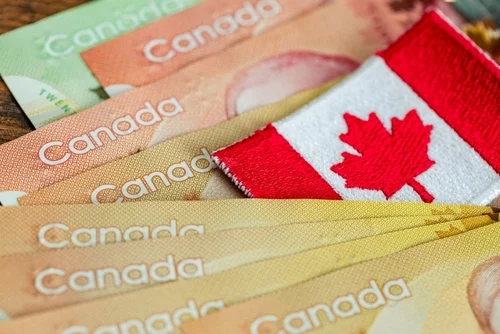
The cost of living in Canada in 2026 varies by city, but newcomers should budget around $2,500–$3,500 CAD a month for a single person, covering rent, groceries, transportation, and utilities. Housing is the largest expense, with average rents highest in Toronto and Vancouver and more affordable options in Calgary, Edmonton, and Halifax.
Beyond those five core costs, housing, groceries, transportation, utilities, and everyday spending, newcomers also run into one-time costs a long-settled resident rarely thinks about: a rent deposit before you’ve earned a Canadian paycheque, a credit history you haven’t had the chance to build yet, and a provincial health-coverage waiting period in some provinces. This guide walks through both.
What is the cost of living in Canada in 2026?
At a glance: budget $2,500–$3,500 CAD a month as a single newcomer, more in Toronto or Vancouver and less in Calgary, Edmonton, or Atlantic Canada.
- Housing is your biggest cost, and most landlords ask for first and last month’s rent upfront before you move in.
- Groceries cost more than they did a few years ago. Canada’s Food Price Report 2026 has the current numbers below.
- IRCC-funded settlement agencies and federal benefits like the Canada Child Benefit can help while you get settled financially.
Housing Costs in Canada in 2026

Rent is where the cost of living varies most from city to city in Canada, and where newcomers run into costs a longer-settled resident never has to think about.
What Are Average Rents Across Canada?
According to CMHC’s 2025 Rental Market Report, the most recent edition available, average two-bedroom apartment rents range widely across the country. Vancouver and Toronto remain the most expensive; Edmonton and Calgary offer considerably more room in your budget. If you’re flexible about where you settle, that gap alone can be the difference between renting on your own and needing a roommate.
| City | Average Rent (2-Bedroom Apartment) |
| Toronto | $2,034/month |
| Vancouver | $2,363/month |
| Calgary | $1,914/month |
| Edmonton | $1,603/month |
Source: CMHC Rental Market Report, 2025 edition (most recent available). Figures are average two-bedroom rents; one-bedroom and shared units typically cost less.
What Newcomers Should Know Before Renting

Without a Canadian credit history, some landlords may hesitate to approve your application, even if you can comfortably afford the rent. A letter confirming your job offer or income, bank statements, references, or a co-signer can all help bridge that gap, and several newcomer housing programs exist specifically to support this. Tenant protections, including notice periods and rent-increase rules, vary by province, so check your province’s tenancy rules before you sign anything. For renting an apartment in Canada, Facebook Marketplace and Settlement.org are two of the most newcomer-friendly places to start your search.
Grocery Costs in Canada in 2026

How Much Do Groceries Cost in Canada?

Grocery bills have climbed noticeably in the past few years. Statistics Canada’s Survey of Household Spending put the average Canadian household’s annual grocery bill at $8,659 in 2023, the most recent year available, up 7.4% from 2021. Looking ahead, Canada’s Food Price Report 2026, led by researchers at Dalhousie University and partner institutions, forecasts a family of four will spend $17,571.79 on food this year, about $1,464 a month, up roughly $995 from 2025. Overall food prices are expected to rise 4–6% in 2026, with meat and poultry (especially beef and chicken) climbing the fastest.
For a more current picture of grocery prices, Statistics Canada’s July 2026 national averages include:
| Grocery item | Average retail price, July 2026 |
| Milk, 2 litres | $5.53 |
| White bread, 675 g | $3.60 |
| White rice, 2 kg | $9.62 |
| Ground beef, per kg | $16.49 |
| Chicken breasts, per kg | $14.68 |
| Eggs, 1 dozen | $4.95 |
Source: Canada’s Food price Report 2026
How to Spend Less on Groceries as a Newcomer

Where you shop matters as much as what you buy. No Frills, Food Basics, FreshCo, and Maxi are Canada’s discount grocery chains, and they’re typically noticeably cheaper than Loblaws, Sobeys, or premium stores like Whole Foods, though which chains are available depends on your province. Stores specialzing in particular cusines and communities, including T&T and Aftab, are often a lower-cost source for staples that mainstream chains price at a premium. Loyalty programs like PC Optimum and Scene+ are free to join and add up over time, and flyer-comparison apps like Flipp and Reebee make it easy to see which nearby store has the best price this week before you shop. For a closer look at where to shop, Canada’s grocery stores are worth exploring city by city.
Transportation Costs in Canada in 2026

How Much Does It Cost to Drive in Canada?

Gas prices vary significantly by province. As of late September 2026, Canada’s national average sits at $1.91 CAD per litre, based on fuel-price tracking of Natural Resources Canada data. Alberta has consistently the lowest prices, at $1.77 a litre, while Ontario sits at $1.81. British Columbia runs higher, at $1.99, while Newfoundland and Labrador reached $2.24 and Prince Edward Isladn $2.15. Fuel taxtes also differ by province and region. The CAA Driving Costs Calculator provides personalized vehicle ownership estimates. Auto insurance adds another layer of cost, and it varies even more by province than gas does.
| Province | Average Annual Premium | Insurance System |
| Ontario | ~$2,000 | Private market |
| British Columbia | ~$1,850 | Public (ICBC) |
| Manitoba | ~$1,200 | Public (MPI) |
| Saskatchewan | ~$1,150 | Public (SGI) |
| Quebec | ~$750 | Hybrid (SAAQ + private insurers) |
Source: 2026 industry premium comparisons. British Columbia, Manitoba, and Saskatchewan run government insurance programs, which tends to keep premiums lower than Ontario’s fully private market.
Public Transit Costs by City

If you’re not driving, public transit costs, and quality, differ enormously by city. In Toronto, the TTC charges $3.30 a ride on PRESTO or contactless payment and, since fare capping came into effect in September 2026, automatically caps your fares at 47 paid trips in a calendar month, after which the rest of the month is free. Vancouver’s TransLink charges $3.50 for a one-zone trip or $117.20 for a monthly pass. Montreal’s ARTM charges $3.75 a ride or $110 for a monthly All Modes A pass. Calgary Transit charges $4.00 a ride or $126.00 a month, with an income-based low-income pass available for qualifying riders.
Public transit users benefit from purchasing monthly passes, which offer better per-ride value than single tickets.
Toronto also runs a Fair Pass Discount Program for lower-income residents, with eligible riders paying $2.10 per PRESTO trip and qualifying for TTC fare capping. Calgary’s Low Income Monthly Transit Pass uses an income-based sliding scale, with 2026 prices ranging from $6.30 to $63 a month. Transit quality varies enormously across the country, though. If you’re settling in suburban Ontario or Atlantic Canada, owning a car may be less of a choice and more of a necessity, so it’s worth factoring into where you decide to live. For more on getting around without a car, navigating public transit in Canada covers what to expect city by city.
Other Monthly Costs to Budget For in Canada

Utilities

Electricity and heating costs swing more by province than almost any other expense, largely because some provinces (Quebec, Manitoba, British Columbia) run public hydro utilities with comparatively low rates, while others rely more heavily on private or deregulated markets. Expect noticeably higher heating bills through the winter months across most of the country, regardless of province.
Internet and Mobile Plans

Canada’s telecom market is dominated by three major carriers (Bell, Rogers, and Telus) regulated by the CRTC. Their flanker brands and smaller providers, such as Fizz, Public Mobile, and Chatr, typically undercut the Big Three noticeably on price for similar data allowances, so it’s worth comparing before you commit to a plan.
Childcare

Under the federal Canada-Wide Early Learning and Child Care agreement, most provinces have been lowering average licensed child care fees toward a $10-a-day target. Rollout speed and actual average fees still vary by province, so check your province’s current child care fee schedule rather than assuming the $10 figure applies immediately wherever you settle.
Healthcare

Several provinces, including Ontario, British Columbia, Quebec, and New Brunswick, apply a waiting period of up to three months before provincial health coverage begins for new permanent residents. During that gap, private interim health insurance is worth arranging before you arrive, not after, since medical costs without coverage can add up quickly.
How to Build a Monthly Budget for Canada as a Newcomer

Costs shift noticeably depending on where you land. Here’s a rough single-adult monthly budget comparing a mid-cost city like Calgary to a higher-cost one like Toronto — treat it as a starting point to adjust to your own situation, not a fixed rule.
| Expense | Calgary (mid-cost) | Toronto (higher-cost) |
| Average rent (all unit types) | $1,885 | $2,571 |
| Groceries | ~$480 | ~$520 |
| Transit pass | $126.00 | ~$155 (TTC fare cap) |
| Utilities, internet & mobile | ~$200 | ~$220 |
| Estimated monthly total | ~$2,690 | ~$3,466 |
Source: rentals.ca National Rent Report, Septmber 2026 (average asking rent, all unit types); Calgary Transit and TTC fare pages; grocery figure estimated from Canada’s Food Price Report 2026 household data. Treat these as approximate starting points, not guarantees.
A few first steps make a real difference before your first paycheque arrives. RBC, TD, Scotiabank, and BMO all offer no-fee “new to Canada” banking packages designed for newcomers who haven’t built a Canadian financial history yet. A secured credit card, where your credit limit matches a deposit you put down, is one of the most reliable ways to start building credit in Canada as a newcomer without an existing credit score.
As a newcomer, you can typically get a Canadian credit card if you’re a permanent resident, international student, or temporary worker with the right immigration documents and a Canadian bank account, though eligibility criteria can vary by issuer.
Registering for your Social Insurance Number (SIN) is a prerequisite for working and opening most accounts, so it’s worth doing early. Once you’re settled, a Tax-Free Savings Account (TFSA) and a First Home Savings Account (FHSA) are both newcomer-accessible ways to grow savings tax-free. See how a TFSA compares to a regular savings account to decide which fits your goals first.
Government and Community Resources for Newcomers in Canada

Settlement support in Canada is largely delivered locally, so what’s available depends on your city and province. IRCC-funded settlement agencies, including ACCES Employment, COSTI, and the Centre for Immigrant and Community Services, offer free help with everything from job searches to housing referrals, though availability varies by location.
On the federal benefits side, the Canada Child Benefit is a tax-free monthly payment for eligible families with children; the Canada Groceries and Essentials Benefit provides quarterly payment that offsets sales tax for lower- and modest-income individuals and families; and the Canada Workers Benefit is a refundable tax credit that tops up income for eligible low-income workers. Eligibility for each depends on your income and immigration status, so it’s worth checking directly with IRCC and the CRA’s newcomer guidance for your specific situation, and, if you’re still deciding where to settle, the best Canadian cities for immigrant families is a good next read.
FAQ: Cost of Living in Canada for Newcomers
What’s a comfortable monthly budget for a newcomer in Canada?
A single newcomer should generally budget around $2,500–$3,500 CAD a month, depending on city. A family of four typically needs about $5,500–$7,500 a month in a higher-cost city like Toronto or Vancouver, and noticeably less in a mid-cost city like Calgary, Edmonton, or Halifax, once you account for larger housing and grocery needs.
What’s the cheapest province to live in?
Atlantic Canada and the Prairie provinces, including Alberta, Manitoba, Saskatchewan, and New Brunswick, generally offer lower housing and gas costs than Ontario or British Columbia. Quebec also has comparatively affordable auto insurance and utility rates, though rents in Montreal have been rising.
What should newcomers know about renting, including deposits?
Most landlords ask for first and last month’s rent upfront and nothing more. In Toronto, that can mean $4,000 CAD or more for a two-bedroom. Without Canadian credit history, a job-offer letter, a co-signer, or bank statements can help your application, and newcomer housing programs exist to support this transition.
What are the most affordable cities for immigrants?
Calgary, Edmonton, and Halifax consistently offer lower rents than Toronto or Vancouver, alongside growing newcomer communities and settlement services. Winnipeg and smaller Atlantic Canada cities can be even more affordable, though job markets and services are typically smaller than in major metros.
How much should I budget for groceries?
Statistics Canada puts the average household’s grocery spend at $8,659 a year. Canada’s Food Price Report 2026 forecasts a family of four will spend about $1,464 a month on food; a single person typically spends noticeably less, depending on diet and location.
What government financial help is available for newcomers?
Eligible families can receive the tax-free Canada Child Benefit monthly, the Canada Groceries and Essentials Benefit quarterly, and the Canada Workers Benefit if you’re a low-income worker. IRCC-funded settlement agencies also offer free job search, housing, and language support, though availability depends on your city.
How long is the wait for provincial health coverage?
Several provinces, including Ontario, British Columbia, Quebec, and New Brunswick, apply a waiting period of up to three months before provincial health coverage begins for new permanent residents. Arranging private interim health insurance before you arrive, rather than after, helps cover you during that gap.
Key Takeaways: Cost of Living in Canada in 2026
- A single newcomer should budget around $2,500–$3,500 CAD a month; a family of four in a higher-cost city needs about $5,500–$7,500.
- Canada’s Food Price Report 2026 forecasts a family of four will spend $17,571.79 on food this year, about $1,464 a month.
- Most landlords require first and last month’s rent upfront, which can mean $4,000 CAD or more for a two-bedroom in Toronto.
- Costs vary sharply by province: Alberta, Manitoba, Saskatchewan, and Atlantic Canada are consistently more affordable than Ontario or British Columbia.
- IRCC-funded settlement agencies and federal benefits like the Canada Child Benefit are available to help newcomers get settled financially.
We know moving your finances to a new country comes with its own learning curve. Remitly‘s personal finance hub has more guides for settling in Canada, and when you’re ready to send money home, we’re here to help make that transfer straightforward.
This guide is based on current information from Statistics Canada, CMHC, Natural Resources Canada, the Canada Revenue Agency, IRCC, provincial governments, transit authorities, and other official Canadian sources on housing, food, transportation, utilities, benefits, and newcomer costs in 2026.
Last reviewed: September 2026


