Key Highlights
-
Yule is the winter solstice in Australia. People say it is the longest night of the year and marks the rebirth of the sun.
-
This festival of light comes from old pagan traditions. It is a time for people to think back and feel fresh again.
-
Some big Yule traditions are lighting a yule log, putting up greens, and having a good meal with loved ones.
-
Yule is not like Christmas. It is about how nature goes in cycles, not about buying gifts.
-
People in Australian Pagan and Wiccan groups follow these customs in a way that fits the Southern Hemisphere’s seasons.
-
This is when many honour the past year and get ready for brighter days after the longest night.
Introduction
As the winter solstice comes closer in Australia, people start to get ready for something special. This celebration, Yule, has a lot of history. It is tied to pagan traditions and marks the shortest day and the longest night of the year. Some parts of Yule may remind you of other customs, but it also gives us a time to be with nature. People use this moment to think about the year and to mark the return of the sun. The solstice means gathering with others, keeping warm, and looking ahead to renewal.
Understanding Yule: Origins and Meaning
Yule is a big festival for many people, especially for those who follow pagan traditions. It lines up with the winter solstice, which is the longest night of the year. This day is an important part of the Wheel of the Year. The Wheel of the Year is a way to mark the changing seasons and to remember how things in nature go round again.
This festival is a good time for people to think back on the past, feel thankful, and plan what they want for the days ahead. Yule is known as a festival of light. It helps people push away the darkness and enjoy the fact that life keeps going on. The longest night slowly goes, and daylight starts to come back again.
Let’s talk about what ‘Yule’ means and dig into its long and rich history.
What Does ‘Yule’ Mean in Pagan and Wiccan Traditions?
The word ‘Yule’ has some interesting roots. It comes from the Old English word ‘ġēol’ and the Old Norse word ‘Jól’. For Pagans and Wiccans, these words are often linked to the idea of a ‘wheel’. That fits well because Yule is a part of the Wheel of the Year. This name can talk about the wheel of the sun as it moves across the sky or the rolling cycle of the calendar year.
Yule is really the tipping point. It’s when the big wheel of the year hits the darkest time and then starts to turn back toward the light. This is why the festival is seen as a strong sign of hope and the idea of rebirth.
For modern Pagans, Yule is about respecting that natural wheel. It means seeing the darkness of midwinter but still trusting that the sun will come back. The name is always there to remind us of the never-ending, lovely turning of nature that shapes our lives.
Historical Roots of Yule: From Norse Legends to Modern Customs
The story of Yule goes back thousands of years. Many of its traditions come from the germanic peoples and old norse tales in northern europe. The norse used to have a festival they called Jól. As they moved through europe and into the british isles, these ways were carried with them. Lots of things we do at christmas, like putting up trees and giving out gifts, start from these older customs.
For some modern pagan and wiccan groups, Yule is the time of a great fight between the holly king and the oak king. The holly king stands for the darker part of the year, and at the winter solstice, or the longest night, that power is at its strongest.
On this night, the oak king, also known as the sun god, wins. That win shows the rebirth of the sun. It also marks the start of the year getting brighter again. This old story is a good way to talk about the changing seasons and the way the sun goes from dark to light again on the solstice.
Timing and Significance of Yule in Australia
Many people think Yule is all about a snowy December. But in Australia, the time is not the same. Yule is linked to the winter solstice, which here happens in June, not December. This is our midwinter and the time of year when we get the longest night and the shortest day. It’s a real turning point in our seasonal calendar.
For Pagan and Wiccan groups in Australia, this timing gives a special and real bond with the land and how it changes. So, let’s look at when Yule takes place down here and why it means so much for people who follow these ways.
When Does Yule Occur Down Under?
In Australia, Yule aligns with the winter solstice in the Southern Hemisphere. This is the astronomical event that marks the shortest day and longest night of the year. Unlike the Northern Hemisphere’s December celebration, our midwinter festival takes place in June. The exact date can vary slightly each year, but it typically falls on or around June 21st.
This timing allows Australian Pagans to celebrate the seasons as they actually experience them. It’s a powerful way to connect with the natural rhythms of the land, observing the deep quiet of winter before the light begins its slow return.
Here’s a look at the winter solstice dates for the coming years in Australia:
|
Year |
Winter Solstice Date (AEST) |
|---|---|
|
2024 |
21 June |
|
2025 |
21 June |
|
2026 |
21 June |
|
2027 |
21 June |
Why Yule Matters for Pagan and Wiccan Communities in Australia
For Pagans and Wiccans in Australia, Yule is a very important time. It marks the deep stillness that comes in midwinter. People use this moment to stop and look inside themselves before life starts up again. The festival focuses on rebirth, which is about moving from the darkest time of the year to the days when there is more sun.
This is a good time for people to think, let go of the old, and plan for new things. The return of the sun shows hope and the will to keep going. It reminds us that life will keep going too.
By marking Yule, these groups connect with the earth where they live. Instead of having christmas in the hot sun, they welcome the cold winter days of June. That makes their spiritual work feel real and local. In this way, Yule is about being strong and believing that good and new things will come again.
[https://www.theaustralian.com.au]
Midwinter Rituals, Symbols, and Celebrations
Yule is full of beautiful signs and special moments. These traditions are about the rebirth of the sun. The warm shine from the yule log and using evergreens show everlasting life. Each thing means something good. People often come together for festivities and feasting. They sit with family and friends and share stories.
These habits link people to nature and to each other. All together, there is a feeling of warmth and community, even in the coldest time of year. Let’s take a look at some old customs that are still loved.
Traditional Practices: The Yule Log, Evergreens & Festive Gatherings
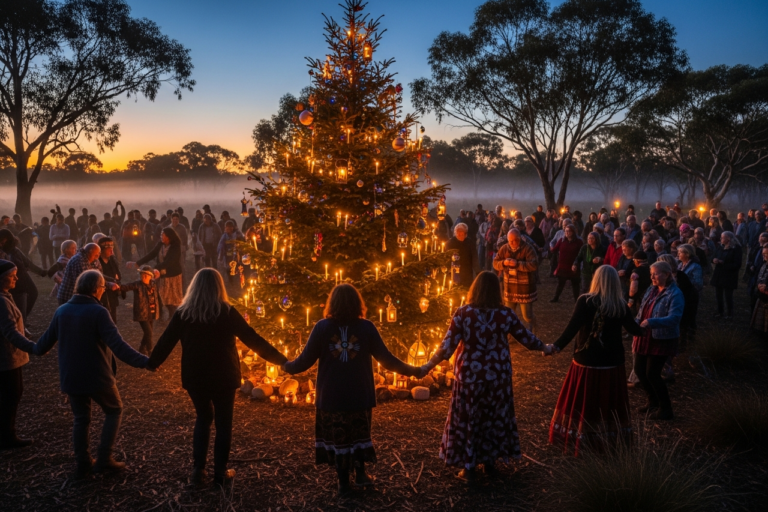
One of the main Yule traditions is burning a Yule log. A certain log gets picked out and burned on the night of the winter solstice to bring back the sun. Before lighting it, people sometimes use the log as a centrepiece or put it on an altar, and decorate it with candles and other decorations for the solstice. When the log is all burnt, many keep the ashes for good luck in the upcoming year.
Another key thing people do is bring greenery indoors. Plants like pine, holly, and ivy stay green all year while others don’t. These decorations show that life carries on, and remind us that good times will come back.
Every Yule needs some fun and food. Spending time with your family and friends is what makes the festivities so nice. People give thanks, enjoy good food, and keep warm in their homes. Some common parts of feasting and Yule include:
-
Sharing big meals with those you love.
-
Enjoying hot drinks, like mulled apple cider.
-
Baking a Bûche de Noël cake, which stands for the Yule log.
-
Giving and getting small, thoughtful gifts.
Conclusion
In the end, Yule brings a strong link to the natural cycles and the deep roots of Pagan and Wiccan traditions in Australia. Midwinter is a good time to think, start fresh, and share happy moments with friends and family. Things like the yule log and being with people you care about show us warmth and light, even when the days get cold. Taking part in these things helps us enjoy the season more and brings our community closer. As you get ready for Yule 2026, think about how you can add these special touches to your own gatherings. Even small things you do can help keep these lovely traditions going.
Frequently Asked Questions
How is Yule different from Christmas in Australia?
Yule is a pagan celebration linked to the winter solstice in June in Australia. It is about nature and the sun’s rebirth. Christmas is in December and marks the birth of Jesus. People often talk about Santa Claus during this time and follow different christmas traditions. Some christmas traditions come from pagan roots, but Yule is more about natural cycles than about jesus or santa or other religious figures.
What are some ways to celebrate Yule in modern Australia?
Modern pagans in Australia mark Yule by keeping to the main traditions. They often have a big meal with family and friends. People like to bring evergreen decorations into their homes. Some will light a bonfire or a yule log. Many also use this time to think about their lives, welcome the return of the sun, and look forward after the longest night.
How can you incorporate Yule traditions into your holiday season?
You can easily add Yule traditions to your winter get-togethers. One simple way is to bake a yule log cake. You might also decorate your place with green branches from outside. Enjoy some warm apple cider with your mates or light a special candle for the solstice. Giving small gifts and thinking about the year gone by are good ways to join in too.