Key Highlights
-
National Reconciliation Week goes from 27 May to 3 June every year. This week marks two big moments in the country’s history.
-
The 2026 theme for reconciliation week is ‘All In’. This asks every person in Australia to be part of the reconciliation journey.
-
During this week, all Australians are encouraged to learn about the histories and cultures of First Nations people and Torres Strait Islander people.
-
Reconciliation Australia is the group that runs the event. They want workplaces, schools, and others in the community to get involved in national reconciliation.
-
This week gives everyone a good chance to build respectful relationships between the wider community and Aboriginal and Torres Strait Islander people.
Introduction
National Reconciliation Week is an important time for the people of Australia. This is when we learn about our past, and about the deep cultures of Aboriginal and Torres Strait Islander people. The theme for 2026 is ‘All In’. It asks us to take part in the national reconciliation journey. The message is for everyone to join in and help—every single day, not just for one week of events. This is our chance to help make our country better and show more respect to all.
Let’s talk about what Reconciliation Week means. We’ll look at how you can be involved, and the ways to be a part of it.
Understanding National Reconciliation Week in Australia
Have you ever thought about what National Reconciliation Week means? This week is set aside for all Australians to stop and learn about our shared past. It is a time to find out more about the cultures and achievements of First Nations people. Reconciliation Week is the key point for us to keep working on national reconciliation with our Indigenous peoples.
Each year, this event asks us to think about how we can each help make better connections between the wider Australian community and Torres Strait Islander and Aboriginal peoples. The goal is to build a future where the stories and cultures of First Nations people are known and respected by everyone. Let’s have a closer look at its history and see why National Reconciliation Week is important.
The origins and evolution of National Reconciliation Week
The journey of this important week started in 1993, called the Week of Prayer for Reconciliation. It began during the International Year of the World’s Indigenous Peoples and got strong backing from Australia’s major faith communities. From the start, it wasn’t a single day. It was a whole week to focus on this cause.
In 1996, the Council for Aboriginal Reconciliation set up Australia’s first National Reconciliation Week. This, was a big moment for Aboriginal reconciliation and national reconciliation. It made the week a key national event. Then, in 2001, Reconciliation Australia was set up to give national leadership and move the reconciliation week efforts forward.
One of the most important moments was in 2000, when about 300,000 people walked together across the Sydney Harbour Bridge for reconciliation week. People did the same across other bridges in the country. This showed just how much the community wanted change. Now, National Reconciliation Week is a part of everyday life in schools, workplaces, and communities everywhere. It helps us remember the significant milestones of our shared story.
National Reconciliation Week – Australia
Why National Reconciliation Week matters for all Australians
This week is a good chance for all Australians to take part in our nation’s reconciliation journey. It is a time for the wider Australian community to learn more, think about the past, and do something good in the present. Reconciliation is not just an idea, it is meant to live inside our hearts, minds, and what we do every day as we try to build a better and more respectful country.
Reconciliation Week is important because it brings people together. It helps the wider Australian community to get to know Aboriginal and Torres Strait Islander peoples. These connections help make our nation strong, as we work on respect, understanding, and learning more about the different histories, cultures, and the future ahead.
In the end, this week is here to help us make a better Australia for future generations. When we take part, we show that we care for First Nations peoples and respect what they bring to all of us. This is something we all must do, and each person who gets involved, no matter how big or small their actions are, helps Australia move closer to real and fair reconciliation.
Key Dates and Their Meaning: 27 May to 3 June
National Reconciliation Week happens each year between two set dates: 27 May and 3 June. These days stay the same every year. They mark very important moments in the history of reconciliation week and the steps made in the national reconciliation journey in Australia. The week starts with the day of the 1967 referendum and ends with the day of the High Court Mabo decision.
These two dates were picked to show respect for these big changes in history. One date shows a big move for recognition in the constitution, and the other shows the High Court’s stand on native title for First Nations peoples. To really see why reconciliation week matters, it helps to know the story behind these days. These are some of the most significant milestones for First Nations peoples on their journey for rights and for native title being part of law with the high court mabo decision.
Historical significance of these dates
The dates of National Reconciliation Week hold deep historical weight. They represent powerful moments of change and recognition in our nation’s story, moving away from past injustices and towards a more inclusive future. These aren’t just arbitrary dates; they are pillars of the reconciliation movement.
The week kicks off on 27 May, marking the anniversary of Australia’s most successful referendum in 1967. On this day, over 90 per cent of Australians voted to amend the constitution. This gave the federal government the power to make laws for Aboriginal and Torres Strait Islander people and, crucially, to include them in the national census for the first time.
The week concludes on 3 June, the anniversary of the landmark 1992 High Court Mabo decision. This ruling overturned the legal fiction of ‘terra nullius’ (land belonging to no one), legally recognising Aboriginal and Torres Strait Islander peoples as the Traditional Owners of their lands. This decision was the culmination of Eddie Koiki Mabo’s long challenge and paved the way for Native Title legislation.
|
Date |
Historical Significance |
|---|---|
|
27 May |
Commemorates the 1967 referendum, where Australians voted overwhelmingly to count Aboriginal and Torres Strait Islander peoples in the census and allow the Commonwealth to create laws for them. |
|
3 June |
Marks the 1992 High Court Mabo decision, which legally recognised the land rights of First Nations peoples by overturning the concept of ‘terra nullius’ and establishing native title. |
How the week is marked across the country
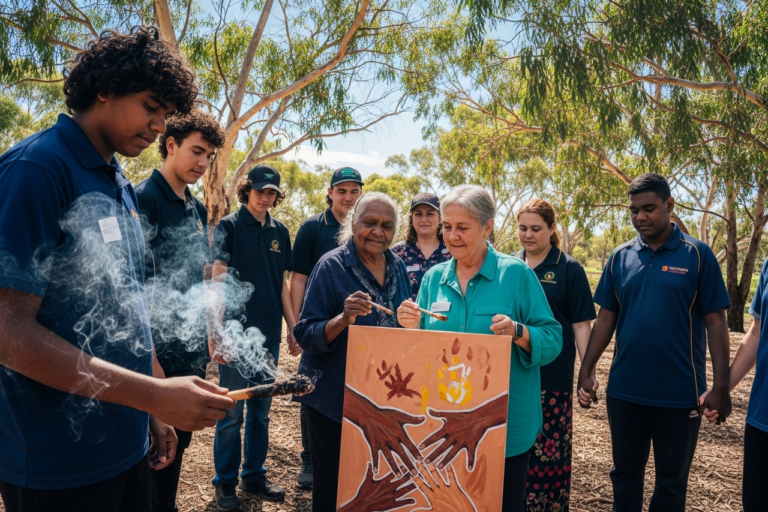
People across Australia from all walks of life join in to celebrate National Reconciliation Week. These celebrations and moments to remember happen in many places, like workplaces, schools, and local communities. Often, events start with an Acknowledgement of Country. This is a way to show respect to the Traditional Owners.
Community organisations, major faith communities, and local councils play a big part in putting on these public events. The events can be things like morning teas, panel talks, art displays, or film showings. The aim is to give people space to learn, talk, and connect. Everyone works together to make the idea of reconciliation a real part of life in cities and towns.
There are many events you can join for reconciliation week. These include:
-
community breakfasts and watch parties for big broadcasts,
-
cultural workshops, storytelling sessions, and guided tours,
-
public talks and panel chats with First Nations leaders and community members.
The 2026 Theme ‘All In’ Explained
The Reconciliation Week theme for 2026 is ‘All In’. This is a clear and strong call for every Australian to get fully behind the work of reconciliation week. It asks people to do more than just quietly agree. It is about doing simple things, every day, to help bring change.
This uplifting theme and the bright artwork were made together with Carbon Creative, which is a First Nations-owned creative agency. The look and feel of the campaign was created by Bundjalung artist Otis Hope Carey. His art shows hope. It shows people from all different walks of life coming together. This theme is a chance for everyone to take part and share the job of making things better for all.
What does ‘All In’ mean for reconciliation?
The 2026 Reconciliation Week theme, ‘All In’, says that reconciliation is for everyone. It is not just up to a few people. Instead, it asks every person, every community, and every group to step in and help build a more united country.
This theme says that moving forward for Aboriginal and Torres Strait Islander peoples should not be for first nations people alone. For too long, they have been the ones to carry the weight of championing this work. ‘All In’ calls on the wider Australian community to help and to play their part to build more respectful relationships.
When we talk about being ‘All In’, it means making a clear choice. You need to learn, listen, and to take steps. It’s also about knowing our shared past and moving towards a future where first nations cultures are respected and celebrated. The reconciliation journey takes effort from all of us, and this theme for reconciliation week is a call for everyone to get involved.
Ways the theme shapes activities and engagement
The ‘All In’ theme sets the mood for events during reconciliation week. It asks everyone to do more than just watch. People are not just there to look on. This week is about joining in. Reconciliation is not a spectator sport or a passive activity. This theme wants organisers to plan things where everyone takes part.
The focus is on doing things together, not just being on the side. There can be workshops where people learn from each other. People may work together on something like a ‘Sea of Hands’ display. Or they might join in singing with a choir as part of national reconciliation week. It’s about action, not just sitting back.
Here is the way ‘All In’ can shape what happens:
-
Workplaces can have “lunch and learn” meetings where the team talks about what being ‘All In’ means for them.
-
Groups in the community can set up walks or small projects that bring all sorts of people together.
-
People can join in national reconciliation week by sharing help and starting talks with the people they know.
This is a time for everyone to be a part of national reconciliation, not just watch from the sidelines.
Participating in National Reconciliation Week Events
Getting involved in National Reconciliation Week is easy. Each year, there are thousands of events across Australia. Workplaces, schools, councils, and community organisations all put these on. The events are open and welcome all community members. You can come, learn, and meet others.
To see what’s happening near you, go to the Reconciliation Australia website and sites for each state. You can also find events on social media. Many groups share news there, so watch for updates about National Reconciliation Week in your area. You might go to a big public event or something small nearby. No matter what, your part matters. There are many ways to join in, for yourself or together with others.
Getting involved as an individual, family, or group
As an individual, you can begin by learning more. Read different articles, watch some documentaries, and follow First Nations voices on social media. You might also go to public talks or join webinars to get a deeper understanding. If you share what you learn with friends and your family, you help spread the message of reconciliation.
Families can get involved as well. Early learning services and schools often hold special activities, but there’s a lot you can do at home too. You can visit a museum to see First Nations or Torres Strait Islander exhibits, read stories by Indigenous authors with your kids, or go as a family to a community event during Reconciliation Week. Doing these things together helps bring respect to the next generation.
Groups, like workplaces or clubs in the community, can do their part for a better future. You can help on the reconciliation journey by:
-
Hosting a morning tea and talking about reconciliation.
-
Getting a group together to join a local Reconciliation Week event.
-
Creating a book club on works by Aboriginal and Torres Strait Islander writers.
Highlights of major events in Australian cities
Cities in Australia put on all sorts of big events for National Reconciliation Week. In Western Australia, Reconciliation WA sets up many things to do. There’s a big breakfast in Perth and other events in towns like Albany and Newman. The museums in WA also run programs. You can go on Aboriginal tours or join in for talks with experts.
In the past, people walked together over bridges to show how important coming together is. This comes from the huge walk over the Sydney Harbour Bridge back in the year 2000. These walks, and big meet-ups like them, still happen in New South Wales, South Australia, and other places. A lot of people turn up to show they are part of national reconciliation.
As well as these main events, you will find many local gatherings. Keep a look out for:
-
Large breakfasts with big-name speakers, sometimes shown online for everyone to see.
-
Public art on display and other group projects right in the city.
-
Nights where First Nations leaders talk and share stories you need to hear.
There is plenty for all of us to get involved with in reconciliation week, no matter where you are.
Conclusion
To sum up, National Reconciliation Week 2026 is called ‘All In’. The theme asks everyone in Australia to join in and be part of the journey for understanding and bringing people together. By taking part in reconciliation week events and activities, we can learn more about Aboriginal and Torres Strait Islander histories and ways of life. This helps all of us build stronger connections, trust, and respect in each community. You can go to an event in your area or spend time with family and friends thinking about what this week means. Every bit of effort matters. Let’s make sure we are all part of making things better together in National Reconciliation. If you want to know more about what’s on, have a look at local listings and get into the spirit of this important week!
Frequently Asked Questions
How does National Reconciliation Week support Aboriginal and Torres Strait Islander communities?
National Reconciliation Week helps First Nations people by making their voices, stories, and ways of life heard. It gives the whole country a chance to listen to the truth. This week also pushes everyone to learn about what matters to Aboriginal and Torres Strait Islander peoples. It asks people to step up and do their part. By doing this, more people show respect. More people stand with Aboriginal reconciliation. There is support for National Reconciliation and strong bonds are made during Reconciliation Week.
How can schools participate in National Reconciliation Week?
Schools and early learning services can get involved by using the official resources from Reconciliation Australia. They can add First Nations ideas and stories into what kids learn. They can also ask local Elders to talk, hold assemblies for everyone, or do art projects around the theme. This helps the next generation learn why it is important to respect Aboriginal people.
Where can I find local National Reconciliation Week events near me?
You can look for Reconciliation Week events near you by going to the Reconciliation Australia website. There, you will see a calendar with all the events that are listed for your area. You should also look at the websites and social media pages for your state’s reconciliation group, your local council, and different community organisations. They often share what is happening around your area, so community members can come along.