Key Highlights
-
The Islamic New Year, also called Hijri New Year, is the start of the year in the Islamic calendar.
-
It marks the migration of Prophet Muhammad from Mecca to Medina. This was an important time in Islamic history.
-
Muharram is the first month in the Hijri calendar. This is a special month for Muslims.
-
The new year brings dates like the first day of Muharram and the Day of Ashura on day 10.
-
The Islamic New Year is not like the Gregorian New Year. It is a time to be quiet, think deeply, and renew your spirit.
-
In 2026, the new year is set to begin on about 16th June. That will mark the start of year 1448 AH.
Introduction
Welcome to a special time of year for Muslims all over the world. The Islamic New Year, or Hijri New Year, is the start of a new year on the Islamic lunar calendar. This new year, compared to 1 January with all the fireworks and parties, is calm and quiet. It’s a time to think, feel grateful, and grow closer to faith. Muslim Australians come together during this time, remember their history, and look forward with fresh belief. The new year, or Hijri New Year, is an important part of life that shows respect for the lunar calendar and the Islamic lunar calendar.
Understanding the Islamic New Year and Its Significance
The Islamic New Year is a special time. It marks the start of the Hijri calendar. For many, this new year is more than just a date. It is about thinking back on a very important event—the migration of Prophet Muhammad from Mecca to Medina in 622 CE.
This journey changed things for Muslims. It led to the start of the first Muslim community in Medina. So, when the first month of the Islamic calendar comes, which is Muharram, people remember and think about the big steps taken for the faith.
Let’s take a look at the calendar that shows how this new year is marked, and understand why the first month of the Islamic calendar means so much.
The Role of the Islamic Hijri Calendar in Marking the New Year
The Islamic Hijri calendar is a lunar calendar. This means the months in the Muslim calendar are based on the phases of the moon. It is not the same as the Gregorian calendar, which is a solar calendar. The hijri calendar follows how the moon goes around the Earth. There are 12 months in a year and these have 354 or 355 days.
Because of this, every Islamic month starts when people see the new moon. This is why the new year and other Islamic holidays seem to move back by about 10 or 11 days every year, unlike the fixed dates in the Gregorian calendar.
This clear system is used for all important Muslim events, like Ramadan, Eid al-Fitr and the Hajj. When people first spot the new moon for Muharram, that is when the Islamic New Year begins. This moment is a big deal and brings excitement for people all over the world.
Historical Importance of Muharram for Muslims
The month of Muharram is the first month in the islamic calendar, and it is one of four special months in Islam. It has strong ties to islamic history. Muharram is important because of the hijrah of the prophet muhammad. This event was when the muslims became their own group, and the islamic calendar began from this point.
There is another part that gives Muharram great meaning. On the tenth day, which is called the day of ashura, muslims look back in their own way. For sunni muslims, this day is marked by fasting. They do this to remember when God helped Prophet Musa (Moses) and his people get away from Pharaoh by making a path through the red sea.
For shia muslims, the day of ashura is a sad time. It is when they think about the battle of karbala, where Husayn ibn Ali, the grandson of prophet muhammad, lost his life in 680 AD. Because of all of this, the month of muharram is a special time to reflect on new starts and also to think about big sacrifices.
Key Dates and Events Associated with the Islamic New Year 1448 AH
As the Islamic year 1448 AH is coming soon, it’s good for people to know the big dates to look out for. The Hijri New Year is shaped by some important events in the first month, which is called Muharram. The main dates to watch for are the first day of Muharram and a very holy day soon after.
The first day of Muharram is the start of the new year. Then, there is the Day of Ashura, which is on the 10th day of this first month. Since these new year dates follow the lunar calendar, they will fall on different days each year on the Gregorian calendar.
Now, let’s check out when these important dates will happen in 2026 and see what they mean.
When Does the Islamic New Year Fall in 2026?
In 2026, the Islamic New Year’s Day is expected to be observed on or around Tuesday, 16th June. This date marks the first day of Muharram and the beginning of the Islamic year 1448 AH. It’s important to remember that the exact date can vary slightly depending on your location.
The start of an Islamic month is confirmed by the physical sighting of the new moon. While some countries, like Saudi Arabia, rely on astronomical calculations, many communities wait for local moon-sighting committees to declare the start of the month. This can sometimes result in a difference of a day or two between countries.
For this reason, while 16th June 2026 is the predicted date for many, you may find it observed on the 17th or even 18th in some parts of the world.
|
Event |
Hijri Date |
Predicted Gregorian Date (2026) |
|---|---|---|
|
Islamic New Year |
1 Muharram 1448 |
Tuesday, 16th June |
|
Day of Ashura |
10 Muharram 1448 |
Thursday, 25th June |
Major Dates in the Month of Muharram and Their Meanings
The month of Muharram is the first Islamic month, and it is a special time in Islam. This month is known for its deep meaning and many chances to do good deeds and talk to God. The whole month is holy, but there are a few days that mean more than the others.
One of the most important days in the month of Muharram is the Day of Ashura. It happens on the 10th day of Muharram. This day means different things for Sunni Muslims and Shia Muslims, but for both, it is a time to remember the past, fast, and in many cases, be sad for what happened long ago.
Below are the most important dates in this month of Muharram and what they stand for:
-
1st Muharram: This is the first day of the new year in the Hijri calendar. It marks the migration of Prophet Muhammad, which started a new chapter for Islam.
-
9th Muharram: Many Muslims fast on this day and also on the 10th day. This was a practice of Prophet Muhammad and is followed by people today.
-
10th Muharram (Day of Ashura): For Sunni Muslims, this is the day when Moses and his people were saved. For Shia Muslims, this day is for remembering the death of Husayn ibn Ali in the Battle of Karbala.
The month of Muharram, the new year, and the Day of Ash
How Muslim Australians Celebrate the Islamic New Year
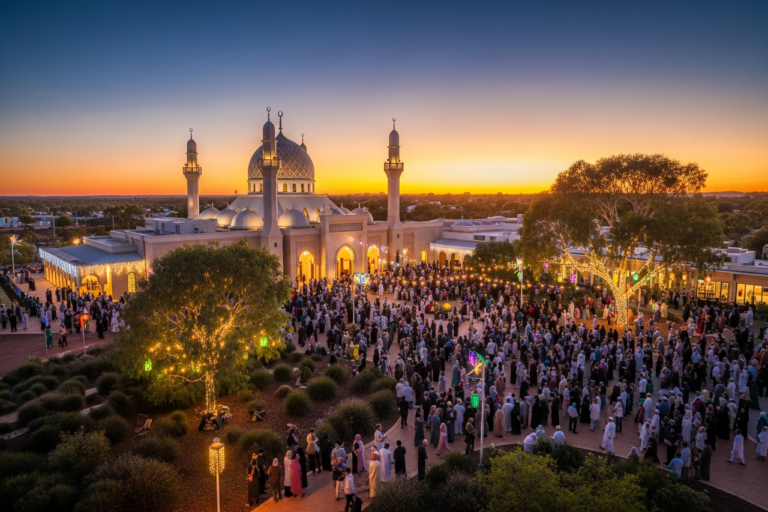
For the diverse Muslim community in Australia, the new year is not a time for big or noisy parties. Instead, it is a time of reflection. This is a special period that is both personal and meant for the community. People focus on simple, meaningful activities. The aim is to hold on to Islamic values and help the community grow stronger.
It is a quiet start to the year. Many gather for prayer. There are times to learn about islamic history and think about the significant events that shaped their faith. People look both inward and forward. They think about their own path, make new promises to faith, and spend time with family. There is also a wish to care more for others in the community in the new year.
These moments are often held at mosques. Families also gather at home and share in cultural traditions during this time of reflection.
Community Gatherings, Mosques, and Spiritual Activities
In Australia, mosques are important for the Muslim community, especially when the new year, Muharram, begins. These places give people a space for worship and help everyone remember what this time means. The mosque brings people closer to the spiritual feel of the new year, and it is where many come together for special events.
These gatherings in the mosque are all about special prayers and other acts of worship that help with spiritual renewal. People use this time to think about the first Muslim community, their story, and how they kept going through tough times. Everyone shares a deep respect for this moment and finds unity by being together as they try to make their faith strong.
Some of the most common things you will see at mosques during Muharram are:
-
Special Prayers: People will join together in prayer to ask for good things in the new year.
-
Sermons and Lectures: Imams and other speakers will talk about the meaning behind the Hijrah and Muharram, both in history and for the heart.
-
Recitation of the Quran: People read the holy book alone or together.
-
Charitable Acts: Many will want to give more and help others who need support.
Traditions, Reflections, and Cultural Observances Across Australia
Muslim Australians celebrate the new year not only at the mosque, but also at home and with their community. Here, they mix Islamic principles with other cultural traditions. It’s a time when families come together for personal reflection. They talk about the inspiring story of the Islamic New Year, looking at its lessons about sacrifice, faith, and renewal.
The new year is also a good chance to share knowledge with the younger generation. Parents and older family members tell the young ones stories about the Prophet’s migration. They explain why Muharram is special, helping kids understand their heritage and see the deep spiritual meaning behind the new year.
The focus is on the spiritual side, but people sometimes prepare special traditional dishes to enjoy with their family and neighbours. Sharing food like this helps bring the community closer and gives a warm, cultural feel to the new year. These moments help everyone—from kids to adults—feel that the start of the new year is a good and important time.
Conclusion
As the Islamic New Year comes closer, it is a good time to think about our faith, the people around us, and the things we share. For Muslim Australians, 1448 AH is not just a time to have a good time. It is also when we can feel new in our hearts, get close with family and friends, and take part in what makes our culture special. There are times when we come together with other people and there are times when we sit alone and think. The way we mark this day shows how Islamic heritage is a big part of life in Australia. Let’s keep building these close ties and keep alive the values that are important to every one of us. Take on the New Year’s spirit and join the celebrations that bring us together!