Key Highlights
-
Vassa is called the rains retreat or buddhist lent. It is a time when people focus more on spiritual practice.
-
Vassa starts after a full moon day. The date goes by the lunar calendar, and this is often in the month of July.
-
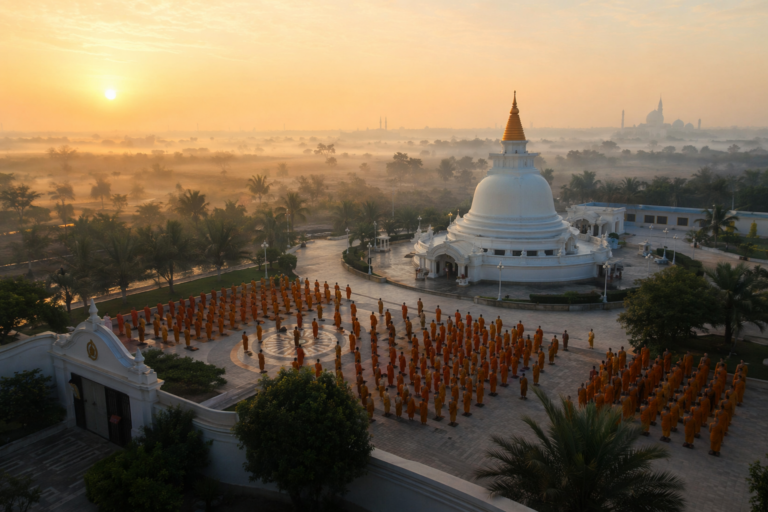
During the rains retreat, buddhist monks do not travel much. They stay in one place and follow monastic life.
-
The retreat began because of the monsoon season in India. There are heavy rains during this time.
-
Lay people give alms, visit, and make offerings to the monastic community.
-
Vassa ends with Pavarana, and then there are the Kathina robe offering ceremonies.
Introduction
Vassa is one of the most important times in the Buddhist calendar. People also call it the rains retreat or buddhist lent. It is a season that goes on for three months. During this time, monks stay in one place, think a lot, and live with strong rules. If you are in the UAE and wonder when Vassa will start in 2026, you should know that this comes from the lunar calendar, not from the regular calendar. To know when it will happen, you first need to understand why Vassa, or buddhist lent, is so special in the Buddhist tradition.
Significance of the Beginning of Vassa in Buddhist Tradition
The start of Vassa is important because it marks a special time for spiritual practice for buddhist monks. In theravada buddhism, this time helps set the pace of monastic life. It gives the monastic community a clear plan for study, discipline, and staying in one monastery.
At the same time, the period of vassa makes the bond between buddhist monks and lay people stronger. It is not just a rule for monastic life but a season that everyone shares in buddhism. This is why the first day comes with care, strong will, and a clear promise to take part. When you look more at the retreat itself, you will see the deeper meaning of vassa in theravada buddhism and for every monastic community.
Understanding the Rains Retreat and Its Spiritual Importance
The rains retreat is a time of three months when monks stay in one place. They follow a steady routine and stop moving around. This retreat was started by the Buddha and he asked all fully ordained bhikkhus to take part in it. This rule shows how important the rains retreat is in monastic life.
In these months, monks need to always stay in the place they pick. They do not travel from one place to another. If there is a valid reason, they can leave. But they have to come back within a week. The rains retreat gives the right setting for deep and intensive practice. It helps monks make daily discipline a part of their life.
When you look at it, the rains retreat helps be close to the Buddha’s teachings, good conduct, and living together in a community. The retreat has the name Rain Retreat as it matches the rainy season in North India. This is the time when rain can make travel hard. Staying in one place becomes good for daily use and helps monks in a spiritual way too.
Why the Beginning of Vassa Marks a Notable Event for Monks and Laypeople
For the monks, the first day of Vassa means more than just a symbol. On this day, monks make an open promise to stay in one place. They choose a monastery or some place to live for the retreat. This moment is important in the monks’ lives and shows that a fresh way of living starts from now. It also tells the whole monastic community that their special period of discipline has started.
For lay buddhists, the first day of Vassa starts a busy time. It is the start of real help for the monks. Over time, the tradition has shown that lay practitioners invite monks to stay with them, get a good place ready for the monks, and bring things the monks need most. Offering this help gives lay supporters much good merit. It is seen as a key part of spiritual practice, bringing lay buddhists and monks together.
-
Monks clearly say where they will live for the first day of vassa retreat.
-
Lay supporters help by getting rooms ready, setting up a simple shrine, or helping out in the temple.
-
The monastic community and the lay followers grow close with a strong promise at the start of vassa.
Date of Vassa 2026 in the UAE
Vassa does not start on the same day on the normal calendar each year. The first day of vassa is based on the full moon day in the lunar months, and so there can be a small change in the start date. This is why you might see different calendars at different monasteries, even in the UAE.
Based on what most people follow, vassa starts the day after the full moon day in the month of July and keeps going until the full moon day of October. Some groups allow a later beginning. They do this on the full moon day in August if there is a special reason. The right time to start in 2026 is best decided by using this information above.
When Does Vassa Begin in 2026?
In 2026, the first day of vassa in the UAE will be identified by the relevant lunar observance rather than by a single fixed civil rule. The compiled information states that Vassa begins on the day after the July full moon and continues for three months.
In traditional terms, this start is linked to the full moon of the eighth lunar month in many Theravada settings. That means the period of vassa begins immediately after that full moon observance and continues until the October full moon, unless a later permitted entry is used.
|
Reference point |
Timing |
|---|---|
|
First day of vassa |
Day after the July full moon |
|
Traditional lunar marker |
Full moon of the eighth lunar month |
|
Regular end point |
Full-moon day of October |
|
Alternate entry |
Day after the August full moon |
|
Retreat length |
Three months |
How Are Dates Determined for the Rains Retreat in Different Countries
Dates for the rains retreat are set using lunar months, not a fixed date in the solar year. The main sign is the full moon day in the month of July. The retreat then starts on the next day.
Because people follow both religious calendars and plans set by each monastery, different monasteries might list their dates in a few different ways. There is also an extra note. If someone cannot start with the group after the July full moon, another entry time can begin after the full moon in August.
So, if you want to find the rains retreat date in the UAE, you should check the calendar at your local temples or monasteries. The same rule works in Thailand and other Buddhist countries. The start of the retreat depends on the full moon day and the lunar cycle, and each community will plan its public retreat time around that day.
Rituals and Practices at the Start of Vassa
At the start of Vassa, buddhist monks be more settled and focus more on discipline. There is a custom where monks say where they will stay. They must stay in one place during this time. This helps with meditation. It also helps them follow the rules and keep the order in the monastic life.
Lay people are also involved. They invite buddhist monks, help with a place to stay, and support by giving things every day. Some ceremonies, like giving a robe, come after Vassa. At the start, the focus is on what the monks want to do, where they stay, support, and keeping precepts and community work.
Traditional Ceremonies and Observances by Buddhist Monks
The start of Vassa follows the vinaya rules. Monks make it clear that they will stay at one monastery or place for the whole retreat. This rule is one of the main things they do at the start of the season. It shows how important the rule made by the Buddha is.
There is no mention of a new ordination ceremony on the first day. But there is a strong sense of order and holding back from normal ways of life. Both senior monks and new monks follow this same way of retreat. They do not travel, unless there are valid reasons for it.
-
Formal declaration to stay in one residence during Vassa
-
Suspension of ordinary travel in line with vinaya discipline
-
More settled ascetic practices and community order during the retreat
The special robe ceremony comes later, after Vassa, at Kathina. But the start of this season helps get everyone ready for that event.
Common Practices Among Lay Practitioners During the Rains Retreat
For lay practitioners, Vassa is a time when they get more involved with the Sangha. The info gathered shows that lay supporters often invite monks to join the retreat at a special place made ready for them or at the temple. This helps lay life to become a part of religious activities.
In day-to-day tasks, help can come by getting a place ready, setting up where monks eat, and looking after all the things monks need during Vassa. People give this care from their hearts. Many say it is a good source of merit. The bond with dhamma grows stronger by doing work for others and by being there with the Sangha.
-
Offering alms and daily material support to monks
-
Visiting local temples and taking part in sermons or devotional activities
Even though every local community may have its own way, what stays the same for lay supporters is support, respect, and sharing in Vassa together. This shows their strong place in serving dhamma, the monks, and each other.
The Rain Retreat: Why Vassa Coincides with Monsoon Season
Vassa is also known as the Rain Retreat. It got this name because it was made for the rainy season. In the time of the buddha, monks followed to this retreat during the heavy rains in India. It was more practical and easier to stay in one place. It also taught them discipline.
The connection with the monsoon season is important. It is not something that happened by chance. The three-month retreat gave the monks a set plan. They knew where to stay, what to study, and how to live with rules at this time, when travel was tough. To understand why vassa became a long-term rule, it helps to see where it came from and how it affects people every day.
Meaning of “Rain Retreat” and Its Historical Origins
The words “Rain Retreat” talk about a retreat that happens for three months during the rainy season. Many people also call it buddhist lent. The main idea is not about giving up food like other types of lent. Instead, it means monks stay in one place and follow rules in that season.
This practice started in the time of the buddha. People say the buddha himself made Vassa a rule for the monks to follow. You can find these rules in the vinaya pitaka, mainly in the Mahavagga.
This story tells us why Vassa is still a key part of Theravada practice. It is not just a custom that came later. It began as a rule for the group of monks and has always been a part of buddhist life. This is why many follow Vassa as a rainy season retreat and lent each year.
Impact of the Rainy Season on Buddhist Monastic Life
The rainy season brings changes to monastic life. During Vassa, monks stop traveling. They stay in their monasteries. So, their time during these months becomes more settled. There is a set way to live and do things in the monastic community in this period.
If a monk has a valid reason, he can leave. But, he needs to come back in one week. The rule is strict, but at the same time, there is a little room if something real happens and there is a need.
-
Monsoon season helps the monks have a fixed life in the monasteries.
-
They do not travel, unless they have valid reasons, and must return soon.
This way, the rainy season changes where monks live and also changes the way the whole monastic community handles the daily routine in these months.
Khao Phansa Day and Its Connection to Vassa
Khao Phansa is a name that many theravada buddhists use when they talk about the start of the Vassa season. You can think of it as the beginning of the rains retreat. This time begins after the full moon day that is linked with Asalha Puja in each region.
The information here is more about what Vassa is, not about the festival activities. Still, people in buddhist communities know that Khao Phansa is about the start of the rains retreat. And if you want to really understand what this time means, it is good to see how many in Southeast Asia mark the same event. For theravada buddhists, this is a big part of their yearly routine.
Role of Khao Phansa in Southeast Asian Buddhist Cultures
In southeast asia, Khao Phansa is linked with the start of the Vassa season. No matter if you look at Thailand or Myanmar, you will see the same main idea. Monks take part in a settled retreat that connects to the rainy season and the moon.
The collected information shows this in a clear way. Vassa starts after the July full moon. It is expected that monks stay in one place. There are different names for it in the region, but all have the same commitment for the monks.
-
Khao Phansa marks the point when the rains retreat begins
-
Asalha Puja is the time with a full moon, which is linked to this change in season
So, if people want to know how Vassa starts in Thailand and other Buddhist places, here is the answer. The start is shown by a shared retreat setup. The way people talk and act may change by country, but the meaning is the same. This links back to the rainy season, public custom, asalha puja, Khao Phansa, vassa, and more in southeast asia and places like Thailand and Myanmar.
Unique Traditions Observed in the UAE and Other Countries
Different groups can show the start of the period of vassa in their own ways, but the main rule is the same everywhere. The collected details give a clear example from Sri Lanka. There, buddhist monks are often invited and brought to the place for vassa with a big walk, music, and a special welcome. The dwelling for the retreat is also made ready for them.
In the UAE, how people observe vassa can change with what local temples and the groups living there do. Still, the most important thing is that no matter where buddhist monks start vassa, some things always stay. These are stating where they will stay, not traveling much, and getting help and care from the people who live nearby.
-
Some groups set up simple places to live, with meal rooms and places to pray
-
Some start with special invites and bringing visiting monks in with a ceremony
These ways may look different, but they all show the same care for the retreat and for the Sangha.
Changes in Monastic Lifestyle During Vassa
When Vassa starts, the monk’s life changes and he stays in one place instead of moving around. There is not much travel, and the monk’s home is fixed. The way of monastic life becomes quiet, and there is more discipline every day. This lets monks spend more time on meditation. It helps everyone follow the rules, and take care of one another.
In this retreat, monks have more time for the study of the dhamma and also for intensive practice. They do this day by day. Even though people offer robes in the Kathina ceremony later, the way Vassa is set up helps monks get ready for that time. For three months, monks will live together, practice, and support each other with good routines.
How Monks Adapt Daily Routines for the Retreat
At the start of Vassa, monks change what they do each day. They make a promise to stay in one monastery or home. This quickly changes the way a monk’s life goes. They stop moving all the time. The retreat gives them more steadiness, good order, and there is more peace in just one place.
That change shapes all of monastic life. Monks do not travel during this time, unless they really have valid reasons to be away for a short time. Even then, they are expected to come back in a week. This rule keeps the retreat on track but gives some room for real-life needs.
-
In daily life, monks now centre their days in one place and with their own community
-
With less travel and fewer interruptions, ascetic practices get more support
So, if you ask what is new at the start of Vassa, the answer is clear: monks live with more steadiness, they stay in one area, and retreat rules become much clearer.
Increased Focus on Meditation and Community Service
When the retreat, or Vassa, starts, the monks can spend more time on meditation and living with dhamma in mind. Staying in one place is good because there are not many trips or changes. This lets everyone focus more on their spiritual practice.
The gathered information also shows that Vassa is not just about looking inward. It grows the bond between the monks and those who support them. The people in the community bring food, places to stay, and the things needed every day. The monks also stay close to people in the community through the whole season.
-
Meditation gets better during the retreat because things stay the same each day.
-
The monks help the community by being there, giving advice, and living a shared religious life.
So, Vassa brings stronger inner training and builds a real link between the Sangha and the people who help them.
FAQs (Frequently Asked Questions)
Interested in when Vassa starts? This is the beginning of the rainy season retreat. It is a special time for buddhist monks, which goes on for three lunar months. During Vassa, many lay supporters and lay practitioners take part by connecting with their local temples. They do this to help with the rainy season retreat and to help spread the teachings of the Buddha.
The first day starts with the full moon of the eighth lunar month. This date is very important in theravada buddhism. People often ask questions about why this time is so important, the traditions of it, and how it changes the monastic life and ways that lay supporters help.
How Long Does Vassa Last After It Begins?
Vassa is also called buddhist lent. It lasts for three months. The period of vassa starts right after the full moon in July. It finishes at the full moon in October. People count the days with lunar months. Vassa has been a key part of monastic life for theravada monks for a long time. The duration of this lent is important in their community.
Are There Special Activities for Families During Vassa in the UAE?
The material does not give details about family programmes that are just for the UAE. But in lay life, families and lay supporters can still join in. They can do this at local temples. At these places, people support the monks, visit them, and take part in devotional activities during buddhist lent. What they do can change based on the customs in each community.
What Is the Difference Between Vassa and Kathina?
Vassa is a three-month retreat that people call buddhist lent. Kathina takes place after this. During Kathina, the Sangha gets a special robe. Then, this robe will go to one monk who finished the retreat. Vassa and Kathina be part of monastic life, but they are not the same as each other.
Conclusion
To sum it up, the start of Vassa is a big moment for Buddhist monks. It is also a special time for other people to join in spiritual practices. This Rains Retreat makes us think about being mindful. It helps us see the value of community and taking time to look at our lives during the rainy season. When you get to know the rituals and ways of Vassa, you can feel closer to this time, whether you practice Buddhism or are just interested. You may be new to Vassa or know a lot about it, but taking its lessons to heart can help you grow as a person and feel more part of the group. If you want to know more about how to join in local events for the rains retreat, do not hesitate to ask!