Key Highlights
-
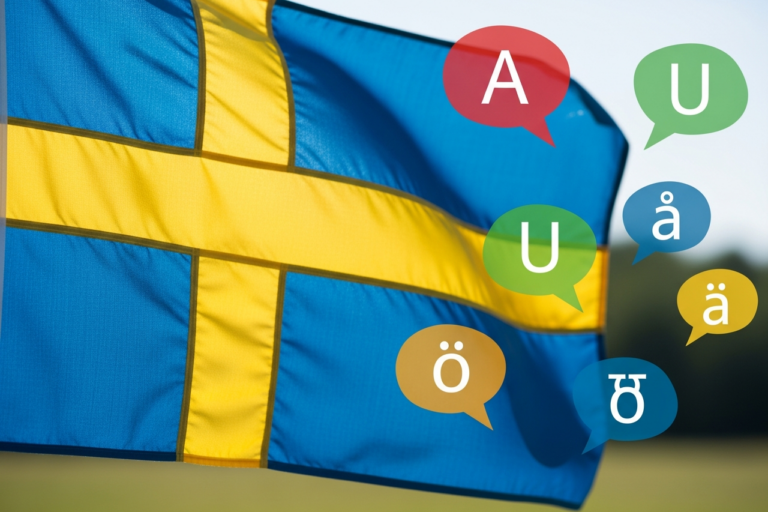
The Swedish language has nine vowels. These include the usual letters A, E, I, O, U, and Y. There are also the special letters Å, Ä, and Ö.
-
In Swedish pronunciation, you hear both long and short vowel sounds. The difference between these can change the meaning of a word.
-
Vowel length is often decided by how many consonants come after the vowel.
-
Swedish vowels can be “hard” (A, O, U, Å) or “soft” (E, I, Y, Ä, Ö). This choice can affect how the consonant before the vowel sounds.
-
For people who speak English, learning these vowel sounds is a key way to get good at Swedish pronunciation.
Introduction
If you want to learn the Swedish language, you should know that Swedish pronunciation is an important first step. The Swedish alphabet may look the same as the one in English, but some things about it are not easy for English speakers. The Swedish language has nine vowels. A few of these are not in English, and each one is said in at least two ways. To speak with others clearly, you have to get these sounds right. This guide will help you go through all you need to know about the Swedish vowels. It will help you feel sure about your new swedish pronunciation and improve the way you talk in Swedish.
Understanding Swedish Vowels: An Overview
The vowel system is an important part of Swedish pronunciation. The Swedish language has nine vowels, and each one makes its own sound. These are A, E, I, O, U, Y, as well as the special letters Å, Ä, and Ö.
You should know that in the Swedish language, each vowel can be long or short. This big difference changes the meaning of a word. We will look at what makes these vowels special and why they matter in Swedish pronunciation. Each sound, or phoneme, is important to get right when you use Swedish.
What Makes Swedish Vowels Unique?
What makes the Swedish language stand out is the way the vowels sound and how long you hold them. If you look at the Swedish alphabet, you will find some extra letters: Å, Ä, and Ö. These are not in the English alphabet at all. They are not just different ways to use A and O. They are their own letters in the Swedish alphabet. Each one has a special sound. For example, ö is close to the “er” sound in “her.”
Another special part of Swedish is how it groups vowels as “hard” or “soft.” The Swedish alphabet includes hard vowels like A, O, U, and Å. The soft vowels are E, I, Y, Ä, and Ö. This is important because it can change how you say the consonant right before the vowel. For example, the ‘g’ in gata (street) will not be the same as the ‘g’ in gärna (gladly). The vowel right after the consonant tells you which sound to use.
Where you make the sound in your mouth, or the “place of articulation,” also matters in Swedish pronunciation. Some Swedish vowel sounds happen further back in your throat, like how you say ‘u.’ That is different from English and makes the sound in Swedish more rounded. These small changes are what gives Swedish its musical sound. They are key for being able to say words the Swedish way.
The Importance of Vowels in Swedish Pronunciation
In Swedish pronunciation, vowels are very important. They help create the melody and intonation that make the Swedish language sound unique. In English, vowel sounds can change a lot, but in Swedish pronunciation, you need to get each vowel sound right if you want people to understand you. Even a small change in how you say a vowel can make a word mean something else.
You can think of each vowel as one building block in a syllable. How long you hold the vowel, and the way you say it, will change the rhythm and flow of your words. For example, glas (glass) and glass (ice cream) are different only because the ‘a’ sound is short in one and long in the other. If you learn this, you will get much closer to sounding fluent in Swedish.
The music and stress you hear when people speak Swedish comes mostly from vowels. Pitch and the way people say their words mix together to make that singing sound that Swedish has. You will do better in your learning if you listen closely to every vowel right from the start. This helps make things much easier as you pick up more words in Swedish.
The Swedish Vowel Alphabet
The modern Swedish alphabet comes from the Latin alphabet, like English. The Swedish alphabet has 29 letters in all. You will find the same 26 letters in English, but Swedish has three extra letters at the end. These extra letters are Å, Ä, and Ö.
The Swedish letters Å, Ä, and Ö are not just the English A and O with a mark added. These are special Swedish letters with new sounds. The Swedish vowels are A, E, I, O, U, Y, Å, Ä, and Ö. Let’s look at these nine vowels in the Swedish alphabet.
Introducing the 9 Swedish Vowels
Swedish has a rich vowel system with nine vowels in its alphabet. What makes it interesting is that each of these vowels has at least two different pronunciations: a long version and a short version. This duality is a fundamental part of the language.
The vowels are also divided into two categories: hard and soft. The hard vowels are A, O, U, and Å, while the soft vowels are E, I, Y, Ä, and Ö. This distinction influences the pronunciation of certain consonants that precede them, such as ‘g’, ‘k’, and ‘sk’.
Let’s break down the basic sounds. The table below shows each vowel, its type (hard or soft), and a comparison to help you understand its long and short pronunciation.
|
Vowel |
Type |
Long Pronunciation (like the vowel in…) |
Short Pronunciation (like the vowel in…) |
|---|---|---|---|
|
A |
Hard |
|
|
|
E |
Soft |
|
|
|
I |
Soft |
|
|
|
O |
Hard |
|
|
|
U |
Hard |
|
|
|
Y |
Soft |
|
|
|
Å |
Hard |
|
|
|
Ä |
Soft |
|
|
|
Ö |
Soft |
|
|
Distinguishing Å, Ä, and Ö from Other Vowels
For people who are learning the swedish alphabet, the three extra letters—Å, Ä, and Ö—can look a bit scary to start with. The most important thing you need to know is these are not different types of A or O. Each one is a separate letter in the alphabet. Every letter has its own sound for you to learn.
The letter Å sounds a lot like the ‘o’ in the english word “for.” You will see it often in swedish. For example, it’s in the word hej då (goodbye). It helps to learn this sound soon because it comes up a lot with swedish pronunciation.
The letter Ä is said almost like the ‘ai’ in “hair.” There is a nasal sound to it. You will hear this in a word like äta (to eat). Lastly, Ö is a sound that we use in english, but we do not have our own letter for it. It is close to the ‘er’ in “her.” You can hear this sound in öl (beer).
If you get these new sounds right, using the swedish alphabet will become much easier.
Vowel Length in Swedish
One big thing you need to know about Swedish pronunciation is vowel length. In the Swedish language, each vowel can be long or short. This is not just about how you talk. It can really change what a word means. So, getting the vowel length right helps people understand you.
Most of the time, a vowel in Swedish is long when it has only one consonant after it or when it is at the end of a word. A vowel gets short when there are two or more consonants after it. In this text, we will show you examples of this, so you can see how it works in Swedish pronunciation.
Long vs. Short Vowel Sounds Explained
If you want better Swedish pronunciation, it’s good to know the way long and short vowel sounds work in the Swedish language. Here’s the main thing to remember: the number of consonants after a vowel, in a part of a word with strong stress, will often decide if you use a long or short vowel.
You will find a long vowel when there is one consonant, or none, after the vowel (especially when the vowel is at the end of a part in a word). A good example is the word bil (car). Here, the ‘i’ is long because there is just one consonant after it. The sound of ‘i’ goes on more, like the “ee” in the English word “week.”
On the other hand, you use a short vowel when you see two or more consonants after the vowel. With the word till (to), the ‘i’ is quick and short since ‘ll’ comes right after it. The sound comes fast. Knowing this rule can help you get the clear beat and sound of Swedish when you say words the right way.
How Vowel Length Changes Word Meaning
In the Swedish language, the length of a vowel is not a small thing. It is a big part of what makes words different from each other. If you say the vowel too short or too long, you might end up saying a word you did not mean to say. This can cause confusion and sometimes funny mistakes.
One well-known example in Swedish is between tak and tack. The word tak means “roof.” It has a long ‘a’ sound because there is only one consonant after it. On the other hand, tack means “thank you.” It has a short ‘a’ sound because there are two consonants after the vowel. The spelling looks like only a small change, but the difference in how you say these words changes what they mean.
There is another pair: mat (food) and matt (dull). In mat, the ‘a’ is long so you need to stretch the sound. In matt, the ‘a’ is short and quick because it has double ‘t’ after it. Knowing these changes is very important if you want your Swedish pronunciation to get better. It helps you say the right word and makes talking and understanding in Swedish much easier.
Making sure you use the right vowel length is a big step to improve your Swedish pronunciation and word use. It helps people know what you want to say and it makes you sound more natural when you speak Swedish.
Beginner’s Guide to Mastering Swedish Vowel Pronunciation
Are you ready to work on Swedish vowel pronunciation? Don’t worry if it doesn’t sound good right away. If you keep at it, you will start sounding like the Swedish speakers in Sweden before long. The most important thing is to listen and practice often.
This guide will show you what you need and give you step-by-step help to begin. You will hear native speakers, and you will record your own voice. You will learn some good ways to get the hang of these new sounds. Let’s begin and help you do well.
What You’ll Need to Get Started (Resources & Tools)
To start getting good at your Swedish pronunciation, you do not need much to begin. But the right tools can really help you. The most important thing is to listen to real Swedish speakers often and try to copy what you hear. Getting feedback on your own pronunciation will help you get better.
You can work on your Swedish pronunciation while you are at home. There are videos, audio clips, and language apps that use native speakers. The way these Swedish speakers say words will help your ear get used to the different Swedish vowel sounds.
To begin, here are some helpful tools:
-
Language Learning Apps: Many apps let you hear words spoken by native Swedish speakers.
-
Swedish Media: Watch Swedish movies, listen to Swedish podcasts, or enjoy Swedish music for real, everyday pronunciation in Swedish.
-
Recording Device: Use your phone or computer to record your own voice. This lets you hear your pronunciation and help yourself get better.
-
Online Dictionaries: Some online dictionaries offer audio so you can listen to how words are said in Swedish.
Common Challenges for English Speakers
For english speakers, getting used to swedish pronunciation can be tough in some ways. The biggest problem is that there are some swedish vowel sounds that do not happen in english. The sounds for ‘y’ and ‘u’ in swedish need you to use your lips and tongue in new ways. It does not feel natural at first.
Another thing that makes trouble is how vowel length works. In english, the length of a vowel is not the most important thing for meaning. But in swedish, if you say a short vowel instead of a long one, it could turn your word into another word. You have to use your ear and practice making and hearing these differences.
There are also extra vowels in swedish, which are Å, Ä, and Ö. These can confuse english speakers. A lot of people try to use sounds they already know, but these vowels are new and not the same as in english. It is important to learn them as new sounds and not try to use english vowel sounds for them. Learning swedish pronunciation will go much better if you treat these as fresh sounds and start from the start.
Step-by-Step Guide to Pronouncing Swedish Vowels
Now let’s look at some easy steps to help you get better at Swedish vowel pronunciation. This three-step plan will help you use your muscles the right way and also train your ear. It is about listening, practicing with special drills, and getting feedback.
If you follow these steps, you will do more than just know the rules. You will really start to feel the sounds of the vowels. You will hear the small changes, say them better, and start to speak with more confidence. The first and most important step is to listen.
Step 1: Listening to Native Speakers
The best way to learn any new sound is to hear it first. Before you try to say the Swedish vowels, take some time just to listen to native speakers. This will help you make a mental picture in your head of how the sounds should be. This is an important first thing you need to do.
Put yourself into the Swedish language as much as you can. You can watch Swedish TV shows, listen to podcasts, or play Swedish music. Pay good attention to how Swedish speakers say their words, especially the vowels. You do not need to understand all the words right now. Your goal is to take in the sound, the rhythm, and the melody of the Swedish language.
You should know that there are a few dialects in Swedish, so how people say things might be a bit different. But, by listening to a lot of native speakers, you can get a good idea of the main sounds in Swedish. Just listening will help your ear learn the small changes in pronunciation that you will use later.
Step 2: Practicing with Minimal Pairs
Now that you have trained your ear, you can start to practice more. One very good way to learn hard sounds in the Swedish language is by using minimal pairs. These are words with only one sound that is not the same. This makes it easy to pick out and work on a certain vowel.
For Swedish pronunciation, minimal pairs help a lot with both long and short vowels. For example, you can try to say tak (roof) for the long ‘a’ sound. Then say tack (thank you) for the short ‘a’ sound. Say one, then the other, and listen to how your mouth makes the sound. You will hear the change in the sound when you do it like this.
You can get lists of minimal pairs on the internet or in Swedish textbooks. Look for the pairs that use the vowel sounds that are hardest for you. This kind of practice will help you make new muscle habits. After some time, your Swedish pronunciation can sound much better and feel more natural. These drills can be a very important part of your learning in the swedish language.
Step 3: Recording and Comparing Your Voice
Now, you get to be your own coach for Swedish pronunciation. You have practiced by listening to native Swedish speakers. You also worked with minimal pairs before this. Now it’s time to record your own voice. At first, it can feel a bit strange. Still, this is one of the best ways for you to get better.
Grab your phone or any app where you can record audio. Pick some words or short sentences. Try to choose ones with tough vowels or tricky consonant clusters. Listen to how a native Swedish speaker says the word. Then, record yourself saying the same thing. Afterward, play both recordings. See how your words match the native one.
Listen to your recording with care. Do your vowels sound long or short like the Swedish speaker? Did you say Å, Ä, and Ö the right way? Can others hear your consonant and vowel sounds clearly? When you compare yourself to native speakers, you find out where you need to fix your pronunciation. Keep repeating this exercise often. You’ll see that your Swedish accent will get much better in time.
Conclusion
To sum up, learning how to say Swedish vowels can help you get better at Swedish pronunciation and talking to others in the language. It is important to know the special sounds of Å, Ä, and Ö. Paying attention to vowel length in Swedish also helps you say words the right way. This makes what you say easy to understand. When you follow our simple guide, you can get past common problems and feel sure when speaking Swedish. Remember, the more you practice, the better you get. Don’t be afraid to listen to native speakers and use different resources to learn more. If you want to get even better at the Swedish language, you can book a free trial or talk with someone who can help you personally. This will give you more support as you learn.
Frequently Asked Questions
How do Swedish vowel sounds compare to English vowels?
Some vowel sounds in the Swedish language are close to the ones you hear in English, such as the ‘i’ sound in bil. But, there are many others that are new for english speakers. The swedish language has more vowel sounds. You will find different sounds for Y, U, Å, Ä, and Ö. You also have to make new shapes with your mouth and lips for these swedish vowels that you do not use for any english vowel.
Are there common mistakes to avoid when pronouncing Swedish vowels?
Yes, many english speakers make this mistake. They often do not hear the difference between a short vowel and a long one. This can change the meaning of a word in swedish. Some also say the letters in the swedish alphabet, like Å, Ä, and Ö, the same way they do in english. But these letters have their own sounds. It helps to practice with minimal pairs. This way, you can learn how the vowel sounds should be in swedish and not mix them up with english.
How is vowel length shown in written Swedish?
In Swedish writing, you can often tell the length of a vowel by looking at how many consonants come after it. If there is only one consonant after the vowel, the vowel is long. An example is tak. If there are two or more consonants that come after a vowel, the vowel is short. For example, in tack. This is seen often in Swedish pronunciation.
These rules make vowel length easy to spot in Swedish. They help people know how to say a word the right way. If you want to learn about Swedish pronunciation or the way vowel length works, keep an eye on how many consonants follow the vowel. It is a helpful tip when you read or speak Swedish.
Is there an easy way to practice Swedish vowels at home?
Yes! You can practice Swedish pronunciation at home with no trouble. There are language apps to use. Listen to Swedish music, podcasts, or watch movies to hear how native speakers say things. You can use your phone to record your voice. After you record, listen back and see if your pronunciation is like native speakers. Working with minimal pairs is a good way to get better.