Key Highlights
Here are the key takeaways from this blog post:
-
The short vowel sound is one of the most common in the English language.
-
Learning the short vowel sound is a key first step for phonemic awareness.
-
This guide shows each of the five short vowel sounds and gives examples of short vowel words.
-
You will get useful ways to teach short vowels to early readers.
-
Find out about fun things and resources you can use to practice these sounds.
-
Knowing short vowels helps you build a strong start for reading and spelling.
Introduction
Welcome to your guide on short vowel sounds. These sounds are a big part of the English language. Young learners usually start with them first. If you learn these, you can read and say many new words.
It does not matter if you are a parent, a teacher, or just want to know more. You can get to know what a short vowel is and how to teach it in many ways. This guide will show you every step, from what these sounds mean, to easy and fun ways to use them. You will be ready to show a new word to any new reader with confidence.
Understanding Short Vowel Sounds in English
In the English language, every word has at least one vowel sound. The short vowel sound is the most common one. You hear it in words like “cat,” “pet,” and “bug.” Long vowels often sound like the letter’s name, but short vowels have a quick, sharp sound.
It is important to know how the short sound is not like consonant sounds. This skill is key for kids who are starting to read. It helps them break words into small parts, so they can read and spell better. Let’s take a look at what short vowels are and why these short vowel sounds are so important for people just learning to read.
What Are Short Vowels?
A short vowel does not make the same sound as the letter’s name. It has a fast, clear sound. For example, the “a” in “apple” and the “e” in “egg” both have a short sound. These are the short sounds of the vowels, and they are easy to hear in many English words.
The most common spot to find a short vowel is in a closed syllable. A closed syllable is a technical term. It is when a vowel comes before one or more consonant letters. For instance, in the word “cat,” you see the vowel “a,” then the consonant “t.” This closes the syllable and makes the vowel use its short sound.
Knowing this is helpful for early readers. When early readers learn one letter sound for each consonant and get the short sounds of the vowels, they start to read simple words on their own. The link between a letter and its sound is a big part of phonics.
Why Short Vowel Sounds Matter for Early Reading & Phonics
Getting the short vowel sound right is an important first step for early readers. These sounds come up often. They help kids unlock and read many words. When kids see they can read new words, it gives them confidence and makes them happy to read more.
Hearing and picking out these sounds is a big part of phonemic awareness. This skill helps children work with the sounds in words. It is key for reading and spelling. If a child can hear the /a/ in “cat,” they start to get how words work.
That is why most reading programs start with teaching the short vowel sound. A sound card or another simple tool can help kids connect the letter to its sound. This makes it easy for young children to learn. Knowing the short vowel sound is an important part of reading.
The Five Short Vowel Sounds Explained
The English language uses five main vowels: A, E, I, O, and U. Each of these letters has its own short vowel sound. You can show these short sounds in the phonetic alphabet using special symbols. For example, the short vowel sound for ‘a’ is /ă/.
It is important to know these five main vowel sounds. When kids know these, they can mix them with other letters to start reading many easy words. Now, let’s see some simple examples of each short vowel sound and some common words you can use to practice.
Simple Examples of Short Vowel Sounds for Each Letter
To make the concept of a short vowel clear, let’s look at some simple examples of words. The best way to teach the vowel sound is to associate it with a word that a child already knows. For instance, the short ‘a’ vowel sound is in “apple,” a word most children recognize.
These examples help anchor the abstract concept of short vowel sounds to concrete English words. Hearing the sound within a familiar word makes it easier for a child to remember and apply when they encounter new words.
Here is a table with examples for each of the five short vowel sounds:
|
Vowel Letter |
Short Vowel Sound |
Example Word |
|---|---|---|
|
A |
/ă/ |
apple, cat |
|
E |
/ĕ/ |
elephant, pet |
|
I |
/ĭ/ |
igloo, dish |
|
O |
/ŏ/ |
octopus, mob |
|
U |
/ŭ/ |
umbrella, tub |
Common Short Vowel Words and Pronunciation Tips
Practicing with lists of short vowel words is a good way to help build fluency. A great place to start is with CVC words. CVC words have a consonant, then a vowel, then another consonant. These words are easy to read and good for people new to English. Some of these short, three-letter english words are “hat,” “pen,” “sit,” “top,” and “sun.”
To get better at your English pronunciation, watch how your mouth moves. Short vowels have quick sounds, and your mouth feels more relaxed than it does for long vowels. You can use word families too. Word families are groups of words that all end in the same way, like “cat,” “bat,” and “hat.” This will show that just by changing the first letter, you get a new word.
Here are a few tips to help you remember the sounds:
-
Use hand motions or gestures for each sound.
-
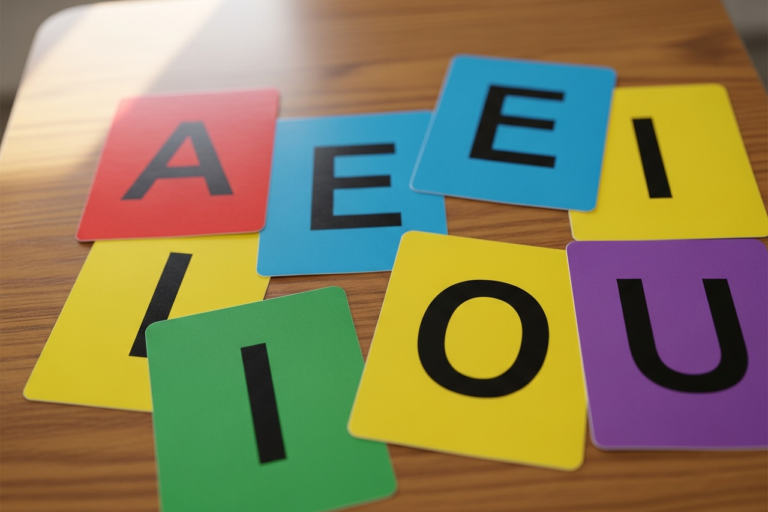
Make picture cards with a keyword for each vowel (A for apple).
-
Sing songs that put focus on the short vowel sounds.
Beginner’s Guide: How to Teach and Practice Short Vowels
Are you ready to teach short vowels? This part gives you a clear, easy guide to help early readers learn this important skill. When you teach step by step, the process can be smoother and help them learn better.
We will talk about the things you will need, how to start teaching the sounds, and fun ways for early readers to practice. Think of this as your map for turning a hard topic into a simple and useful learning tool. The next parts will show you what to do to get started.
What You’ll Need to Get Started (Materials & Resources)
You do not need a lot of money or hard-to-find stuff to teach short vowels. A simple approach often works best. Many good tools can be handmade or found in your house.
The goal is to make learning feel good for the senses and fun, too. With just a few items, you can help your lessons be more lively and interesting. Start by picking up some basic things. You can make your own sound card or games with these. Even using a piece of paper and a marker helps a lot when teaching.
Here are a few things you might want to start with:
-
Sound flashcards: Make or print cards with the letter on one side and a picture or word key on the other, like ‘a’ and ‘apple’.
-
Whiteboard and markers: Good for showing how to write letters. You can also use them for easy word-building games.
-
Magnetic letters: These give kids a way to both build and change words with their hands.
Step-by-Step Guide to Teaching Short Vowel Sounds
Teaching short vowels gets easier if you use a clear, step-by-step guide. The most important thing is to introduce one idea at a time. Make sure your child gets each step down before you move on to the next one. That way, you help build a strong base for your child, and you will not overwhelm them.
You should start by teaching the vowel sound first. Before kids learn the letters, they need to listen for and spot the short vowel sound when they hear spoken words. This skill is called phonemic awareness, and it is a big part of learning how to read.
Once you teach the sounds, you can show how each sound matches a letter. Then, your child can practice using simple words. This step-by-step way helps kids feel good about what they learn. They start to see how our language fits together. This makes teaching short vowel and vowel sound a good thing for both you and your child.
Step 1: Introduce Short Vowel Sounds with Visuals and Audio
The first vowel sound a child learns needs to be simple and easy to remember. Visual help works really well for this. Use a sound card that has the letter and a picture of something the child knows, like “a” beside an apple. This helps make a strong link in their mind. The child can see the letter, hear the sound, and picture a real thing.
When you show each short vowel, say the short vowel sound clearly. Have the child copy you. You can also talk about how their mouth should look for each shape. For the short vowel sound /e/, you could tell the child, “Smile a little and say ‘eh’.” Show the right mouth shape by saying it out loud. Then, ask the child to watch and use a mirror so they can practice doing this too.
Start slow. Begin with one or two of the first vowel sounds at a time. Giving them all five sounds right away can be too much. Let the child get good at the first short vowel sounds. Working like this gives them a strong and happy start when they are learning to read.
Step 2: Practice with Worksheets, Activities, and Games
Once you start teaching the first sounds, it will be time to practice short vowel sounds. Doing things over and over helps a lot, but it should not be boring. Worksheets are good for staying on task, but mixing them with other games and activities will keep kids interested and happy to learn.
A wide variety of interesting activities helps make sure that the kids who learn in different ways all get what they need. Some kids enjoy hands-on games. Others will want to use their time with coloring worksheets where it feels quiet. The goal is to give children enough time and practice with each vowel sound so that they get to know them well.
Here are some ideas for activities, games, and worksheets:
-
Vowel Sorting: Give the child some picture cards. Then ask them to put the cards in different piles by their short vowel sound.
-
Word Building: You can use magnetic letters or blocks for children to build simple CVC words.
-
Fill-in-the-Blank Worksheets: Make sentences or words where the child writes the short vowel that is missing.
-
“I Spy” with Sounds: Say “I spy with my little eye something that starts with the /a/ sound.” They can look around and find something with that sound, like an apple.
Conclusion
In the end, knowing and teaching short vowel sounds is key for early reading and phonics. When you see how important short vowel sounds are, both teachers and parents can help kids build a strong reading base. Using step-by-step ways to show, practice, and review these sounds with fun materials and activities helps kids learn about how words sound. It also helps make learning fun for them. Keep in mind, the main goal is to build a place where kids are active, ask questions, and feel good about learning. If you want one-on-one help with short vowel sounds, you can get in touch for a meeting to find the best ways to help your child.
Frequently Asked Questions
How can I help my child tell the difference between short and long vowels?
To help your child tell the difference, say that a long vowel sound “says its name,” like the ‘A’ in “acorn.” A short vowel gives a different sound, like the ‘a’ in “apple.” You can show charts and help your child put words into short vowel or long vowel groups. This way, your child will get better at knowing vowel sound types in the english language.
Are there any tricks for remembering short vowel sounds?
Yes! One good way is to connect each short vowel with a word and a hand action. For the short vowel ‘a’, you can act like you bite into an apple. Doing motions and seeing these actions can help you and people remember the short vowel sounds in new English words. This method can also be good for phonemic awareness.
What are the basic rules for identifying short vowels in words?
One of the basic rules that helps people is the “closed syllable” rule. When you see a vowel followed by a consonant in a syllable, the vowel will often make its short sound. This is why CVC words, like “cat,” “hen,” and “pig,” use the short vowel. These words are simple examples of short vowel words with a closed syllable.
Does short vowel pronunciation change in different English accents?
Yes, the way people say a short vowel sound in English can change a lot from place to place. What people call /ŏ/ in one regional dialect might sound another way in a different place. Also, when a vowel is not stressed, it can become a muffled vowel sound called a schwa. This makes the english pronunciation of that vowel sound even more mixed up.