Key Highlights
Here are the main points you will find in this guide:
-
The Romanian language has seven vowels. Some of these use special letters that give them unique sounds.
-
To sound more like a native speaker, it is important to master Romanian vowels and Romanian pronunciation.
-
The Romanian alphabet includes special characters, such as â, î, and ă. Each one has its own way to be said.
-
You will get to know how Romanian vowels sound different from English vowels. This helps you avoid common mistakes in pronunciation.
-
The guide offers simple tips for better pronunciation. You can use listening and repeating, which are good ways to improve.
With this info, you will be able to learn more about the Romanian language and the romanian alphabet. You will understand how special letters and vowels are used, and get good at romanian pronunciation—just like a native speaker.
Introduction
Welcome to your easy guide on Romanian vowels! If you are studying the Romanian language, you will see that how you say words is very important. Saying the vowel sounds in the right way helps you speak more clearly and with confidence. Good Romanian pronunciation helps people understand you. It also helps you understand what native speakers say. This guide will show you every vowel sound, so your learning will be simpler and better.
Overview of Romanian Vowels
The Romanian alphabet is mostly easy to sound out, so it’s helpful for those who want to learn. You just need to learn each sound, and then you will say words correctly. The vowels are very important in Romanian pronunciation. It’s good that these sounds stay the same almost all the time.
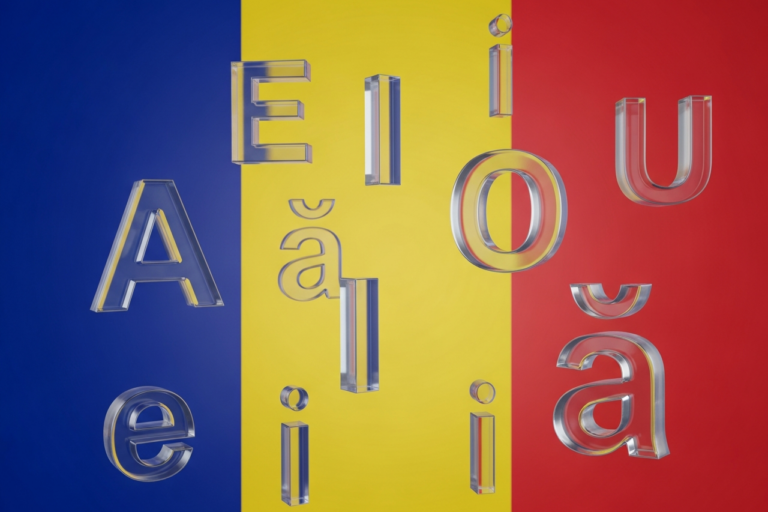
In the Romanian language, there are seven vowels. Five of these are the ones you already know: a, e, i, o, and u. There are two other special vowels: ă and î/â. They make sounds you will only find in Romanian. Let’s look at how these vowels sound up close.
The Basic Vowel Sounds in Romanian
Learning the main vowel sounds in Romanian is the first step to having good pronunciation. The romanian alphabet has five vowels. These vowels look the same to english speakers: A, E, I, O, and U. The sounds of these vowels are clear and steady in romanian. You do not hear a mix of sounds like in english pronunciation.
Here is how these vowels sound: The romanian “a” is like the “a” you hear in “father.” The vowel “e” is like the “e” in “bet.” The romanian “i” gives the sound you say in “beet.” For the vowel “o,” think about how you say “o” in “pole.” The romanian “u” is a lot like the “oo” in “pool.”
These simple vowels make up many romanian sounds you will hear a lot. If you practice saying these, you set up a good base for other, harder words you may use. Paying attention to these main vowels can really help your romanian pronunciation improve.
How Many Vowels Does the Romanian Language Have?
The Romanian language has a total of seven vowels. This count includes the five standard vowels you already know (a, e, i, o, u) plus two more that are specific to the Romanian alphabet: ă and î/â. While î and â look different, they represent the exact same vowel sound.
These special vowels are crucial for correct Romanian pronunciation. The vowel ‘ă’ makes a sound similar to the ‘u’ in the English word “but.” The vowels ‘î’ and ‘â’ produce a sound that doesn’t have a direct equivalent in English, but it’s a key part of the language’s unique character.
Here is a simple breakdown of the seven Romanian vowels and their corresponding sounds. The International Phonetic Alphabet (IPA) symbols are included to help you with precise pronunciation.
|
Vowel |
IPA Symbol |
English Approximation |
|---|---|---|
|
a |
[a] |
‘a’ in “father” |
|
e |
[e] |
‘e’ in “bet” |
|
i |
[i] |
‘ee’ in “beet” |
|
o |
[o] |
‘o’ in “pole” |
|
u |
[u] |
‘oo’ in “pool” |
|
ă |
[ə] |
‘u’ in “but” |
|
î/â |
[ɨ] |
No direct equivalent |
Why Mastering Vowels Is Crucial for Pronunciation
Learning how to say vowels the right way is a good place to start if you want to get better at Romanian pronunciation. When you say vowels right, you do not just sound more like a true speaker—you help others know what you want to say and stop mistakes before they happen. Many words in the Romanian language end with a vowel, so working on these sounds early makes it much easier for you to speak well.
If you get strong with vowels, you make it easy for people to understand you. When native speakers know right away what you say, you feel good about talking more. This can help your talking skills grow, just like learning new words or grammar rules.
Why spend time on vowels? Here are a few important things to think about:
-
Clarity: Saying your vowels right helps you be clear so others understand you.
-
Comprehension: It helps you spot the meaning of words when you listen.
-
Confidence: When you can speak in a clear way, you feel good about your skills.
-
Fluency: Getting real at vowel sounds gets you closer to that easy, smooth flow that is key for good Romanian pronunciation.
Unique Features of Romanian Vowel Sounds
Romanian is a Romance language. This means Romanian comes from the same roots as Italian, Spanish, and French. Even so, the romanian pronunciation is not the same as those other languages. There are a few twists that make romanian different. One big thing is the use of special characters, like ‘ă’, ‘î’, and ‘â’. These show sounds that most other languages do not have.
Romanian pronunciation of vowels stands out for being clear and simple. Each vowel in romanian has only one sound. This is not like how vowels in english work. In english, vowels can sound many different ways. Knowing that each vowel sound in romanian will stay the same makes it easier to learn for new people. Next, we will look more at vowel sounds. We will also see other things that will come up as you learn romanian pronunciation.
Comparison of Romanian and English Vowel Pronunciation
One of the biggest hurdles for English speakers learning Romanian is getting used to the vowel sounds. English vowels can have multiple pronunciations depending on the word (think “read” vs. “read”). In contrast, Romanian vowels are consistent; each has a single, unchanging sound.
This consistency is a huge advantage for learners. Once you learn the sound for each vowel, you can apply it across the board. The Romanian sounds are also “purer,” meaning they don’t typically glide into other sounds like many English vowels do (e.g., the ‘o’ in “go”).
Let’s compare the main vowels to give you a clearer picture of the differences in Romanian pronunciation.
|
Vowel |
Romanian Sound |
Common English Mistake |
|---|---|---|
|
a |
Like ‘a’ in “father” |
Pronouncing it as in “cat” |
|
e |
Like ‘e’ in “bet” |
Pronouncing it as in “me“ |
|
i |
Like ‘ee’ in “see“ |
Pronouncing it as in “pin” |
|
o |
Like ‘o’ in “pole” |
Pronouncing it as in “hot” |
|
u |
Like ‘oo’ in “boot” |
Pronouncing it as in “put” |
Short and Long Vowel Duration in Romanian
When you learn about Romanian pronunciation, you don’t have to worry about how long you hold vowel sounds. In other languages, the time you take to say a vowel might change what a word means. But in Romanian, the vowels all sound clear and have about the same length.
A vowel might sound a bit longer if it is in a stressed syllable or when someone uses a special tone in a sentence. Still, this happens because of how people speak, not from rules you must study or remember.
This makes things easy for people who want to learn about romanian pronunciation. You just need to know how to say the seven vowels in the right way—there’s no need to think about vowels being long or short. When you listen to people who speak romanian all the time, you get used to the language’s rhythm and the way stressed syllable and vowel sounds change a little in different syllables. This is a natural way to improve how you use romanian pronunciation and intonation.
Influence of Accent Markers and Diacritics
In romanian spelling, you will often see special letters that have marks above them called diacritics. These are not just for looks. They matter in romanian pronunciation. When you see these special letters, it changes the way you say the word. These characters on romanian vowels are ‘ă’, ‘â’, and ‘î’.
These marks are key if you want your romanian pronunciation to be right. Each one stands for its own vowel sound. For example, ‘a’ and ‘ă’ are not the same thing. If you ignore these marks, it can mess up how you say the word and make things confusing.
There are a few key points to know about these special letters in romanian:
-
ă (a-breve): This is a quiet, in-between sound. It is like the ‘a’ in the word “sofa.”
-
â (a-circumflex): This makes a sound you won’t hear in english. It is used in the middle of words.
-
î (i-circumflex): This letter makes the same sound as ‘â’, but you will find it at the start and end of words.
-
ș and ț: These are not vowels. But they do have diacritics and are a big part of proper romanian pronunciation.
Get to know these special letters, as they will help you with words, pronunciation, and in spelling right in romanian, especially
In-Depth Guide to Each Romanian Vowel
Now that we have talked about the basics, it’s time to look more closely at each vowel in the Romanian alphabet. Knowing how each vowel sounds is very important for good pronunciation. The five vowels you know, along with two special ones, always sound the same and are easy to tell apart.
In the next parts, we will look at how to say every vowel. You will learn the main vowel sounds and find out the rules for the special vowels ‘â’ and ‘î’. We will also look at how some words can sound different in other parts of the Romanian language.
Keywords: romanian alphabet, romanian language, vowels, romanian, alphabet, pronunciation
A, E, I, O, U – Fundamental Vowel Sounds
The five basic vowels in the romanian alphabet are A, E, I, O, and U. These are very important for how the language sounds. The good thing is, their pronunciation is clear and always stays the same. It’s not tricky like with english vowels. Each one has just one sound you need to know.
Here is how to say each one: ‘A’ is like the ‘a’ in “father.” ‘E’ says the ‘e’ like the one in “bet.” ‘I’ is the same as the ‘ee’ in “beet.” Next, ‘O’ is the ‘o’ you hear in “pole.” ‘U’ makes the ‘oo’ sound you hear in “pool.”
Getting good at these five vowels is the first real step to learning the romanian alphabet and its pronunciation. Since they stay the same all the time, if you learn their sounds well, you can say many romanian words right. If you use ipa, it can help you check and practice the exact sounds: a [a], e [e], i [i], o [o], and u [u].
Understanding and Using â and î
The special letters ‘â’ and ‘î’ can look a bit confusing when you first see them. But the rule with these letters is quite easy. Both of them make the same sound. This sound is called a close central unrounded vowel. This sound is not found in English. It is one of the main sounds you will hear in the romanian alphabet.
If they both make the same sound, you might ask: why do we need two special letters? The answer is in the way words are spelled. You should use the letter ‘î’ at the start and end of a word. You should use the letter ‘â’ anywhere else in a word. That means ‘â’ is used in the middle. These writing rules were made by the Romanian Academy. They wanted to make the romanian alphabet easier for people to read and write.
Here is a fast list to help you with these special letters in Romanian:
-
Same Sound: Both â and î make the same vowel sound.
-
‘î’ Usage: Use ‘î’ only at the very start or very end of a word (e.g., început – beginning).
-
‘â’ Usage: Use ‘â’ in the middle of a word (e.g., România).
-
This rule is used no matter if the vowel is in a stressed syllable or not.
Regional Variations in Pronunciation
Standard romanian pronunciation is taught and used all across Romania. But, you will notice there are some small changes when you listen to people from different places in the country. These changes are not big—most of the time, they mainly affect intonation and how people speak, not the main vowel sounds.
For instance, people from Moldavia speak with a different melody in their voice than people from Transylvania or Wallachia. Some of these changes come from slight slavic influences on romanian in these places. But, these accents do not change the words’ meanings.
This is good news for learners. The ways people say romanian words in different places are not big enough to make it hard to understand. The main vowel sounds you learn will be clear anywhere you go in Romania. If you keep learning, you may start to hear these small changes. It will help you learn more about romanian pronunciation as well as intonation, and will make you enjoy the language even more.
Common Challenges with Romanian Vowels
For many people who start to learn Romanian, getting the right romanian pronunciation can be a bit hard in the beginning. The vowels in romanian are always said the same way, but they can still be hard to get right, especially if your first language has other vowel sounds. Some romanian vowels, like ‘ă’ and ‘î’ or ‘â’, need more practice. It is normal if you have a hard time with these sounds at first.
If you find some parts of romanian pronunciation tough at the start, do not stress about it. You are not alone, and this is just part of learning. Next, we will talk about the common mistakes that learners and beginners make with romanian pronunciation. We will also go through words that sound alike but have small vowel changes, and how the way you say a vowel can change what a word means.
Typical Pronunciation Mistakes Learners Make
When you start to learn romanian pronunciation, you might run into a few problems, especially if you are english speakers. Many beginners have trouble because they use the way vowels sound in english when they say romanian words. This can turn simple romanian vowels into gliding sounds, or something close to english diphthongs.
It is also easy to say the special letters the wrong way. The vowels ‘ă’ and ‘î’/’â’ are not found in english, so you have to listen closely and practice to get them right. Another thing that often gives learners trouble is the way some romanian consonant sounds mix with vowels. This can change your accent a lot.
Here are some usual mistakes to look for in your pronunciation:
-
Adding a ‘w’ sound after the ‘o’ or ‘u’.
-
Saying ‘a’ like in the word “cat” instead of like “father.”
-
Mixing up the sounds of ‘ă’ and ‘â’.
-
Ignoring the special marks on romanian letters and saying them as if they were normal letters.
Paying attention to these common issues with special letters, consonant sounds, and vowels will help you sound better in romanian and speak with a more natural pronunciation.
Romanian Words with Subtle Vowel Differences
In the Romanian language, even small changes in vowel sounds can make a big difference in word meaning. That is why it is so important to really listen to how vowels are said. When two words have just one different sound, they are called minimal pairs. This is a great way to help your ear get used to the sound of Romanian.
For example, the difference between ‘a’ and ‘ă’ might look small. Still, it can change the whole meaning of a word. If you get better at hearing and saying these vowel sounds, your Romanian pronunciation and listening will both improve. You will be able to hear differences in words that others may not notice.
Here are some examples of minimal pairs in Romanian language:
-
pat (bed) vs. păt (a dialect or old form)
-
sac (sack) vs. săc (a rare or regional word)
-
var (lime) vs. văr (cousin)
When Vowel Pronunciation Changes Word Meaning
In Romanian, there is more to listen for than small changes in vowels. The place where you put the stress in a word can change what it means. The vowel sound may stay the same. But when you stress a different part of the word, it can become something else. These special word pairs are called minimal pairs, and they are important for learners.
One well-known example is the word copii. If the stress is on the first “o” (cópii), it means “copies”. If you move the stress to the second “i” (copíi), it means “children”. You can see that getting this wrong in Romanian might be pretty confusing or even funny, because the meaning changes a lot.
Here are a few more examples where the stressed syllable can change the word in Romanian:
-
acele (those, feminine) vs. ácele (the needles)
-
cântă (he/she sings) vs. cântắ (he/she sang – an old way of saying it)
-
The amount of stress you put on one part of the word matters a lot. This shows that it helps the most to listen to native speakers and try to use the same intonation and pronunciation.
Learning about stressed syllable use, intonation, and these minimal pairs will help learners sound much better in Romanian.
Practicing Romanian Vowel Pronunciation
Learning about Romanian vowels is important, but you only get good at Romanian pronunciation with practice. For you to improve, you have to hear the sounds often and try to use them. It’s helpful to listen to a native speaker and copy how they say words. This will make you sound better in Romanian.
Try to find ways to practice often. Also, make sure you get immediate feedback. That way, you know what to fix. In the next parts, we will talk about some good exercises. We will also give tips on great places to hear a native speaker and share ideas to make your Romanian accent clear. Let’s start working on your pronunciation!
Effective Tips and Exercises for Improving Vowel Sounds
A great way to get better at Romanian pronunciation is to practice often and focus on what you are doing. Don’t just listen to others speak. Try to be active with the sounds you hear. A simple thing you can do is to record yourself speaking and then listen to a recording from a native speaker. You will get immediate feedback and find out where you can do better.
Another thing that can help is to work with minimal pairs. These are words that only have one sound be different, like var (lime) and văr (cousin). Say these words out loud. This will help your mouth get used to making each sound in a new way. Taking Romanian lessons with a teacher can also give you tips that are just for you.
Here are some tips to help you start:
-
Listen and Repeat: Copy native speakers in audio clips or videos.
-
Record Yourself: Check your romanian pronunciation against how a native speaker says the words.
-
Use a Mirror: See how your mouth moves, so you can be sure you make the sounds right.
-
Practice Minimal Pairs: Say the words out loud that have small pronunciation changes.
-
Sing Along: Use Romanian songs to have fun and practice vowel sounds.
Try these tips to see good improvement in your Romanian pronunciation.
Listening to Native Speakers and Finding Recording Resources
One of the best ways to get better at Romanian pronunciation is to listen to how the language sounds. Try to spend time listening to a native speaker. This will help you pick up on the right rhythm, intonation, and vowel sounds. The more time you spend with these sounds, the more you will get used to Romanian.
You do not need to go to Romania for this. You can find many recordings online. Watching Romanian TV shows and movies with subtitles is a great way to learn new words in context. It also helps you hear how people use the language. Romanian music is also a good tool. The tunes and repeated words in music make it easy to remember how Romanian sounds.
Here are some ways you can hear a native speaker:
-
Online Dictionaries: Many, including the one at RomanianPod101, have audio for each word.
-
Romanian Media: Try watching movies such as Aferim! or TV shows like Las Fierbinți. Listen to popular Romanian music from artists like Andra or Smiley.
-
Language Learning Platforms: A lot of websites and apps offer lessons and talks recorded by a native speaker.
Developing a Clear Romanian Accent
Working on a clear Romanian accent is more than getting single vowels right. You need to pick up the rhythm, stress, and rising and falling tones that the Romanian language has. Doing this will help your speech sound smooth and natural. That is what takes you closer to fluency.
Getting a good accent also means you have to train your ear to pick up the “music” in Romanian sentences. Listen to how speakers let their words rise and fall and where they put emphasis. Try to shadow everything you hear. This is when you listen to a short sentence and repeat it right away, trying hard to match the speaker’s tone and pitch.
To work on a clear accent:
-
Focus on Intonation: Listen for the melody in Romanian sentences. Try to match it as close as you can.
-
Practice with Native Speakers: Talk with people who speak Romanian well. Ask them to tell you where you go wrong with your pronunciation or accent.
-
Be Patient: A real accent does not happen fast. You get better if you keep working at it. Remember to cheer for the small wins along the way!
Conclusion
To sum up, getting good at Romanian vowels is very important if you want clear pronunciation and to talk well in this language. When you know what is special about these vowel sounds and how accent marks change them, you will get better at speaking. It also helps to practice with native speakers and use the right resources to build your skills. Keep in mind, every bit you do to work on your vowel pronunciation brings you closer to fluency. It does not matter if you are new to this or just want to get better at it. Be open to the journey of learning Romanian vowels. If you want to take your language skills up a level, you can reach out for a free trial consultation!
Frequently Asked Questions
Do Romanian vowels have nasal or diphthong forms?
Romanian vowels are usually clear and don’t have the nasal forms you find in French. Still, the romanian alphabet has many diphthongs and even triphthongs. These come from mixing a vowel with one or two semi-vowels in the same part of a word. You hear these gliding sounds often in romanian pronunciation.
What is the historical origin of Romanian vowels?
The vowels in Romanian come from Vulgar Latin, which was the language spoken by people in the Roman Empire. Romanian is a romance language, so it began with Latin sounds. But over many years, other languages near Romania also changed how it sounds today. From Old Romanian to the language we have now, its vowels changed a lot and got their own style.
How do you practice tricky Romanian vowels like â and î?
To get better at saying the Romanian vowels â and î, first listen to native speakers. This will help you hear the right sound. After that, record yourself saying words with these vowels. Compare your recording with the native ones. Getting this immediate feedback is very important. Practice with words like România for â and început for î. Keep going with this until the pronunciation feels natural for you. This way, you will improve your Romanian vowel sounds.