Key Highlights
-
See the main parts of Persian phonology, which includes special sounds and rules for saying words.
-
Find out about the six Persian vowels. These are split into short and long types. They can change the meaning of words.
-
Look at the 23 consonants used in Modern Persian. See how they are like or not like sounds in other languages.
-
Learn about the usual stress in Persian. This can be hard for new learners to get right.
-
See why Persian pronunciation can be different in the dialects spoken in Iran, Afghanistan, and Tajikistan.
-
Get some tips for the common problems in pronunciation. This can help you sound more like a native speaker.
Introduction
Welcome to the exciting world of Persian phonology. If you want to learn the Persian language, it is important to know the sounds first. This will help you speak clearly and understand others. People in Iran, Afghanistan, and Tajikistan mostly use Persian. The language comes with a unique and lovely sound system.
In this guide, you will find help with everything from vowels to consonants. You will also get tips about stress patterns and pronunciation. There is no need to worry if you find the writing system hard at the start. We will help you break it down step by step. With time, you can speak the Persian language with more confidence.
Key Features of Persian Phonology
The study of Persian phonology shows a system that is easy to learn and smooth for a lot of people. There are 23 clear Persian sounds. That number gives you six vowels and 17 consonants. Linguists say you will find many of these sounds in English, so the start of learning Persian pronunciation is not too hard.
In Modern Persian, knowing the difference between short vowels and long vowels is very important. This can change what a word means. There is another thing you should know. The script may look like Arabic, but Persian is not the same—it has its own sounds. Sometimes, the match between the letters and the sounds they make is not simple. You may see more than one letter for the same sound.
These steps make it helpful to understand Persian sounds and pronunciation.
Distinctive Elements Compared to English
When you look at the phonology of Persian and English, there are a few big things that stand out. The first is how the vowel system works in each language. English has a lot of vowel sounds, between 14 and 20, and this includes many diphthongs. This can make it hard for people to get vowel pronunciation right in English. Persian makes it easier, as it uses only six vowels. This means learners do not have to remember as many sounds.
The consonants in both languages also have some things that make them different. There are many consonants you will hear in both English and Persian. But Persian has some sounds that do not exist in English. These are the uvular consonants like ‘q’ (ق) and ‘x’ (خ), produced at the very back of the throat. On the other hand, Persian does not have some English sounds, like the ‘th’ found in “think.”
Another area where they are not the same is word stress. In Persian, the stress is more regular. Most of the time, you will stress the last syllable when you say a word. In English, stress can fall on different syllables and may even change the meaning of a word. This adds to why English can seem tricky. These things together are what make the sound of each language, or their phonology, stand out as their own.
Overview of Morphophonological Characteristics
Morphophonology looks at how sounds change when morphemes, the smallest bits of meaning, come together. You can really see this in Persian phonology when words are built. For example, when you add suffixes to verbs or nouns, the sounds in Persian words often mix in ways you can guess.
There is a good example of this in Persian. The word “ketâbxâne(h)” means library. It comes from “ketâb,” which means book, and “xâne(h),” which means house. When you join these two morphemes, you get one new word with a smooth blend. The pronunciation in this case is easy to follow, and the new word is written as one unit.
Persian is different from some other nearby languages because it does not have strong vowel harmony. Vowel harmony is when all the vowels in a word have to be from the same group. This rule does not matter much in Persian, so adding prefixes or suffixes is more simple. You do not need to change the vowel of the main word to fit the new ending or beginning. Because there is not much vowel harmony, rules for pronunciation in Persian verbs and other Persian words are steady and clear.
Persian Vowels
The Persian language has a simple vowel system. This is good news for people who want to learn it. There are six main Persian vowels. These are divided into two groups. The first group has three short vowels. The second group has three long vowels.
The short vowels are ‘a’ like in cat, ‘e’ like in bed, and ‘o’ like in bold. The long vowels are ‘â’ like in arm, ‘i’ like in sit, and ‘u’ like in noon.
This difference between short vowels and long vowels is important in Modern Persian. The length of each vowel is not just about pronunciation. It can also change the meaning of a word. Also, short vowels are often not written down in Persian. This can make it hard for people who are new to the Persian language. We will look at these vowel sounds more in the next sections.
Short vs. Long Vowel Sounds
Understanding the difference between short and long vowels is crucial in Modern Persian because vowel length can distinguish one word from another. The three short vowels are /a/, /e/, and /o/, while the three long vowels are /â/, /i/, and /u/. The primary distinction is the duration you hold the sound.
This concept might be new if your native language doesn’t use vowel length this way. For example, a short /a/ versus a long /â/ creates completely different words. While the phonetic quality is also slightly different, the length is the most prominent feature for a learner to focus on. Mastering these six Persian sounds is a key step toward clear pronunciation.
In written Farsi, the long vowels are always represented by a letter, but the short vowels are usually not written, except in educational texts or to avoid ambiguity. Here’s a simple breakdown:
|
Vowel Type |
Vowel |
Example Sound in English |
|---|---|---|
|
Short |
a |
cat |
|
Short |
e |
bed |
|
Short |
o |
bold |
|
Long |
â |
arm |
|
Long |
i |
sit |
|
Long |
u |
noon |
Vowel Inventory and Variations
The standard vowel system in Persian has six main vowels. You will hear these sounds the most, especially if you listen to Tehrani Persian. That is the main way of speaking and the one people learn first. The vowels are split into two groups. The short vowels are /a, e, o/ and the long vowels are /â, i, u/. Because of this, it is easier at first to say the words correctly in Persian than it is in some other languages that use more vowels.
But there are different ways of speaking the Persian language in other places. The way people say these vowels can change from place to place. For example, someone in Iran might say a vowel differently than someone in Tajikistan or Afghanistan.
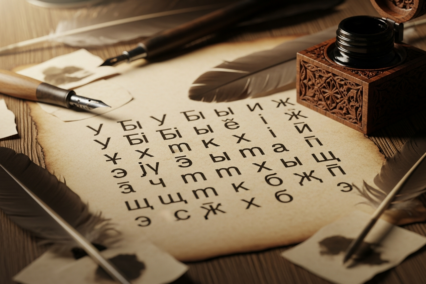
Tajik Persian uses the Cyrillic script. In Tajikistan, their vowel system has changed because of other languages spoken nearby. The main set of vowels is still alike, but the sounds of each vowel and how they are used can be different. This helps make the Persian language more rich, because each place brings something new to it.
Persian Consonants
Persian phonology has 23 consonant sounds. If you speak English, this will be easy for you because most of these consonants are ones you know. Sounds such as /b/, /p/, /t/, /d/, /k/, /g/, /m/, and /n/ are spoken the same way as in English. This makes learning Persian pronunciation much easier for people who speak English.
The Persian alphabet is made up of 32 letters, but some letters make the same sound. For example, the /s/ and /z/ sounds can be written with different letters. This is left over from when the script first came from Arabic. If you want to master the Persian alphabet, it helps to see how these consonants go with the syllable structure. Up next, we will talk about the unique and common consonant sounds in Persian phonology and how they fit into each syllable.
Common Consonant Sounds and Pronunciation
In modern Persian, there are some common consonants that are easy to say, like /p/, /b/, /t/, and /m/. But there are also some sounds in this language that need more practice. Two of these are called uvular sounds. They are /q/ (ق) and /x/ (خ). The sound /x/ is a voiceless fricative. It is close to the “ch” you hear in the Scottish word “loch” or in the German word “Bach.”
The consonant /q/ (ق) is a voiced uvular stop in some ways, but in Tehrani Persian it sometimes mixes with another sound called /ɣ/ (غ), which is a uvular fricative. People make both these sounds at the back of the mouth, right by the uvula. They can be hard to say for people who speak English at first.
Persian handles consonant clusters in a simple way. While English allows hard clusters, like the “str” sound in “street,” Persian does not. The way syllables work in Persian means you usually get a consonant and a vowel together. You will not get many words that start with lots of consonants in a row. This makes Persian pronunciation smooth and easy to follow from one syllable to the next.
Allophonic Variation and Dialect Differences
Allophones are other ways to say the same sound, or phoneme, but the meaning of the word does not change. In Persian, you can find this in many different places. One example is how people say the consonant /q/. In Tehrani Persian, this sound is often said the same as /ɣ/. Over time, this has become the normal way in Tehran. It shows that sounds can come together in a dialect as the years go by.
There are a lot of clear dialect differences in the Persian-speaking areas. People speak Persian in Iran and call it Farsi. In Afghanistan, people speak Dari, and in Tajikistan, people speak Tajik Persian. All of these have their own special sounds and rules. For example, tajik persian uses the Cyrillic script and has Russian influence. This has changed how people there say some words and letters.
The phonology, or sound system, of the language has changed from what it was in Middle Persian to how people speak now. These changes show up in the dialects used in different regions. A person from Tehran and a person from Kabul will often still understand each other. But their accents and the way they say some vowels and consonants will be different. This helps us see how old and rich the history of Persian really is.
Stress, Accent, and Pronunciation Challenges
Getting the stress and intonation in Persian right matters as much as saying each sound the correct way. In Persian, where you put the stress in a word is usually easy to know. This helps most people learn faster. But, there are some exceptions, and little changes can still make things hard. You need to stress words the right way if you want people to understand you. It will also help you sound more like a native speaker.
Persian intonation gives meaning too. It helps show if you are asking a question, making a statement, or showing how you feel. When you pick up the rhythm and tune of Persian, your speaking skills will get much better. Next, we will talk about certain word stress rules and things that often trip up learners when it comes to persian intonation.
Word Stress Patterns and Difficulties for Learners
The role of stress in Persian phonology is to give the language a beat. It helps to tell apart some grammar forms. Most of the time, stress is put on the last syllable in Persian words. For example, in the word “ketâb” for book, stress goes on the last syllable: ke-TÂB. This rule is easy and good for people who are just starting to learn Persian words.
But there are some important exceptions that are harder. Some endings and grammar parts in Persian move the stress away from the last syllable, so this can be confusing. For learners, the hardest part may be to remember these exceptions so the pronunciation sounds natural and good.
Some main exceptions are:
-
The plural ending “-hâ” does not take the stress. The stress stays on the syllable before it.
-
The calling ending “â,” when it goes after a name or noun, pulls the stress to itself. So the stress moves from the usual place.
One more thing to know is that wrong stress can change what the Persian words mean. It can also flip the grammar, like making something a command instead of a statement. To get the pronunciation right, focus on the syllable structure and listen to what native Persian speakers say. This is the best way to come over the challenges in Persian phonology and syllable stress.
Conclusion
To sum up, knowing about Persian phonology will help you with the sounds and pronunciation of the Persian language. When you look at things like how vowels and consonants change, or how Persian sounds are not the same as the ones in English, you will get better at speaking. You will also find it easier to notice stress and accents. Getting into the small details of Persian sounds helps you talk better, and it makes you see how nice this language is. If you want to work on your pronunciation more, you can ask for a free consultation. You can get help and tips that fit you and your learning pace.