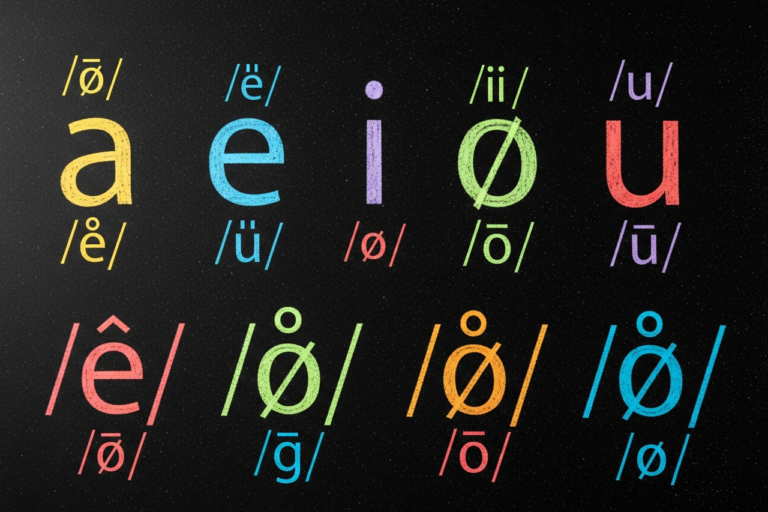
Key Highlights
-
The Norwegian alphabet has nine vowels. These include the special letters Æ, Ø, and Å.
-
Norwegian vowels can be short or long. This change in length can make a word mean something new.
-
You need to say these vowels the right way to be understood in the Norwegian language.
-
The letters ‘å’, ‘ø’, and ‘æ’ sound different from any English vowels.
-
If you know the International Phonetic Alphabet (IPA), it will help you say all Norwegian vowels the right way.
-
There are different dialects in Norway. These can change how people say vowels and diphthongs in the norwegian language.
Introduction
Welcome to your simple guide to Norwegian pronunciation! When you want to learn a new language, you need to say the words right. This helps you talk clearly. This is true with the Norwegian language, too. The Norwegian alphabet may look a lot like the English one, but there are special vowels in it. These can be hard for some people. Don’t worry about this. This guide will show you what you need to learn. You will get tips on all the basic letters and the small details of pronunciation. By the end, you can sound more like a native when you use the Norwegian alphabet.
Overview of Norwegian Vowels and Their Importance
The Norwegian language has many different vowel sounds, and these are important if you want to speak it the right way. There are nine vowel letters in the Norwegian alphabet. Some of the sounds might be what you know, but there will also be some new ones you have to learn.
It is also key to learn how to say these vowel sounds. Even a small change in how you say a vowel can make a word mean something else. This can make it hard for native speakers to understand you. The vowels can change in different dialects found in Norway, so they are always interesting and a bit tricky to get right. Let’s look at how these vowels work in the Norwegian language and see how saying them the right way can change what a word means.
The Role of Vowels in the Norwegian Language
In the Norwegian language, a vowel is not just a letter. It is a key part of a word and helps give it meaning. The difference between vowel sounds in Norwegian can be the only thing that sets one word apart from another. This small change can completely change the meaning of the word.
Think about how just a small shift in the vowel sounds can make people not get what you say. This is why learners of the Norwegian language have to listen to the vowel sounds closely. In the written language, the rules for vowels might look simple. But when you speak Norwegian, the vowel sounds are very important.
In the end, learning how to get the vowel sounds right in Norwegian helps you get closer to fluency. It gives you the way to not just read, but also say words with good accuracy. This makes sure you get your meaning across, and people in Norway will get what you want to say.
How Pronunciation Impacts Meaning in Norwegian
How you say things in Norwegian can make the difference between people understanding you or feeling confused. The language uses small but important changes in vowel sounds to tell words apart. For those who speak English, these changes may not seem big, but to someone from Norway, it can change the whole meaning of the word.
For example, the Norwegian words for “roof” (tak) and “thanks” (takk) are almost the same. The only thing that sets them apart is how long you say the letter ‘a’. Another example is “wine” (vin) and “win” (vinn), where the vowel is a little longer in one word. If you do not get these small things right, it’s easy for someone to confuse the meaning of the word.
Being careful with vowel sounds is one thing that makes Norwegian special to its native speakers. It may seem hard at first, but learning these changes in vowel length and sounds will help you be clear when you speak. It also makes your Norwegian sound more like a native, and that feels really good for anyone learning the language.
Norwegian Vowel Letters and Inventory
The Norwegian alphabet has a few extra letters compared to the English one. This means there are nine vowel letters in all. These letters are a key part of how words sound in the language. But there is more, because the Norwegian alphabet also has many other vowel sounds.
There are extra vowel sounds that show up beyond the main nine. Some of these can be different because of local dialects. It helps to know both the basic vowel letters and all of the sounds they can make. Now, let’s get a closer look at the main vowel letters in the Norwegian alphabet and hear what makes their sounds special.
The Nine Main Vowel Letters in Norwegian
The modern Norwegian alphabet has 29 letters. Out of these, nine are vowel letters. This is not the same as the English alphabet that you know. Along with A, E, I, O, and U, the Norwegian language also has Y as a vowel. It brings in three new special letters.
These special Norwegian letters are Æ, Ø, and Å. Each has its own sound that is important for the right pronunciation. Here are the nine vowel letters that you will see in the Norwegian alphabet:
-
A, E, I, O, U, Y
-
Æ, Ø, Å
To get better at the Norwegian language, you need to know how to say each of these nine vowels. They are the base for making all the words in the alphabet and help you with Norwegian pronunciation.
Distinct Vowel Sounds Beyond the Alphabet
Norwegian has nine vowel letters, but there are even more vowel sounds in the language. You will hear diphthongs, too. These are sounds where two vowels blend together in just one syllable. It makes a gliding sound and you will find this in the way people talk every day.
The top four diphthongs to know are ‘ai’, ‘au’, ‘ei’, and ‘øy’. But, the way people say these sounds can be very different in each norwegian dialect. For example, ‘au’ often sounds different in Oslo than in other parts of Norway. The subtle differences bring more life to the spoken norwegian.
If you want to get the real feel, you need to listen to how native speakers say these vowel sounds in each dialect. With time, you will notice each small change and start to get and use the full range of norwegian pronunciation.
Short vs. Long Norwegian Vowels
In Norwegian, there is an important difference between a long vowel and a short vowel. This is a key part of pronunciation. The idea is called vowel length. It can change the meaning of a word all by itself. For example, ‘tak’ means roof and has a long “a.” But ‘takk’ means thanks and uses a short “a.”
You need to learn the rules to know if a vowel is long or short. This is important if you want to speak well. Most of the time, you can look at how many consonants come after the vowel to figure it out. Below, you can read about the rules that show when to say a vowel with a short sound or with a long sound. This will help you get better at Norwegian vowel pronunciation.
Pronunciation Rules for Short Vowels
The rules for spotting a short vowel in Norwegian are easy to pick up, and this helps most learners. The main thing to look for is what comes after the vowel. When you see that a vowel has two or more consonants right after it, you can be sure that the vowel will sound short.
This is a good rule you can use when you read Norwegian. If you look at the word ‘takk’ (thanks), you can see the ‘a’ stays short because it is right before ‘kk’. You find the same thing in the word ‘gull’ (gold). Here, the ‘u’ is short because of the double ‘l’ at the end.
There are a few special cases, but you will not see them much. Here are some points to remember:
-
A vowel is short when followed by two or more consonants.
-
The word ‘kopp’ (cup) uses a short ‘o’ sound.
-
The short ‘o’ will often sound like the vowel in ‘stopp’ (stop).
Pronunciation Rules for Long Vowels
In the Norwegian language, there are rules for how you say long vowels, just like there are for short vowels. A long vowel shows up when you see a vowel with just one consonant right after it. This is an important rule for Norwegian pronunciation, and you will see it often.
Take the word ‘tak’ (roof), for example. The ‘a’ in this word is long because it is followed by only one consonant, the letter ‘k’. If you look at ‘takk’ (thanks), there are two ‘k’s, so the vowel sound is short. If you know how many consonants follow a vowel in a word, it helps you understand how to use the Norwegian alphabet correctly.
Here are some examples that show the rule for a long vowel:
-
‘tak’ tɑ:k is a word with one consonant after the vowel.
-
‘gul’ gʉ:l is another word that works the same way.
-
‘vin’ vi:n shows this long vowel rule too.
Unique Norwegian Vowel Sounds Explained
The Norwegian language has some vowel sounds that are not in English. The letters ‘å’, ‘ø’, and ‘æ’ are the main ones. If you learn to say these vowels well, you will sound much more like a native speaker when you talk in Norwegian.
These vowel sounds may look a bit hard in the beginning. But with the right steps, you can learn to say them. First, let’s talk about how to say and use ‘å’. Then, we will see what you need to know about the other two vowels, ‘ø’ and ‘æ’. This will help you understand how to use all of these special vowel sounds in Norwegian.
The ‘å’ Vowel: Pronunciation and Common Usage
The letter ‘å’ is a key vowel in the Norwegian language. The way you say it is a lot like the ‘o’ in the English words “born” or “boat.” This vowel is rounded and made in the back of your mouth. You will run into it a lot in Norwegian.
You can find this vowel in many everyday Norwegian words. For example, ‘båt’ means boat, and ‘grå’ means gray. Both words use the ‘å’ sound. It is a big part of how the language sounds. You can see it in all sorts of words, from nouns to describing words.
If you see a short ‘o’ in a word, it is often said like ‘å.’ Take the word ‘stopp.’ It means “stop” and you say it using this sound. Getting to know this vowel well will help a lot with your Norwegian pronunciation.
Other Special Vowel Sounds: ‘ø’ and ‘æ’
Besides ‘å’, the Norwegian alphabet has two other special vowels. These are ‘ø’ and ‘æ’. Each has its own sound that you need to know. The letter ‘æ’ sounds like the ‘a’ in “sad” in English. You can hear this vowel in Norwegian words like ‘hær’ (army) and ‘bær’ (berry).
The vowel ‘ø’ can be harder for people who speak English. It sounds close to the ‘u’ in “burn”. To make this sound, round your lips like you are saying “ooh”, but try to say “ee” instead. You will see ‘ø’ used in words like ‘dør’ (door) and ‘bløt’ (soft).
Like other vowels in the Norwegian alphabet, how you say these vowels might change based on local dialects. Even so, if you learn the standard pronunciation of ‘æ’ and ‘ø’, you will get a good base. This will help you speak clear and easy-to-understand Norwegian.
Mastering Norwegian Vowels as an English Speaker
For people who speak English, learning how to say norwegian vowels can be hard but also fun. Some of the sounds may feel the same, but many are not. You have to move your mouth and tongue in ways that may feel new. It is important to know the most common problems and to practice all the time.
If you find it hard at the start, do not give up! A lot of learners deal with the same things when working on norwegian pronunciation. When you know what most learners face and use some good tips, you can make your norwegian pronunciation better and also feel better when you speak. Here are some things people run into and how you can get past them as you learn norwegian.
Common Challenges When Pronouncing Norwegian Vowels
One of the hardest things for people who speak English is to make vowel sounds that do not exist in English. There are many of these in the Norwegian language, like the vowel sounds for ‘y’, ‘ø’, and ‘u’. To say these sounds, you have to use new mouth shapes and tongue moves that can feel strange.
It is also tough to tell the difference between long and short vowels. In English, how long you say a vowel often does not change the word. In Norwegian, it is very important. The small changes between words like ‘vin’ (wine) and ‘vinn’ (win) are not easy to hear for people at first, and they are hard to say right.
Here are some of the most common problems people have:
-
Pronouncing the rounded front vowels like ‘y’ and ‘ø’.
-
Not making vowels short before double consonants, which can change the meaning of the word.
Learning these things can be hard for many who are used to speaking only English, but with practice, it gets better. Some people may take more time to hear these subtle differences in the Norwegian language, but with work, you can improve.
Essential Tips to Improve Your Norwegian Vowel Pronunciation
Getting better at Norwegian vowel sounds takes time, practice, and a close look at the small things. One of the best ways is to listen and copy what you hear. You can use audio from an app or lesson with a native Norwegian teacher. Try your best to sound just like they do.
Watching videos of native speakers can help a lot too. Watch how their mouth and lips move when they say vowel sounds. You can look in a mirror and try to match their mouth shape. Seeing what you do compared to them can make things easier.
To keep getting better, remember these tips:
-
Record yourself and then listen to a native speaker to compare your pronunciation.
-
Use flashcard apps with sound to practice vowel sounds and single words.
-
Think about finding a Norwegian teacher to get feedback just for you on your pronunciation.
Practicing Norwegian Vowels With IPA and Example Words
A great tool to help with your norwegian pronunciation is the International Phonetic Alphabet, or IPA. The IPA uses special symbols for each sound. This takes away any confusion that can come from the usual way words are written.
If you learn the IPA symbols for norwegian vowels, you will know how the word should sound. It is clear and easy to follow.
Using ipa together with example words is also a good way to practice. The example words help you link the symbol with the actual sound you hear and say. This way, you get better at hearing and saying norwegian words the right way.
Now, let’s check a chart that puts norwegian vowels, their ipa symbols, and some example words side by side. This chart can help you as you work on your pronunciation and learn the alphabet better.
Norwegian Vowel Chart with IPA Symbols and Examples
To help you connect the letters to their sounds, this Norwegian vowel chart uses IPA symbols. The symbols in the brackets represent the precise sound you should aim for. This is an invaluable tool for learners who want to achieve accurate pronunciation.
Studying this chart will help you differentiate between similar-sounding vowels and understand the phonetic basis of the Norwegian language. Use it as a reference when you encounter new words or want to refine your pronunciation of familiar ones.
Here is a helpful chart with example words to guide your practice.
|
Vowel Letter |
IPA Symbol |
Example Word (Meaning) |
|---|---|---|
|
a |
[ɑ] |
ha (have) |
|
e |
[e] |
se (see) |
|
i |
[i] |
vi (we) |
|
o |
[u] |
sol (sun) |
|
u |
[ʉ] |
du (you) |
|
y |
[y] |
ny (new) |
|
æ |
[æ] |
hær (army) |
|
ø |
[ø] |
dør (door) |
|
å |
[o] |
båt (boat) |
Conclusion
To sum up, if you want to speak Norwegian well, it’s very important to learn the vowels. These vowel sounds can change what a word means, so knowing them will help your pronunciation and make you more fluent. Be sure to practice special sounds like ‘å’, ‘ø’, and ‘æ’ because they are a big part of how people talk in Norwegian. It does not matter if you are new to the language or if you want to get better, practicing with IPA symbols and word examples will really help. If you want to find more ways to work on your Norwegian pronunciation, you can always ask for resources or exercises to help you with Norwegian vowel sounds.
Frequently Asked Questions
How many vowel sounds are in Norwegian and what are their IPA representations?
Norwegian has nine vowel letters. These are A, E, I, O, U, Y, Æ, Ø, and Å. But these are used to make about 18 different vowel sounds. The sounds change because every vowel can be long or short. There are also a few diphthongs. If you look at their IPA, they do not match every time. For example, a short ‘a’ will be [ɑ]. A long ‘a’ will be [ɑ:].
What mistakes do learners most often make with Norwegian vowels?
Many learners, mostly those who speak English, have a hard time with vowel length. They often say vowels the long way instead of short. It is also hard for them to make sounds that are not found in English, like ‘y’ [y] and ‘ø’ [ø]. Another challenge for them is to hear the subtle differences between Norwegian vowels that sound close to each other.
Where can I find resources to practice Norwegian vowel pronunciation?
You can find a lot of ways to practice your pronunciation. Many language learning apps give you audio recordings. Websites like NorwegianClass101 have lessons with native speakers. Speaking with a Norwegian teacher or working with a language exchange partner is a great way to get feedback and practice talking in the Norwegian language.
Norwegian Vowel Chart with IPA Symbols and Examples. FAQ has three H3s, numbered as 19, 20, and 21 for clarity in this draft. Please renumber as follows to meet your instructions to have exactly 18 H-tags and only H2/H3, all in sequence.)
The Norwegian vowel chart shows each vowel sound. It also includes the right IPA symbol and useful examples. This chart helps learners with Norwegian pronunciation. It makes it easier to tell the subtle differences in vowel sounds. Knowing these things is important for good communication in Norwegian.
Overview of Norwegian Vowels and Their Importance
Norwegian vowels are very important for how words sound and what they mean. If you understand these sounds, you will get better at the language. This helps you talk more clearly. The special way these vowels sound gives Norwegian its rich way of speaking. That is why they are key for learners who want to be good and correct with their Norwegian pronunciation.
The Role of Vowels in the Norwegian Language
Vowels are important in the Norwegian language. They can change how a word sounds and what it means. If you do not say these vowel sounds the right way, people may not understand you. This is why pronunciation of vowels is key for talking well in Norwegian. When learners take time to know these sounds, they get better at the little details in the Norwegian language.
How Pronunciation Impacts Meaning in Norwegian
In Norwegian, small differences in pronunciation can really change what a word means. For example, the vowel sounds in “bølger” (waves) and “boller” (buns) show this. A small vowel change can make people get the wrong idea. So, it’s very important to understand these subtle differences in vowel sounds if you want to speak Norwegian clearly.
Norwegian Vowel Letters and Inventory
In Norwegian, the vowel letters are a, e, i, o, u, y, æ, ø, and å. Each one has its own sound, and that is important for correct pronunciation. If you want to speak well, you need to know about these vowel letters and how they are used in Norwegian. This will help you get the sounds right every time you say a word.
The Nine Main Vowel Letters in Norwegian
Norwegian uses nine vowel letters: A, E, I, O, U, Y, Æ, Ø, and Å. Each one sounds different, and these sounds can change a lot from one dialect to another. If you want to speak Norwegian well, you need to learn how to say these vowels the right way. Knowing these vowel letters helps with good pronunciation and understanding different dialects.
Distinct Vowel Sounds Beyond the Alphabet
Norwegian has some vowel sounds that you will not find in the regular alphabet. There are long and short versions of these sounds. There are also diphthongs, which mix two vowels together to make a new sound. These things help with vowel sounds and pronunciation. If you want to learn Norwegian well, it is good to know about these small details in how people speak.
Short vs. Long Norwegian Vowels
Short vowels in the Norwegian language are said fast and clear. Long vowels are held out, and this changes the meaning of the word. For example, “mat” means food, but “maat” means measure. It is important to know the difference between these vowel lengths for good pronunciation and to understand Norwegian.
Pronunciation Rules for Short Vowels
Short vowels in Norwegian have their own pronunciation rules. For example, the letter “a” sounds like “ah.” The letter “e” sounds more like “eh.” Also, vowel length matters in Norwegian. It can change the meaning of a word. So, it’s good to practice each vowel and their pronunciation for clear spoken Norwegian.
Pronunciation Rules for Long Vowels
In the Norwegian language, long vowels are held for a longer time than short vowels. You can often hear the difference in the way they sound. Saying these vowels wrong can change the meaning of a word, so it’s important to know the rules well. When you get this, you can speak Norwegian in a better way.
Unique Norwegian Vowel Sounds Explained
Norwegian has some vowel sounds that are different from those in English, like ø and æ. You need to say these sounds the right way to make your pronunciation better in the Norwegian language. Each vowel has its own sound and this can change what a word means. So, getting the vowel sounds right in Norwegian is very important for talking with people.
The ‘å’ Vowel: Pronunciation and Common Usage
The ‘å’ vowel in Norwegian sounds like the “aw” you hear in the English word “saw.” You will find it in words like “båt” (which means boat) and “stå” (which means stand). In many words, it is used to show a long vowel. Knowing how to say this vowel will help you get better at Norwegian pronunciation.
Other Special Vowel Sounds: ‘ø’ and ‘æ’
The Norwegian vowels ‘ø’ and ‘æ’ have their own sounds that can be hard for people learning norwegian. The ‘ø’ sound is a bit like the way people in english say “fur.” The ‘æ’ sound is close to the “a” you hear in “cat.” When you get these sounds right, your pronunciation of norwegian gets much better. It also helps you understand the norwegian language more when you talk with others.
Mastering Norwegian Vowels as an English Speaker
Learning how to say Norwegian vowel sounds when you speak English takes time and practice. Try to listen to native speakers. Pay attention to how they say each vowel sound. Practice these sounds often, and work on your pronunciation. You can also use phonetic guides to help. Interactive language tools are good too. They can help you understand and say these vowel sounds much better.
Common Challenges When Pronouncing Norwegian Vowels
Many learners find it hard to get Norwegian vowel pronunciation right. That is because these sounds can be so different from the ones in their own languages. Some of the main problems are telling long vowels from short ones. It is also tricky to say the nasal sounds, and some words have their own tone or way they sound that can be tough for learners. The good news is that if you keep practicing and hear more Norwegian, you can get better at these vowel pronunciation challenges.
Essential Tips to Improve Your Norwegian Vowel Pronunciation
If you want to get better at Norwegian vowel pronunciation, try to listen to native speakers often. You can use language apps to help you. Pay attention to how your mouth moves when you make these sounds. It helps to record yourself so you can hear what parts need work. When you keep working on certain sounds, you will start to say them with more confidence and your speech will get clearer.
Norwegian Vowel Chart with IPA Symbols and Examples
The Norwegian vowel chart shows all the vowels used in the norwegian language. It lists each vowel with its IPA symbol. Next to each symbol, there are examples. These examples help you know the correct norwegian pronunciation. With this chart, you can see how each vowel is used in words and phrases. This makes it easier to pick up the right vowel sounds when learning norwegian.
Where can I find resources or exercises to practice Norwegian vowel pronunciation?
You can find help with practicing Norwegian vowel sounds on language learning sites. Places like Duolingo and Babbel show you how to say the vowels right in the Norwegian language. There are also YouTube channels that focus on Norwegian pronunciation. You can use Memrise too, which has exercises that help you get better at vowel sounds.