Key Highlights
Ready to check out the sounds of Nepal? This guide will help you learn the basics about Nepali vowels. Read on to find what you need to get started:
-
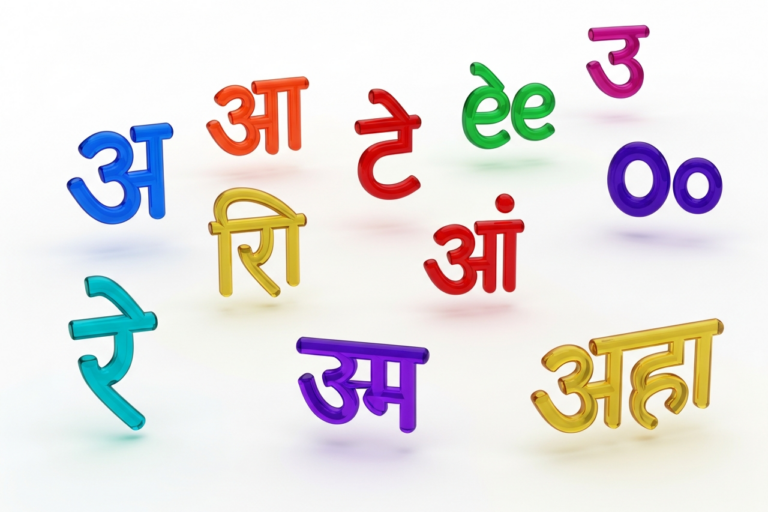
The Nepali alphabet uses the Devanagari script. It uses special symbols to show its vowel sounds.
-
There are 13 vowels in the Nepali alphabet. But people use only about ten when they talk every day.
-
Learning how to say these vowels helps you speak Nepali in a clear way.
-
Vowels have a form by themselves. They also use special marks, called ‘matras’, when they join with consonants.
-
Once you know these vowel sounds, you can read, write, and speak the Nepali language much better.
Introduction
Welcome to your simple guide for the beautiful Nepali language! If you ever felt interested in Nepal, with its high mountains and busy culture, learning the language of Nepal can be your next good step. Nepali is the official language of Nepal. Many people speak it. When you learn Nepali, you get a real look into a colorful part of their life.
This article will talk about a basic part of the Nepali alphabet: the vowels. If you learn these sounds well, you will find it easy to speak with more confidence. You will also start to connect better with people and culture of Nepal. If you want to use Nepali in work or travel, knowing these first vowels is the best way to start with the Nepali alphabet.
Overview of Nepali Vowels
The Nepali vowels are at the heart of the language of Nepal. Unlike English, where vowel sounds can be hard to figure out, the Nepali alphabet is more steady and simple to use. This helps new learners a lot, because the vowel sounds are always spoken the same way. For native Nepali speakers, these sounds are what make up every word.
When you start to learn, you will see that each vowel in Nepali has its own sound. This sound almost never changes. This makes things a lot easier. If you know these basic vowel sounds, as they are shown in the Journal of the International Phonetic Association, you will be ready to communicate clearly in Nepali.
Importance of Vowels in the Nepali Language
Vowels are the main part of the Nepali language. They are in every Nepali word and syllable. If you get the vowel sounds right, you will be easy to understand by native speakers. It is important because even a small change in a vowel can make a Nepali word mean something else. You should listen and practice the pronunciation from the start. This will help you build good vocabulary.
Think of simple Nepali words. The greeting “Namaste” (नमस्ते) needs the ‘a’ and ‘e’ vowel sounds to be said the right way. When you say “dhanyabād” (धन्यवाद), which means “thank you,” it uses clear ‘a’ sounds that are important. If you can hear and say these sounds well, you will have better fluency and your Nepali will sound more natural.
You can practice by listening to native speakers. You can use language exchange apps like Tandem. It’s also good to find online audio tools. These will help you get used to Nepali vowel sounds and improve your pronunciation. By doing this, learning nepali will be easier and you will get better at speaking it.
Role of Vowels in the Devanagari Script
The Devanagari script is used for Nepali, Hindi, Marathi, and other languages of India. In Devanagari, vowels have two main jobs. Every Nepali vowel has its own letter in the alphabet if it starts a word or stands alone. For example, the vowel ‘अ’ (a) is a complete letter.
But Devanagari script shows its special feature when you use vowels with consonants. You don’t write the full vowel letter. Instead, you put a mark called a ‘matra’ on the consonant. This makes Devanagari a syllable-based alphabet, because every unit shows a consonant and a vowel together. For example, the letter ‘क’ (ka) always comes with the ‘a’ sound.
To change the vowel sound in that syllable, you add a matra. This system helps the script stay very close to how the words sound. It lets you read Nepali words without guessing, as long as you know the rules for each syllable. In Devanagari script, both the main letters and the matras for each vowel are important for writing in Nepali.
List of Nepali Vowels and Their Sounds
The Nepali alphabet has vowels that are key to good pronunciation. The traditional script shows 13 vowels, but people now mainly use the first ten. These vowels have clear and steady sounds, which makes it easier to learn.
To really get the vowel sounds right, you should learn the International Phonetic Alphabet (IPA) symbols along with the Devanagari script. That way, you have a straight guide for pronunciation. We will look at each of these vowels more closely so you can improve how you speak Nepali.
Pronunciation Guide for Each Vowel
Getting the right pronunciation of Nepali vowels is an important part of sounding more natural in the Nepali language. The vowel sounds in this language are clear and sharp. If you learn these sounds well, they will help you understand words better and talk in an easier way, too. Many of the vowel sounds in Nepali are a lot like sounds in English, so it will not be hard for you to learn them.
Let’s take a look at vowel sounds that you will hear the most in the Nepali alphabet. You see them in so many words, from things you say when you meet someone new to common food. Here you get a list of the main Nepali vowels and how you can say them in an easy way:
-
अ (a): It sounds much like the ‘u’ in “up” or “cut.”
-
आ (ā): It sounds like the ‘a’ in “father” or “car.”
-
इ (i): It is like the ‘i’ you hear in “sit” or “pin.”
-
ई (ī): You say this like the ‘ee’ in “machine” or “see.”
-
उ (u): This is like the ‘u’ in “put” or “book.”
When you practice these vowel sounds, you can use help from things like the Journal of the International Phonetic Association, or you can listen to native speakers. This will help
English Transliteration and IPA for Nepali Vowels
To help bridge the gap between the Devanagari script and the Roman alphabet, English transliteration is an invaluable tool. It provides a way to write Nepali words using familiar letters, which is especially helpful for beginners. Alongside transliteration, the International Phonetic Alphabet (IPA) offers a precise, universal key to pronunciation for all Nepali vowels.
This chart is a great reference for seeing the Devanagari character, its standard Nepali transliteration, and the corresponding IPA symbol. It’s a handy tool for practicing both reading and speaking. How do you write the Nepali vowels in English transliteration? The table below shows the most common method.
This chart of Nepali vowels provides a clear overview:
|
Devanagari |
Transliteration |
IPA |
Sound Example |
|---|---|---|---|
|
अ |
a |
/a/ |
‘u’ in ‘up’ |
|
आ |
ā |
/a:/ |
‘a’ in ‘father’ |
|
इ |
i |
/i/ |
‘i’ in ‘sit’ |
|
ई |
ī |
/i:/ |
‘ee’ in ‘machine’ |
|
उ |
u |
/u/ |
‘u’ in ‘put’ |
|
ऊ |
ū |
/u:/ |
‘oo’ in ‘flu’ |
|
ए |
e |
/e/ |
‘ay’ in ‘they’ |
|
ऐ |
ai |
/ai/ |
‘ai’ in ‘aisle’ |
|
ओ |
o |
/o/ |
‘o’ in ‘so’ |
|
औ |
au |
/au/ |
‘ou’ in ‘ouch’ |
Writing Nepali Vowels in Devanagari
Now that you know how to spot and say the Nepali vowels, it’s time to learn how to write them. The Devanagari script looks nice and neat. With some practice, you will get used to the way each letter is made. Every vowel has its own look when you write it alone.
The good news is, the modern world gives you simple ways to write in the Nepali alphabet. You can try out tools like Easy Nepali Typing or put a Nepali keyboard on your phone or computer. This makes things go quick. You just type how words sound, and the right letters in Devanagari script show up for you.
Script Symbols and Stroke Order
Learning the Devanagari script symbols for Nepali vowels is not just about knowing what they look like. You have to learn the right way to write each one too. Doing the strokes in the right order helps you write the letters in a clear way. Most letters in this alphabet have a horizontal line across the top. You usually draw that part last.
Here is how you can start making some key vowels. When you keep practicing, your hand will get used to it. Every symbol for a vowel in the Devanagari script is different, so it’s good to know them well. This will help you write.
-
अ (a): First, make a shape that looks like the number ‘3’. Then draw a vertical line. Last, draw the line across the top.
-
आ (ā): This is nearly the same as ‘अ’, but you add another vertical line right next to the first one.
-
इ (i): Start with a short vertical line, then draw an ‘S’ shape. Put a little loop at the bottom.
-
ई (ī): This looks like ‘इ’, but you put a curvy line at the top.
Keep practicing the stroke order for all the Nepali vowels in the Devanagari alphabet. You will see your writing get better and you will read the script more easily. There are a lot of online sites out there with videos to show you each step as
Common Matras and Their Usage
In the Devanagari script, the vowels do not usually show up in their full form inside a word. You will see them as marks attached to consonants. These marks are called matras. It is important to learn about these matras if you want to read and write in the Nepali language. There is a matra for every vowel, except for ‘अ’ (a). This vowel sound is already in every consonant.
If you want to change the vowel sound for any consonant, you add the right matra to it. For example, the consonant ‘क’ (ka) becomes ‘कि’ (ki) when you use the matra for ‘इ’. It turns into ‘कु’ (ku) with the matra for ‘उ’. Each matra will go before, after, above, or under the consonant. It all depends on which vowel you want to use.
Here’s a quick look at some common matras and how you will see them in the Nepali language:
-
आ (ā): The matra is one line (ा) you write after the consonant, like in का (kā).
-
इ (i): The matra (ि) is a small curve that starts after the consonant and moves to the left over it.
-
ई (ī): This matra (ी) looks like the previous one but it curves over the consonant to the
FAQs (Frequently Asked Questions)
Here are answers to some common questions about Nepali vowels.
How many vowels are there in the Nepali alphabet?
The Nepali alphabet has 13 vowels. But today, native speakers in Nepal often use only about 10 vowels when they talk with others. The other vowels are old. You mostly find them in religious or poetic works that come from Sanskrit.
What are some effective ways to practice Nepali vowels?
To practice Nepali vowels, try listening to native speakers on language exchange apps or watch videos online. Use flashcards to connect the script, the sound, and how it’s written. Say words and short phrases out loud again and again. This helps you work on proper pronunciation, build your vocabulary, and get more fluent in Nepali.
What is the difference between Nepali vowels and consonants?
In the Nepali alphabet, vowels and consonants be used in different ways. Vowels make open sounds. They are the base of a syllable. A consonant needs a vowel to finish the syllable. Every Nepali consonant has a natural ‘a’ sound with it. This stays until the sound is changed by a vowel matra.
Conclusion
Learning Nepali vowels is important if you want to get better at using the nepali language. Knowing about vowel sounds helps you with pronunciation. It also makes it easier to read and write in the devanagari script. You might be just starting out, or you may want to go deeper with what you know. Practicing nepali vowels will help you speak and write with more fluency and confidence. Take time to look over the pronunciation guides and writing methods in this guide. Let yourself enjoy the nepali language. Add these vowel sounds to your daily practice.
If you want to learn even more about nepali, you can always find extra help or resources to grow your skills.