Key Highlights
-
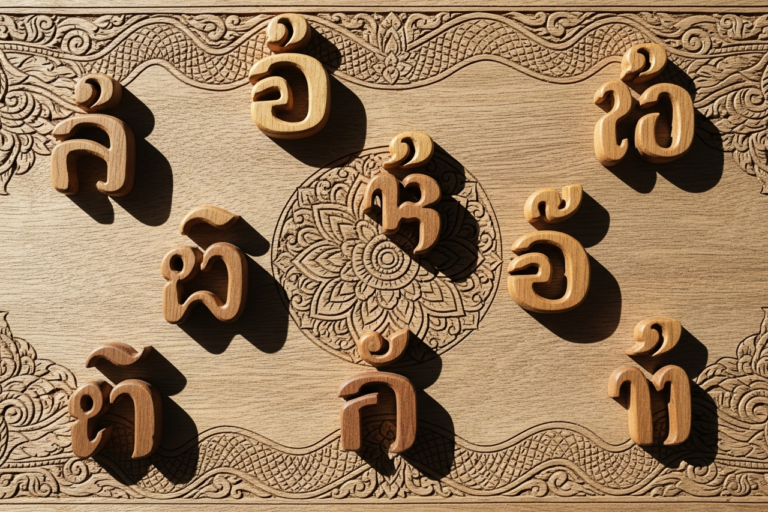
The Lao script is an abugida writing system. Each consonant has its own vowel sound attached to it.
-
Lao vowels are marks that go around consonants. They are not their own letters.
-
These marks sit above, below, before, or after the consonant.
-
Vowel length is very important in Lao. It shows if a vowel is short or long. This difference can change what a word means.
-
The Lao writing system is used for the official language of Laos. It is also used in some minority languages.
-
The Lao script came from the Old Khmer script. The Old Khmer script came from the Brahmi script.
Introduction
Welcome to the world of the Lao language. If you want to know how to read and write in Lao, you are in the right place. This guide will show you the basics of Lao vowels. Vowels are an important part of the Lao writing system, called “Akson Lao.” Knowing how these vowels work is important for the script and pronunciation of the Lao language. Get ready to see the different sounds and symbols in the Lao writing system. These make the Lao language special.
Understanding the Lao Vowel System
The Lao vowel system is a part of an abugida writing system. You will find this kind of writing system in many places in South and Southeast Asia. In this system, consonants are the main part of each syllable. The vowel sounds are shown with marks that you put around the consonants. The Lao script has a long history. It started long ago with the ancient Brahmi script.
Knowing about this system is the first thing you need to read Lao. The Lao vowel system is not like alphabets where vowels are their own letters. In Lao script, vowels need to go with consonants. In this guide, we will see the special work these vowels do and how they are not the same as consonants.
The Role of Vowels in Lao Language
In the Lao language, the vowel is the main part of every syllable. It gives the basic sound that helps put consonants together to make real words. Vowels are not single letters but small marks that stick to a consonant. The type of consonant that a vowel works with can change the tone of the syllable. This tone is very important in Lao.
There are a few kinds of vowels in the Lao language. You will find short vowels, long vowels, and special types called diphthongs, or combined vowels. Every kind sounds a little different and has its own way of being written. If you say a long vowel when it should be short—or a short vowel when it should be long—you might say something you did not mean. Vowel length is a big deal for good pronunciation in Lao.
For example, in Lao, the word for “eye” (ຕາ, said /tàː/) uses a long vowel. A word with the same consonants but a short vowel could mean something else. This is why it is so important to know about long vowels and short vowels. If you want to speak and understand Lao the right way, you need to get these vowel differences right.
Lao Vowels Versus Consonants: Key Differences
The main way that Lao vowels and consonants are different is in how they look and what they do in the Lao script. Consonants are the main part of the script. Each one shows a single sound and belongs to a group (high, mid, or low) that can change how the tone works.
Lao vowels work differently than in English or other alphabets. Vowels in Lao are not full letters on their own. They are small marks you put above, below, before, or after a consonant. A vowel is always with a consonant. It cannot stand by itself. If a word needs to start with a vowel, there is a special letter “ອ” in the lao script. People use it to hold the vowel at the start of a word.
This big difference is why the Lao writing system is called an abugida and not a real alphabet like in English. In the lao script, consonants build the word. Vowels change the sound of the syllable. Both vowels and consonants must work together to show every sound, so they cannot be separated in this system.
Types of Lao Vowels
Lao vowels come in many types. We can put them into groups based on how they sound and how they are made. The biggest difference is vowel length. There are long vowels and short vowels. This is more than just how you say the word. Vowel length can change what a word means.
There are also special vowels. These are made when you join more than one vowel to get new sounds, like diphthongs. If you learn about these kinds of vowels, you will get better at reading and speaking Lao. Let’s take a closer look at the different kinds of vowels in Lao.
Short Vowels and Their Pronunciation
Yes, there is a significant difference between short and long vowels in Lao. Short vowels are pronounced with a quick, abrupt sound. In the Lao script, these vowels often have a distinct written form that distinguishes them from their long counterparts. For example, some short vowels are formed by adding a specific symbol (◌ະ) or by using a different mark altogether.
Their pronunciation is crucial because using a short vowel instead of a long one (or vice versa) can change a word’s entire meaning. Mastering the correct pronunciation of short vowels is essential for clear communication. Each short vowel corresponds to a specific mark that combines with a consonant to form a syllable.
Here is a table of some common short vowels and their sounds:
|
Lao Script |
IPA |
Pronunciation Guide |
|---|---|---|
|
◌ະ / ◌ັ◌ |
/a/ |
Like the ‘a’ in “cat” but shorter |
|
◌ິ |
/i/ |
Like the ‘i’ in “sit” |
|
◌ຶ |
/ɯ/ |
A sound not in English, like saying ‘uh’ with your lips spread |
|
◌ຸ |
/u/ |
Like the ‘u’ in “put” |
|
ເ◌ະ / ເ◌ັ◌ |
/e/ |
Like the ‘e’ in “bet” |
Long Vowels and Distinctive Sounds
Long vowels in the Lao writing system have a sound that lasts longer than short vowels. This difference in vowel length is important in Lao. Each long vowel has its own symbol, and it is not the same as the short version. For example, the long vowel /aː/ is written as ◌າ in the Lao writing system. Its short vowel symbol is ◌ະ.
You need to hold the sound of these vowels a bit longer when you say them. ◌ີ sounds like the “ee” in “see,” and you stretch this sound out. ◌ູ makes a sound like the “oo” in “moon,” and it should be held. Knowing how to say these long vowels and noticing their length helps people speak Lao the right way.
Long vowels are a big part of the Lao vocabulary. For example, the word for “goose” (ຫ່ານ, /hāːn/) uses the long vowel symbol ◌າ. If you use a short vowel, it will change the word, or maybe make it meaningless. Seeing these vowel symbols and understanding how they sound will help you start to learn Lao.
Special and Combined Vowel Forms
Yes, the Lao vowel system has special and combined vowels along with the basic short and long vowels. These are known as diphthongs or triphthongs. This means you glide from one vowel sound to another in the same syllable. The Lao writing system uses basic vowel marks or special symbols together to make these sounds.
These forms are not extra letters like new consonants. Instead, they stand for common vowel pairings. This way, it is easier to write complex vowel sounds that you often hear in the Lao language.
Here are some examples of these special vowels in the Lao writing system:
-
ໄ◌ / ໃ◌: Both are for the sound /aj/, like the “ai” in “aisle.”
-
เ◌ົາ: This makes the /aw/ sound, like “ow” in “how.”
-
◌ໍາ: This shows the /am/ sound, like the “am” in “Sam.”
Each of these special vowels has its own name in the lao writing system. They are an important part of how you write and read Lao.
Placement Rules for Lao Vowels
In the Lao script, you do not write vowels in just one spot next to consonants. The writing system has its own rules. A Lao vowel can go above, below, in front of, or behind the consonant it is with. There are some vowels in Lao that even go around the consonant on more than one side.
At first, this part of the Lao writing system may look hard. But if you look closer, there is a clear way to do it. You have to know the placement of each Lao vowel, not just how the symbol looks. The next parts will show you how vowels are written and how they work with consonants in Lao.
Written Representation of Vowels
The way Lao shows vowel sounds is not the same as consonants. Consonants are single letters. But vowels are marks added to them. This came from scripts like the old Khmer script. Each vowel symbol always sits in a certain spot next to the consonant it connects with.
For example, the symbol for /i/ (◌ິ) goes above the consonant. The symbol for /u/ (◌ຸ) goes below. Some vowels, like /eː/ (ເ◌), sit in front of the consonant. This system is an important part of the Lao alphabet. It makes it different from other alphabets where vowels are just written after consonants, one by one.
So, you need to know how each vowel mark looks and where it must go. A consonant is needed to “carry” the vowel mark. Vowel marks are never written alone. This helps make each syllable neat, with the consonant in the middle and the vowel marked around it. This way of writing has been carried on from the old Khmer script to the Lao alphabet.
Combining Vowels and Consonants to Form Syllables
Making a syllable in Lao is a simple process. You use the first consonant of a syllable as the starting point. Next, you put the vowel in its spot, which might be above, below, before, or after the consonant. This pairing of a consonant and a vowel gives the main sound to the syllable.
After that, you can build more on the syllable. The syllable might finish with another consonant, so it acts as a “closed” syllable. Lao sometimes uses consonant clusters, which means two consonants show up together at the start of the syllable. But this happens less often than in English. You put the vowel around the first consonant or the cluster.
To make a full syllable in Lao, these steps are usual:
-
Start with the first consonant of a syllable or a consonant cluster.
-
Place the vowel in its correct spot around the consonant.
-
If you need to, add a final consonant for a closed syllable.
-
Put a tone mark above the first consonant if you want to change the tone.
This way of connecting consonants and vowels helps every Lao syllable match its pronunciation.
Pronunciation Tips and Common Challenges
Mastering how to say Lao vowels can feel good, but you might find it hard, especially if you speak English. In Lao, the length of the vowel matters, and there are sounds that are not in English. The language also uses tones, which makes it more tricky.
But you can get through these problems with the right method. Lao writing looks like the Thai script, so that may help some people, but Lao has its own rules. The next parts will show you ways to practice and point out common issues. This will help you go forward in learning Lao vowel pronunciation.
Mastering Vowel Sounds with Practice Techniques
Getting the right pronunciation in the Lao vowel system needs regular practice and good listening. Because the sounds are new to people who speak English, you need to train the ear to catch what makes them different. Listen to native Lao speakers often. You can do this by using music, films, or language apps.
When you speak, it’s good to start by making the sounds bigger than usual. For long vowels, try to keep the sound going a bit longer. To work on tones, use your hand to trace the pitch as you talk so you get used to how the sound moves. Tone marks will guide you, so always watch them closely when you read in Lao.
Here are some tips that can help you learn:
-
Use flashcards: Make flashcards with the vowel sign on one side and the pronunciation on the other. Use these every day.
-
Record yourself: Record yourself saying different words. Compare what you said with how a native speaker sounds. This will let you know where you can do better.
-
Listen and repeat: Find audio clips and try to repeat the words or phrases. This is a good way for most people to improve how they say the vowel or use the tones in Lao.
These ideas will help your skills grow with long vowels, tone marks, and the whole Lao vowel system. Keep practicing to get a better pronunciation than before, even if you speak English.
Difficulties Learners Face When Learning Lao Vowels
One big problem people have when learning Lao vowels is telling apart sounds that aren’t found in their own language. For people who speak English, vowels like /ɯ/ (written as ◌ຶ) are hard because there is no English sound that matches. You also have to listen closely to notice the difference between short and long vowels. This is important in Lao, while in English it does not change the meaning as much.
The tone in Lao adds another problem. How you say a vowel depends on the tone of the syllable. The tone comes from the type of consonant, the syllable shape, and any tone marks. Many learners can’t keep the tone right all the time. This can make it hard for others to understand you.
The way vowels go around consonants can be confusing when you first start learning. You have to remember if the vowel comes before, after, above, or below the consonant. It is not a straight line like with some other alphabets. It takes time and work to get used to this new way of putting together words.
Conclusion
To sum up, it is important to learn Lao vowels if you want to get better at this language. Knowing how Lao vowels work and the rules that go with them helps you with pronunciation. This also makes your Lao speaking and writing stronger. When you spend time working on the sounds and where to say them, you will feel comfortable in conversations and with written Lao. Remember, learning a new language takes time. Be patient and stay curious. If you want to use what you know or you need help, reach out and ask for a free consultation.
Frequently Asked Questions
Do Lao vowels impact the tone of words?
In the Lao language, vowels do not give the tone of a syllable, but how long the vowel is does matter. The tone of a syllable in Lao is set by the class of the consonant, tone marks, and if the syllable is live or dead. A live syllable ends with a long vowel or a soft sound, while a dead syllable ends in a short vowel or a stopped sound. Because of this, vowel length is very important for the tone of a syllable.
How many vowels are there in the Lao script?
The Lao script uses 33 vowels, but this can be confusing. You do not see 33 different letters. Instead, the Lao script makes many vowel sounds by joining a small set of basic symbols. These symbols help show short, long, and different vowel sounds. The vowels work as marks and not like a usual alphabet.
Are there online resources or flashcards to practice Lao vowels?
Yes, there are many online tools to help you with Lao vowels. Websites and apps often have things like flashcards, audio clips for pronunciation, and writing tasks. You can find some good resources for all levels, from new learners to those who know a lot. These are easy to get no matter where you are, even in Australia.