Key Highlights
Here’s a quick look at what you’ll get to know about korean vowels:
-
The korean language has 10 basic vowels. These basic vowels are the start of the hangul alphabet.
-
In english, vowel sounds can change. But with korean vowel sounds, the sounds are always the same in every word.
-
You will learn how to write each korean vowel. You will see easy steps for making them.
-
The basic vowels can join together to make 11 more sounds. These are called double vowel or compound vowels.
-
Every hangul syllable must use at least one vowel and one consonant.
Introduction
Are you getting started on your journey to learn the Korean language? A good place to start is with the Korean vowels. These are called “모음” (moeum). The vowels are the building blocks of the Hangul alphabet. The best part is that these vowel sounds are not hard to learn. If you can learn the basic vowel sounds, you will soon be able to know how to read and write using Hangul. This guide will show you all the things you need to know, from how to say the vowels to how to use them for making syllables.
Introduction to Hangul and the Importance of Korean Vowels
Hangul is the official Korean alphabet. This writing system was made to be simple and easy for people to use. Before Hangul, writing in Korean was tough because the characters were hard. With Hangul, almost everyone can learn to read and write with less effort. One important part of the korean alphabet is the korean vowel.
It is important to know the vowels because every word you write in modern standard korean needs them. If you start by learning vowels, you will have a strong start to learning the korean writing system. It gives you a good base and helps you get quicker at korean writing. Let’s see why learning the vowel first is smart and how the way hangul is made helps you pick up the alphabet fast.
Why Learn Korean Vowel Sounds First?
For beginners, it is best to start with korean vowel sounds. This makes it much easier to learn the korean language. In english, one vowel can sound different, like “a” in “apple” and “arm.” But in korean, vowels always sound the same in every word. This helps you skip the guessing part and makes you feel more sure about what you are saying.
If you are a native english speaker, you will see that many korean vowel sounds are a lot like english vowels. This makes korean pronunciation easier. When you get these vowel sounds right, you can start to enjoy korean culture more. You may watch K-dramas without needing subtitles or read your favorite korean recipes.
If you work on vowels first, you learn the main building blocks you need in korean. After you get the vowels, you can put together syllables and later full words. This is the smart way to begin and will help you do well as you learn the korean language.
How Hangul Was Designed for Easy Learning
One of the most interesting things about hangul is how clever and thoughtful the design is. The korean writing system was made to be easy, so it is one of the most simple and clear alphabets in the world. The shapes of the korean letters did not just come out at random. They are based on clear ideas and the sounds people make when they talk.
The basic vowels in korean are made using just three shapes. There is a dot for the sky, a horizontal line for the earth, and a vertical line for people. If you mix these, you get all the other vowels. For example, if you put a dot to the right side of the “human” vertical line, you get the vowel ‘ㅏ’ (a).
Because the system makes sense, you don’t have to remember a lot of new shapes. When you know the way the korean letters fit together, you can figure out and write each syllable very fast. This makes learning the korean writing system and its vowels much quicker for people who want to try it.
An Overview of the 10 Basic Korean Vowels
The Korean language has 10 basic vowels. These vowels are the heart of the Hangul alphabet. Learning these basic vowels in Korean is easy. The reason is that each vowel name is just the sound it makes. This is like the way vowels work in English. The consonants in Hangul have their own names, but the vowels are named by their sound.
If you can memorize these 10 Korean basic vowels, you will get a big start on reading and saying Korean words. This skill makes learning the other, more complex vowels much easier. When you know the basic ones, you can start to form bigger ideas with the language and put together other vowels.
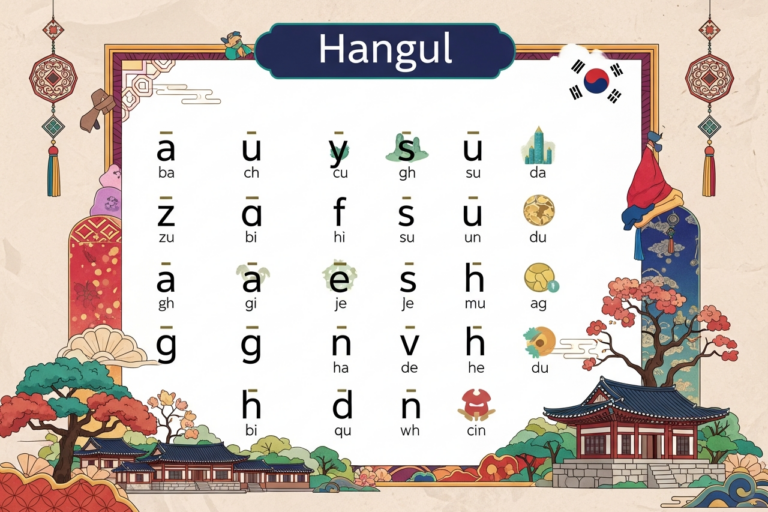
Let’s look at a chart for these basic vowels of the Hangul alphabet. You will also see how to write every one of them.
Chart of Basic Korean Vowels with Pronunciation Guides
Getting the hang of Korean vowel sounds is easier when you have a clear guide. The Korean vowel system is quite consistent, which is a big help for new learners. The first vowel you’ll often encounter is ‘ㅏ’ (a), and its sound is similar to the “a” in “apple.”
Many of the basic sounds have direct parallels to English vowels, making them intuitive to pronounce. Below is a chart listing the 10 simple vowels, their romanized spelling, and an English word with a comparable sound to help you practice.
|
Korean Vowel |
Romanization |
English Pronunciation |
|---|---|---|
|
ㅏ |
a |
apple |
|
ㅑ |
ya |
yarn |
|
ㅓ |
eo |
hug |
|
ㅕ |
yeo |
yummy |
|
ㅗ |
o |
home |
|
ㅛ |
yo |
yoga |
|
ㅜ |
u |
moon |
|
ㅠ |
yu |
universal |
|
ㅡ |
eu |
(no direct equivalent) |
|
ㅣ |
i |
free |
Writing Each Basic Korean Vowel in Hangul
The Korean writing system is built on easy and clear rules. You can learn to write the Korean basic vowels with just a little practice. The stroke order uses two main rules. First, you write from top to bottom. Second, you go from left to right. If you stick to this, the letters will look right and feel natural.
In hangul, the vowels are grouped by the main stroke they use. Some vowels are called vertical vowels, like ㅏ (a), ㅑ (ya), ㅓ (eo), ㅕ (yeo), and ㅣ (i). Their longest line runs up and down. These are always written to the right of a consonant.
Other vowels are horizontal vowels. They include ㅗ (o), ㅛ (yo), ㅜ (u), ㅠ (yu), and ㅡ (eu). The main line for these goes across. You will always put these below a consonant. Knowing the difference helps you put together syllable blocks in the hangul alphabet.
Exploring Compound (Double) Korean Vowels
After you get used to the basic vowels, you can start learning about compound vowels. People also call them the double vowel group. You will find 11 of these vowels in Korean. To make them, you put two basic vowels together. This is a part of the Korean vowel system that makes learning Korean feel easy to follow.
These vowel pairs, or diphthongs, help give new sounds to the language. That adds more depth to how people speak Korean. You will often see these double vowels when one of the basic vowels gets added to ㅣ(i), ㅗ(o), or ㅜ(u). Now, let’s look at what makes these vowels compound and how their sound, or pronunciation, is a bit different from the basic vowels you first learned.
What Makes a Vowel Compound in Korean?
A compound vowel, or double vowel, is just what the name says. It is one letter in Korean that comes from putting two basic vowels together. These pairs, called diphthongs, have their own sound that is different from the basic vowels. For example, ‘ㅗ’ (o) and ‘ㅏ’ (a) mix to make ‘ㅘ’ (wa). In every korean syllable, these vowel pairs are always shown as one part.
It is easy to see how these compound vowels come about. Most of them are made by adding a second basic vowel to one of these four basic vowels:
-
ㅣ (i)
-
ㅗ (o)
-
ㅜ (u)
-
ㅡ (eu)
One example is ‘ㅝ’ (wo), which comes from ‘ㅜ’ (u) and ‘ㅓ’ (eo) used as a pair. Once you see that these sounds in a korean syllable are only made by joining simple vowels you know, it all becomes much easier to learn.
Pronunciation Differences Between Simple and Compound Vowels
Simple vowels have just one clear sound that does not change. On the other hand, when you see a double vowel, the sound slides from one vowel to another in the same syllable. For example, ‘ㅘ’ (wa) starts with ‘ㅗ’ (o) and quickly goes into ‘ㅏ’ (a). When you put ‘ㅜ’ (u) together with ‘ㅣ’ (i), you get ‘ㅟ’ (wi). This sounds much like how you say “we.”
It is interesting that some double vowels in Korean look different but sound the same when used today by korean natives. For example, ‘ㅙ’ (wae), ‘ㅚ’ (oe), and ‘ㅞ’ (we) are all said close to the “we” in “wet.” This might be hard at first, but if you listen often and practice, you can pick it up over time.
It’s good to keep in mind that a double vowel does not mean you have to make two stops or break the sound. It is more about showing how these vowel sounds blend as one. Try to pay attention to how korean natives make these double vowel sounds. This can help with your pronunciation and make you sound more like a native speaker.
Beginner’s Guide: How to Start Learning Korean Vowels
Ready to get started and learn? The best way for learners is to work on the 10 Korean basic vowels. If you master these vowels first, you will have a good base in the Korean language. You do not need to be perfect at the start; the most important thing is to know the shapes and the vowel sounds.
Doing a little bit each day is important. When you practice daily, you get better and remember more. Next, let’s check out some good tools and see a simple process that will help you learn Korean vowels and their sounds the right way.
Essential Tools and Resources You’ll Need
If you are just starting to learn the korean language, having the right tools can make a big difference. You only need a few things to help with vocabulary and pronunciation. Pick materials that are made for learners who are new to korean.
There are many websites and apps with interactive lessons and quizzes. These are great for practicing vowels. Listening to how native speakers talk in korean is also very helpful. You can watch korean shows or listen to podcasts. Here are some tools you need:
-
Online Korean Classes: A tutor gives you lessons and feedback made just for you.
-
Language Apps: These apps use flashcards and exercises you can do at any time.
-
Korean Media: Watching shows or listening to music helps you get better at listening and hearing vowels in real use.
-
Practice Partners: Practice with korean-speaking friends. This gives you real-world conversation in korean.
These resources mix learning with practice, and this is a good way for learners to improve their skills in korean.
Step 1: Mastering Hangul Vowel Shapes and Sounds
The first thing you need to do to learn Hangul vowels is to link the shapes to the way they sound. The smart part of this alphabet is that the vowel shapes come from three simple things: a vertical line (ㅣ), a horizontal line (ㅡ), and a dot (·). In modern Hangul, the dot is now a short line.
You can see these as building blocks. For example, the vowel ‘ㅏ’ (a) is made with a vertical line and a short line added to the right. The vowel ‘ㅗ’ (o) has a short line above a horizontal line. If you want to get better at picking out pieces of Hangul, connect each shape to its sound.
Flashcards can really help you here. Put the Hangul vowel on one side and its romanized pronunciation on the other side, along with a hint (like, put ‘ㅗ’ on one side and ‘o’ as in ‘home’ on the other). This way of practice helps you remember not just the vowel shapes but also the correct pronunciation.
Step 2: Practicing Writing and Pronouncing Vowels
Once you know the shapes and sounds, you can start to use what you learned in the korean alphabet. Write the korean vowels over and over to help your hand get used to the shapes. Follow the basic stroke order or rules: start at the top and move down, and start at the left and go right. This will help your writing look neat and be correct.
For pronunciation, it is best for beginners to listen and say the letters again and again. Try to find audio or video clips with a native speaker. Make sure you hear each vowel, like eo, well and try to sound the same. Record your voice and listen to it. Compare it to the native speaker to see what you need to change.
Do not worry about opening your mouth too much at the start if you have to. For vowels like ‘ㅗ’ (o) and ‘ㅓ’ (eo), it’s really about how much you open your mouth. Focusing on these small steps will help you get better at the korean alphabet. Keep practicing and you will improve over time.
How Korean Vowels Combine with Consonants to Form Syllables
In the hangul alphabet, you can’t write a vowel on its own. Korean words need syllable blocks, and each block has to have at least one consonant and one of the korean vowels. This is a basic rule in the language. Even if a syllable sounds like it starts with only a vowel, it always begins with the silent consonant ㅇ.
Where you put the vowel inside the syllable block depends on its look. This is when you need to know about horizontal vowels and vertical vowels. These rules are important in hangul to make sure you build the block the right way.
Structure of Korean Syllables: Rules and Examples
The basic rules for building a Korean syllable are easy to follow. Each Korean syllable starts with a consonant. If a word starts with a vowel sound, you must put the silent consonant ‘ㅇ’ at the beginning. This helps to make the sound clear. For example, the vowel ‘ㅏ’ (a) will be written as ‘아’ when you build the syllable.
Vertical vowels, like ‘ㅣ’ (i) and ‘ㅐ’ (ae), always go to the right side of the first consonant. For instance, in the syllable 매 (mae), the vowel ‘ㅐ’ comes on the right. Horizontal vowels, such as ‘ㅗ’ (o) and ‘ㅠ’ (yu), are put below the first consonant. In 뉴 (nyu), the vowel ‘ㅠ’ sits under the consonant ‘ㄴ’.
Some compound vowels use both vertical and horizontal styles. These vowels sit on the right and below the first consonant, as seen in the syllable 왜 (wae). At the final position in a korean syllable block, you can only use a consonant. A vowel does not go in this spot at the end.
Conclusion
To sum up, getting good with Korean vowels is a key part of learning Hangul. When you get to know the structure, pronunciation, and how these sounds go together, you build a strong base for your language skills. Keep in mind that you get better with practice. Use different tools and resources to help you remember what you learn. Talk with native speakers as much as you can. The more you use the language, the more sure you will feel about it. So, jump in and start learning Korean vowels now. If you want more help, you can ask for a free trial or talk with someone who can guide you as you learn.
Frequently Asked Questions
Which Korean vowel sounds are most challenging for English speakers?
For a native English speaker, korean vowel sounds like ‘ㅡ’ (eu) and ‘ㅢ’ (eui) can be some of the hardest to learn. This is because there is no english vowel that is just like them. Also, the difference between ‘ㅓ’ (eo) and ‘ㅗ’ (o) is not easy. You have to watch the shape of your mouth to hear it. If you study these vowel sounds more, you will get better at korean.
Are there mnemonic tips for remembering Korean vowels?
Yes! A simple way to remember Hangul is to link vowel shapes to basic parts. The horizontal line in ‘ㅗ’ (o) and ‘ㅜ’ (u) can stand for the ground. The short line points “over” for ‘o’ and “under” for ‘u’. These visual hints make Korean writing easier to get.
How are Korean vowel sounds shown in the International Phonetic Alphabet?
Korean vowel sounds each have their own sign in the International Phonetic Alphabet (IPA). This helps people say them just right. For example, ‘ㅏ’ is shown as [a], ‘ㅣ’ as [i], and ‘ㅡ’ as [ɯ]. With an IPA chart, learners can get a better feel for how to use each sound in the hangul alphabet. It makes the pronunciation of korean vowels easier to learn and understand.
Why are Korean vowels essential for beginners learning Hangul?
Korean vowels are very important for beginners. They are the main part of each syllable in the Korean language. When you learn them first, you get the basic building blocks for reading and writing Hangul. The vowels in this alphabet have a clear pronunciation, so they are easy to learn. This helps beginners feel good and sure about starting with Korean vowels.