Key Highlights
-
The Japanese language has a phonetic system known as hiragana. It uses five main vowel characters.
-
The first step in learning the Japanese writing system is to get the pronunciation and stroke order right for these vowels.
-
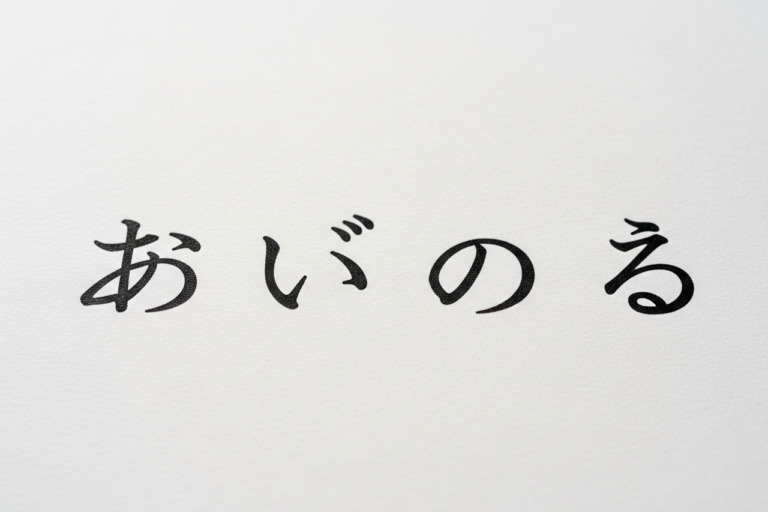
The five core hiragana vowels are あ (a), い (i), う (u), え (e), and お (o).
-
Saying each vowel sound correctly is key to talking well with native speakers.
-
Knowing how double vowel forms work is helpful when you want to grow your vocabulary.
-
To make memorization easier, try using apps or practicing writing. This can help you learn hiragana faster.
Introduction
Are you ready to take your first step into the beautiful world of the Japanese language? One of the best places to start is with hiragana. This script is an important part of the Japanese writing system. Hiragana is a phonetic system, so every character stands for a sound.
This guide will show you the five basic hiragana vowel characters. If you learn these vowels well, you will have a strong base for using the Japanese language. It will help you read, write, and speak in a better way.
The Basics of Hiragana Vowels in the Japanese Writing System
The Japanese writing system uses three main scripts: hiragana, katakana, and kanji. In hiragana, each character stands for a sound. Usually, this is a mix of a consonant sound with a vowel sound. But there are also characters for a pure vowel sound.
There are five basic vowel sounds in hiragana. These are very important because they are at the base of the whole hiragana chart. Every character in hiragana, except for ん (n), is made by putting a consonant and one of these vowels together. Let’s look at these main hiragana characters and see why they matter so much when you want to learn the Japanese writing system.
Overview of the Five Core Hiragana Vowel Characters
The five core hiragana vowel characters form the very first row of the hiragana chart. They are あ (a), い (i), う (u), え (e), and お (o). Each of these characters has a distinct, pure vowel sound that doesn’t change, unlike some vowels in English. Their pronunciation is crisp and clear.
Think of these five characters as the foundation of the entire phonetic system. For example, the “k” consonant row consists of か (ka), き (ki), く (ku), け (ke), and こ (ko), each combining a consonant with one of the core vowel sounds. This pattern repeats for all other consonant rows in the hiragana chart.
Understanding these five vowels first makes learning the rest of the hiragana much more systematic and less intimidating. Here is a simple table showing the basic vowels:
|
Hiragana Character |
Romanization |
Pronunciation Guide |
|---|---|---|
|
あ |
a |
“ah” as in “father” |
|
い |
i |
“ee” as in “see” |
|
う |
u |
“oo” as in “moon” |
|
え |
e |
“eh” as in “get” |
|
お |
o |
“oh” as in “go” |
The Importance of Learning Hiragana Vowels First
Starting your Japanese language journey with the hiragana vowels is a smart way to begin. When you learn these five basic characters, you build a strong base for everything else in the japanese language. Every other hiragana syllable is made with these vowel sounds. So when you know them well, you will pick up new things in the japanese writing system faster.
This idea helps you see how the whole hiragana chart works. After you know the vowel sounds, it becomes easy to match the consonant sounds with them. You just link them together. This is better than trying to remember all 46 hiragana charts at one time.
Building this base helps you to:
-
Recognize patterns in the japanese writing system more easily.
-
Pronounce new words with greater accuracy.
-
Gain confidence as you see how the system connects.
-
Communicate more clearly with native speakers from the very beginning.
Pronunciation Guide to Hiragana Vowels
Correct pronunciation helps you be understood in Japanese. The five hiragana vowels have simple and clear sounds. These do not change much, unlike the vowels you see in the english alphabet. If you get these vowel sounds right early on, you will not build bad habits that are hard to fix later.
This part gives a close look at how to say each vowel. We will compare the sounds to ones in english and show you mistakes that happen often. This will help you practice the right way. If you pay close attention, you can say these vowels the way a native speaker would.
Correct Pronunciation for Each Hiragana Vowel
Getting the pronunciation of hiragana vowels right can be easy. The reason is that these sounds stay the same every time. In English, it is common for one vowel letter to have many different sounds. But in Japanese, each vowel only has one sound. For people who want to learn, this makes things better.
It is important to keep practicing these vowel sounds until they feel easy and normal. Try to listen to audio samples from native speakers if you can. When you hear them, try to copy the way they say each one.
Here’s a simple way to say each hiragana vowel:
-
あ (a): Say it like “ah” in “father” or “spa.” Keep your mouth open and relaxed.
-
い (i): It sounds like “ee” in “see” or “meet.” Let your lips spread a bit.
-
う (u): Say it like “oo” in “moon” or “flute.” Round your lips, but don’t push them out like in English.
-
え (e): Say it like “eh” in “get” or “bed.” Keep it short and clear.
-
お (o): It is like the “oh” in “go” or “boat.” Make sure it is short, with no “w” sound at the end, which is something people may do when they speak English.
Use these tips, practice with audio samples, and listen to native speakers
Common Pronunciation Pitfalls and How to Avoid Them
When you start to learn Japanese pronunciation, you may find it tough if you speak English. A lot of English speakers make the same mistakes, mostly with vowel sounds. The biggest problem is that people often use English rules for Japanese vowels. But Japanese vowels are simple one-sound vowels, while in English, many vowel sounds slide from one sound to another.
Take the English “o” in “go” as an example. In English, it often ends with a bit of a “w” sound, like “goh-w.” But in Japanese, the お (o) sound is just a clear and short “oh” with no extra sound at the end. The sound for “a” in English can change a lot. But the Japanese あ (a) is always “ah.”
To keep from making these mistakes, try these tips:
-
Keep the vowel sounds short and sharp.
-
Do not let your voice slide between two vowel sounds when you say one hiragana character.
-
Make your lips round for う (u), but do not pucker the way you do when you say the English “oo.”
-
Listen to native speakers and repeat what they say. Focus on what your mouth does when you make the sounds.
If you practice with native speakers, pay close attention to every vowel, and notice how each hiragana sounds, you will get better at Japanese pronunciation.
Step-by-Step Guide to Writing Hiragana Vowel Characters
Now that you know how to say the vowels, you will learn how to write them. Writing hiragana is more than just copying what it looks like. It is important to follow the right stroke order. This is a key part of the Japanese writing system. It matters for all parts of writing, from basic characters to kanji characters.
When you follow the right stroke order, your characters will look even, easy to read, and you can write them without wasting time. This part shows you how to write each of the five basic characters step by step. This will help you learn good habits with your hiragana from the very start.
Understanding Stroke Order for Hiragana Vowels
The idea of stroke order is very important in Japanese writing. Each hiragana character uses a set number of strokes, and you need to draw them in a special order and way. This is not only about old customs. It helps you write each hiragana character the right way, so people can read it, and it also saves time. When you get good at doing the first stroke and the rest for vowels, you will find it easier to learn all the rest of the hiragana.
You can think about stroke order like your pen doing a little dance. The first stroke is the base. After that, each new stroke adds to it and follows in line. If you learn to do this well, your writing will look balanced and people will know what you are trying to say. This helps a lot, especially when you write fast.
Key things you should remember about stroke order:
-
Strokes usually go from the top to the bottom, or from the left to the right.
-
When a stroke goes across, it comes before the lines going up and down that cut through it.
-
How many strokes you need and the way you draw them does not change for any hiragana character.
Visual Writing Practice: Examples for A, I, U, E, and O
Seeing how you write each hiragana character is one of the best ways to learn them. Let’s check out some easy writing examples for the five vowels. Make sure to watch where the first stroke and the other strokes start and end. It can help to use grid paper to get all the parts and shapes right.
Here’s a breakdown for each vowel:
-
あ (a): This hiragana character uses three strokes. The first one is a line going from side to side. The second one goes down and then curves. The last one is a loop on the right.
-
い (i): This is a simple one with two strokes. The first stroke is a curved line to the left. The second stroke is a short, straight line to the right.
-
う (u): You draw this with two strokes too. The first stroke is a small mark at the top. Then, make a big C-like curve line under it.
-
え (e): This vowel is also two strokes. Start with a small mark at the top, then make one long, zig-zag line under it.
-
お (o): You have three strokes here too. Start with the line going across, then a line that goes down and has a loop, and at last, make a small dash line to the right.
If you practice with different hiragana fonts, you will see and know these vowel shapes wherever you go. When
Variations and Uses of Hiragana Vowels
After you learn the basic vowels, you can look at different ways to use them. In Japanese, a vowel can be made longer, and that can change what a word means. Some people call these “double vowel” forms. It’s important to know how to say and write these long sounds. That will help you expand your vocabulary.
In this part, you will learn the rules for these changes. You will also see how vowels in hiragana help make many words in Japanese. These five simple characters can help you understand and say many new expressions.
Double Vowel Forms and Extended Sounds
In Japanese, the length of a vowel sound can change the meaning of a word. These long sounds are called extended sounds or double vowels. For most vowels, you just write the vowel character two times. For example, おばさん (obasan, aunt) turns into おばあさん (obaasan, grandmother) by making the “a” sound longer.
But, there are some special rules for the “e” and “o” sounds. To make a long “e” sound, you usually add い (i) instead of another え (e). For example, “sensei” (teacher) is written as せんせい. To get a long “o” sound, you often add う (u) instead of more お (o). A popular example is “arigatou” (thank you), which is written as ありがとう.
There are some exceptions to these rules:
-
The word for “big,” おおきい (ookii), uses おお and not おう.
-
The word for “older sister,” おねえさん (oneesan), uses おねえ and not おねい.
-
Saying these extended vowel sounds right is very important in the language.
-
Also, dakuten marks do not go with pure vowel characters.
Long vowel sounds, or double vowels, are a key part of Japanese. If you miss them, your words might not be clear. Try to pay
How Hiragana Vowels Are Used in Japanese Words
Hiragana characters, and the vowels, appear everywhere in written Japanese. They are very important because they keep sentences together. Hiragana is used to show meaning for small words, like particles, that help tell what a noun does in a sentence. Some of these are は (wa), を (o), and が (ga).
You will find hiragana in okurigana, which are parts added to verbs and adjectives that tell about tense or politeness. For instance, in the word たべます (tabemasu, to eat), べます is written in hiragana. This makes it possible for the main meaning, which is often shown with kanji, to change.
Hiragana also has more uses:
-
It writes words from Japanese that don’t have a kanji version.
-
It is used for words if the kanji is too hard or too formal.
-
It is used with furigana, which are small hiragana printed near kanji to show pronunciation.
Conclusion
Learning hiragana vowels is the first big step in picking up the Japanese language. The five main hiragana letters—A, I, U, E, and O—help you with pronunciation and they form many words. If you get to know their sounds and do the right strokes, you will feel more sure when reading and writing in Japanese. Take time to learn these basic parts. They will help you understand the Japanese language in a better way. If you want to improve your skills, you can get a free talk with our language experts now.
Frequently Asked Questions
What’s the difference between hiragana vowels and katakana vowels?
Hiragana and katakana are both parts of the Japanese language. The vowel sounds in hiragana and katakana are the same, so how you say them does not change. The difference is in how the characters look and how you use them. Hiragana has rounded shapes, while katakana looks more sharp or boxy. You use katakana mostly for words that come from other languages and when you want to make something stand out.
Are there effective strategies for memorizing hiragana vowels?
Yes, there are many ways to help with memorization. You can use apps with flashcards. You can write the hiragana character again and again on paper or in a workbook. Some people link each hiragana character to an image that starts with that sound. You can also get practice sheets with the basic characters in PDF format online to help you learn.
Where do hiragana vowels appear on the full hiragana chart?
The five hiragana vowel characters—あ (a), い (i), う (u), え (e), お (o)—make up the first row of the hiragana chart. This chart is called the gojūon. In the japanese writing system, the other kana go under these vowels in neat columns. Each column matches with its own vowel sound.