Key Highlights
Here are the key takeaways from our guide to Hawaiian vowels:
-
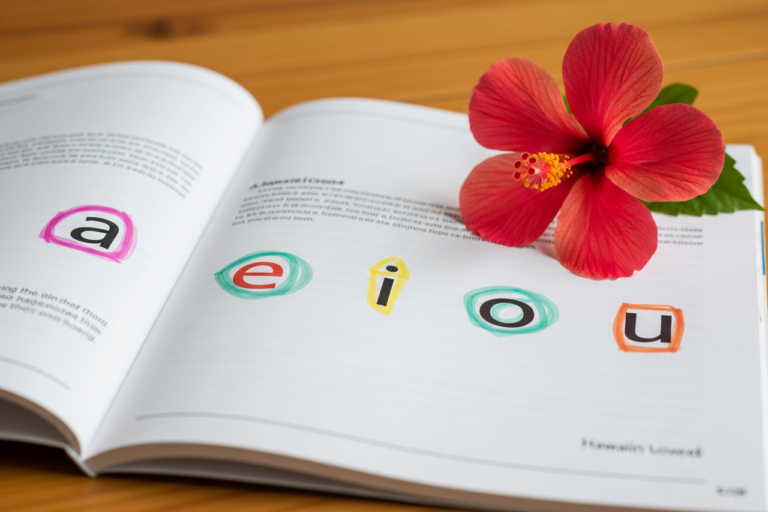
The Hawaiian language has five main vowels: A, E, I, O, and U. Each one sounds different and stays the same when you say it.
-
If you want to say Hawaiian words the right way, you must learn how to say the vowels the proper way.
-
A word’s meaning can change just from the length of a vowel. The longer sound is often shown with a line called a kahakō (macron).
-
Sometimes two vowels join to make a new sound. These vowel pairs, or diphthongs, are needed for the way the Hawaiian language sounds and flows.
-
If you know these vowel sounds, you will understand Hawaiian culture better and you will get along with native speakers in a good way.
-
There are marks in Hawaiian, like the ʻokina (glottal stop), that help you say the words right and know what the words mean.
Introduction
Aloha! Welcome to the world of the Hawaiian language. The sound of Hawaiian words is beautiful and full of music. If you have been drawn to the way Hawaiian words sound, then you already know some of the magic of its vowels. The Hawaiian alphabet is simple. There are only 13 letters, with five of these being vowels. These give the Hawaiian language its lovely sound. In this guide, you will learn about each vowel in the Hawaiian alphabet. You will get to know how to say them right. This will help you enjoy and understand this amazing language even more.
Understanding the Role of Vowels in the Hawaiian Language
Vowels are at the heart of the Hawaiian language. In Hawaiian, words focus on vowel sounds, not like English where consonants often take the lead. The Hawaiian syllable structure is simple. You will see a consonant followed by a vowel, or sometimes the syllable is just a vowel.
This style makes the language sound smooth and easy to follow. Native Hawaiians value this flowing rhythm. In Hawaiian, every syllable ends with a vowel. This makes it pleasant to say and hear. Let’s find out why vowels are so important in the language, how they affect Hawaiian words, and why Hawaiian relies so much on them.
The Importance of Vowels in Hawaiian Phonology
In the Hawaiian language, vowels are very important. The whole system is based on just a few vowel and consonant sounds, but vowels are what make Hawaiian words stand out. Each syllable in a Hawaiian word has to end with a vowel, and there are no consonant clusters in the language. This helps make Hawaiian sound smooth and like music.
Because of this, words in the Hawaiian language are just groups of syllables, and each syllable has a vowel in it. Native Hawaiians know that getting these vowel sounds right is not just about clear pronunciation. It’s also about keeping the rhythm and feel of Hawaiian as people have always spoken it.
Hawaiian has changed over the years too. Some consonants dropped out between vowels. This made long vowels and diphthongs form. Because of this, vowels became even more important and now carry almost all the sound and meaning in Hawaiian words.
How Vowels Shape Word Meaning
The effect of vowels on the meaning of Hawaiian words is huge. If you change a vowel sound, or make it longer or shorter, you can end up with a whole new meaning. For someone learning, this part can be tough. But for fluent speakers, it feels easy and normal. Saying each word the right way is the only way people will really know what you mean.
Listen to how a word with a long vowel and a short vowel can sound a lot alike but mean different things. For example, pau means finished. Pāʻū, said with the longer ‘a,’ is a type of skirt. You can see that just one small change adds a new meaning. The special mark on the vowel shows how long you need to make the sound, and that detail really matters in Hawaiian.
Most of the time, the vowel is what tells you the meaning. The Hawaiian alphabet doesn’t have many consonants, so the five vowels—and little changes to them—have to do a lot of work. Learning how each vowel sounds helps you get the most from Hawaiian words and really understand the Hawaiian language.
Why Hawaiian Relies on Vowel Sounds
The hawaiian language uses many vowel sounds because of how its alphabet is set up. It only has eight consonants. To make more words, vowels help add variety and depth.
In hawaiian language, you will not find consonant clusters, like you do in english words such as “street” or “splash.” Here, each consonant is always followed by a vowel. Because of this, every syllable ends with a vowel. This puts focus on the vowel sounds.
This way of structuring words is common in many polynesian languages, not just in hawaii. Over time, hawaiian has grown into the smooth and gentle language people know today. The need for more vowels in hawaiian is not a weakness. It is a feature that gives the language its unique charm and makes it sound so rich and expressive.
The Five Hawaiian Vowels Explained
The Hawaiian alphabet has just five vowels: A, E, I, O, and U. It is simple. The key thing to know is that their pronunciation in Hawaiian stays the same and is easy to remember. This is not like English, where each vowel can sound many different ways. In Hawaiian, every vowel has its own set sound. This does not change. When you learn the sound, you can always get it right.
Linguists and people who study language use something called the International Phonetic Association chart, or IPA, to show exactly how new sounds work. But to make things easy, we can use examples from English to help us see how the Hawaiian vowels sound. Below, we will look at all five important vowels in the Hawaiian alphabet. We will talk about how they sound, compare them with sounds in English, and see some things that make them stand out.
Overview of ‘A’, ‘E’, ‘I’, ‘O’, and ‘U’
The five Hawaiian vowels are the building blocks of the language’s sound system. Each vowel has a short and a long version. The short vowels are crisp and quick, while the long vowels are held for a slightly longer duration, a distinction that can change a word’s meaning.
Let’s break down the basic sounds. The pronunciation of these short vowels is generally consistent across all Hawaiian words. They are pure sounds, meaning your mouth position stays the same from beginning to end, without gliding into another sound as often happens in English.
Here is a simple guide to their pronunciation. Long vowels, indicated with a kahakō (e.g., ā), are simply an elongated version of the same sound.
|
Hawaiian Vowel |
Pronunciation Guide |
Example Sound in English |
|---|---|---|
|
A |
ah |
as in “father” |
|
E |
eh |
as in “bet” |
|
I |
ee |
as in “see” |
|
O |
oh |
as in “go” |
|
U |
oo |
as in “moon” |
Vowel Pronunciation Versus English
For many English speakers, the biggest challenge with saying Hawaiian words comes from trying to stop old habits. A lot of people know that English vowel sounds change a lot. Think about the letter ‘a’ in “cat,” “father,” and “late.” In Hawaiian, each vowel has one main sound. This makes how you say the be Hawaiian words easier after you learn the simple rule.
What makes the Hawaiian vowel sound stand out is that it does not change. In English, vowels can join together. So, when we say “go,” we end up making an “oh-oo” sound. That slides from one vowel to the next. In Hawaiian, the ‘O’ sound is always just a pure “oh” with no change.
Here are some big things to remember:
-
Consistency: Every Hawaiian vowel uses the same, core sound. ‘A’ is always “ah.” You do not say “ay” or “uh.”
-
Purity: Hawaiian vowels use one steady sound, or monophthong. You should not “glide” between vowel sounds like in English pronunciation.
-
No “Schwa”: Hawaiian does not use that weak “uh” sound (known as schwa in IPA) which you often hear in English words such as “about” or “sofa.”
Unique Characteristics of Hawaiian Vowels
One interesting thing about the Hawaiian language is how it uses vowel sequences. When the language has two vowels together, they are spoken as two different syllables. These syllables move softly into each other, and this forms diphthongs. This way of saying words helps the Hawaiian language sound smooth and musical.
The lengthening of vowels is another important feature. If you say a short ‘a’ or a long ‘ā’, you can make two different words. This is not just about stress or saying it louder. The sound change is needed to tell one word from another. This use of vowels makes Hawaiian very accurate and that is something people in Hawaiian culture value a lot.
All these things—the clear pronunciation, the diphthongs, and the meaning tied to the length of the vowels—work together to make Hawaiian stand out. If you learn these details about the vowel, you will not only learn to speak, but also come to like and understand the deep structure that makes the Hawaiian language so beautiful.
Mastering Pronunciation: Each Vowel Sound
Now, it’s time to get hands-on and really learn the pronunciation of each vowel. The main thing is to listen and repeat. Watch the shape of your mouth, and focus on how clear each sound is. These Hawaiian vowel sounds are short and sharp, not long or sliding like the ones we often say in English.
It is best to copy how native speakers pronounce these words. As we talk about each Hawaiian vowel, try to say them out loud. We will begin with the most used vowel, ‘A’, and move on to each one. There will be examples so you can practice and get better at saying Hawaiian words.
How to Pronounce the Vowel ‘A’ in Hawaiian
The vowel ‘A’ is the vowel used most in Hawaiian. It is the easiest vowel to learn. You say it “ah,” like when you sit in the doctor’s office and he tells you to say “ahh.” It is like the ‘a’ in “father.”
Linguists who use the International Phonetic Alphabet, also called IPA, say this sound is [ɐ] or [a]. The sound stays the same and is always a clear “ah” when it is stressed. If it’s not stressed, it sounds a little softer, but it never becomes the “ay” in “say” or “ae” in “cat.”
You can practice the pronunciation of this sound with the word aloha. You do not say “uh-lo-ha.” You say “ah-lo-ha.” The ‘a’ at the start and at the end both sound like the open “ah.” If you get the first vowel right, you make a good foundation for learning more Hawaiian words.
Keywords: hawaiian, vowel, pronunciation, english, alphabet, ipa, linguists
Distinct Sounds of ‘E’, ‘I’, ‘O’, and ‘U’
With ‘A’ done, now let’s talk about the other four vowels in the Hawaiian language. The letter ‘E’ is said like “eh,” like you say in “pet” or “bed.” For example, the word hele (which means “to go”) is said “heh-leh.” When ‘e’ is not stressed, it can sometimes sound closer to an ‘i’ if you talk fast.
The next vowel is ‘I.’ It sounds bright, like “ee” in “machine” or “bee.” Think about the word wikiwiki (fast), which you say as “wee-kee-wee-kee.” The vowel ‘O’ has a simple “oh” sound, just like in “boat” or “note.” You hear this sound in pono (which means “righteousness”), said as “poh-noh.”
Last, we have ‘U.’ It is said as “oo,” like the ‘u’ in “flute” or the “oo” in “moon.” You can hear this in hula (a type of dance), spoken as “hoo-lah.” These vowel sounds in Hawaiian are always clear and do not change. They make up the main melody of the Hawaiian language.
Examples of Vowel Pronunciation in Common Words
Hearing these vowels while saying common Hawaiian words is the best way to help you learn the right pronunciation. It makes these rules feel less hard and connects them to sounds that native Hawaiians use all the time. We can look at some examples to see how these vowels work in real Hawaiian words.
You will notice that each vowel keeps its real sound, even when it is next to another vowel or a consonant. For example, in the name of the state fish, humuhumunukunukuāpuaʻa, you can hear the “oo” sound from ‘u’ and the “ah” sound from ‘a’ over and over in this word.
Here are some common Hawaiian words to try:
-
Mahalo (thank you): say it like “mah-hah-loh.” The “ah” stays the same and the “oh” is clear every time.
-
Kane (man): say it like “kah-neh.” The ‘a’ is an “ah” sound, and the ‘e’ is “eh.”
-
Wahine (woman): say it like “wah-hee-neh.” This word mixes three vowel sounds, and you can hear each one.
Learning these Hawaiian words and paying attention to the vowels will make your pronunciation so much better.
Special Features: Vowel Length and Diacritics
Beyond the five main sounds, the Hawaiian language uses two big things to change how we say vowels. One is vowel length, and the other is the glottal stop. The language shows these with special marks—the kahakō (macron) and the ʻokina. These marks are small, but they make a huge difference in pronunciation and meaning.
Knowing these marks is not just nice to have. It is needed for reading and speaking Hawaiian the right way. If you leave them out, a word can mean something else. We can look at the kahakō and the ʻokina to see how these marks work in the hawaiian language.
The Role of Kahakō (Macron) in Vowel Length
The kahakō is a mark you see in Hawaiian words. It is a straight line over a vowel (ā, ē, ī, ō, ū). It shows you that this vowel sounds longer. The sound lasts for about two times as long as a short vowel. This is not just for stress or to make the word stronger. It makes the word totally different.
Think of it like holding a note in music. The sound does not change, but it is held longer. For example, ‘ā’ is still “ah,” but now you keep it going. This change in length helps with the sound and meaning of Hawaiian words.
As an example, mana means “supernatural power.” But māna means “a flock of birds.” Adding this mark changes the meaning. If you don’t use the kahakō with Hawaiian words, it’s like missing a letter in English. You could end up saying something else or wrong.
The ʻOkina and Its Impact on Vowel Sounds
The ʻokina looks like a backward apostrophe and stands for a glottal stop. This is a sound you make when you close and then let go of your vocal cords for a short time. You can hear this glottal stop in English in the middle of “uh-oh!” The break you get between “uh” and “oh” is where this sound happens.
In the Hawaiian alphabet, the ʻokina is a real consonant. Where you put it in a word is very important for good pronunciation. The ʻokina lets you have a clear break between two vowels. For example, pau (finished) is said smooth and quick, almost like one beat. But paʻu (soot) has two beats, with a clear pause in the middle you can hear, like “pah-oo.”
If you add or remove an ʻokina from a word, it can change what the word means. Long ago, a glottal stop showed where another letter in the Hawaiian alphabet used to be, but got dropped. The glottal stop is a big part of how people say words in Hawaiian now, and knowing how to use it is important.
Words Differentiated by Vowel Length in Hawaiian
The value of vowel length in Hawaiian is easy to see. It separates words that look the same but sound different. The lengthening of vowels, shown by the kahakō, is a big part of hawaiian vocabulary. It is used a lot in hawaiian culture and in how people talk.
This difference is not just something that interests linguists. It is needed for speaking daily. If you say a vowel wrong, it can cause mix-ups. At times, people may feel hurt or confused. Think of the way “ship” and “sheep” can mean two things in english. The smallest change in sound can make all the difference.
Here are some examples of how the lengthening of vowels changes the meaning:
-
kane (male) vs. kāne (husband)
-
pua (flower) vs. puā (to come forth)
-
ia (he/she/it) vs. iā (a type of fish)
Mastering Vowel Combinations in Hawaiian Words
After you learn how to say each vowel in Hawaiian, you need to work on saying groups of vowels. In many Hawaiian words, you will see two or three vowels next to each other. These groups, called diphthongs or vowel clusters, help give Hawaiian its smooth sound.
When you find more than one vowel next to each other, they join to make a single sound in the same syllable. It is important to learn how to say these together the right way. This will help your pronunciation of Hawaiian words sound more real and natural. Here, we will talk about the basic rules, some common diphthongs, and a few tips to help you practice vowel sequences in Hawaiian.
Basic Rules for Combining Vowels
When you mix vowels in the Hawaiian language, the first one in the pair is usually stronger. It gets most of the stress. The sound slides into the next vowel. These pairs are called diphthongs. They are said as one syllable. For example, ‘ai’ is not “ah-ee.” It is more like the quick “eye” sound.
You can hear both vowels, but they move smoothly into each other. This is different from how English does it. In English, some vowel pairs make a new sound, like ‘ea’ in “read.” In Hawaiian, you just blend the two sounds you know from the vowels.
Here are some basic rules to remember in the Hawaiian language:
-
The first vowel is usually louder or gets more stress than the second one.
-
The two vowels glide together in a single, smooth sound.
-
Diphthongs like ‘ai’, ‘ae’, ‘ao’, ‘au’, ‘ei’, ‘eu’, ‘oi’, and ‘ou’ will sound as you blend their vowels.
Knowing these things will help you say Hawaiian words well.
Common Diphthongs and Their Pronunciation
Learning the most common diphthongs in the Hawaiian alphabet can really help to make your pronunciation better. These vowel groups come up a lot in Hawaiian, and they are key to having a natural way of speaking. When saying them, remember to mix the sounds together in one beat or syllable.
Let’s talk about the most used mixes of vowels. For example, ‘au’ is said like the “ow” in “cow.” You can hear this sound in the word māua (we two). Another usual diphthong is ‘ai’, and it sounds like the ‘y’ in “sky,” as found in the word kai (sea).
Here are some of the most common diphthongs in the Hawaiian alphabet and how they sound:
-
ai: sounds like “eye” (for example, haʻi, means to speak)
-
ae: sounds like “eye,” but ends with more of an “eh” sound (for example, kae, means edge)
-
au: sounds like “ow,” as in “cow” (for example, au, means I)
-
ei: sounds like “ay” in “say” (for example, lei, means garland)
Tips for Practicing Hawaiian Vowel Clusters
Practicing vowel clusters in Hawaiian words is about listening a lot and repeating. You get better at pronunciation by hearing how native or fluent speakers say these words. Try to copy their sounds as close as you can.
Break long words in Hawaiian into each syllable. Say every syllable slow. Focus on the vowel sounds. Once you feel more sure, start to speak faster. This lets your mouth learn how to make the right shapes for those sounds.
Here are some good tips to help us practice:
-
Listen to Hawaiian music: The words in the songs help you hear Hawaiian words and their vowel clusters naturally.
-
Watch videos of Hawaiian speakers: Look at how their mouths move when they talk.
-
Practice with place names: Saying names like Hawaiʻi, Oʻahu, and Maui helps you with common vowel clusters.
Try to use these steps every day to make your pronunciation of Hawaiian and its syllables better. You will get good over time.
Conclusion
To sum it up, knowing Hawaiian vowels is key if you want to get to know the language better. These sounds help shape words and give them meaning. Learning the five main vowels and what makes them special, like how long they are and the use of special marks, will help you with your Hawaiian pronunciation and help you understand more. As you keep working with vowel pairs and diphthongs, also remember that practice is what brings better results. Stick with it, and soon, you’ll feel more sure about speaking Hawaiian. If you have any questions or want some help, just ask!
Frequently Asked Questions
Are There Tricks for Remembering Hawaiian Vowel Sounds?
Yes! There is a good trick to help with this. You just need to remember this short phrase: “Ah, hey! See? Oh! Ooh!” Each part of this says how you say a Hawaiian vowel, in order: A, E, I, O, U. When you repeat this phrase, it helps you remember the basic rules of Hawaiian vowel pronunciation.
What Are Common Mistakes Made with Hawaiian Vowels?
The most common mistake for English speakers with the Hawaiian language is using English pronunciation rules. They often turn simple vowels into double sounds, like saying “oh-w” instead of just “o.” Another mistake is missing the ʻokina, which is the glottal stop, and the kahakō, which is the macron. These are very important in Hawaiian to get the right meaning and pronunciation.
Can You Share Examples of Hawaiian Words That Only Use Vowels?
Yes, that’s true! In the Hawaiian language, every word ends with a vowel. Because of this, you will find some words that use all vowels. For example, ‘ae means yes. It has a glottal stop and a diphthong. There is also ‘eaea, which means to be dusty or musty. The Hawaiian language has many words like this that use more vowels.