Key Highlights
Here’s a quick look at what you will find out about Greek vowels:
-
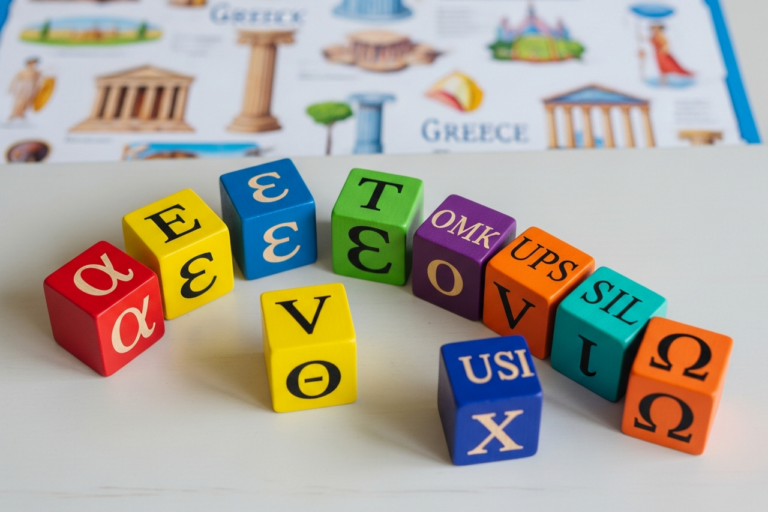
The Greek alphabet has 24 letters. Out of these, seven are vowels. They are Alpha, Epsilon, Eta, Iota, Omicron, Upsilon, and Omega.
-
These vowels can have both long and short vowel sounds. In Ancient Greek, you could hear the difference. In Modern Greek, these sounds do not stand out as much.
-
You will see vowel combinations, also called diphthongs, in the Greek language. They make new sounds that are not the same as the sounds of single letters.
-
Getting the right pronunciation can be tough. Listen to people who speak Greek and learn about accent marks. This will make it easier for you to pick up the sounds.
-
Learning the vowels is the first important step when you start to read and understand the Greek language. This is true if you want to learn Ancient Greek or Modern Greek.
Introduction
Welcome to your full guide to Greek vowels! If you are starting to learn the Greek language, it is good to know the vowels first. The Greek alphabet is one of the oldest writing systems that people still use. It has a long history and has helped shape many other scripts. When you get to know the vowel letters, you open up the sounds and parts of Greek words. This will make learning much smoother for you. Let’s look at these important pieces of the Greek script together.
The Greek Vowels in the Greek Alphabet
The greek alphabet has 24 letters. Out of these, seven are vowel letters and the other 17 are consonants. These all work together in greek words. This setup is a big part of the greek writing system.
If you know these seven vowels, it will help you read ancient greek texts and new words too. Their sounds and shapes have been used in the greek alphabet for many years. Let’s look at what these important greek letters are and where they are in the alphabet.
Names and Symbols of Each Greek Vowel
Each of the seven Greek vowels has a unique name and is represented by both uppercase and lowercase forms. Recognizing these symbols is the first step toward reading the Greek script. For example, you have Alpha, the first letter of the alphabet, and Omega, the last.
The vowels Omicron and Omega are particularly interesting as they represent “little o” and “great o,” respectively, highlighting a distinction in sound that was important in Ancient Greek. Similarly, you’ll encounter Iota and Upsilon.
Here are the seven vowels with their uppercase and lowercase forms. Knowing these will help you navigate the Greek alphabet with confidence.
|
Vowel Name |
Uppercase |
Lowercase |
|---|---|---|
|
Alpha |
Α |
α |
|
Epsilon |
Ε |
ε |
|
Eta |
Η |
η |
|
Iota |
Ι |
ι |
|
Omicron |
Ο |
ο |
|
Upsilon |
Υ |
υ |
|
Omega |
Ω |
ω |
Order and Number of Greek Vowels
There are 24 letters in the Greek alphabet. Out of these, seven of them are vowels. The vowels are found throughout the alphabet, not placed together in one spot. The first vowel is Alpha (Α, α), which is right at the start. The last is Omega (Ω, ω), which is at the end.
Knowing where each vowel is can help when you want to put words in order or remember the greek alphabet. The greek vowels do not come one after the other. They show up between the greek consonants, which is like the order we have in the english alphabet. This is an important part of how the greek language works.
The greek vowels, listed in the same order as in the greek alphabet, are: Alpha (Α, α), Epsilon (Ε, ε), Eta (Η, η), Iota (Ι, ι), Omicron (Ο, ο), Upsilon (Υ, υ), and Omega (Ω, ω). You will find this order to be the same in both old and new types of greek script. So you can count on it when you study the language.
Pronunciation Guide to Greek Vowel Sounds
Saying Greek vowels the right way can look tough at first. But if you have a little help, you can get the hang of it. The vowel sounds are the base of spoken Greek. To speak and understand Greek well, you need to know these sounds. Each of the seven greek letters gives a special sound.
Over time, vowel sounds changed between ancient Greek and modern Greek. Still, the main sounds are easy to spot. We will talk about what makes short and long vowels different. You will also find some simple tips here to help you get better at modern Greek pronunciation.
Short and Long Vowel Sounds Explained
In Classical Greek, one big thing about the greek alphabet was that some vowel sounds could be short or long. This means that how long you hold the vowel could change what a word means. The greek alphabet uses different letters to show these vowel sounds. Epsilon (ε) is used for a short ‘e’ sound, and Eta (η) for a long ‘e’ sound. In the same way, Omicron (ο) is the short ‘o’, and Omega (ω) is the long ‘o’.
For other vowels like Alpha, Iota, and Upsilon, the same letter can be short or long. Sometimes, a long vowel in the alphabet is marked with a line over it, called a macron. You might see this with ᾱ. For example, the Alpha in “papa” has a short sound, and the Eta in “prey” is a long sound.
In modern greek now, people do not really make this difference between long vowels and short vowels. The vowel sounds are more simple. But if you want to learn classical greek or really know its pronunciation, this difference is something you have to understand.
Tips for Perfecting Greek Vowel Pronunciation
Getting better at your Greek vowel sounds can happen if you keep practicing. An easy way to learn is to listen to people who speak Greek or follow language guides. Hearing the real sounds helps you get used to how people speak and makes it easier for you to say the greek vowels right.
It helps if you connect the greek vowel sounds to words you already know in English. For example, the Alpha (α) in the greek alphabet is like the ‘a’ in the word “father.” The Iota (ι) can sound like the ‘i’ you hear in “pin.” Doing this helps you remember how each one is said.
Here are a few tips to practice your vowels in the greek language:
-
Listen to audio guides about the greek alphabet.
-
Read some greek words out loud and work on each vowel sound.
-
Record your voice and listen, then check it against how a native speaker says it.
-
Watch where the accent marks are, because in greek they sometimes change how you say a word.
Greek Vowel Combinations and Diphthongs
Besides single vowels, the Greek script has special vowel combinations called diphthongs. A diphthong is when two vowels are next to each other in the same syllable and make a new sound together. These vowel combinations are important in the Greek language and show up in many words.
It is important to know how these pairs of vowels work so you can get the right pronunciation and read the words in Greek. The sound of a diphthong is not like just putting the two vowel sounds together; it is different. Now, we will look at some diphthongs and see how they can change the meaning of different words in Greek.
Common Diphthongs and Their Pronunciations
The greek alphabet has some important vowel combinations called diphthongs. These happen when you put two vowels together to get one sound. In ancient greek, these vowel pairs had set ways to say them. If you want to learn greek or read old greek texts, then you should get to know these sounds. This is a big step for good greek pronunciation.
One example is Alpha with Iota (αι). You say this like the word “aisle” in english. There is also Omicron with Upsilon (ου). For this, use the “ou” you hear in “group.” These sounds are not the same as just saying both base vowels each.
Here are some common greek vowel combinations and how they sound in english:
-
αι (Alpha-Iota): Say it like “aisle.”
-
ει (Epsilon-Iota): Say it like “eight.”
-
οι (Omicron-Iota): Say it like “oil.”
-
αυ (Alpha-Upsilon): Say it like “ou” in “hour.”
How Vowel Combinations Influence Word Meanings
Vowel combinations are not just about how you say words. They are an important part of the way words are made and understood in the Greek language. The choice of diphthong in a word is a key part of how it is written. You cannot swap out a diphthong without changing the word or making it wrong.
Many times, the use of a certain vowel combination helps people tell words apart, even if they sound close to each other. These different sounds from diphthongs make the Greek language richer. They give more ways to say things and add extra meaning and feeling, which you can see in ancient Greek texts.
You can think of vowel combinations as a big part of what makes a word what it is. For example, the word for “at home” in Greek is οἴκοι (oikoi). The diphthong οι is used there. If you change this vowel combination, the word turns into something else. To be good at reading and writing Greek script, you need to know and use these combinations the right way.
Vowels vs. Consonants in Greek
The greek alphabet, like in english, has two main kinds of letters. These are vowels and consonants. In the greek alphabet, there are seven vowels and 17 consonants. They work together to make syllables and words in the greek language. Vowels give the open sound to words, and consonants help shape those sounds by stopping or changing the air’s flow.
The way vowels and consonants mix with each other makes the greek language stand out. Some consonant combinations in greek, like the one with delta, are easy to say. Other combinations can be harder. Now, let’s look at what makes vowels and consonants different from each other in the greek alphabet.
Core Differences and Why They Matter
The main difference between vowels and consonants in the greek alphabet is in how you say them. Vowels (α, ε, η, ι, ο, ω, υ) are spoken with an open mouth, so air moves easily from the lungs. This air flow makes a long sound that helps make the heart of any syllable.
Consonants, such as Pi (π), Tau (τ), and Delta (δ), need you to stop the air some way. You use your lips, teeth, or tongue to do this. That is how their sounds get made. This is at the center of how people use the greek alphabet and speaking rules in the greek language.
It is important to know that every time you find a syllable in the greek language, you will find a vowel or something like a diphthong. Consonants, even the letter delta, need a vowel with them to make a sound in any word or syllable. They do not stand alone. This is how people make words and the beat in the greek script. Knowing how vowels and consonants go together is a big part of using and learning the greek script and writing system.
Examples of Words with Vowels and Consonants
It is easy to see how vowels and consonants work together in the Greek language when you watch them in use. Every word in Greek is made from a mix of these two kinds of letters. They come together to form syllables, which build the meaning in each word. Let’s check out a few examples from ancient Greek texts.
Take the word ἄνθρωπος (anthropos), which means “man.” In this word, you find the vowels α and o. These vowels are split up by consonants like ν, θ, ρ, and π. The vowels are in the middle of each syllable. The consonants help give the word its shape.
Look at these other examples that show how vowels and consonants work in the greek script:
-
λόγος (logos) – “speech” or “word”
-
σκηνή (skene) – “tent”
-
δῶρον (doron) – “gift”
-
χώρα (chora) – “country”
Each word here shows that the greek language needs both vowels and consonants. They come together to make words that have meaning. You find this in ancient Greek texts and in any other use of Greek.
Essential Tips for Learning and Remembering Greek Vowels
Learning and remembering the Greek vowels does not have to be hard. With the right approach, you can make it fun too. If you are new to greek letters, focus on a few good tips. Doing this can help you put these greek vowels into your mind faster. The key is to keep the learning active and also try to make it more engaging for you.
You can use memory tricks or try easy pronunciation practice. There are many simple ways to get better with the greek script. Here we will share some helpful tips for those starting out. We will also point out which vowels you will see most. This makes your time learning more useful.
Memory Tricks and Beginner Strategies
One of the best ways to remember the Greek vowels is to use a trick, like a simple phrase. Make a short sentence where each word starts with a vowel sound. This can help you think of the letters in the right order. It can also help if you match greek letters to things you know. Try to see a shape or an object that looks like the letter. This can make it easy to remember.
It is also a good idea to make flashcards. On one side, write the uppercase and lowercase greek letters. On the other side, write the name of the vowel and how it sounds. Keep testing yourself. If you quiz yourself often, you will get better with the greek alphabet and greek script.
There are more ways to help you learn the vowels:
-
Practice writing all the greek letters by hand. This will help your muscles learn the shapes.
-
Use apps to learn that have alphabet and letter drills built in.
-
Put the names of things in your house in greek. This lets you see the greek script as part of your daily life.
-
Match each vowel to a greek word you know and say it out loud often.
Most Frequently Used Greek Vowels
As you start to read the greek alphabet, you will see that some vowels show up more than others. Alpha (α) and Iota (ι) are the vowels that come up the most in the greek language. These two letters show up a lot in word endings and greek script. You will find them in almost any sentence, because they are used in many parts of greek.
Epsilon (ε) and Omicron (ο) are also used a lot. They have the short “e” and “o” sounds. These letters are very common in both Ancient and modern greek. You need to get used to how they sound, because you will see them all the time.
All the seven vowels in the greek alphabet are important, but if you learn Alpha, Iota, Epsilon, and Omicron first, you can read greek quicker. As you keep reading the greek script, the other vowels—like Eta, Upsilon, and Omega—will get easier and come with time.
Conclusion
To sum up, learning Greek vowels is a key part of getting to know the Greek language and getting better at your pronunciation. When you know the sound of each vowel and how they work together, you can start to talk in Greek more clearly. Make sure to practice a lot. Memory tricks can help you remember these sounds better. No matter if you want to read old Greek stories or just talk for fun, these basics will help you enjoy the Greek language even more. If you want to go further in your learning, you can ask for a free trial or a meeting. This can help you know more about Greek vowels and much more!
Frequently Asked Questions
Are Greek vowel sounds always pronounced the same way?
No, not always. The way you say Greek vowels can change. This happens when there are accent marks or when a vowel makes a diphthong with another vowel. In ancient Greek, there was a clear difference between long and short vowels. That changed how you say them. Today, in modern Greek, this is not as common, but accent marks and other rules still play a part in how words sound in the Greek language.
How many vowels are in the Greek alphabet?
The greek alphabet has seven vowels. These are Alpha (α), Epsilon (ε), Eta (η), Iota (ι), Omicron (ο), Upsilon (υ), and Omega (ω). The number of vowels is the same in both ancient greek and modern greek. These vowels are a key part of the 24-letter alphabet.
Are Greek vowels important in crossword puzzles?
Yes, Greek vowels are key in crossword puzzles. You will often see clues that say “Greek vowel.” Most of the time, the answer is the name of a vowel like ETA, IOTA, or ALPHA. If you know the names of these vowels, it will help you a lot in crosswords. This is a good way to get some answers fast for any crossword fan.